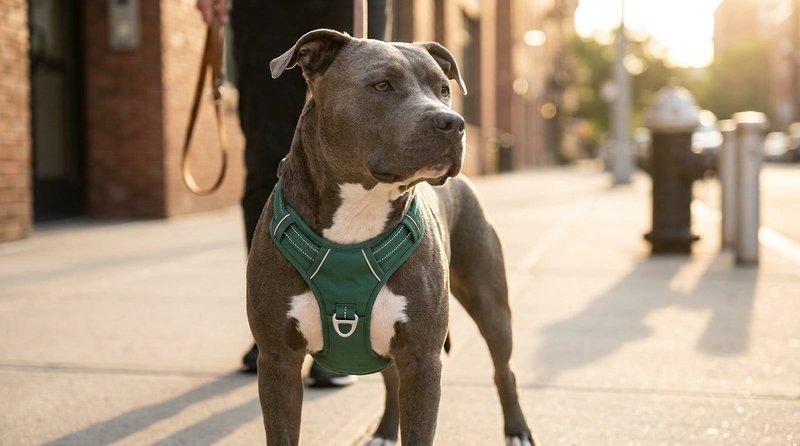

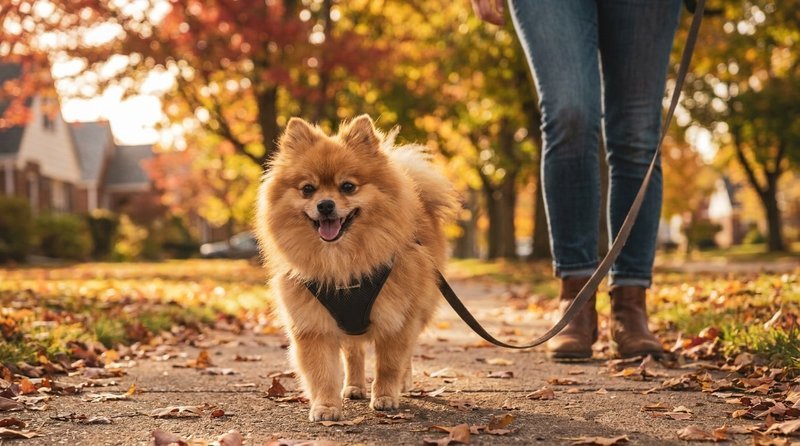
The best harness for dogs with collapsed trachea keeps all leash pressure off the neck and windpipe. It attaches at the chest or back, sits low below the throat, and does not ride up when the dog pulls. Lightweight, padded, well-fitted vest or Y-shaped designs suit the small and toy breeds most affected. Because most affected dogs weigh under 20 pounds, correct sizing matters as much as style. A harness manages the condition and reduces a common cough trigger, but it does not cure it; veterinary care is essential.
That dry, honking cough - the one that sounds like a goose every time your dog gets excited or hits the end of the leash - is hard to forget once you’ve heard it. For a small dog with a collapsed trachea, every tug on a collar lands right on the most fragile part of the airway.
The good news: switching walking gear is one of the simplest, most effective changes you can make. Veterinary experts agree that a dog with a collapsed trachea should be walked on a body harness, not a collar. But “just get a harness” isn’t quite enough, because the wrong one can still creep up onto the throat under tension and undo the whole point.
This guide covers what a collapsed trachea is, why a harness protects the airway, the features that matter, our honest picks (ours and competitors’), how to fit one on a tiny dog, and the red flags that mean it’s time to call your vet. We test gear on our own dogs, and every medical claim here comes from veterinary sources - not marketing.
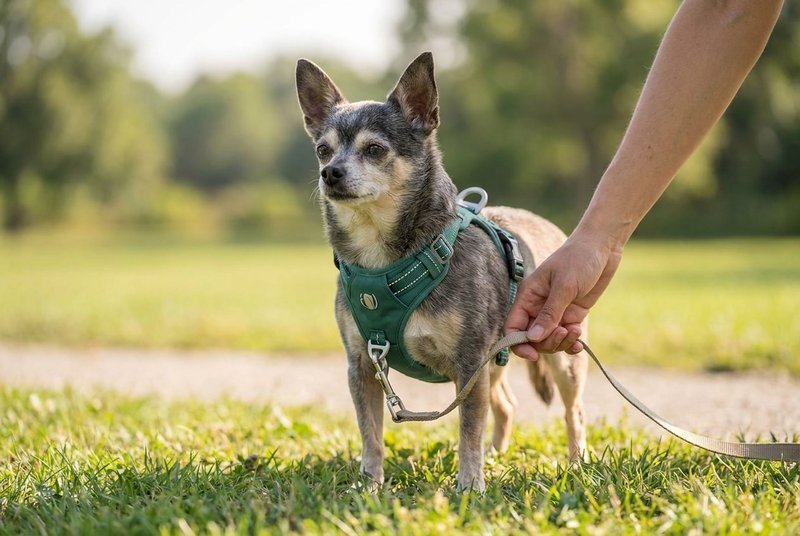
Table of Contents
- What Is a Collapsed Trachea in Dogs?
- Why a Harness - Not a Collar - for Tracheal Collapse
- What to Look for in a Harness for a Collapsed Trachea
- Front-Clip vs Back-Clip for a Collapsed Trachea
- Best Harnesses for Dogs With Collapsed Trachea: Our Picks
- How to Fit a Harness on a Dog With a Collapsed Trachea
- When a Harness Isn't Enough: See Your Vet
- Frequently Asked Questions
- The Bottom Line on the Best Harness for Dogs With Collapsed Trachea
What Is a Collapsed Trachea in Dogs?
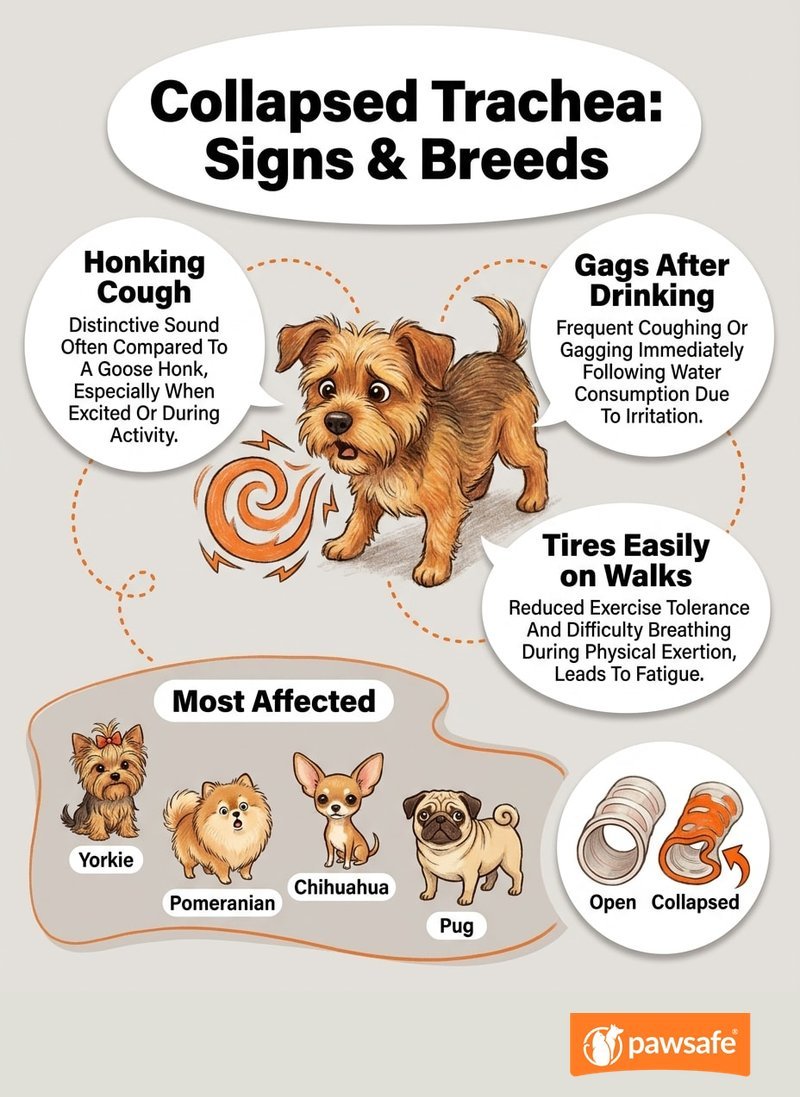
The trachea - your dog’s windpipe - is held open by a series of C-shaped cartilage rings joined by a soft membrane along the top. In tracheal collapse, that cartilage loses its rigidity, the rings flatten, and the airway narrows. Air moving through the squashed passage turns turbulent, which irritates the lining and triggers coughing. Cornell’s Riney Canine Health Center describes it as a progressive disease in which weakened rings flatten and narrow the airway.
It isn’t a simple congenital-or-not story. Many small dogs seem to carry a cartilage weakness from birth, but the condition often shows up later, pushed along by aging, chronic airway inflammation, obesity, infection, or inhaled irritants. Vets grade collapse from I to IV by how much the airway narrows, but the grade doesn’t reliably predict how much a dog coughs.
Symptoms and Triggers
The hallmark sign is a dry, harsh, repeated cough that sounds like a goose honk. Other signs include:
- Gagging or retching, especially after drinking
- Wheezing or noisy breathing
- Getting tired or winded easily on walks
- Coughing when picked up or when the neck is pressed
- Fainting or collapse in more severe cases
- Blue, gray, or pale gums or tongue - a medical emergency
Common triggers are excitement, exercise, heat and humidity, smoke and other irritants, eating or drinking, and - the one you can control today - pressure from a collar. One caveat: a honking cough is a clue, not a diagnosis. Kennel cough, chronic bronchitis, and heart disease can sound similar, which is why a vet visit matters.
Which Dogs Are Most Affected
Tracheal collapse shows up overwhelmingly in small and toy breeds, most often:
- Yorkshire Terriers
- Pomeranians
- Chihuahuas
- Toy and Miniature Poodles
- Maltese
- Shih Tzus
- Lhasa Apsos
- Pugs
Most dogs start showing signs in middle or older age, though it can appear earlier. In recent veterinary studies, affected dogs averaged around 10 pounds - so “under 20 pounds” is a useful shorthand for harness shopping, even though larger dogs are occasionally affected.
Why a Harness - Not a Collar - for Tracheal Collapse
The trachea runs right down the front of the neck, exactly where a collar sits. When a dog on a collar pulls, lunges, or hits the end of the leash, that force lands directly on the most vulnerable spot. The right harness for dogs with tracheal collapse spreads the same force across the chest and ribcage instead - structures built to take a load.
This is one of the few points in dog care with near-unanimous expert agreement:
- Cornell’s Riney Canine Health Center lists “switching from neck collars to harnesses” among its core lifestyle adjustments.
- The American College of Veterinary Surgeons recommends “use of a body harness (not a neck lead or leash).”
- The American Kennel Club advises using a harness instead of a collar to keep pressure off the throat.
- Tufts notes that throat pressure can aggravate a collapsing trachea and that harnesses reduce neck and throat pressure.
There’s supporting mechanics, too. A 2020 study of 50 small dogs found that a windpipe that’s already weakened is far more vulnerable to external neck pressure than a healthy one. That’s the whole case in a sentence: a fragile airway and a collar are a bad match.
A fair caveat: none of this proves a collar caused your dog’s collapse, and no harness prevents the disease. What a harness does is remove a known trigger and keep leash force off a delicate airway. Keep the collar for ID tags if you like - just clip the leash to a harness. For the wider picture on how different styles perform, our hands-on dog harness reviews test ten popular models across fit, comfort, and control.
What to Look for in a Harness for a Collapsed Trachea
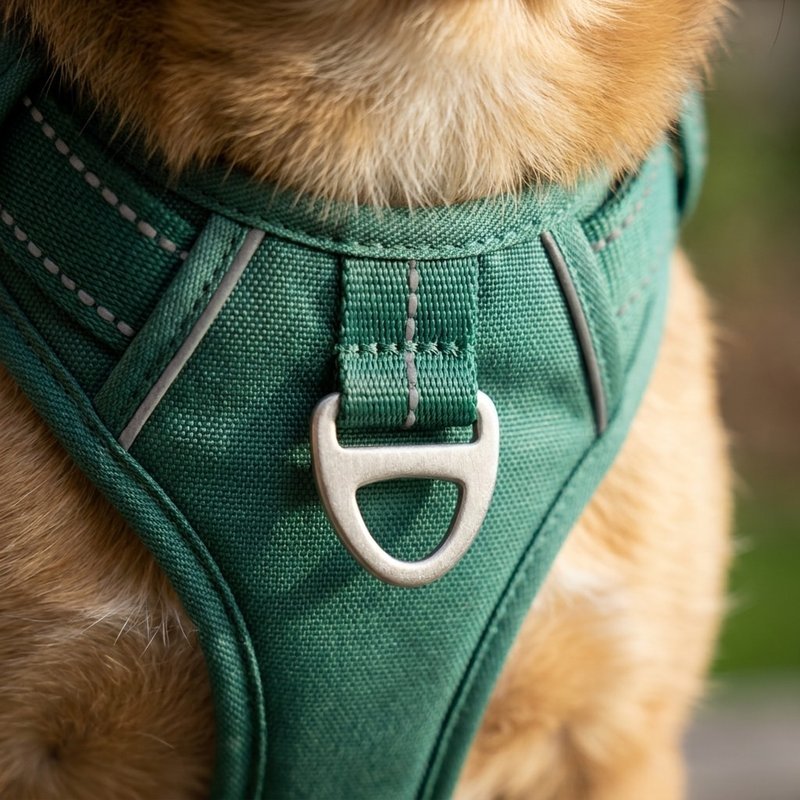
Not every harness protects the airway equally. What you’re really after is a well-fitted no-choke harness that keeps force off the neck - and on a small dog, the difference between a good choice and a bad one comes down to these features.
It Stays Low, Off the Throat - Under Tension
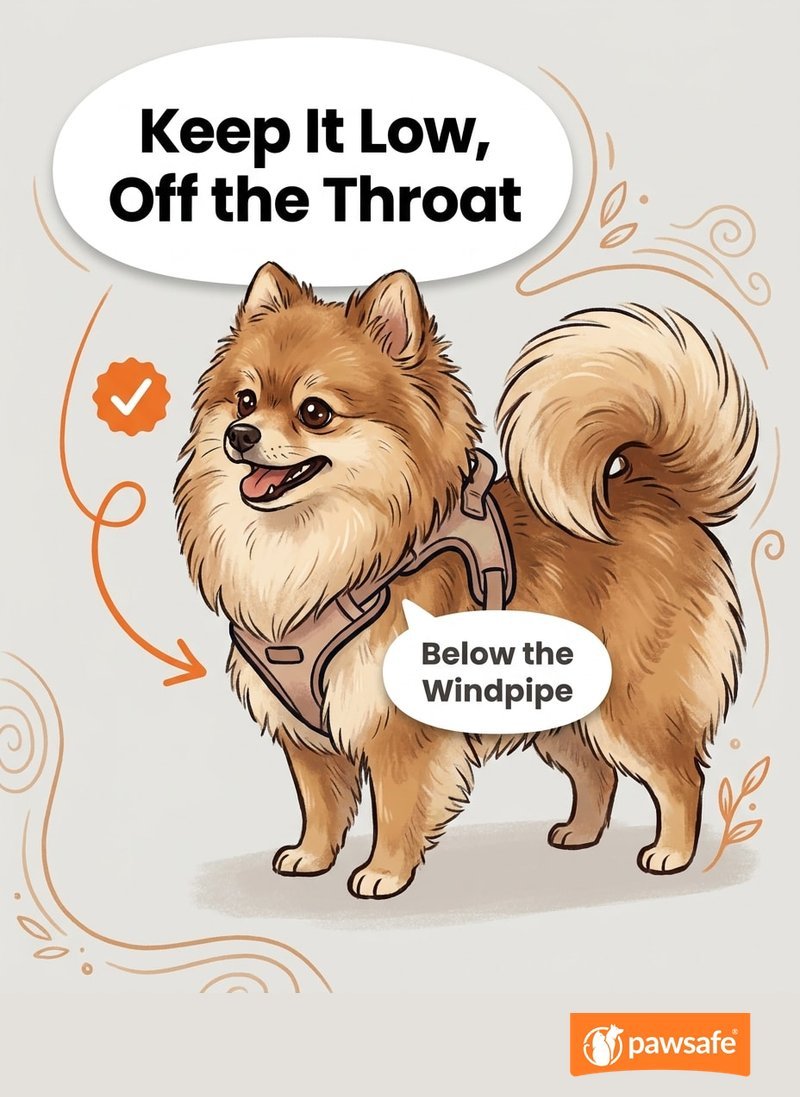
This is the single most important test, and it’s the one shoppers skip. A harness that looks fine standing still can slide forward and up when your dog pulls, pressing straight onto the windpipe. Before you trust any harness, clip the leash on and apply gentle pressure backward, upward, and to each side. The neckline or chest strap must stay on the breastbone and never migrate onto the soft throat.
Lightweight and Breathable
Toy dogs don’t need heavy hardware, and because heat and humidity make coughing worse, breathable mesh or light webbing beats a bulky, heat-trapping design.
Stop Your Dog Pulling On Their Leash
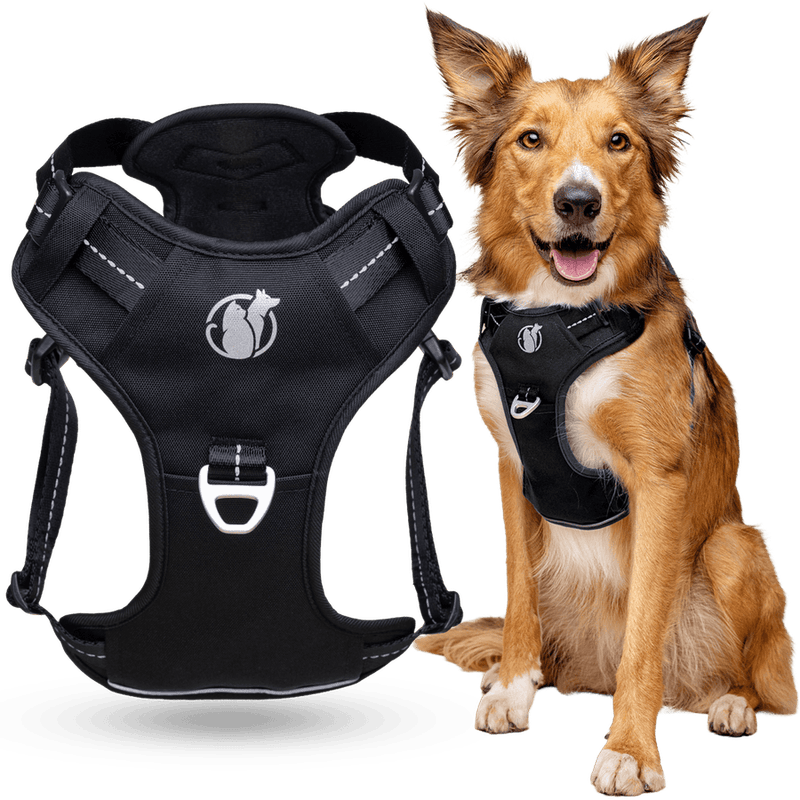
The Steady+Style No Pull Harness uses front and back clip points to redirect pulling, so you get immediate, gentler control and can actually enjoy the walk again.
Shop Now 👉Better Walk Guarantee • 90-Day PawSafe® Promise
Padded or Smooth Load-Bearing Edges
Wide, padded, or smooth-edged straps spread pressure and prevent rubbing on a dog walked several times a day. Padding is a nice-to-have, though - it never makes up for a strap sitting in the wrong place.
Enough Adjustment to Fit a Small Body
Small dogs are hard to fit: narrow neck, round chest, sometimes a big coat. Look for enough adjustment (or precise sizing) to snug the chest without choking the neck. A harness that’s merely “close enough” can still slide into the throat zone.
Easy On, Easy Off, and Escape-Resistant
Many airway-sensitive dogs hate straps dragged over their heads, which sparks the very excitement that triggers coughing - step-in styles and neck buckles keep the routine calm. And because tiny dogs are champion reverse-outers, you want a snug, stable fit with reflective detailing for low-light walks.
Front-Clip vs Back-Clip for a Collapsed Trachea
Owners often ask which clip is safest for a fragile windpipe. The honest answer: no study has compared them for tracheal collapse, and the right choice depends on your dog and the fit.
- Back-clip harnesses attach between the shoulders, so leash force comes from behind rather than pulling on a chest ring near the throat - a sensible default for a small dog who already walks calmly. The trade-off is that it won’t slow a determined puller.
- Front-clip harnesses attach at the chest and can gently turn a puller back toward you, reducing the pulling that sets off coughing. The catch, flagged by veterinary experts, is that some front-clip straps can ride up toward the throat under a hard pull. A front clip is fine if it stays low on the breastbone - and unsuitable if it doesn’t.
- Dual-clip harnesses give you both: walk calmly on the back ring, add the front only when you need steering, as long as that front strap passes the stays-off-the-throat test.
The takeaway: don’t get lost in the clip debate. A harness that fits well and stays off the throat beats any clip position that doesn’t.
Best Harnesses for Dogs With Collapsed Trachea: Our Picks
We evaluated harnesses against the features above and against real small-dog bodies. Prices are U.S. listings as of 2026. One honest note up front: none of these products has clinical testing in dogs with tracheal collapse, and the best harness is the one that passes the under-tension throat test on your dog.
| Harness | Price | Clip type | Sizing basis | Best for |
|---|---|---|---|---|
| PawSafe Steady+Style | $63.96 | Front + back | Weight + adjustable | Small dogs ~10 lb+ that also pull |
| Gooby Comfort X | $24-26 | Back only | Chest girth (11.75-28 in) | Lightweight everyday wear |
| Gooby Escape Free Comfort X One | From $34 | Back only | Chest girth (~10.5-33 in) | Dogs that back out |
| ComfortFlex Sport | ~$44 | Back only | Girth (~12.5-42 in) | Padded, active small/medium dogs |
| Freedom Choke Free (small) | From $20 | Back only | Exact girth, under 20 lb | The very smallest dogs |
| Voyager Step-In Air | ~$15 | Back only | Chest girth (~11-23 in) | Budget, calm tiny dogs |
| PetSafe Easy Walk | ~$23 | Front only | Girth (~12-49 in) | Pullers (watch for ride-up) |
Best for Small Pullers That Need Padded Control: PawSafe Steady+Style
Our Steady+Style No-Pull Harness is a padded, dual-clip harness with a reinforced aluminum front D-ring on the chest, a rear D-ring for relaxed walks, a padded chest plate that spreads pressure off the neck, Duraflex buckles, a top grab handle, and reflective stitching. For a small dog that pulls hard enough to set off coughing, that combination gives you real steering while keeping leash force on the sternum, not the throat.
The honest fit note that matters most here: the Steady+Style starts at size XS (10-18 lbs). That makes it a good option for the larger end of the tracheal-collapse crowd - Pugs, bigger Pomeranians, small Poodles, and other small dogs around 10 pounds and up that also pull. But many affected dogs are 5-8 pound Chihuahuas, Yorkies, and Maltese, and for them a featherweight vest (below) is the better call. If you use the front clip, do the under-tension check and keep that chest strap low; if it ever creeps up, switch to the rear ring. It’s also seatbelt-compatible. The same brachycephalic-safe thinking applies to flat-faced breeds - see our guide to the best harness for French Bulldogs.
- Sizes: XS (10-18 lbs), S (18-28 lbs), M (28-50 lbs), L (45-70 lbs), XL (70-132 lbs)
- Front + rear attachment, padded chest plate, grab handle, reflective, AirTag pocket
- Best for: small dogs ~10 lb and up that pull; not the pick for a 5-lb toy breed
Best Lightweight Everyday Option: Gooby Comfort X
The Gooby Comfort X ($24-26) is popular in this niche for good reason: a head-in mesh design with a deep V-neck and an X-frame meant to keep force off the throat, and it’s feather-light (Gooby lists it around 0.15 lb). Fair caveats: it’s back-clip only, fits chests from about 11.75 inches up (check your dog’s measurement), and the brand’s “zero pressure” language is a marketing claim, not a clinical result. Rated about 4.6/5 across 95 reviews.
Best for Escape Artists: Gooby Escape Free Comfort X One
If your dog throws it in reverse and steps out, the Escape Free Comfort X One (from $34) uses the same X-frame and deep V but adds a chest mechanism that contracts under backward pressure, plus a wider size range (roughly 10.5-33 inch chest). Because it tightens, the under-load fit check matters even more - keep that action on the ribcage, not the neck. No harness is truly escape-proof. Rated about 4.8/5 across 116 reviews.
Make Every Walk Feel Under Control
Adjustable comfort design helps reduce leash tension fast so walks become calm, consistent, and more enjoyable for both of you.
Shop Now 👉Better Walk Guarantee • 90-Day PawSafe® Promise
Best Padded, USA-Made Option: ComfortFlex Sport
The ComfortFlex Sport (~$44) is a fully padded, over-the-head harness with a reflective chest strap, rear attachment, and top handle, made in the USA in a wide size range (about 12.5-42 inch girth). The padding is comfortable for a dog walked daily, and it’s a favorite for active small and medium dogs. As always, the horizontal front strap must sit low on the breastbone - fit it carefully and re-check that it doesn’t creep up.
Best for the Very Smallest Dogs: Freedom Choke Free
The Freedom Choke Free harness (from $20) is built for dogs under 20 pounds and sized by the exact inch of chest girth - a real advantage for a 5-pound dog that falls off most charts. It’s a soft step-in with no over-the-head opening. Honest notes: the soft leather is less breathable than mesh, and the maker says it’s a walking harness, not a tie-out. For the tiniest dogs, the precise sizing is hard to beat.
Best Budget Step-In: Voyager Step-In Air
At around $15, the Voyager Step-In Air is a soft air-mesh step-in vest with rear D-rings - an easy, low-cost option for a calm tiny dog. The catch: Voyager notes this model isn’t adjustable, so the proportions have to match your dog closely. If the neckline rides up or the vest rotates, size down or choose an adjustable harness instead.
A Note on Front-Only Harnesses: PetSafe Easy Walk
The PetSafe Easy Walk (~$23) steers pullers effectively, but for a collapsed trachea, treat it with extra care: it’s front-only, and its horizontal chest strap can rotate or ride up toward the throat if it isn’t fitted precisely. If you choose it, keep the strap low and level and re-check it on every walk.
How to Fit a Harness on a Dog With a Collapsed Trachea
The best harness in the world fails if it’s the wrong size - and on a tiny dog, a loose harness slides forward into the exact spot you’re trying to protect.
Measure, don’t guess. With your dog standing squarely:
- Ribcage girth: wrap a soft tape around the widest part of the chest, just behind the front legs. This is your primary number.
- Lower neck: measure the base of the neck where the harness neckline will sit, if the maker asks for it.
- Weight: note it, but treat it as a secondary check - sizing is not standardized between brands.
Then use the size chart for that exact model - chest girth is the key harness measurement, and sizes are not standardized between brands.
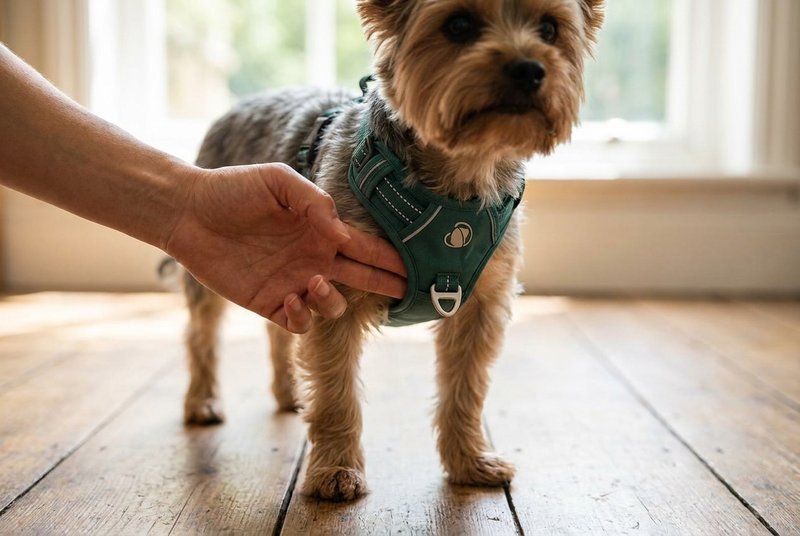
The two-finger rule and the under-tension test: once it’s on, you should be able to slip two flat fingers under each strap - snug enough that your dog can’t back out, loose enough not to pinch. (Some escape-resistant models specify a closer one-finger fit; follow the instructions, and make sure breathing and chest movement stay free either way.) Then do the test that matters most: clip the leash, apply light tension in every direction, and watch the lowest point of the neckline or chest strap. If it migrates onto the throat, the harness is wrong for this dog. Walk a few steps, ask for a turn and a sit, and confirm nothing rotates or digs into the armpits.
A few walking habits protect the airway, too: keep walks calm and steady, avoid heat and humidity, keep a little slack in the leash, and reward loose-leash walking so your dog isn’t constantly leaning into the harness. For more walking-gear help, browse our dog harness guides.
When a Harness Isn’t Enough: See Your Vet
A harness is one part of lifelong management, not a treatment. It can keep leash force off the neck and remove a cough trigger - it can’t rebuild cartilage, reopen the airway, or stop the disease from progressing. Tracheal collapse is managed, not cured.
Book a veterinary exam for any persistent or recurring cough, gagging, wheezing, reduced stamina, or coughing that continues even after you switch away from a collar - especially in an older toy-breed dog. Your vet can confirm the diagnosis, grade the collapse, and build a plan that may include weight management, avoiding irritants, and medications; for severe cases, specialists can discuss surgical options like external ring supports or internal stents. This is general information, not a treatment plan - your vet’s guidance comes first.
Call your vet or an emergency clinic right away if you see:
- Blue, gray, purple, or very pale gums or tongue
- Open-mouth breathing at rest, or obvious struggle to breathe
- A neck stretched out to breathe, or heavy belly effort
- Fainting, collapse, or weakness
- A severe coughing fit that won’t settle
While you get help, keep your dog cool and calm and take any pressure off the neck. Don’t muzzle a dog that’s struggling to breathe.
Frequently Asked Questions
What kind of harness is best for a dog with a collapsed trachea?
A lightweight, secure body harness that stays completely below the throat when the leash is tensioned. Look for breathable material, smooth or padded edges, enough adjustment for a small body, armpit clearance, and a stable fit that won’t rotate or let your dog back out. No brand is clinically proven best - fit matters more than the label.
Enjoy Calm Walks Starting Today
Dual-attachment harness distributes pressure and helps turn tug-of-war outings into relaxed, bonding strolls from the first use.
Shop Now 👉Better Walk Guarantee • 90-Day PawSafe® Promise
Is a front-clip or back-clip harness better for tracheal collapse?
Neither has been proven medically superior. A back clip is a sensible starting point for a small dog that already walks on a loose leash. A front or dual clip can help steer a puller, but only if the chest strap stays low on the breastbone and never rides up toward the throat under tension.
Are harnesses safe for dogs with a collapsed trachea?
A properly fitted body harness is the standard veterinary recommendation and is safer for leash attachment than a neck collar - Cornell, the ACVS, VCA, and the AKC all advise switching. An ill-fitting harness can still press on the throat or let a dog escape, so fit and an under-tension check matter.
What’s the best harness for a Pomeranian, Yorkie, or Chihuahua with tracheal collapse?
Breed doesn’t decide the model - measurements do. Measure the individual dog and pick the smallest lightweight harness that fits securely, stays below the throat, and clears the armpits. Coat volume, chest shape, and whether your dog backs out matter more than the breed name.
Can a harness fix or prevent a collapsed trachea?
No. A harness cannot rebuild weakened cartilage, reopen the airway, or prevent the disease. What it can do is keep leash force off the neck and remove one recognized cough trigger. Tracheal collapse is managed, not cured, and gear is only one part of a veterinary plan.
What does a collapsed trachea sound like?
Most often a dry, harsh, repetitive cough described as a goose honk. Some dogs also gag or wheeze, especially when excited, after drinking, or under leash pressure. Sound alone can’t tell collapse apart from kennel cough, bronchitis, or heart disease, so it needs a vet’s assessment.
My dog only coughs on walks - could it be the collar?
Possibly. Collar pressure on the front of the neck is a recognized trigger, especially when a dog pulls. Switch the leash to a well-fitted harness and book a vet check. Improvement after removing collar pressure is a good sign but doesn’t confirm the diagnosis on its own.
When should I take my dog to the vet?
Book an exam for any persistent or recurring cough, gagging, wheezing, reduced stamina, or coughing that continues after you switch away from a collar. Seek emergency care immediately for blue, gray, or pale gums, open-mouth breathing at rest, fainting or collapse, or an episode that won’t settle.
The Bottom Line on the Best Harness for Dogs With Collapsed Trachea
Choosing the best harness for dogs with collapsed trachea really comes down to one rule: keep every ounce of leash pressure off the neck.
- Go harness, not collar. Cornell, the ACVS, VCA, and the AKC all agree - clip the leash to a body harness and keep the collar for ID.
- Stay low and stay put. The right harness sits below the throat and never rides up under tension. Test it before you trust it.
- Size for a small dog. Most affected dogs are under 20 pounds; measure the ribcage and use the model’s chart, not the weight guess.
- Fit beats the label. No brand, clip position, or shape is clinically proven best - the winner is whatever passes the throat test on your dog.
For a small dog around 10 pounds and up that also pulls, a padded dual-clip harness like the Steady+Style keeps force on the chest while giving you real control; for the tiniest 5-pound toy breeds, a featherweight vest is the kinder fit. Whichever you choose, pair it with calm walks, a lean body, and your vet’s guidance - because the best harness for dogs with collapsed trachea is one part of caring for a condition that deserves a full medical plan.