


When a dog’s breath smells like fish, the cause is usually one of two things: dental disease, where plaque bacteria release sulfur compounds, or anal gland secretions transferred to the mouth when a dog licks its rear. A fish-based diet or fish oil can also be the harmless answer. Less often, a fishy or ammonia odor points to kidney disease, especially in older dogs. Persistent fishy breath, visible tartar, scooting, or signs of illness warrant a veterinary exam to find and treat the real cause.
You lean in for a cuddle, your dog gives you a happy face-lick, and you recoil - the breath smells like low tide. Fishy. Not just “dog breath” bad, but genuinely fishy.
If you’ve searched “dog breath smells like fish,” you’re in the right place. Here’s the good news: “fishy” is actually a useful clue. It narrows a long list of bad-breath causes down to a short one - and, surprisingly, the answer sometimes isn’t the mouth at all. It’s the other end.
This guide walks through why fishy breath happens, a cause-by-cause table with the tell-tale signs to look for, how to check your dog at home, the routine that clears up plaque-related breath, and the signs that mean this is a vet visit - not a breath mint. We write with veterinary sources and this article is reviewed by a licensed vet, but your own vet, who can examine and test your dog, always has the final say.
Table of Contents
Why Does My Dog’s Breath Smell Like Fish?
There are two reasons a dog with fishy breath usually smells that way.
The first is the mouth. Plaque is a film of bacteria on the teeth, and as it builds up, the bacteria break down proteins and release volatile sulfur compounds like hydrogen sulfide and methyl mercaptan. Those gases are what make “dog breath” smell bad - and to some noses, fishy. (Fair warning, though: “fishy” is a subjective description, so the smell alone can’t diagnose a specific problem.)
The second is genuinely the other end. Dogs have two small anal sacs beside the anus that hold a pungent, characteristically fishy fluid - it even contains trimethylamine, the compound behind fish odor. Cornell describes anal-sac discharge as having a characteristic “fishy” odor. When a dog licks its rear, that secretion transfers to the mouth, muzzle, and coat - so when a dog has fish breath and a fishy-smelling tail, the anal glands are a prime suspect, not the teeth. A good daily dog dental care routine handles the first cause; the second is a whole different fix.
The Common Causes of Fishy Dog Breath
Fishy breath has a handful of usual explanations, and the extra signs around it usually reveal which one you’re dealing with.
| Likely cause | What else you’ll notice |
|---|---|
| Dental / periodontal disease (most common bad-breath cause) | Yellow-brown tartar, red or bleeding gums, drooling, pawing at the mouth, dropping food, loose teeth |
| Anal gland issues (the classic fishy smell) | Scooting, licking or biting the rear, swelling beside the anus, fishy odor on the coat and tail too |
| Fish-based food or fish oil | Smell started after a food or supplement change; dog otherwise well and comfortable |
| Kidney disease | More ammonia- or urine-like; older dog; increased thirst and urination, weight loss, poor appetite, vomiting, lethargy |
| Diabetes | Breath is more sweet or fruity than fishy, with increased thirst, urination, and appetite plus weight loss |
| Oral tumor, foreign object, or teething | A lump, bleeding, facial swelling, dropping food, or (in puppies) loose baby teeth |
| Coprophagia (eating feces) | Witnessed stool eating; fecal, not truly fishy, odor |
A few of these deserve emphasis. Whatever’s behind the dog breath fishy odor, the extra signs are what point to the cause. Dental disease is the number-one cause of persistent bad breath. It’s very common - the majority of dogs show some gum disease by early adulthood, and the AKC calls it the leading reason dogs get stinky breath. Anal glands are the cause most likely to smell specifically fishy. And in a senior dog, new ammonia-or-fishy breath alongside drinking and urinating more is worth taking seriously. It can be a sign of kidney disease that needs testing. Diabetes is a useful contrast: its telltale breath is sweet, not fishy.

Check Your Dog at Home (Mouth and Rear)
You can gather useful clues before you even call the vet.
Look in the mouth. With a calm dog and good light, gently lift the upper lip (don’t force the jaws open) and look along the teeth - especially the big teeth toward the back, where tartar and odor tend to be worst. You’re checking for yellow-brown tartar, a red or swollen gumline, bleeding, broken or loose teeth, or anything lodged between teeth. Stop if your dog seems painful or pulls away.
Check the rear. Watch for scooting across the floor, or licking and biting under the tail. Look (don’t press) for redness or swelling beside the anus. One important safety note: don’t try to express the anal glands yourself unless your vet has shown you how - done wrong, it can cause pain or infection, and a full-feeling sac can actually be an abscess or growth.
Note anything else. Increased thirst or urination, weight loss, a poor appetite, vomiting, a lump, or bleeding all push this toward a vet visit rather than home care.

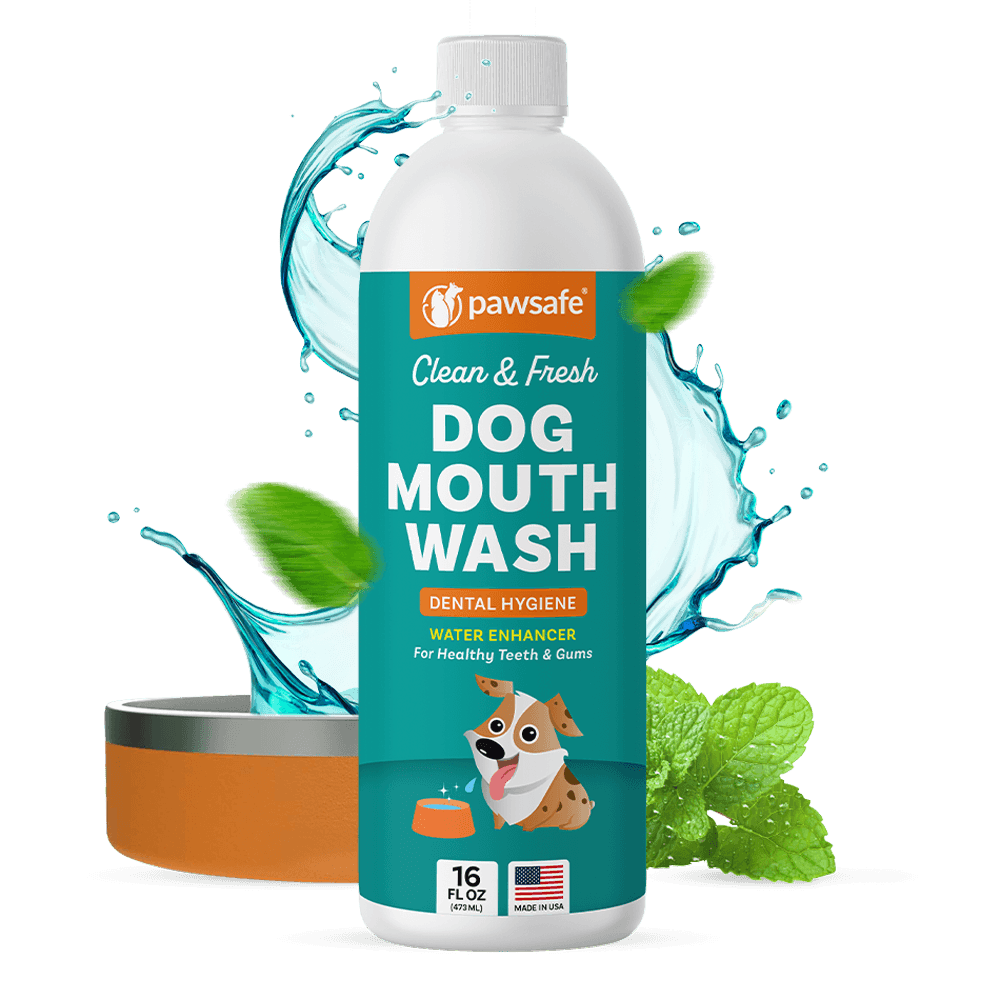
Fresh Breath The Easy Way
Just add to the water bowl to support cleaner mouths and noticeably fresher breath without daily brushing struggles.
Shop Now 👉Fresh Breath Guarantee • 90-Day PawSafe® Promise
How to Fix and Prevent Fishy Dog Breath
Once you have a sense of the cause, match the fix to it - and rule out the serious causes first. New, sudden fishy breath with any sign of illness means a vet before any home routine.
For everyday, plaque-related breath, the fundamentals are well established:
- Brush the teeth with a dog-specific (usually enzymatic) toothpaste. Daily is the goal and works best, since plaque comes back fast; even a few times a week beats nothing. Never use human toothpaste - dogs swallow it, and some contain xylitol, which the FDA warns is dangerously toxic to dogs.
- Add a between-brushings helper. Dental chews and water additives can help control the bacteria behind breath odor. For a product sold on a plaque- or tartar-control claim, the VOHC Seal (from the Veterinary Oral Health Council) is a useful independent check. Our Dog Mouthwash is a no-brush water additive - a few drops in the bowl - made with naturally derived ingredients to freshen breath and help with everyday plaque. Think of it as an add-on to brushing, not a replacement, and not a fix for anal-gland or medical causes.
- Book a professional cleaning when there’s visible tartar, red or bleeding gums, or a loose tooth. Home products slow new plaque. They can’t remove hardened tartar or treat disease below the gumline - only a full veterinary cleaning, done under anesthesia with X-rays and scaling below the gums, can reset that.
- For anal glands, have a vet or groomer express them when needed; a vet may suggest more dietary fiber for dogs with recurring issues.
- For a fish-diet smell, it’s harmless - switch proteins or mix fish oil into food if the odor bothers you.
If you want the wider playbook, our guide on how to get rid of bad dog breath goes deeper on the daily routine.


When to See the Vet
Most fishy breath comes down to a treatable dental or anal-gland issue - but the smell is a signal worth acting on, not masking. Book a prompt appointment (generally within a few days) if you notice:
- New, sudden, or strong fishy breath with no obvious meal explanation
- Visible tartar, red or bleeding gums, or a loose, broken, or painful tooth
- An oral lump, ulcer, facial swelling, or blood in the drool
- Repeated scooting, rear-licking, or swelling beside the anus
- A senior dog with new abnormal breath plus increased thirst or urination, weight loss, appetite change, or vomiting
- Fishy breath alongside vomiting, diarrhea, or appetite loss
- Breath that’s still off after a week or two of daily dog-safe brushing
Seek urgent care for trouble breathing, swallowing, or opening the mouth; collapse or severe weakness; a hot, painful, swollen area beside the anus with pus or blood; sweet, fruity breath with vomiting or weakness (a possible diabetic emergency); or any suspected xylitol ingestion. For a sense of how mouth problems progress if left alone, see our guide to the stages of dog gum disease.
Frequently Asked Questions
Why does my dog’s breath smell like fish?
The usual suspects are dental disease (plaque bacteria release sulfur compounds), fishy anal gland secretions transferred to the mouth when your dog licks its rear, or recently eaten fish-based food or fish oil. Dental disease is the leading cause of ongoing bad breath, while a distinctly fishy smell alongside scooting or rear-licking points more toward the anal glands.
Daily Water Additive For Oral Freshness
Helps maintain better breath and oral hygiene as your dog drinks, keeping cuddle moments pleasant.
Shop Now 👉Fresh Breath Guarantee • 90-Day PawSafe® Promise
Is fishy breath from my dog’s teeth or their anal glands?
It can be either. Look for dental clues - yellow-brown tartar, red or bleeding gums, drooling, dropping food - or anal gland clues - scooting, rear-licking, swelling, or a fishy smell on the coat as well as the breath. Because the odors overlap, your vet may need to check both the mouth and the rear to be sure.
Can kidney disease make a dog’s breath smell fishy?
An owner might describe it that way, but kidney-related breath is more classically ammonia-, urine-, or metallic-smelling. It’s more concerning when the breath change comes with increased thirst and urination, weight loss, poor appetite, vomiting, or lethargy, especially in an older dog. Only bloodwork and a urinalysis can diagnose kidney disease - smell alone can’t.
Does fish food or fish oil cause fishy breath?
Yes, temporarily. If the smell started after a fish-based food or a fish-oil supplement, clears between meals, and your dog is otherwise comfortable with a healthy mouth, diet is the likely, harmless answer. Persistent or unusually strong fishy odor still deserves a look, since you can’t assume the food is the cause just because fish is in it.
How do I get rid of my dog’s fishy breath?
Find the source first. Daily brushing with dog-specific toothpaste is the best-supported way to control the plaque that causes oral odor, and a proven dental chew or water additive can help between brushings. Existing tartar, painful teeth, anal gland disease, or any medical cause needs your vet - masking the smell won’t fix what’s causing it.
Turn Plain Water Into Breath Support
A simple routine that supports a cleaner mouth and fresher kisses over time—no messy brushing required.
Shop Now 👉Fresh Breath Guarantee • 90-Day PawSafe® Promise
Can I brush my dog’s teeth with human toothpaste?
No. Dogs swallow toothpaste instead of spitting it out, and human products aren’t made for that. Some contain xylitol, which can cause dangerous low blood sugar and liver injury in dogs. Always use a toothpaste labeled specifically for dogs, and keep human toothpaste, mouthwash, and gum well out of reach.
Do water additives work for dog breath?
Some specific products can help slow new plaque and tartar, but the evidence is product-specific and they’re an add-on, not a replacement for brushing or a professional cleaning. Choose a dog-specific additive (ideally one with a VOHC Seal for plaque or tartar). A water additive won’t remove hardened tartar or treat disease below the gumline.
When should I see the vet for my dog’s fishy breath?
Book a prompt visit for sudden or strong fishy breath, visible tartar or bleeding gums, a loose tooth, an oral lump, repeated scooting or anal swelling, or fishy breath with vomiting, diarrhea, appetite loss, or increased thirst and urination in an older dog. Seek urgent care for trouble breathing, collapse, a hot painful anal swelling, or suspected xylitol ingestion.
The Bottom Line
Fishy dog breath is a clue, and most of the time it points somewhere very fixable.
- The mouth or the other end - dental plaque and anal glands are the two most common reasons a dog’s breath smells like fish
- Match the fix to the cause - brushing and a water additive for plaque; a vet or groomer for anal glands
- Diet can be the harmless answer - fish food or fish oil that clears between meals
- Take the smell seriously in a senior dog - fishy or ammonia breath with more drinking and weight loss can mean kidney disease
- Never mask, always find the source - and never use human toothpaste
For everyday plaque-related freshness, a simple daily habit goes a long way: brush when you can, and add a dog-safe water additive to the bowl between brushings. Explore our dog dental care guides for the full routine - and when fishy breath is sudden, strong, or paired with any sign of illness, skip the breath mint and call your vet.