

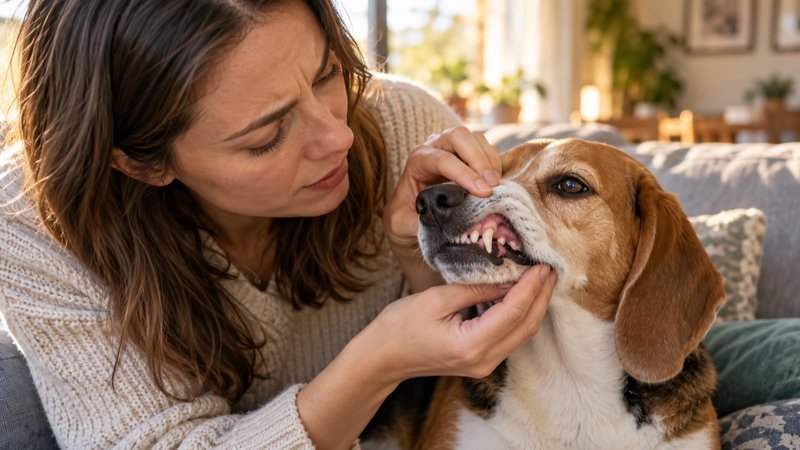
Once plaque hardens into tartar, you can’t safely or completely remove it from your dog’s teeth at home - a toothbrush, chew, or additive won’t lift cemented-on tartar, and hand scrapers can hurt your dog. A veterinarian removes tartar by scaling above and below the gumline under anesthesia. What you can do at home is remove soft plaque with brushing and slow new tartar with vet-accepted products. Visible tartar means it’s time for a veterinary dental exam.
You’ve spotted the yellow-brown crust along your dog’s gumline, and the search that brought you here probably included the words “without a dentist” or “at home.” So let’s be honest with you right away: hardened tartar isn’t something you can safely scrub, dissolve, or scrape off yourself. The vet has to remove it.
That’s not the whole story, though - and it’s not a dead end. There’s a lot you can do at home, it just isn’t “removing” tartar; it’s stopping the next layer from forming. In this guide we’ll explain why tartar is so stubborn, exactly what you can safely do without a vet, the DIY tactics to avoid (some are genuinely risky), what a professional cleaning involves and costs, and when tartar means it’s time to book the vet. This is one piece of our complete dog dental care routine, and it’s the honest version - no gimmicks.
Table of Contents
- Can You Remove Tartar From Dog Teeth at Home?
- Plaque vs Tartar: Why Tartar Is So Hard to Remove
- How to Prevent and Slow Tartar at Home
- What NOT to Do (Please Skip These)
- How a Vet Removes Tartar (and What It Costs)
- When to See the Vet About Tartar
- Frequently Asked Questions
- The Bottom Line on How to Remove Tartar From Dog Teeth
Can You Remove Tartar From Dog Teeth at Home?
Short answer: soft plaque, yes - hardened tartar, no.
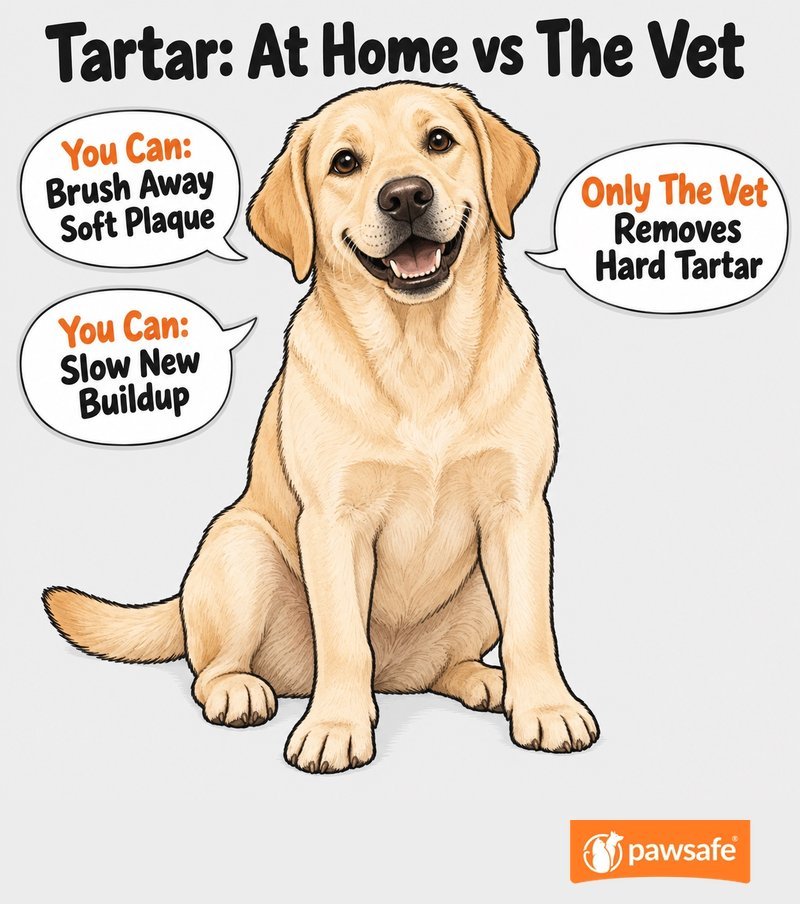
Plaque is the soft, sticky bacterial film you can disrupt with a toothbrush. But once saliva minerals turn it into tartar (calculus), it’s rough, firmly bonded to the enamel, and it builds both above and below the gumline. At that point a brush, chew, or rinse simply can’t shift it. As the VCA puts it, “tartar is so tough that the only way to remove it is with a dental cleaning.” Veterinary guidelines say the same: brushing removes plaque, not calculus.
So the honest way to read “how to remove tartar without a dentist” is this - you can’t safely strip what’s already cemented on, but you can remove the soft plaque before it hardens and slow how fast new tartar forms. And here’s the part that matters most: much of the damage happens below the gumline, where you can’t see or reach, so even a tooth that looks cleaner on top can be hiding disease. That’s the vet’s job.
Plaque vs Tartar: Why Tartar Is So Hard to Remove
The timing is what makes tartar sneak up on you. Plaque starts rebuilding within hours of a cleaning, and saliva minerals begin hardening it into tartar within about a day - with buildup developing over roughly one to three days. Once it’s mineralized, tartar is porous and grippy, so it collects even more plaque, which hardens in turn. It builds in stages, getting thicker and creeping under the gums; our guide to the stages of dog tartar shows how that progression works. This is exactly why prevention beats removal: it’s far easier to brush away soft plaque daily than to wait for cemented tartar you can no longer touch.
How to Prevent and Slow Tartar at Home
This is where your effort actually pays off. You can’t remove hardened tartar, but you can keep new tartar from piling on - and keep a freshly cleaned mouth clean.
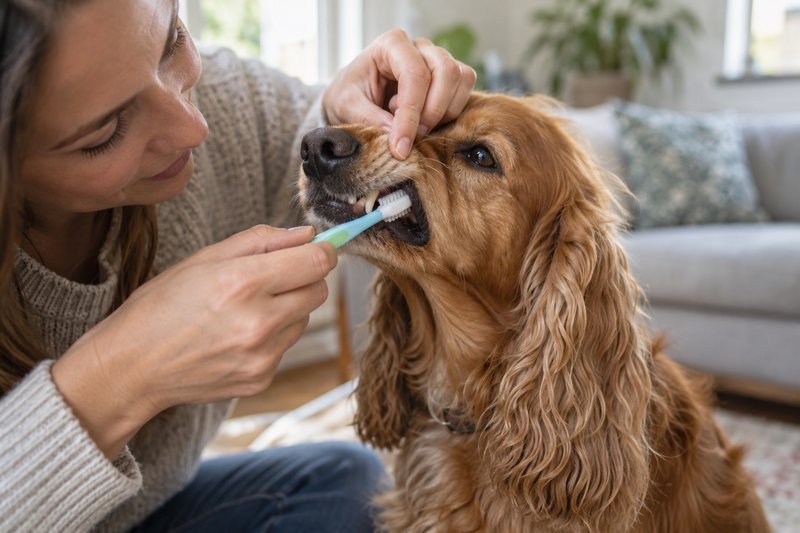
- Brush daily with canine toothpaste (never human toothpaste). It’s the single most effective home step, disrupting plaque before it can mineralize. If the gums look red or sore, get a vet check before brushing.
- Use products with real evidence. For chews, diets, water additives, and wipes that claim to control plaque or tartar, the Veterinary Oral Health Council awards its VOHC Seal only to specific products shown to help - a useful way to tell a working product from marketing. Remember these slow new buildup; they don’t dissolve existing tartar.
- Pick chews wisely. Choose the right size, supervise chewing, and skip anything rock-hard (bones, antlers, hooves) that can fracture teeth.
If your dog won’t tolerate a brush, don’t give up on dental care - our guide to cleaning dog teeth without brushing covers the alternatives. A water additive is one of the easiest to fit into a routine: our PawSafe Dog Mouthwash is added to the water bowl to help freshen breath and support your dental routine between cleanings. To be clear, it’s a helper - it does not remove or dissolve tartar and doesn’t replace brushing or a vet cleaning.
What NOT to Do (Please Skip These)
The internet is full of tartar “hacks.” Several can hurt your dog - here’s what to avoid.
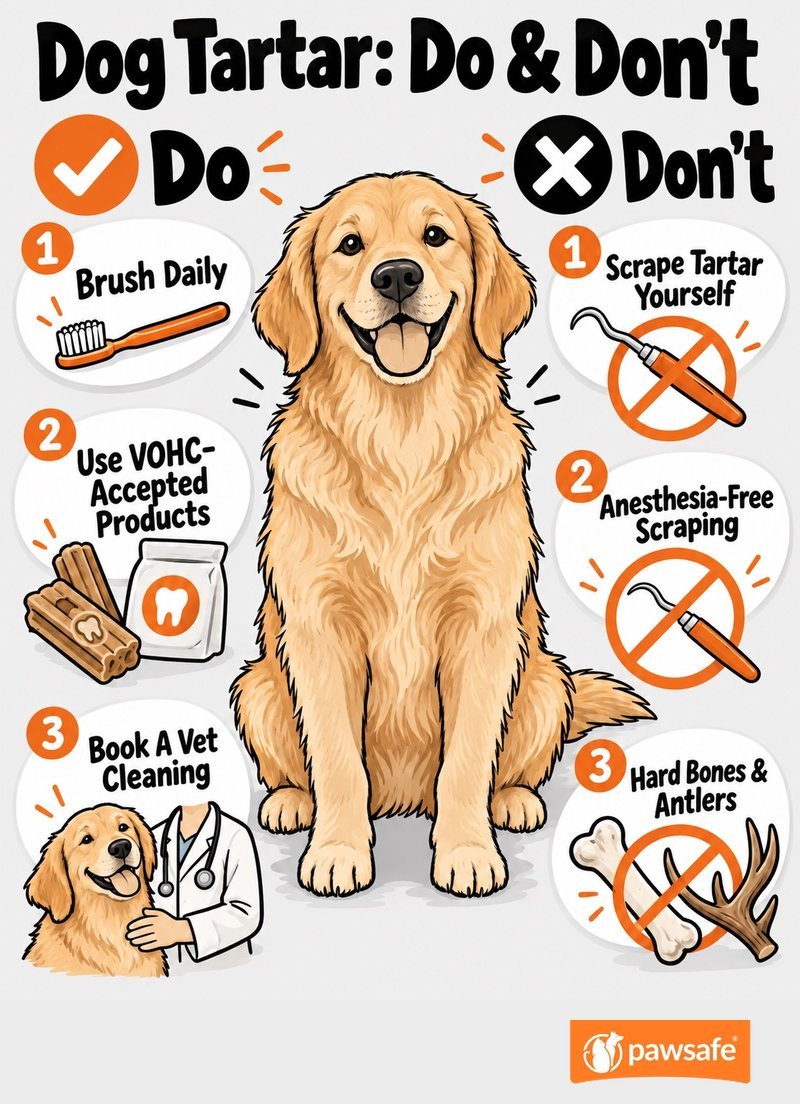
- Don’t use handheld dental scalers or picks. Those “dog tartar remover” tools can lacerate the gums, chip enamel, and get you bitten - and they leave the disease below the gumline untreated. Worse, a scratched, unpolished tooth attracts plaque faster.
- Skip “anesthesia-free” scraping. The American Veterinary Dental College is clear that anesthesia-free tooth scraping is not a substitute for a proper cleaning: it can’t clean below the gumline, take x-rays, or protect the airway, and it can stress or injure your dog while giving a false sense that the problem is handled.
- No human toothpaste or baking soda. Human toothpaste can contain fluoride, detergents, or xylitol (toxic to dogs), and raw baking soda can upset the stomach.
- Don’t trust “tartar-dissolving” remedies. Coconut oil, vinegar, and essential-oil mixtures aren’t supported for removing canine tartar, and some can irritate the mouth or gut.
- Never force a painful mouth. If brushing hurts, stop and see your vet - pushing through creates a lasting aversion.
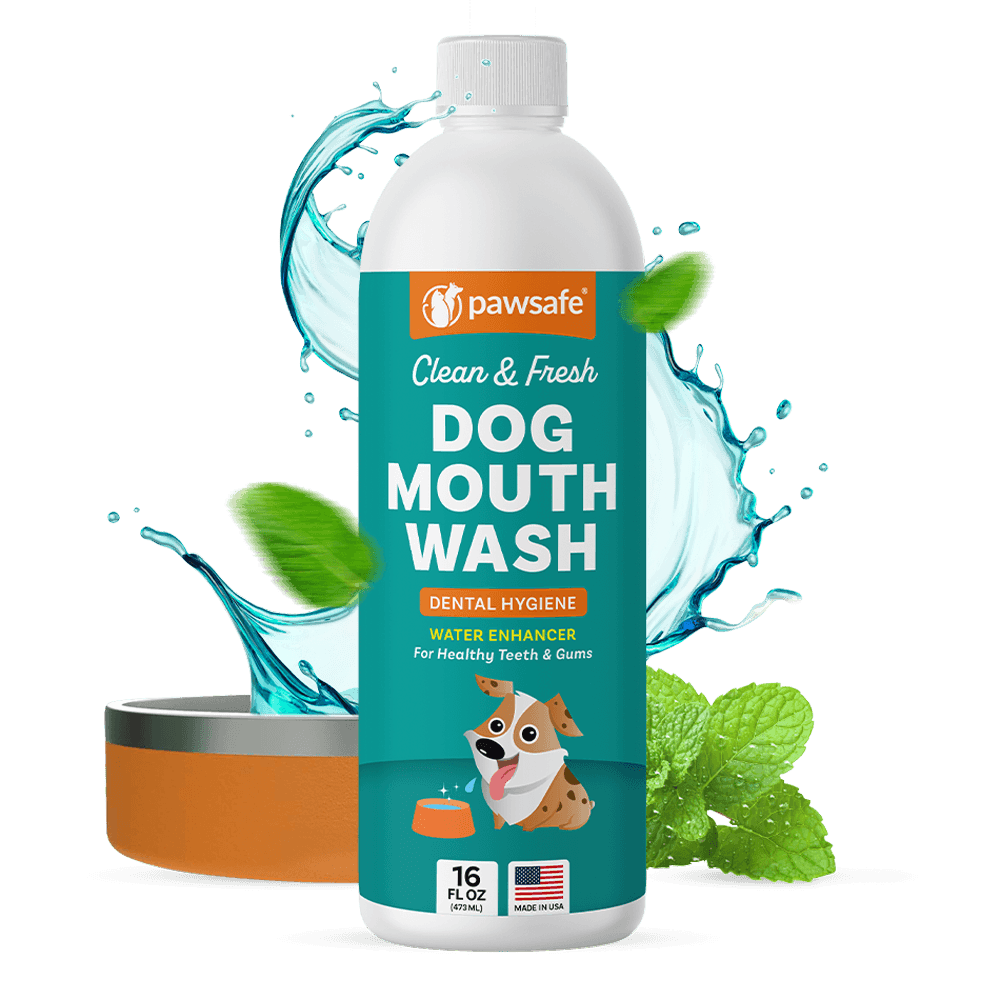
Fresh Breath The Easy Way
Just add to the water bowl to support cleaner mouths and noticeably fresher breath without daily brushing struggles.
Shop Now 👉Fresh Breath Guarantee • 90-Day PawSafe® Promise
How a Vet Removes Tartar (and What It Costs)
A professional dental cleaning is the safe, complete way to remove tartar. Under general anesthesia, your vet examines and charts each tooth, takes full-mouth x-rays to find disease below the gumline, scales tartar from above and below the gum margin, polishes the teeth to smooth the surface, and treats anything they find. Anesthesia isn’t just for comfort - it lets the team clean under the gums safely and protects your dog’s airway from water and debris.

What does it cost? In the US, a routine cleaning is often quoted in the several-hundred-dollar range - averages land around $350-$400 - but the total climbs with dental x-rays, extractions, longer anesthesia, disease severity, your dog’s size, and your region, sometimes past $1,500. Because hidden disease often isn’t visible until your dog is under anesthesia and x-rayed, ask for an itemized written estimate and confirm what’s included; a low advertised price may leave out x-rays, extractions, or medications. One reassuring note: a routine cleaning usually doesn’t require a specialist - a well-equipped general-practice vet can handle it, and referral is reserved for complex cases.
When to See the Vet About Tartar
Here’s the thing about visible tartar: it’s already proof that plaque has hardened and home care can’t fully fix it - so it’s a signal to book a dental exam, not to reach for a scraper. See your vet promptly if you notice:
- Yellow, tan, or brown tartar, especially along the gumline
- Persistent bad breath
- Red, swollen, bleeding, or receding gums
- Loose, broken, worn, or discolored teeth
- Drooling, pawing at the mouth, chewing on one side, or eating slowly
- Dropping food, reduced appetite, or signs of mouth pain
Treat facial or jaw swelling, active bleeding, a newly broken tooth, or a dog who can’t eat as same-day concerns. Tartar isn’t only cosmetic - left alone it drives gum disease, which can be painful and, over time, affect the whole mouth.
Frequently Asked Questions
Can you remove tartar from a dog’s teeth without a vet?
Not the hardened tartar, no. Once plaque mineralizes into tartar, it’s cemented to the tooth and extends below the gumline, so a toothbrush, chew, or additive can’t lift it - only a professional cleaning under anesthesia can. Without a vet, what you can do is remove soft plaque by brushing and slow new tartar with vet-accepted products. That prevents the next layer; it won’t strip what’s already there.
Is it safe to scrape tartar off my dog’s teeth myself?
No. Veterinary dentists advise against home scaling and “anesthesia-free” scraping. A slip can cut the gums, chip enamel, or get you bitten, and scraping only the visible surface leaves the damaging disease below the gumline untreated - while making teeth look deceptively clean. Scaling also needs polishing afterward, which home tools can’t do. Leave tartar removal to your vet.
Daily Water Additive For Oral Freshness
Helps maintain better breath and oral hygiene as your dog drinks, keeping cuddle moments pleasant.
Shop Now 👉Fresh Breath Guarantee • 90-Day PawSafe® Promise
Do natural remedies or additives dissolve dog tartar?
No home remedy safely dissolves cemented tartar. Coconut oil, vinegar, and “tartar-melting” mixtures aren’t supported by good canine evidence, and some can irritate the mouth or stomach. A few vet-accepted products (certain water additives, seaweed-based chews) can slow how fast new tartar forms after a cleaning, but that’s preventing buildup - not removing what’s already hardened on.
How does a vet remove tartar, and how much does it cost?
Under general anesthesia, the vet scales tartar from above and below the gumline, polishes the teeth, takes full-mouth x-rays, and treats any disease found. In the US, a routine cleaning is often quoted in the several-hundred-dollar range (averages around $350-$400), while extractions, x-rays, or a specialist can push it past $1,500. Ask for an itemized estimate - low advertised prices often exclude x-rays and extractions.
How do I stop tartar coming back after a cleaning?
Start home care as soon as your vet says the mouth has healed. Daily brushing with canine toothpaste is the most effective step; proven dental chews, a dental diet, and a water additive help slow new buildup between cleanings. Consistency is what keeps a freshly cleaned mouth clean - plaque starts reforming within about a day.
Does a dog tartar remover tool work?
The handheld “dog tartar remover” scalers sold online can chip the visible crust off, but that’s cosmetic and risky - they can injure the gums or enamel, they don’t reach below the gumline where disease lives, and an unpolished tooth actually attracts plaque faster. Vets don’t recommend them. A professional cleaning is the safe, complete way to remove tartar.
The Bottom Line on How to Remove Tartar From Dog Teeth
If you take one thing from this guide, make it this: you prevent tartar at home, and your vet removes it.
- Hardened tartar needs a professional cleaning - scaling above and below the gumline under anesthesia.
- At home, focus on prevention - daily brushing plus proven chews, diets, and a water additive slow new buildup.
- Skip the risky shortcuts - hand scalers, anesthesia-free scraping, and “tartar-dissolving” remedies can hurt your dog and leave real disease untreated.
- Visible tartar means book an exam - it’s a signal, not a job for a scraper.
Knowing how to remove tartar from dog teeth really comes down to knowing your lane: keep the plaque under control at home, and let your vet handle what’s already turned to stone. For the full system - breath, brushing, gum disease, and more - explore our dog dental care guides.