
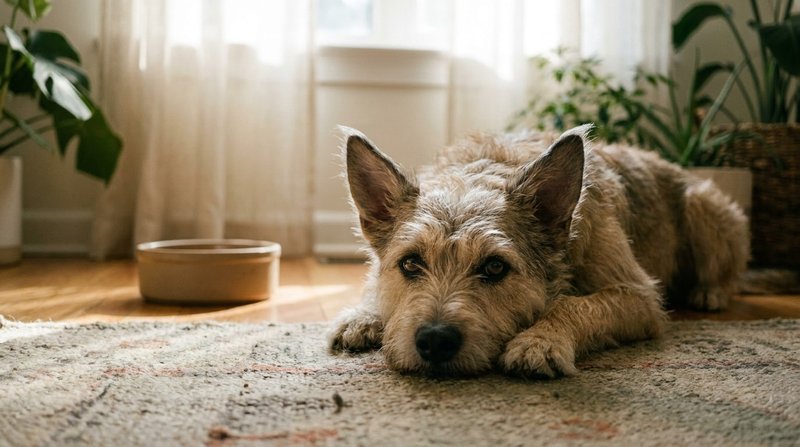
When a dog has diarrhea but is acting normal - eating, drinking, and playing - it usually points to a mild, passing digestive upset from something like dietary indiscretion, a sudden food change, or stress. A healthy adult can often be watched at home for 24 to 48 hours with small bland meals and fresh water. Blood, black tarry stool, repeated vomiting, lethargy, a painful or bloated belly, or diarrhea lasting beyond 48 hours needs a vet. Puppies, seniors, and tiny dogs need veterinary care sooner.
It’s one of the stranger combinations in dog ownership: the yard says something is clearly wrong, and your dog says absolutely nothing is - tail up, dinner inhaled, ball dropped hopefully at your feet.
If you’ve typed “dog has diarrhea but acting normal” into a search bar at 11pm, this is for you. The good news first: a dog who genuinely feels fine usually is mostly fine, and most simple diarrhea settles at home within a day or two. But “acting normal” is a reassuring clue, not a clean bill of health - dogs are wired to hide feeling unwell, and the same loose stool can occasionally be the first sign of something that needs a vet.
This guide sorts out both halves. You’ll learn why a happy dog gets the runs, exactly how to help at home, the red flags that mean “call the vet now,” what to do if there’s vomiting too, and where a probiotic honestly fits. We test our gear and supplements on our own dogs, and every medical point here comes from veterinary sources - though your own vet always knows your dog best.
Table of Contents
- Is It Normal for a Dog to Have Diarrhea but Act Fine?
- Why a Happy Dog Gets Diarrhea
- How Long Can a Dog Have Diarrhea? The 24-48 Hour Rule
- The 48-Hour Home-Care Plan (For a Dog Who's Otherwise Fine)
- When to Worry: Red Flags and When to See a Vet
- Dog Vomiting and Diarrhea but Acting Normal: What to Do
- What the Vet Will Do
- Do Probiotics Help a Dog With Diarrhea?
- Frequently Asked Questions
- The Bottom Line
Is It Normal for a Dog to Have Diarrhea but Act Fine?
Often, yes. Diarrhea happens when food moves through the gut too fast or the intestine pulls in extra fluid, and a brief dietary or stress-related hiccup can change the stool before it ever touches your dog’s appetite or energy. Veterinary experts note that most acute cases are mild and self-limiting - one summary of cases seen in practice put roughly 90% in the mild category, judged mostly on how bright and well-hydrated the dog is.
That’s exactly why your dog’s behavior is such a useful signal. A bright, hungry, mischievous dog is usually telling you the system is annoyed, not failing.
Here’s the honest caveat, though: acting normal doesn’t identify the cause or guarantee the diarrhea will stay mild. Parasites like giardia can be nearly silent, and some problems start small and build. So we treat “he’s still bouncing around” as a green light to monitor carefully - not as proof that nothing is wrong. For the bigger picture on keeping your dog’s digestion on track, see our guide to dog gut health.
Why a Happy Dog Gets Diarrhea
When a dog is acting normal but has diarrhea, the cause is usually one of a handful of everyday things:
- Dietary indiscretion - the classic. Trash, table scraps, a rich chew, something unspeakable from the yard. Vets rate this the single most common trigger.
- A too-fast food change. Switching kibble overnight is a reliable recipe for loose stool. The fix is a slower 7-to-10-day transition next time.
- Rich or fatty food. Greasy leftovers can loosen stool - and in some dogs can irritate the pancreas, so watch for pain or vomiting.
- Stress colitis. Boarding, travel, moving, visitors, or a new pet can set off frequent, small, mucus-streaked stools (sometimes with a fleck of red) in a dog who otherwise feels great.
- Parasites. Giardia, roundworms, hookworms, whipworms, and coccidia can all cause loose stool - and you usually can’t see them.
- Food sensitivities. An ingredient that doesn’t agree with your dog can cause ongoing soft stool.
Large-Bowel vs Small-Bowel Diarrhea
One distinction helps you describe things to your vet. Large-bowel (colon) diarrhea tends to be small amounts, often with urgency, straining, and mucus - and the dog usually seems fine. Small-bowel diarrhea tends to be larger, watery volumes and, if it drags on, can cause weight loss. Neither pattern pins down the cause on its own, and mixed pictures are common - but it’s useful shorthand.
How Long Can a Dog Have Diarrhea? The 24-48 Hour Rule
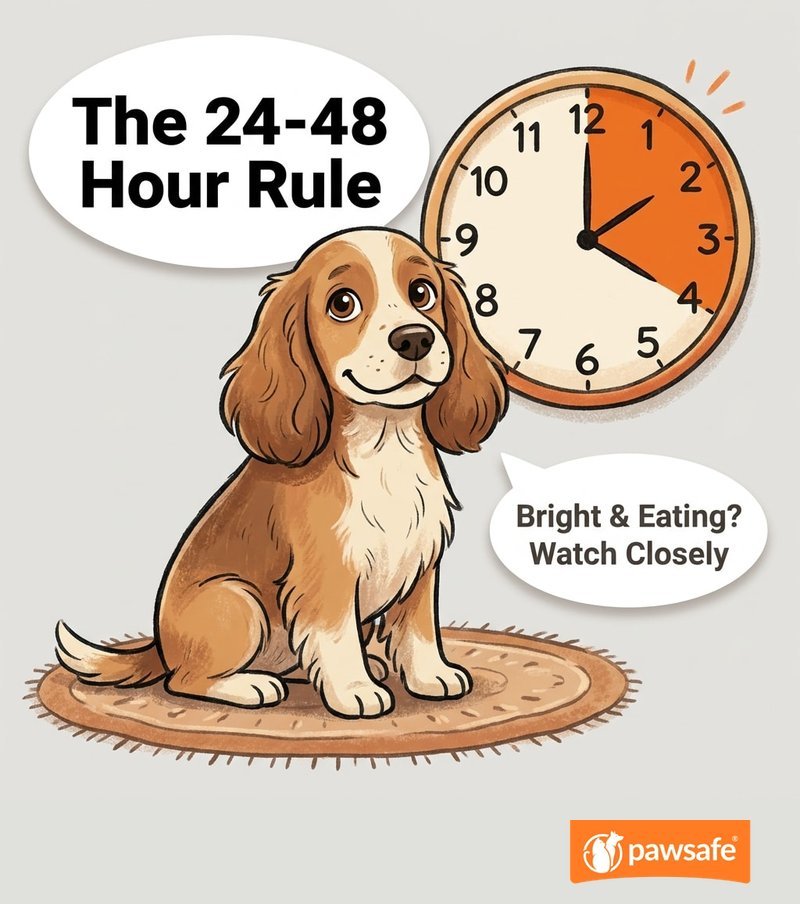
For a healthy adult acting completely normal, the rule of thumb is to watch closely for the first 24 hours. If the stool is clearly firming up, you can keep monitoring. If it isn’t improving - or if it reaches 48 hours - it’s time to call your vet, because persistent diarrhea has causes worth finding (parasites high among them). If it’s already stretched to the three-day mark, don’t keep waiting; book the visit.
Puppies, seniors, toy breeds, and dogs with health conditions get a much shorter leash - they dehydrate faster and have less reserve, so call sooner rather than watching the clock.
Daily Support For Healthy Digestion
Multi-strain probiotic soft chews that help maintain gut balance and stool quality in an easy, tasty format.
Shop Now 👉Vet Approved Formula • 90-Day PawSafe® Promise
The 48-Hour Home-Care Plan (For a Dog Who’s Otherwise Fine)
If your dog is bright, drinking, and comfortable with no red flags (below), here’s the supportive care vets generally recommend. Checking with your vet team first is always safest.
- Keep water available and watch that they drink. Diarrhea drains fluid; a dog who stops drinking has left the “acting fine” category.
- Feed small, bland meals. A vet-recommended digestive diet is ideal. As a short-term stand-in with your vet’s okay, offer plain boiled skinless chicken (or lean turkey) with plain white rice, in several small meals. Use white rice, not brown - it’s lower in fiber and easier to digest during an upset. No butter, oil, salt, or seasoning. (Chicken and rice isn’t a complete diet, so it’s a few-day bridge, not a long-term meal.)
- Consider plain canned pumpkin. A spoonful of pure pumpkin - never spiced pie filling - adds soluble fiber that helps some dogs firm up. It’s an optional helper, not a cure. Our full bland diet for dogs guide walks through portions and timing.
- Don’t reach for human anti-diarrhea medicine. Products like loperamide (Imodium) and Pepto-Bismol can be genuinely risky for dogs - some herding breeds carry a gene that makes loperamide dangerous, bismuth turns stool black and can hide a warning sign, and either can mask the very information your vet needs. If it feels like medicine is called for, that’s a vet call.
- Transition back slowly. Once stools are normal for a day, mix regular food back in over two to three days. Racing back to a full bowl is the classic relapse.
A note on fasting: the old advice to withhold food has softened. For a dog with diarrhea but no vomiting, current veterinary-nutrition guidance generally favors small, frequent, easy-to-digest meals, because the gut heals better with gentle nutrition. Never fast a puppy, a toy or small dog, a diabetic dog, a senior, or a pregnant, nursing, or medically fragile dog without your vet’s specific say-so.

When to Worry: Red Flags and When to See a Vet
This is the half that matters most. A wagging tail does not outrank these signs.
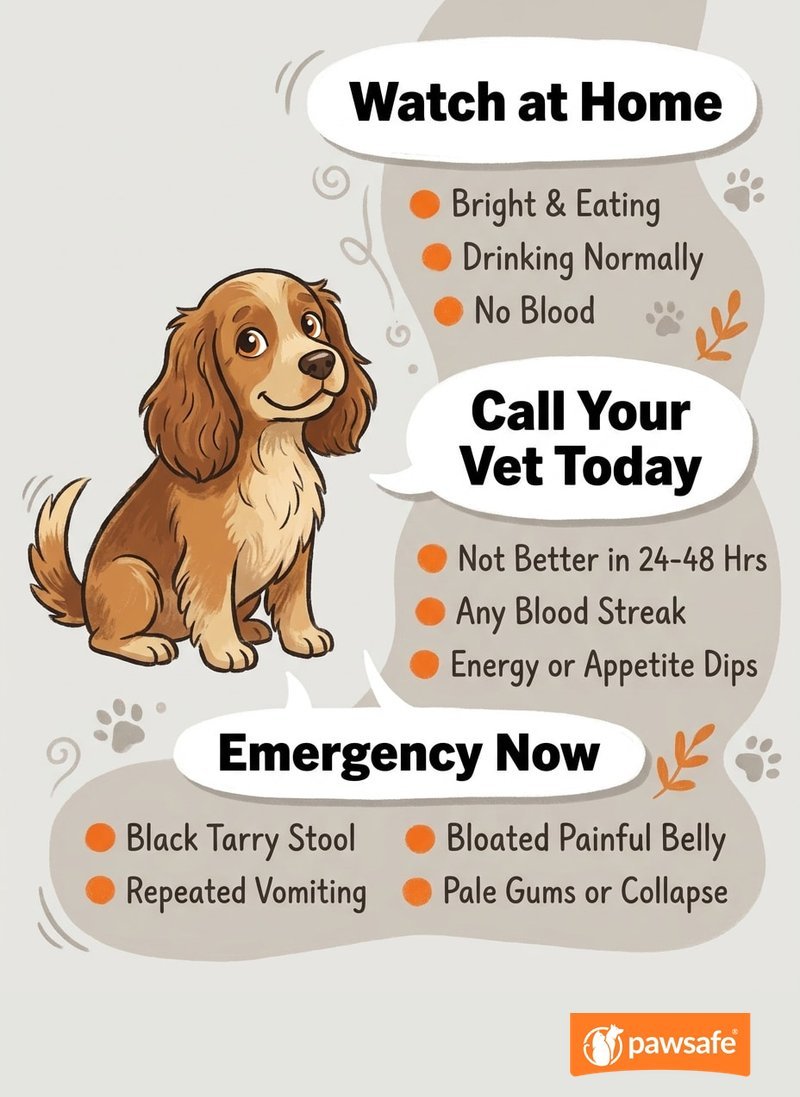
Monitor at home (24-48 hours) if your dog is bright, eating, drinking, and playful, the stool is loose but has no blood, and things are trending better.
Call your vet today if:
- Diarrhea hasn’t improved in 24 hours or reaches 48 hours
- Your dog is going many times, or you see mucus and straining that won’t settle
- There’s any fresh blood - even a small streak (your vet will decide whether to watch or examine)
- Energy, appetite, or drinking dips at all
- You spot dehydration signs: dry or tacky gums, sunken eyes, or skin that’s slow to spring back when gently lifted
- Your dog is a puppy, senior, tiny breed, pregnant, or has a health condition
Head to an emergency vet now if you see:
- Black, sticky, tar-like stool, a large amount of blood, or jelly-like bloody diarrhea
- Repeated vomiting alongside the diarrhea, or an inability to keep water down
- A bloated, tight, or painful belly - especially with repeated retching that brings nothing up (a possible life-threatening bloat)
- Pale, grey, or blue gums, weakness, or collapse
- Lethargy, hiding, or refusing both food and water
- A known or suspected toxin, medication, or swallowed object (sock, bone, corn cob, string)
When in doubt, call. Vet teams triage these calls all day and would far rather hear from you early. Cornell’s Riney Canine Health Center and the American Kennel Club both offer solid owner-facing guidance on these thresholds.
Dog Vomiting and Diarrhea but Acting Normal: What to Do
This is the version that deserves a lower threshold for calling. When a dog has vomiting and diarrhea but is acting normal, the worry isn’t the wagging tail - it’s the math: losing fluid from both ends dehydrates a dog much faster than diarrhea alone, and nausea can stop them replacing it.
One isolated vomit plus a loose stool in an otherwise bright, comfortable adult who keeps water down may still be mild - but call your regular vet for guidance and watch more closely than you would for diarrhea by itself.
Treat it as urgent if the vomiting repeats or continues, water comes back up, you see blood or coffee-ground material in the vomit, the belly looks painful or swollen, or energy drops. And for a puppy or an unvaccinated dog, vomiting plus diarrhea always warrants prompt veterinary screening for parvovirus - which can be serious even when there’s no blood in the stool.
What the Vet Will Do
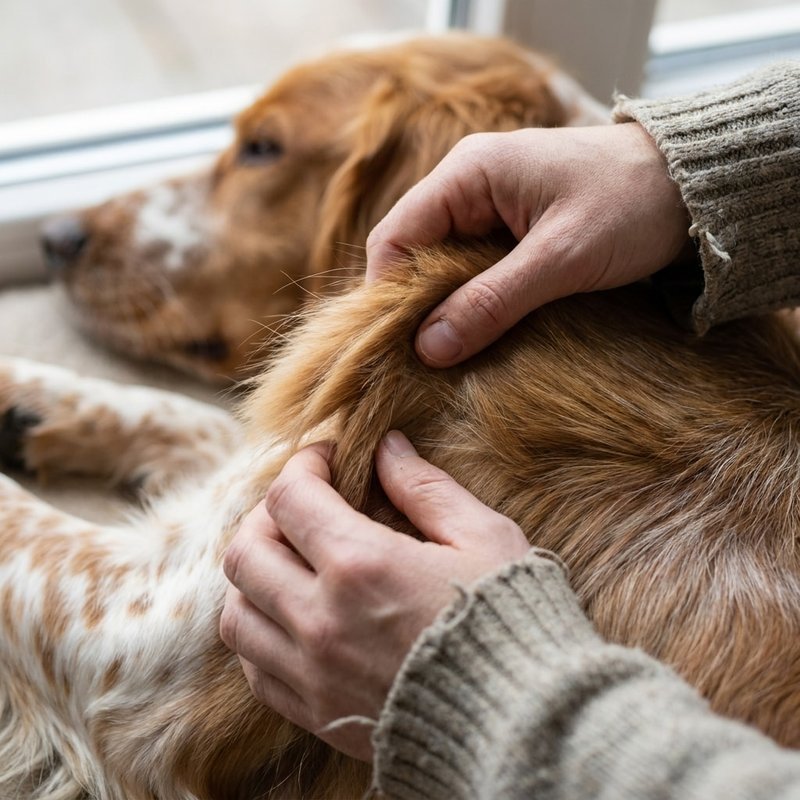
A diarrhea visit is routine, not scary. Your vet will take a history - diet, treats, garbage raids, travel, stress, vaccination and parasite-prevention status - and examine your dog’s hydration, gums, belly, and temperature. From there they may run a fecal test (parasites and giardia hide from the naked eye), bloodwork to check hydration and organ function, a parvo test for puppies or unvaccinated dogs, or an x-ray or ultrasound if they suspect an obstruction. Treatment depends on the cause and can be as simple as fluids and a digestive diet. Notably, antibiotics are not routinely needed for mild cases - so don’t be surprised if your vet skips them. Bringing a fresh stool sample and a quick phone photo or log of what you’ve seen genuinely speeds things up.
Do Probiotics Help a Dog With Diarrhea?
Honestly? Sometimes, modestly - and the evidence is mixed. A few product-specific studies found a canine probiotic or synbiotic shortened loose stool by roughly a day, while others found no meaningful difference, and expert reviews describe the overall evidence as limited. So here’s the fair version: a vet-recommended dog probiotic is a reasonable optional adjunct that may help some dogs recover a little faster or steady a stress- or diet-related wobble - not a cure, and never a substitute for hydration, a diagnosis, or treatment.
Where a probiotic earns its place is everyday gut support and smoothing the bumps - a stressful weekend, a diet change, a sensitive stomach. Our Probiotic Soft Chews pair a multi-strain probiotic blend with prebiotic fiber, pumpkin, and flaxseed in a chicken-flavored chew, formulated to support a balanced gut and normal, firm stools over time. If your dog is genuinely unwell, though, skip the DIY and call your vet - gear and supplements support a healthy dog, they don’t treat a sick one.
Gut & Immune Support In One Chew
Targeted strains assist normal digestion while supporting natural immune defenses—simple once-a-day routine.
Shop Now 👉Vet Approved Formula • 90-Day PawSafe® Promise
Frequently Asked Questions
Is it normal for a dog to have diarrhea but act fine?
It’s common for a dog with a mild, short-lived dietary or stress-related upset to stay bright, hungry, and playful. Normal behavior is reassuring, but diarrhea is still an abnormal sign and doesn’t reveal its cause. Watch closely and call your vet if it worsens, another symptom appears, or it hasn’t resolved within 24 to 48 hours.
How long can a dog have diarrhea before I worry?
For a healthy adult with no red flags, watch closely for the first 24 hours. If it isn’t clearly improving, call your vet; evaluation is wise if it reaches 48 hours. Puppies, seniors, and tiny dogs should be seen sooner. Blood, vomiting, pain, dehydration, lethargy, or rapid worsening overrides the clock.
My dog is vomiting and has diarrhea but acting normal - is that ok?
One isolated vomit plus one loose stool in a healthy adult may stay mild, but vomiting and diarrhea together lose fluid from both ends and dehydrate a dog faster, so call your vet for guidance. Repeated vomiting, blood, a painful or bloated belly, or any drop in energy is urgent. Puppies and unvaccinated dogs need prompt parvovirus screening.
What can I give my dog for diarrhea at home?
With your vet’s okay, offer fresh water and small, frequent meals of a vet-recommended digestive diet, or short-term plain boiled skinless chicken (or lean turkey) with plain white rice. Plain canned pumpkin - never pie filling - or a vet-recommended dog probiotic can be optional extras. Never give human anti-diarrhea medicines.
Make Digestive Care Effortless
Palatable soft chews your dog looks forward to, helping keep things regular and comfortable over time.
Shop Now 👉Vet Approved Formula • 90-Day PawSafe® Promise
Should I fast my dog or feed through it?
For diarrhea without vomiting, current veterinary-nutrition guidance generally favors small, frequent, easy-to-digest meals rather than a routine fast. Advice varies, so follow your vet. Never fast a puppy, toy or small dog, diabetic dog, senior, or medically fragile dog without specific veterinary instructions.
What colour of diarrhea is an emergency?
Black, sticky, tar-like stool is an emergency because it can mean digested blood. A large amount of fresh red blood, jelly-like bloody diarrhea, or blood alongside weakness, pale gums, vomiting, or pain is also an emergency. A small bright-red streak can come from straining but still deserves a same-day call to your vet.
Can stress cause diarrhea in a dog that seems fine?
Yes. Boarding, travel, moving, visitors, or a new pet can trigger stress colitis - often urgent, frequent, small stools with mucus and sometimes a little fresh blood, in a dog that otherwise feels well. Don’t assume stress, though, if the diarrhea is persistent, recurring, profuse, or comes with any red flag.
Do probiotics help with dog diarrhea?
Possibly, but not reliably. Some product-specific studies found a modest improvement in stool while others found no significant benefit, and expert reviews call the overall evidence limited. A vet-recommended canine probiotic is a reasonable optional adjunct for a mild upset - not a substitute for hydration, diagnosis, or treatment.
The Bottom Line
Most of the time, a dog who has diarrhea but is acting normal has a mild, passing upset - and a calm, methodical response is exactly right. Keep the water flowing, feed small and bland, skip the human medicine cabinet, and give it 24 to 48 hours.
- Behavior is a clue, not a diagnosis - bright and hungry is reassuring, but watch closely
- The clock matters - not improving in 24 hours, or still going at 48, means call the vet
- Some signs skip the queue - blood, black tarry stool, repeated vomiting, a bloated belly, or pale gums are emergencies
- The little ones need help sooner - puppies, seniors, and tiny dogs dehydrate fast
- Support the gut, don’t self-treat - a probiotic can help a healthy dog stay balanced, but a sick dog needs a vet
For gentle, everyday digestive support - and for smoothing the diet changes and stressful weekends that set off so many loose-stool days - a daily probiotic is a simple habit. Browse our gut health and probiotics guides for more, and when in doubt about your dog’s diarrhea, trust your gut and call your vet.