

Getting rid of bad dog breath means treating its cause, which is usually plaque and gum disease. Daily brushing with dog toothpaste is the best-supported home step, alongside vet-recommended dental chews, water additives, and dental diets that curb the bacteria behind the smell. Chew toys and fresh water help too, but home care can’t remove hardened tartar or reverse established gum disease. Because persistent bad breath is often the first sign of a dental or medical problem, a strong, sudden, or unusual odor calls for a vet.

“Dog breath” gets laughed off - but a mouth that genuinely stinks isn’t just a quirk of being a dog. Most of the time it’s coming from the same place your own morning breath does: bacteria and plaque on the teeth and gums. The good news is that it’s common and largely manageable. The important news is that persistent bad breath is usually a sign, and occasionally a sign of something bigger than dental buildup.
So this guide skips the gimmicks. You’ll learn how to get rid of bad dog breath with the home remedies that actually have evidence behind them, which popular “natural remedies” are myths (or even risky), how to brush your dog’s teeth safely, what different bad-breath smells can hint at, and the exact point where stinky breath becomes a reason to call your vet. It’s part of our dog dental care routine guide and built on veterinary sources.
Table of Contents
- Why Does Your Dog's Breath Smell Bad?
- How to Get Rid of Bad Dog Breath at Home
- Home Remedies for Dog Bad Breath: What Helps vs What's a Myth
- The One Thing Home Care Can't Fix
- When Bad Breath Means a Vet Visit
- A Simple Routine to Keep Breath Fresh
- Frequently Asked Questions
- The Bottom Line on Bad Dog Breath
Why Does Your Dog’s Breath Smell Bad?
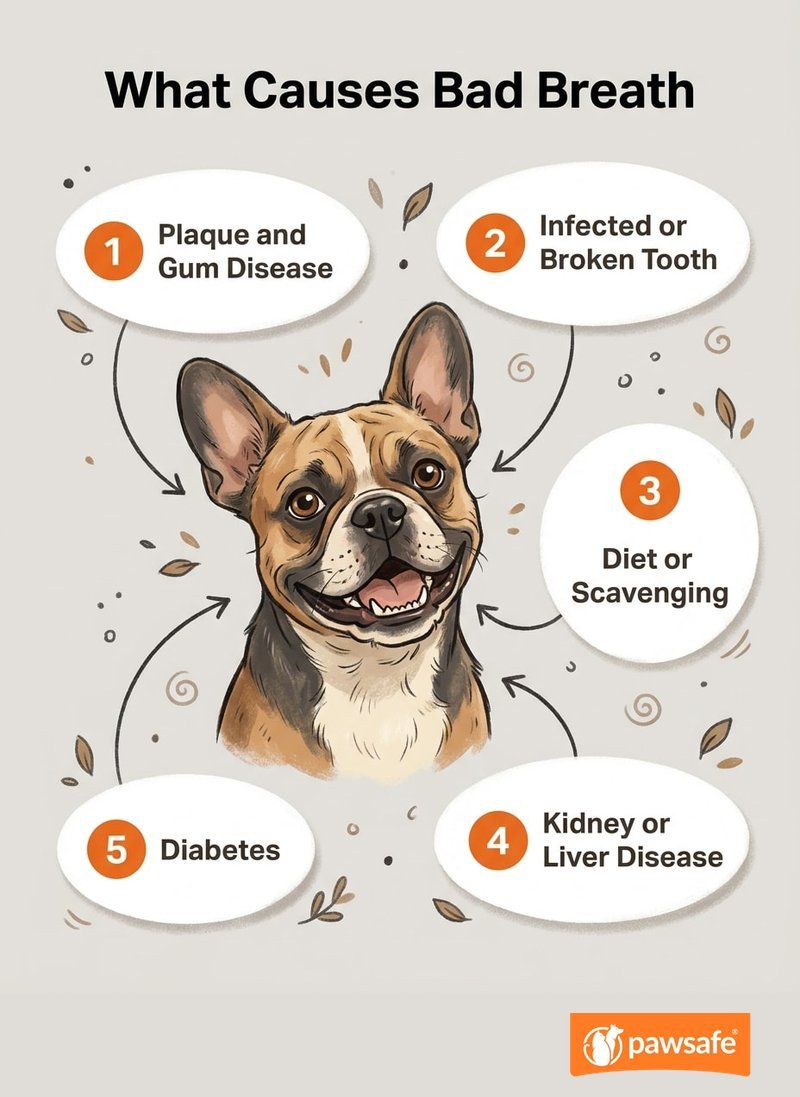
When it comes to dogs and bad breath, the first thing to know is that bad breath - halitosis - is a clinical sign, not a disease of its own, and most of it starts in the mouth. Bacteria form a film on the teeth and gumline; if it isn’t disrupted, minerals in saliva harden that plaque into tartar within a day or two, and inflammation can progress from reversible gingivitis to irreversible gum disease. It’s extremely common: veterinary authorities note that most dogs show some signs of periodontal disease by around age three.
Not every cause is dental, though. Possible sources include:
- Dental and gum disease (by far the most common): plaque, tartar, gingivitis, infected or broken teeth, tooth-root abscesses.
- Diet and behavior: fish-based food, scavenging, or eating feces (coprophagia) can all flavor the breath.
- Systemic illness, where the smell can be a clue (never a diagnosis):
| The smell | It may point to | Often comes with |
|---|---|---|
| Ammonia- or urine-like | Kidney disease | More thirst/urination, vomiting, weight loss, low energy |
| Sweet, fruity, or acetone-like | Diabetes (ketosis) | More thirst/urination, weight loss, weakness, vomiting |
| Persistently foul or decaying | Liver disease or an oral mass | Vomiting, diarrhea, jaundice, a visible lump, bleeding |
Those odor associations are clues worth acting on, not home diagnoses - a smell can’t confirm a disease. If your dog’s breath is specifically fishy, our guide on why a dog’s breath smells like fish digs into that one. For everything else, the pattern that matters is this: breath that briefly reflects a meal is very different from odor that’s persistent, worsening, or paired with other symptoms.
How to Get Rid of Bad Dog Breath at Home
Once your vet has ruled out (or treated) painful disease, day-to-day home care is what keeps breath fresh. Here’s what actually works, strongest first.
Brush Daily (the gold standard)
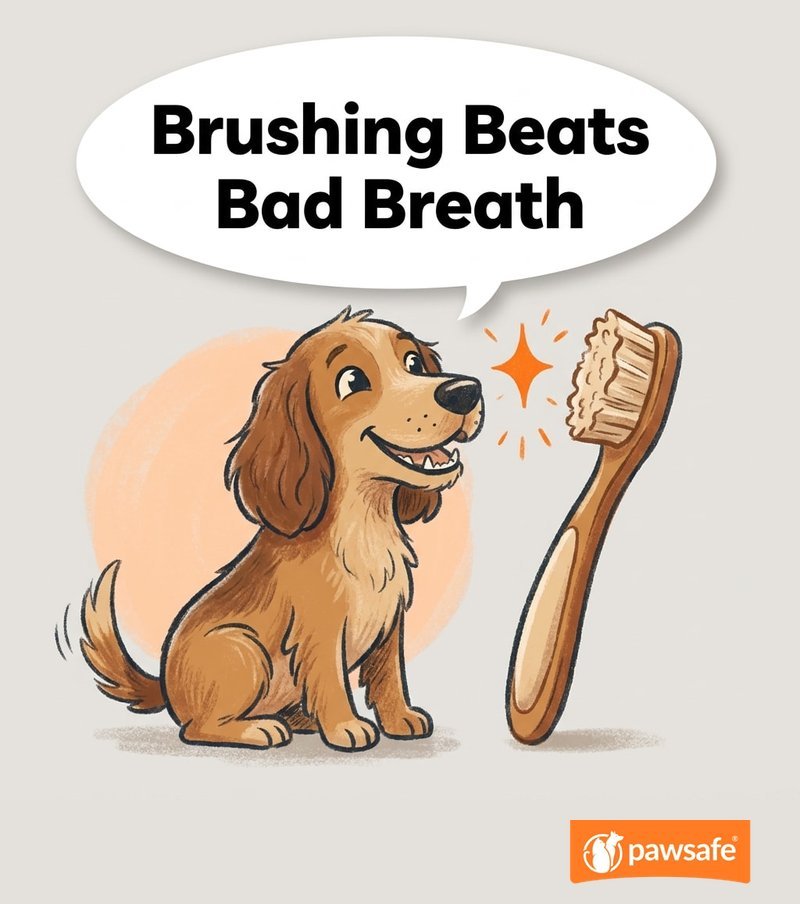
Nothing beats a toothbrush. Daily brushing physically disrupts soft plaque before it hardens, and it’s the most effective home measure there is - one controlled trial found daily brushing delivered more than three times the plaque control of a daily dental chew or dental diet. Aim for daily; every other day still helps.
Two rules make it safe and successful:
- Use dog toothpaste only - never human toothpaste. Human products can contain xylitol or fluoride; the FDA warns that xylitol can cause dangerous low blood sugar and liver injury in dogs. If your dog swallows a xylitol product, treat it as an urgent call to your vet or poison control.
- Introduce it slowly. Let your dog lick the toothpaste, then practice lifting the lip, then a few strokes along the outside of the teeth where they meet the gums. Build up over days or weeks, keep sessions short, and reward cooperation. If the gums look red, swollen, or bleed, have them checked before brushing - brushing sore gums hurts and can make your dog resist forever.
Add Proven Dental Chews and Diets
Some dental chews and specially engineered dental diets genuinely help control plaque and tartar - but benefits are specific to the tested product, and an ordinary crunchy kibble or a random chew doesn’t count. For products sold on a plaque- or tartar-control claim, a useful independent check is the VOHC Seal: the Veterinary Oral Health Council reviews trial data and lets products display “Helps Control Plaque” or “Helps Control Tartar” only when they meet its standards, so look for it on the exact product you’re considering.
One safety note on chews: skip anything rock-hard (antlers, hooves, real bones, ice), which can fracture teeth. A good rule is the thumbnail test - if you can’t dent it with your thumbnail, it’s too hard.
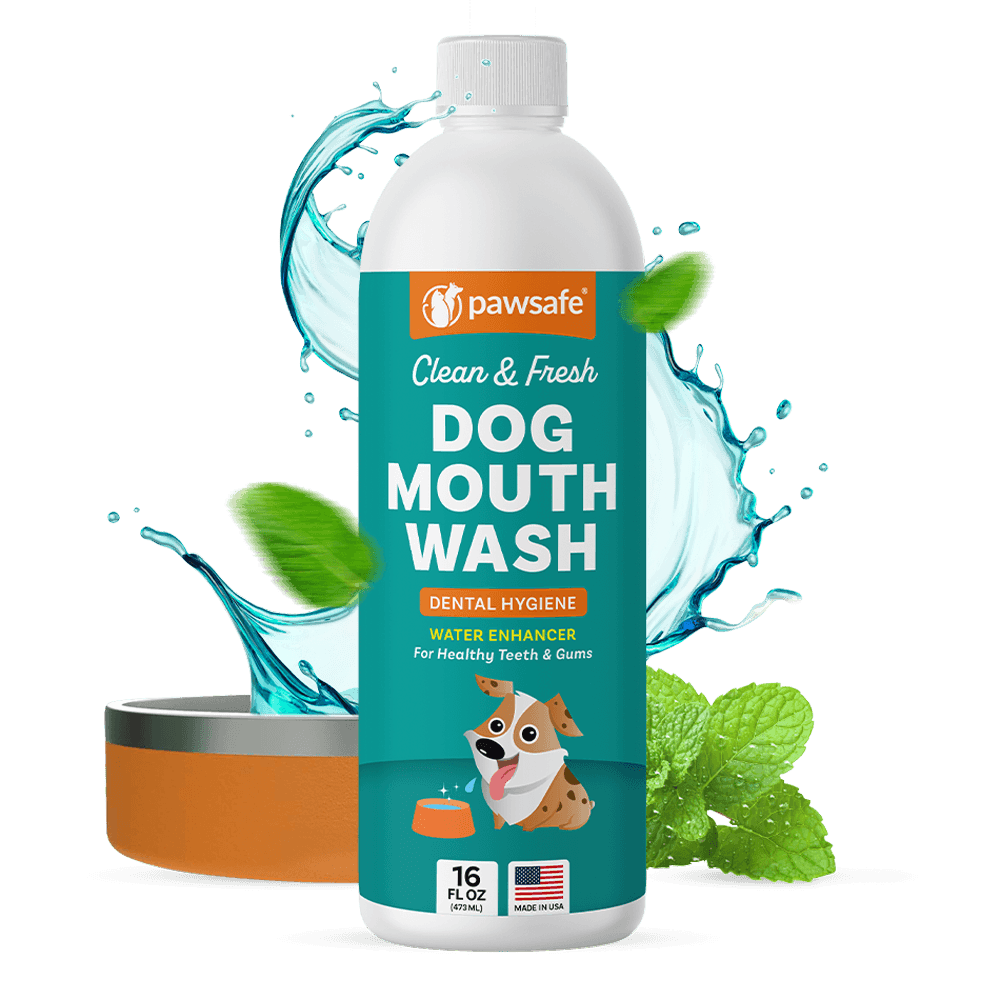
Fresh Breath The Easy Way
Just add to the water bowl to support cleaner mouths and noticeably fresher breath without daily brushing struggles.
Shop Now 👉Fresh Breath Guarantee • 90-Day PawSafe® Promise
Try a Dental Water Additive
For dogs who simply won’t accept a toothbrush, a dental water additive (“dog mouthwash”) you add to the bowl is an easy, passive way to support daily oral care. Some formulations have controlled evidence behind a plaque or tartar claim, and one study found a specific additive meaningfully reduced plaque when used daily after a professional cleaning. Keep expectations realistic, though: a water additive may help control plaque and freshen breath, but it can’t remove existing tartar or treat disease below the gumline, and it isn’t a substitute for brushing.
Mind the Diet, Toys, and Water
Feed a complete, appropriate diet (a proven dental diet is worth discussing with your vet), offer safe chew toys, and keep fresh water available. Water and crunch help rinse and reduce debris, but think of them as supporting players, not treatments.
Home Remedies for Dog Bad Breath: What Helps vs What’s a Myth
Search “natural remedy for dog bad breath” and you’ll get a lot of confident advice. Here’s the honest version:
- Coconut oil: no good evidence it treats halitosis or gum disease, and the extra oil and calories can upset the stomach. Not a dental treatment.
- Parsley: no persuasive evidence, and in large amounts it’s actually on the ASPCA’s toxic list - so skip concentrated parsley, oils, or supplements.
- Carrots and apple slices: fine as occasional low-calorie treats (remove apple core and seeds), but they don’t clean teeth or cure breath, and hard/frozen pieces can crack a tooth or cause choking.
- Yogurt: not a proven oral treatment, and never anything containing xylitol.
- Oral probiotics: an interesting area that’s still under investigation - promising but not proven, and not the same as spooning yogurt into the bowl.
The through-line: home remedies can freshen and maintain, but nothing you add to a bowl reverses gum disease. And please don’t make homemade rinses with hydrogen peroxide, baking soda, essential oils, or human mouthwash - those can do real harm.
The One Thing Home Care Can’t Fix
Here’s the honest limit of everything above: once plaque hardens into tartar, brushing and additives can’t remove it, and once gum disease damages the tissue and bone that hold a tooth, that damage doesn’t grow back. That’s a job for a professional.
A veterinary dental cleaning - often called a COHAT (comprehensive oral health assessment and treatment) - is done under anesthesia so the team can take dental X-rays, probe each tooth, and clean below the gumline where disease actually lives, then treat any problem teeth. Most of a tooth is under the gums, which is why AAHA and the veterinary dental college consider “anesthesia-free” scraping of the visible surfaces cosmetic and inadequate. And please don’t try to scrape tartar off at home - it’s ineffective and can injure your dog’s mouth. If your dog’s bad breath won’t quit, a professional cleaning is usually the missing piece.
When Bad Breath Means a Vet Visit
Book a vet check for persistent, worsening, sudden, or unusually strong breath - and for red, swollen, or bleeding gums; visible tartar or pus; loose, broken, or discolored teeth; drooling or bloody saliva; pawing at the mouth; dropping food or chewing on one side; facial swelling; an oral lump; or unexplained weight loss.
Treat it as urgent - same-day care - if the bad breath comes with any of these:
- Sweet/fruity or ammonia/urine-like breath plus vomiting, weakness, appetite loss, or a big jump in thirst and urination
- Repeated vomiting or severe diarrhea, collapse, or trouble breathing or swallowing
- Inability to eat or drink, rapid facial swelling, or uncontrolled mouth bleeding
- A suspected toxin, or a stick, bone, or string lodged in the mouth
Some dogs deserve a lower threshold: puppies (retained baby teeth, swallowed objects), seniors (gum disease and oral tumors rise with age), small, toy, and flat-faced breeds (crowded teeth), and dogs with diabetes, kidney, or liver disease. If you’re weighing whether a bowl additive is enough, our honest take on whether dog water additives work can help you set expectations.
Daily Water Additive For Oral Freshness
Helps maintain better breath and oral hygiene as your dog drinks, keeping cuddle moments pleasant.
Shop Now 👉Fresh Breath Guarantee • 90-Day PawSafe® Promise
A Simple Routine to Keep Breath Fresh
Consistency beats heroics. A realistic weekly rhythm looks like:
- Daily: brush along the outside of the teeth with dog toothpaste; use a dental water additive per its label; offer one appropriately sized, supervised dental chew if you like.
- Weekly: peek in the mouth for redness, tartar, broken teeth, or lumps, and notice any change in odor, appetite, or chewing.
- Yearly (or as your vet advises): a professional dental evaluation, with cleanings roughly every one to two years for many dogs and more often for small or high-risk breeds.
Think of it as a hierarchy: a healthy mouth (treated by your vet when needed) first, then daily brushing, then evidence-backed extras like chews and a water additive to hold the line between cleanings.
Where does a product like ours fit? Our Dog Mouthwash is a dog-specific water additive you add to the bowl - a low-effort way to support daily oral care and fresher breath, especially for dogs who resist brushing. In plain terms: it may help support daily oral care and fresher breath, but it can’t remove established tartar or treat the underlying causes of persistent bad breath, and it’s meant to work alongside brushing and regular veterinary dental care, not replace them. It’s backed by our 90-day money-back promise if it’s not a fit for your dog.
Frequently Asked Questions
How do I get rid of my dog’s bad breath?
Start by finding the cause - persistent bad breath usually comes from plaque, gum disease, or an infected tooth. Have a vet examine ongoing or worsening odor, and once any painful disease or hardened tartar is treated, keep breath fresh with daily tooth brushing plus evidence-backed dental products. Home care controls new plaque and odor; it can’t remove existing tartar on its own.
What’s the best home remedy for dog bad breath?
Daily brushing with dog-specific toothpaste has the strongest evidence by far. It’s prevention and maintenance rather than a cure - it disrupts soft plaque before it hardens, but it won’t remove established tartar or treat an infection. Never use human toothpaste, which can contain xylitol or fluoride that are unsafe for dogs.
Can I fix my dog’s breath without brushing?
A dental water additive, a proven dental chew, or a dental diet can help control plaque or tartar and may freshen breath, which helps for dogs who won’t tolerate a toothbrush. But these passive options generally don’t match daily brushing, and none of them can remove existing tartar or treat disease below the gumline.
Turn Plain Water Into Breath Support
A simple routine that supports a cleaner mouth and fresher kisses over time—no messy brushing required.
Shop Now 👉Fresh Breath Guarantee • 90-Day PawSafe® Promise
Is bad dog breath a sign of illness?
It can be. Dental and gum disease is the most common cause, but infected teeth, something stuck in the mouth, oral growths, kidney disease, diabetes, and liver disease are all possible. The smell alone can’t identify the problem, so persistent or unusual bad breath deserves a vet’s assessment.
What can I give my dog for bad breath?
Choose dog-specific, properly labeled dental products - ideally ones with real evidence behind a plaque or tartar claim - and ask your vet about dental chews, water additives, or dental diets. Do not give human toothpaste or mouthwash, xylitol-containing products, essential oils, or homemade chemical rinses, which can be dangerous for dogs.
Why does my dog’s breath suddenly smell so bad?
A sudden odor can follow scavenging, eating feces, fish-based food, or something lodged in the mouth. It can also signal a broken or infected tooth, an oral injury, or an acute illness. Sudden strong odor with vomiting, weakness, appetite change, excess thirst or urination, swelling, bleeding, or pain warrants prompt veterinary care.
Do dog water additives or mouthwash work for bad breath?
Some specific formulations help control plaque or tartar when used consistently, especially after a professional cleaning, and a VOHC Accepted claim is good product-specific evidence. Water additives are adjuncts, though: they don’t replace brushing, remove established tartar, reverse gum disease, or substitute for veterinary dental care.
The Bottom Line on Bad Dog Breath
Knowing how to get rid of bad dog breath really comes down to treating the cause and then staying consistent. For most dogs that means a healthy mouth to start with (your vet’s job when there’s tartar or infection), daily brushing with dog toothpaste, and evidence-backed extras like chews and a water additive to keep plaque and odor in check between cleanings. Skip the myths and the homemade rinses, never reach for human toothpaste, and remember that no bowl additive can undo established gum disease.
Above all, treat persistent bad breath as information. If the smell is strong, sudden, or unusual - or comes with vomiting, weight loss, changes in thirst, bleeding gums, or a dog who just seems off - don’t cover it up; call your vet. For a full daily plan and more dental guides, browse our dog dental care library, and here’s to a lot more happy, fresh-breath greetings at the door.