


Dog water additives can help modestly: mixed into drinking water, they may reduce oral bacteria, slow new plaque, and freshen breath. They work best as a convenient daily add-on, especially for dogs that won’t tolerate brushing. Their limits matter - they don’t reach below the gumline, don’t remove hardened tartar, and don’t treat gum disease, so they aren’t a substitute for brushing or professional cleanings. Favor products with real evidence, never use a product containing xylitol, and see a vet for red or bleeding gums.
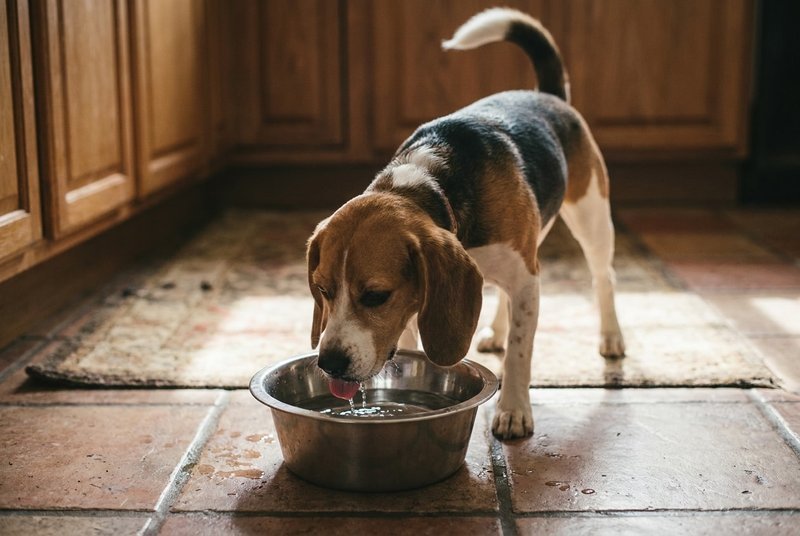
Your dog’s breath could knock you over, brushing their teeth is a nightly wrestling match, and then you spot it: a bottle that promises fresh breath and cleaner teeth with a few drops in the water bowl. No brushing required. It sounds too easy.
So do dog water additives actually work, or do they just mask the smell? The honest answer is somewhere in the middle - and worth understanding before you rely on one.
This guide gives you the straight, vet-informed version: what a dog water additive can and can’t do, how to choose a safe and effective one, how to use it, which homemade ideas are worth trying, and the signs that mean it’s time to see a vet instead. We’ve helped more than 300,000 pet parents care for their dogs, and everything below leans on veterinary sources. It matters, too: surveys estimate that 80% or more of dogs show some dental disease by age three, yet only a small share of owners - around 7% in one survey - brush daily.
Table of Contents
- What Is a Dog Water Additive?
- Do Dog Water Additives Actually Work?
- How Water Additives Work (and What's in Them)
- Are Dog Water Additives Safe?
- How to Choose a Safe, Effective Dog Water Additive
- How to Use a Water Additive (and How Long It Takes)
- Homemade Water Additive Options
- What Water Additives Can't Do - When to See a Vet
- The Best At-Home Dental Routine (Where Additives Fit)
- Frequently Asked Questions
- The Bottom Line
What Is a Dog Water Additive?
A dog water additive (sometimes called a dental water additive or dog mouthwash) is a liquid you measure into your dog’s drinking water. As your dog drinks throughout the day, the formula washes over their teeth and gums to help cut oral bacteria, slow plaque, and freshen breath - no toothbrush needed. That hands-off convenience is the whole appeal, which is exactly why the category has exploded.
Do Dog Water Additives Actually Work?
Here’s the honest answer: some do - modestly - and only as an add-on.
The better-studied formulations can slow how fast new plaque and tartar build up and can improve breath. In one 30-day study, dogs given a treated-water additive after a professional cleaning had roughly 47% less plaque and 24% less tartar than the control group. But note the setup: that benefit was measured after a professional clean, as prevention of re-accumulation - not as a treatment for teeth that were already dirty.
And results don’t transfer across the whole category. A strong result for one formula doesn’t mean every bottle labeled “water additive” or “enzymatic” works. In one study of dogs that hadn’t been scaled, a water additive used alone didn’t meaningfully improve dental health - it did better when paired with brushing or a daily chew.
The bigger limitation is physical. As the American Veterinary Medical Association points out, most dental disease happens below the gumline, where a liquid rinsing through the mouth simply can’t reach. And once plaque hardens into tartar, it can only be removed by professional scaling. So a water additive is a maintenance and prevention helper, not a treatment - it won’t clean below the gums, dissolve tartar, or cure gum disease.
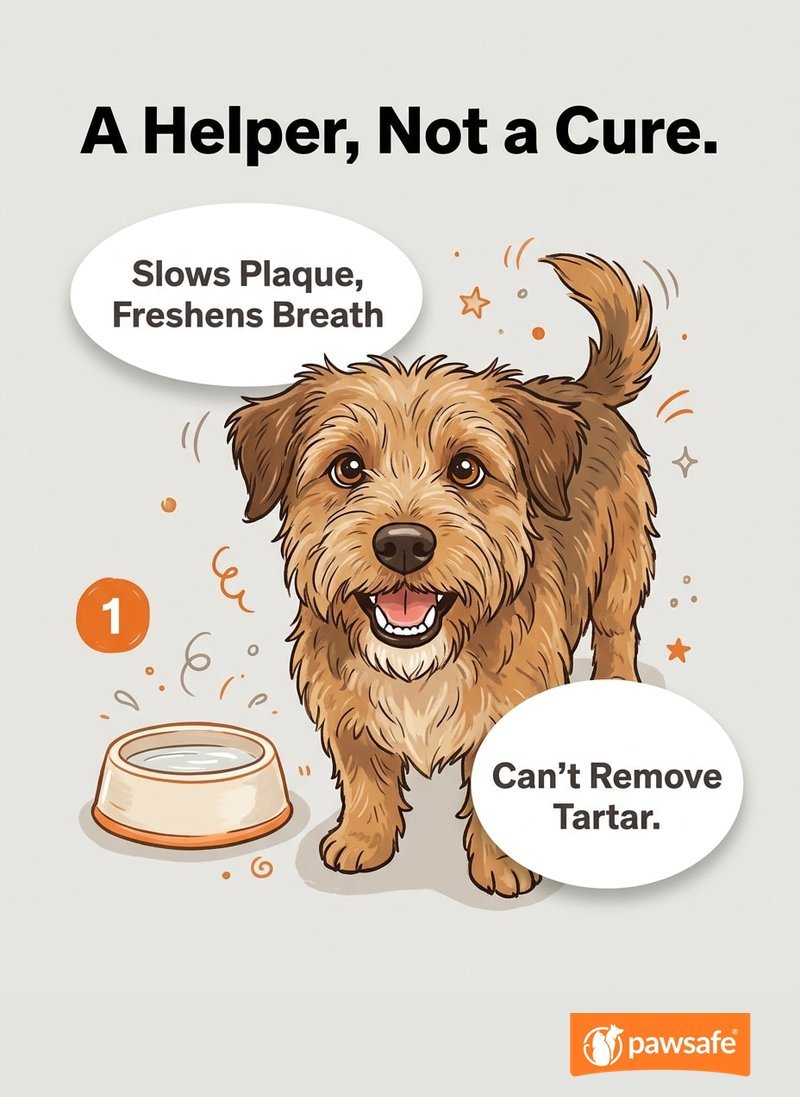
How Water Additives Work (and What’s in Them)
Water additives give brief, repeated chemical contact every time your dog drinks. Unlike a toothbrush, they don’t physically scrub the teeth - they rely on their ingredients to interfere with bacteria and biofilm and to neutralize odor. Common ones you’ll see on labels:
- Stabilized chlorine dioxide - an oxidizing antimicrobial (also used to treat drinking water) that targets bacteria.
- Zinc (gluconate or chloride) - binds the sulfur compounds behind bad breath and can slow odor-causing bacteria.
- Sodium citrate / citric acid - used to help manage plaque, tartar, and mouth pH.
- Cetylpyridinium chloride (CPC) and enzyme systems - antibacterial approaches used in some formulas.
- Sodium bicarbonate (baking soda) and mint oils - buffer acids and freshen breath (mint is mostly for flavor and a fresher-smelling result).
The key thing to remember: it’s the finished, tested formulation that matters, not any single buzzword ingredient. And none of it helps if your dog won’t drink the treated water - so palatability and steady hydration come first.
Are Dog Water Additives Safe?
Most reputable, dog-specific additives are safe when used exactly as directed. A few firm rules keep it that way:
- Never add xylitol - this sugar substitute is toxic to dogs, causing a dangerous blood-sugar crash and, at higher doses, liver injury, with signs starting within 10-60 minutes. The FDA warns that some human toothpastes and mouthwashes contain it.
- Never use human mouthwash - it may contain xylitol, alcohol, or fluoride that aren’t meant to be swallowed by dogs.
- Don’t improvise with chlorhexidine or concentrated essential oils in the water bowl - those are for specific, directed use, not bowl dosing.
- Introduce one product at a time, follow the measured dose, and stop if your dog refuses water, vomits, has diarrhea, or shows mouth irritation - and offer plain water so hydration never suffers.
Check with your vet first if your dog is pregnant or nursing, very young, has kidney, liver, heart, or metabolic disease, is on a restricted diet, or takes medications. Formulas differ, so the label and your dog’s history should guide the decision.
Fresh Breath The Easy Way
Just add to the water bowl to support cleaner mouths and noticeably fresher breath without daily brushing struggles.
Shop Now 👉Fresh Breath Guarantee • 90-Day PawSafe® Promise
How to Choose a Safe, Effective Dog Water Additive
A good additive comes down to a few honest checks, not a single badge:
- A clear label and a dose you can measure - a stated dose per volume of water, an ingredient list you recognize, and a taste your dog will actually accept.
- No xylitol, ever, and no borrowed human products.
- Your dog keeps drinking normally on it - hydration matters more than any claimed benefit.
- Realistic expectations - an additive slows new plaque and freshens breath; it won’t remove tartar or treat disease.
- Independent evidence, where it applies. If a product is sold on a plaque- or tartar-control claim, the VOHC Seal of Acceptance is the best independent check: the Veterinary Oral Health Council reviews a specific product’s trial data and grants a “Helps Control Plaque” and/or “Helps Control Tartar” seal only when it meets set standards (broadly, at least a 15% reduction per trial). It’s product- and claim-specific, not a whole-brand or single-ingredient endorsement, and “natural” or “vet formula” on a label is not the same thing. You can check the current list at vohc.org. A breath-freshening additive that makes no clinical plaque claim is honestly a daily convenience, so the seal is less central to it.
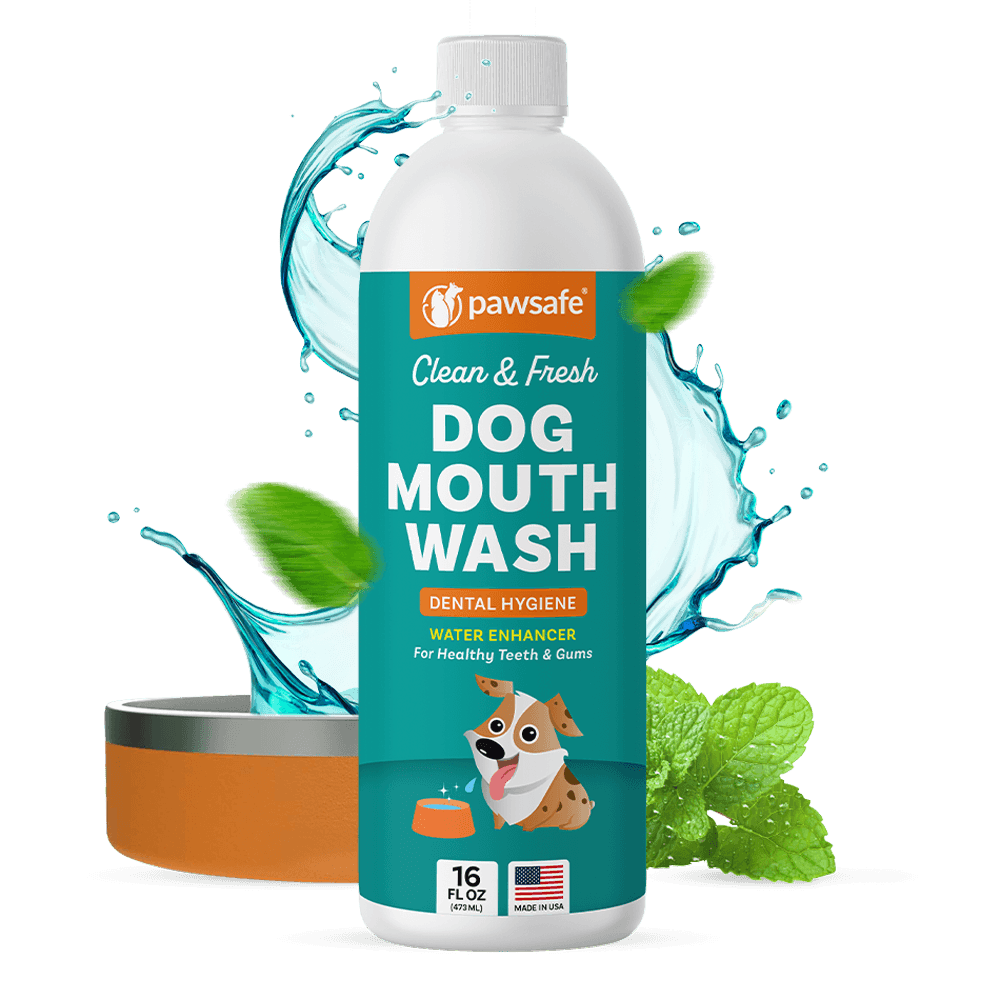
If brushing simply isn’t happening at your house, our Dog Mouthwash is one no-brush option - a bowl-added additive (1-2 tablespoons per 16 oz of water) formulated with ingredients like sodium bicarbonate, peppermint and spearmint oils, and stevia to freshen breath and help manage everyday plaque. We’re honest about what it is: a convenient daily oral-hygiene add-on for dogs that tolerate the taste, not a replacement for brushing or a vet cleaning - and not a substitute for care if your dog already has dental disease.
How to Use a Water Additive (and How Long It Takes)
Using one well is mostly about consistency and the correct dose:
- Follow the exact dose on the label - concentrations differ between products, so don’t assume one ratio fits all.
- Measure the water, don’t eyeball it by bowl size.
- Make a fresh batch at each refill (or as the label says) rather than topping off an old mixture.
- Wash the bowl daily - it’s one of the germiest items in the house.
- Watch your dog’s drinking. If they drink less, remove the additive and give plain fresh water. Hydration beats finishing the bottle.
- Don’t up the dose for stronger breath or visible tartar - more isn’t better or safer.
As for timing: there’s no validated “works in X days.” Minty breath can seem fresher right away, but that’s a sensory change, not plaque control. Canine studies usually assess plaque over about two to four weeks, so give a tolerated additive a couple of weeks as ongoing maintenance - and don’t keep waiting for it to “kick in” if breath is worsening or gums look inflamed.
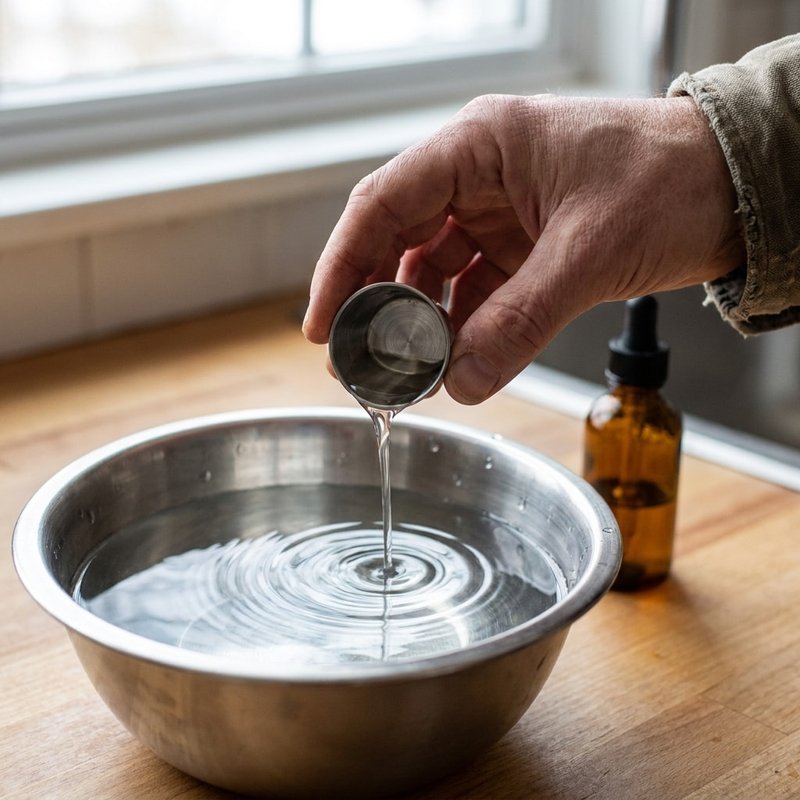
Homemade Water Additive Options
Prefer a DIY route? A few natural ideas get passed around, but be realistic - none has strong canine dental evidence, and none removes tartar or treats disease:
- Curly-leaf parsley - a tiny amount as a food can briefly freshen breath, but use only curly-leaf (not flat/Italian), keep it small, and check with your vet, since parsley in large amounts carries cautions.
- Virgin, unrefined coconut oil - popular online, but there’s no good evidence it controls plaque in water, it doesn’t disperse well, and it’s high in fat (a pancreatitis risk for some dogs).
- A little fresh mint - may briefly change breath odor; never substitute concentrated peppermint or spearmint essential oil.
- Crunchy carrot or apple pieces - these are snacks, not additives; any wiping effect is minor and unproven.
For a fuller rundown of gentle at-home rinses, see our guide to homemade dog mouthwash. The honest bottom line: homemade options are, at best, a mild and short-lived breath freshener - not a fix for real dental disease.
What Water Additives Can’t Do - When to See a Vet
A water additive is not enough, and it’s time for a veterinary dental exam, if your dog has:
- Persistent or worsening bad breath
- Yellow or brown tartar you can see
- Red, swollen, receding, or bleeding gums
- Loose, broken, missing, or discolored teeth
- Pain, reluctance to chew, chewing on one side, or dropping food
- Excessive drooling, bloody saliva, or pawing at the mouth
- Any lump or swelling of the face or jaw
These are recognized signs of oral disease - and because so much of it sits below the gumline, they need a professional exam (and often an anesthetized cleaning with dental X-rays), not another bottle. Facial swelling, oral bleeding, marked pain, or refusal to eat deserve a prompt call.
The Best At-Home Dental Routine (Where Additives Fit)
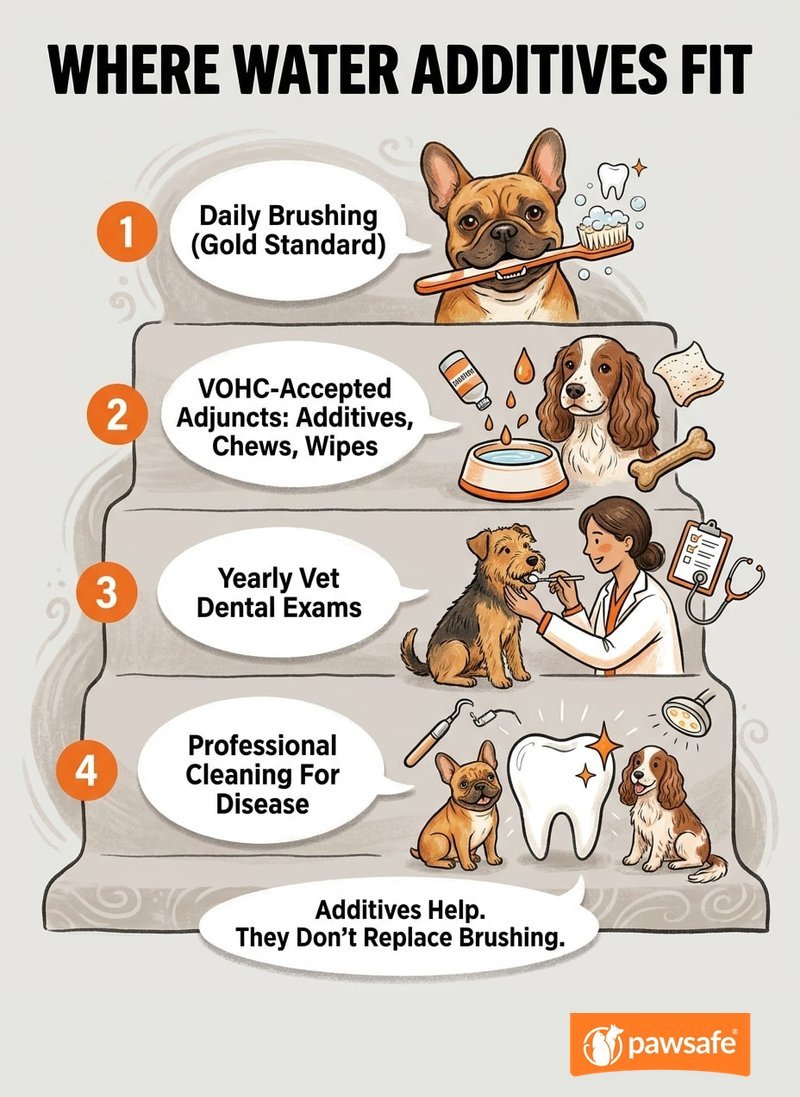
Think of your dog’s dental care as a hierarchy, with additives as one useful layer - not the foundation:
- Daily brushing is the home-care gold standard, because it mechanically removes plaque before it hardens. (Never force it over painful, inflamed gums.)
- Evidence-backed adjuncts - a proven additive, chew, wipe, or gel - supplement brushing, or offer a realistic option when brushing truly isn’t possible.
- Regular professional exams, at least yearly, so a vet can check below the gumline and advise when a cleaning is due.
- Professional treatment for any existing disease.
If your dog flatly refuses a toothbrush, a sensible plan is a vet exam first, then a well-dosed water additive plus a suitable dental chew, with regular lip-lifts to check for tartar or red gums. For alternatives to the toothbrush, see how to clean dog teeth without brushing, and for the full picture, our dog dental care routine guide ties it all together.
Daily Water Additive For Oral Freshness
Helps maintain better breath and oral hygiene as your dog drinks, keeping cuddle moments pleasant.
Shop Now 👉Fresh Breath Guarantee • 90-Day PawSafe® Promise
Frequently Asked Questions
Do dog water additives really work?
Some do, modestly. The best-studied formulations can slow how fast new plaque and tartar build up and can freshen breath, working as a daily add-on - especially for dogs that won’t tolerate brushing. But results vary a lot by product, and in one study a water additive used alone didn’t meaningfully improve dental health. They don’t remove existing tartar or treat gum disease.
Are dog water additives safe?
Reputable dog-specific products are generally designed to be swallowed at their labeled dilution. Safety still depends on the exact formula, the dose, your dog’s health, and whether they keep drinking normally. Never use human mouthwash or add xylitol or concentrated essential oils to your dog’s water - those can be toxic.
How long do dog water additives take to work?
There’s no universal timeline. A minty additive can make breath smell fresher almost immediately, but that’s different from reducing plaque. Canine studies usually measure plaque over about two to four weeks, so give a tolerated additive a couple of weeks - while watching that your dog keeps drinking normally. If breath stays bad or gums look inflamed, see a vet rather than waiting.
Do water additives replace brushing my dog’s teeth?
No. Daily brushing is the most effective at-home way to remove plaque before it hardens, and water additives can’t scrub the teeth or reach below the gumline. Think of an additive as a helpful add-on - or a realistic option when brushing truly isn’t possible - not a replacement for brushing and professional dental care.
Turn Plain Water Into Breath Support
A simple routine that supports a cleaner mouth and fresher kisses over time—no messy brushing required.
Shop Now 👉Fresh Breath Guarantee • 90-Day PawSafe® Promise
What is the VOHC seal?
The Veterinary Oral Health Council (VOHC) reviews trial data for a specific product and awards a “Helps Control Plaque” and/or “Helps Control Tartar” seal when it meets set standards (roughly a 15% or greater reduction per trial). The seal is product- and claim-specific - a useful signal that a water additive has real evidence behind it, and most relevant when a product is sold on a plaque or tartar claim. Check the current list at vohc.org.
Can I make a homemade dog water additive?
You can find DIY ideas like parsley, mint, or coconut oil, but the canine dental evidence is weak or absent and any effect is mild and short-lived. Some carry real cautions (parsley in large amounts, GI upset from oils), and you must never add xylitol or concentrated essential oils. Homemade mixes are not appropriate for a dog with visible dental disease.
Do water additives remove tartar?
No. Once plaque hardens into tartar (calculus), it can only be removed by professional scaling and polishing at the vet. A water additive may help slow how fast new tartar forms, but it can’t dissolve or scrape off what’s already there.
When should I take my dog to the vet for their teeth?
Book a dental exam for persistent or worsening bad breath, yellow or brown tartar, red, swollen, or bleeding gums, loose, broken, or discolored teeth, trouble eating or chewing on one side, drooling or pawing at the mouth, or any facial swelling. These point to dental disease that an additive can’t fix.
The Bottom Line
So, do dog water additives work? Yes - modestly, and in their lane. A good one can slow new plaque and freshen breath as a convenient daily add-on, which is genuinely useful for a dog that won’t sit still for a toothbrush.
Here’s what to remember about a dog water additive:
- It’s a helper, not a cure - it slows new plaque and freshens breath, but won’t remove tartar or reach below the gumline.
- Check the label for a clear dose and recognizable ingredients, and never a product containing xylitol.
- Make sure your dog keeps drinking - hydration comes first.
- Brushing and professional cleanings remain the higher-evidence standards.
- See a vet for red or bleeding gums, visible tartar, or any mouth pain.
Used honestly - as one layer of a bigger routine - a water additive can make fresh-breath days a lot more common. If brushing isn’t happening yet, an easy-to-use dental additive is a sensible place to start, and you can build the rest of the plan with our dog dental care guides. When something looks off in your dog’s mouth, though, your vet is the right next step.