
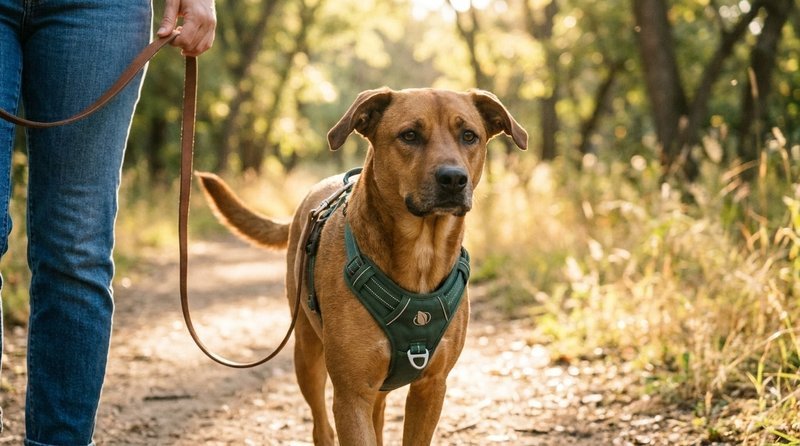
A harness for dogs with anxiety is a well-fitted, off-neck harness that adds security and calm control without adding stress. It keeps leash pressure off the throat, gives the handler steady control, and helps stop a panicking dog from backing out and bolting. Look for soft padding, several adjustment points, a snug escape-resistant fit, and easy, low-stress on and off. A harness is a management and safety tool, not a cure - it works best alongside reward-based training and veterinary guidance.
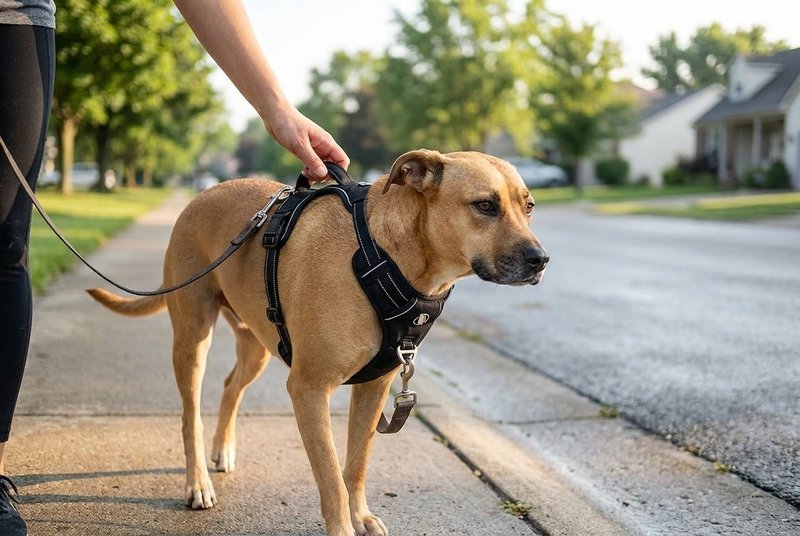
For an anxious dog, the scariest moment on a walk usually isn’t the walk itself. It’s the split second of panic - a garbage truck, a stranger, a dropped umbrella - when your dog tries to spin, flatten, and bolt. And the worst outcome isn’t a hard pull. It’s a dog who slips their gear and runs.
That’s why the right harness for dogs with anxiety matters so much, and why the wrong one makes everything harder. Gear that pinches the neck, wrestles over the head, or slips off when a dog reverses adds stress to a dog who already has too much of it.
Here’s the honest version most product pages won’t give you: a harness is a management and safety tool, not a treatment for anxiety. But the right one genuinely helps - keeping pressure off the throat, giving you calm control, and dramatically lowering the odds that a frightened dog escapes. This guide covers what a harness can and can’t do, the features that actually matter, our honest picks (ours and competitors’), and how to introduce it to a nervous dog without a fight. We test our gear on our own dogs, we’ve helped 300,000+ pet parents, and every claim here is backed by veterinary sources.
Table of Contents
- Do Harnesses Actually Help Dogs With Anxiety?
- Signs and Triggers of Anxiety in Dogs
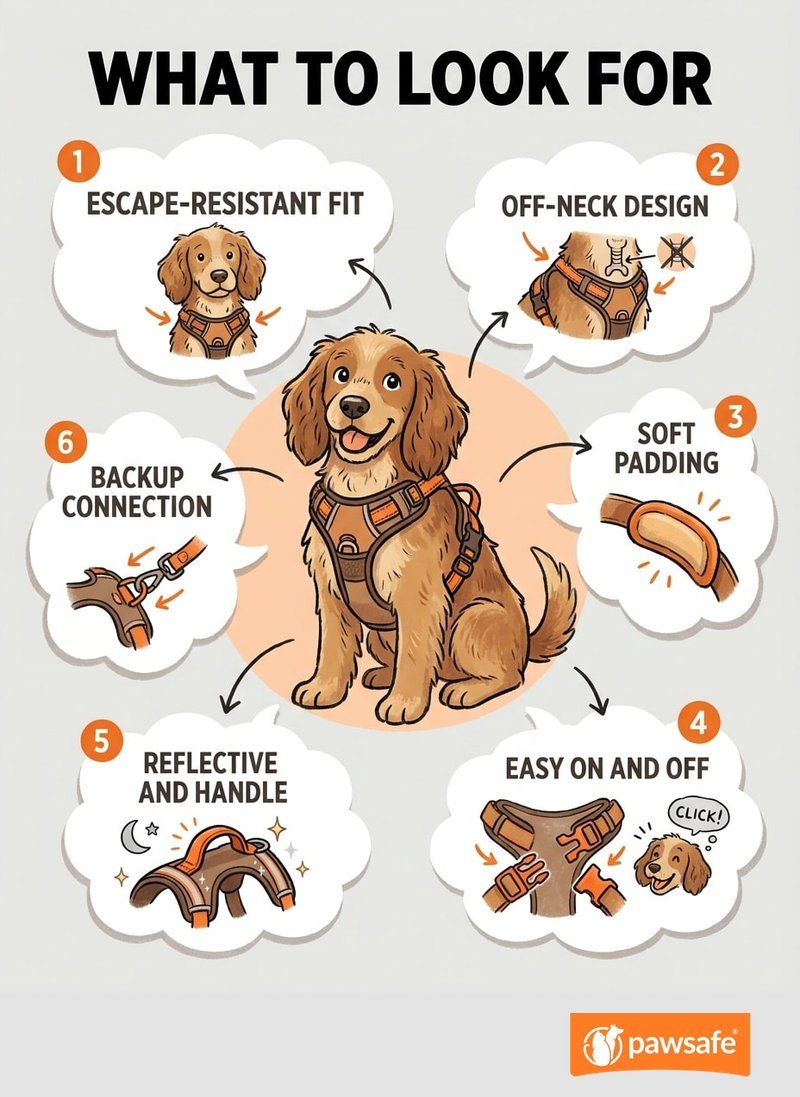
- What to Look for in an Anxiety Harness for Dogs
- Best Harnesses for Dogs With Anxiety: Our 2026 Picks
- How to Introduce a Harness to an Anxious or Gear-Shy Dog
- Keeping a Flight-Risk Dog Safe
- Frequently Asked Questions
- Calmer, Safer Walks Start Here
Do Harnesses Actually Help Dogs With Anxiety?
Yes - but not in the way the marketing suggests. It helps to separate what’s well supported from what isn’t.
What a harness reliably does:
- Moves leash force off the neck and spreads it across the chest, so a startled dog isn’t choked or coughed on top of being scared.
- Gives you calmer, non-punitive control without yanking the throat.
- Lowers escape risk - when the shape, fit, and backup are right.
- Becomes a positive, predictable “we’re going somewhere safe” cue once introduced with rewards.
What’s oversold: the “calming pressure” claim. Snug garments are marketed as swaddling your dog like an anxiety wrap, but the evidence is thin. A 2024 systematic review of canine pressure wraps found only weak and limited evidence of benefit - small studies, inconsistent results, and some funded by the makers. A few dogs may find gentle, even pressure reassuring; many don’t. So treat any calming effect as a low-risk bonus for your individual dog, not a guarantee.
One more honest note: a dog that goes still when you put a harness on isn’t necessarily relaxed. Freezing, flattening, or refusing treats can be fear, not calm. Watch what your dog’s body is telling you.
The takeaway: a harness belongs inside a bigger plan - trigger management, reward-based training, gradual desensitization, and veterinary help when fear is severe. For the wider picture on how different harness styles perform, see our full dog harness reviews.
Signs and Triggers of Anxiety in Dogs
Anxiety doesn’t always look frantic. It can look like a dog trying to disappear.
Common signs include trembling, panting when it isn’t hot, pacing or an inability to settle, a tucked tail, pinned ears, lip-licking or yawning, “whale eye,” hiding, freezing, refusing treats they normally love, and - the safety-critical one - bolting toward doors, gaps, or the end of the leash.
The triggers vary:
- Noise fear: thunderstorms, fireworks, traffic. In one 2020 survey of over 13,000 dogs, about 32% were reported to show noise sensitivity.
- Separation-related distress: panic when left alone, sometimes with dangerous escape attempts.
- Fear of strangers or new places: common in under-socialized dogs.
- Travel and car anxiety.
- Rescue and rehoming adjustment: a new dog may seem quiet at first, then bolt once exposure increases.
- Generalized or age-related anxiety.
See your vet, not just a trainer, when anxiety is sudden, severe, or new in an older dog. Anxiety isn’t always “just behavioral” - pain, illness, sensory decline, and cognitive change can all drive it. According to VCA’s guidance on fears, phobias, and anxiety, a veterinary exam matters when a dog panics to the point of self-injury, becomes aggressive when frightened, or isn’t improving. Severe cases deserve a board-certified veterinary behaviorist.
What to Look for in an Anxiety Harness for Dogs
Once you know a harness is a tool and not a cure, these are the features that make a genuinely good harness for anxious dogs.
An Escape-Resistant, Secure Fit (the #1 priority)
For a flight-risk dog, security beats every “calming” label. A frightened dog escapes by lowering its body and reversing until the neck or chest opening slides over the shoulders. The fixes: a rear belly strap that sits on the narrower waist, several adjustment points to fit the neck and chest independently, and a neck opening that can’t pass over the skull. No honest brand calls a harness escape-proof - only escape-resistant when correctly fitted.
An Off-Neck Design
Keep leash force off the throat. A front clip lets you steer a dog away from a trigger without pulling on the neck; a back clip is comfortable for a calm walker; a dual-clip harness gives you both. Front clips help with steering, but they don’t teach loose-leash walking on their own.
Soft Padding and Comfortable Contact
Padding spreads contact and reduces rubbing, which matters for a dog who’s already tense. Just don’t assume padded means pressure-free - strap position, width, and fit matter as much as the foam. Watch for rubbing at the armpits and behind the elbows.
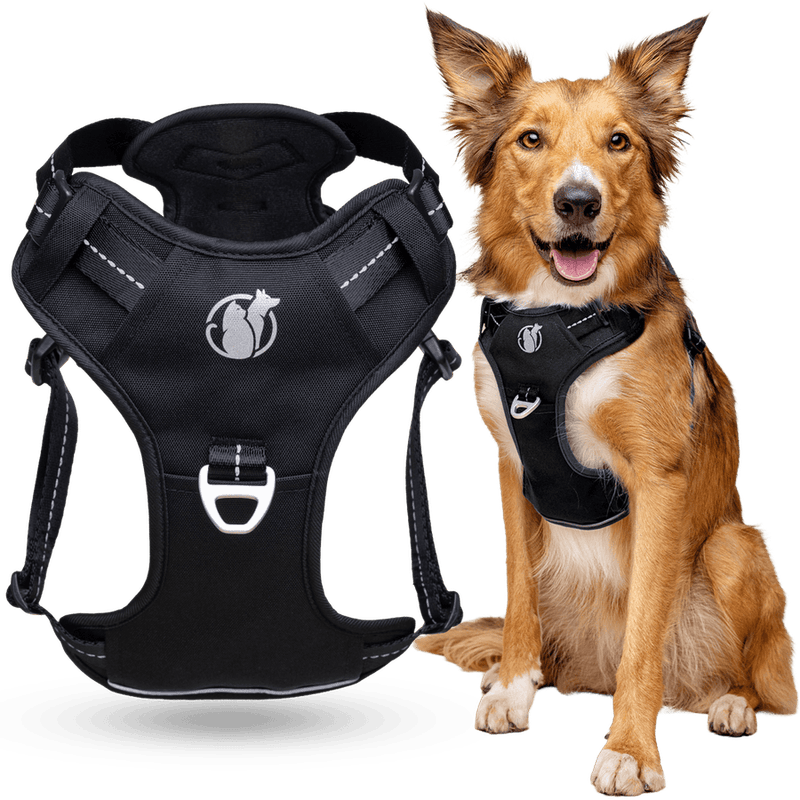
Stop Your Dog Pulling On Their Leash
The Steady+Style No Pull Harness uses front and back clip points to redirect pulling, so you get immediate, gentler control and can actually enjoy the walk again.
Shop Now 👉Better Walk Guarantee • 90-Day PawSafe® Promise
Easy, Low-Stress On and Off
Many anxious dogs are “gear shy.” A harness that buckles at the neck (instead of dragging over the head) or steps on can make the difference between a calm gear-up and a daily wrestling match. Multiple adjustment points let you dial in an odd body shape without over-tightening.
Reflective Trim and a Grab Handle
Reflective material keeps a dark, low dog visible on early or late walks. A padded top handle gives you instant, close control in the exact moment your dog panics - far gentler than hauling on a leash.
A Backup Connection Point
The single best safety upgrade for a bolter is a second point of contact - “belt and suspenders.” Pair the harness with a properly fitted martingale collar and a slack backup leash or strap, so the harness carries the load and the collar only catches a genuine escape.
Best Harnesses for Dogs With Anxiety: Our 2026 Picks
We evaluated harnesses on the features above - security first, then comfort and control. Prices are U.S. listings as of 2026 and exclude promotions. Competitor specs are drawn from manufacturer listings and independent reviews.
| Harness | Price | Clip type | Standout for anxiety | Watch-out |
|---|---|---|---|---|
| PawSafe Steady+Style | $63.96 | Front + back | Padded off-neck control, handle, AirTag pocket | Two-strap, not a 3-strap escape harness |
| Ruffwear Flagline | $69.99 | Front + back | 6 adjustments + rear belly strap (best for bolters) | More buckles; goes over the head |
| Sleepypod Martingale Calming | $60-80 | Front + back | Neck buckle + martingale cinch retention | “Calming” is a name, not proof |
| 2 Hounds Freedom | $33-39 | Front + rear loop | Lightweight training control | Tightening action; no rear third strap |
| PetSafe Easy Walk | ~$23 | Front only | Budget off-neck steering | No back clip or rear strap |
| My Anxious Dog Y-Harness | ~£30 | Front + back | Embroidered “ANXIOUS” space signal | Standard two-strap geometry |
Best Overall: PawSafe Steady+Style No-Pull Harness
Our Steady+Style No-Pull Harness is the one we reach for with a nervous dog, because it covers the things that genuinely help. The front chest ring lets you steer a dog gently away from a trigger without any pressure on the throat, while the rear D-ring handles relaxed stretches - a true dual-clip setup. The padded chest plate spreads contact for comfort, Duraflex buckles hold under a sudden startle-lunge, and a padded grab handle gives you calm, close control in the moment your dog panics. Reflective stitching keeps them visible, and it’s seatbelt-compatible, which helps for dogs with car or travel anxiety.
The feature we love most for an anxious dog is the hidden AirTag pocket. A frightened dog is a flight risk, and a tracker tucked into the harness is real peace of mind if the worst happens - as a supplement to a microchip and ID tags, never a replacement. We use this harness on our own dogs and trust it on walks where we know a spook is possible.
Best for: most anxious dogs - comfort, off-neck control, a handle for panic moments, tracking backup, and car-anxiety support in one harness.
Honest note: the Steady+Style is a padded two-strap dual-clip harness, not a dedicated three-strap “spook-proof” escape design. It fits securely on most dogs, but if your dog has actually reversed out of harnesses before, pair it with a slack martingale-collar backup (see below) or choose a three-strap harness built specifically for escape artists.
- Sizes: XS (10-18 lbs), S (18-28 lbs), M (28-50 lbs), L (45-70 lbs), XL (70-132 lbs)
- Colors: Classic Black, Ever Green, Wild Berry
- Front + rear attachment, padded chest plate, grab handle, reflective, hidden AirTag pocket
Best for Escape Artists: Ruffwear Flagline
If your dog has genuinely backed out of harnesses, the Ruffwear Flagline ($69.99) has the strongest flight-risk geometry of the group: six adjustment points, a rear belly strap that sits over the narrower waist, and a padded handle. That extra retention behind the ribcage is exactly what stops a reverse-out. The trade-offs: it goes over the head, and four buckles can be fiddly or noisy for a gear-shy dog. Escape-resistant, not escape-proof - still add a martingale backup for a serious bolter.
Best for the Calming-Pressure Idea: Sleepypod Martingale Calming Harness
The Sleepypod Martingale Calming Harness ($60-$80) is thoughtfully built: a neck buckle so it doesn’t drag over the head, dual clips, and a martingale cinch that adds torso retention. If you want to try the snug-pressure approach, this is a well-made way to do it. Just hold the name loosely - “calming” is a description of intent, not proof that it treats anxiety, and the cinch sensation bothers some touch-sensitive dogs.
Make Every Walk Feel Under Control
Adjustable comfort design helps reduce leash tension fast so walks become calm, consistent, and more enjoyable for both of you.
Shop Now 👉Better Walk Guarantee • 90-Day PawSafe® Promise
Best for Training Control: 2 Hounds Freedom / PetSafe Easy Walk
For dogs where gentle steering is the priority, the 2 Hounds Design Freedom ($33-$39) pairs a front ring with a velvet-lined belly strap and strong hardware, and the budget PetSafe Easy Walk (about $23) gives you real front-clip control cheaply. Both are honest front-steering tools rather than escape harnesses - the Easy Walk has no back clip or rear strap, so it shouldn’t be your only line of defense for a flight risk.
Best for Space Signaling: My Anxious Dog Yellow Y-Harness
If strangers keep crowding your nervous dog, the My Anxious Dog padded Y-harness (about £30) has “ANXIOUS” embroidered in black on yellow - clearer than an unexplained yellow ribbon. The yellow-dog convention can help, but the AKC cautions that many people have never heard of it, so use explicit wording and still advocate out loud. It’s a standard two-strap harness, so treat the signal as a bonus, not escape protection.
How to Introduce a Harness to an Anxious or Gear-Shy Dog
A harness only helps if your dog will wear it calmly. Never pin a nervous dog and force gear over its head - that teaches them the harness is something scary that happens to them.
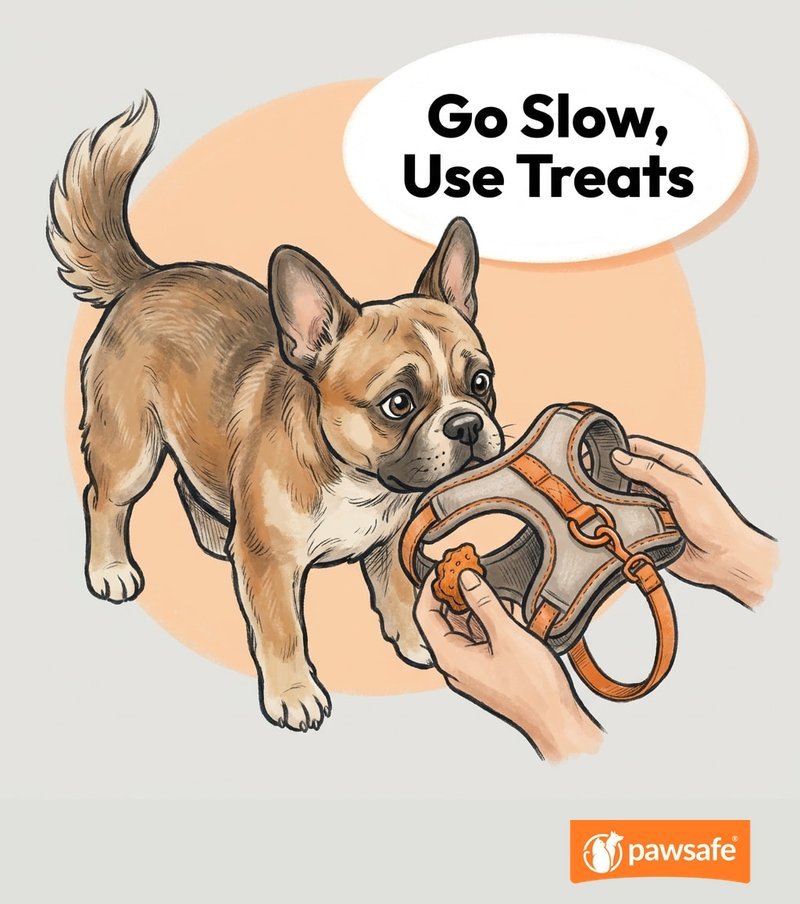
Build a positive association instead, working slowly enough that your dog can still take food and walk away:
- Put the harness on the floor and reward any look or step toward it.
- Reward voluntary sniffing.
- Present the neck opening; reward your dog for moving its nose toward or through it.
- Condition the buckle sound separately, at a distance your dog is comfortable with.
- Close one buckle, feed several treats, then take it off while your dog is still relaxed.
- Build wearing time from seconds to minutes indoors, then add a leash and a short, quiet first walk.
If your dog freezes, hides, pants, scratches at the gear, or refuses treats, you’ve gone too fast - back up a step. Fit it indoors first, use the two-finger test (two fingers should slide under each strap without forcing), and do a gentle backward tug-test to confirm your dog can’t reverse out.
For dogs whose anxiety shows up as lunging and barking at other dogs or people, our guide to the best harness for reactive dogs covers that specific challenge in depth.
Keeping a Flight-Risk Dog Safe
For a newly adopted, highly fearful, or previously escaped dog, one secure harness isn’t always enough. If your dog has a real history of slipping their gear, start with a dedicated escape-proof dog harness built with a third strap. Then add a second layer: two points of connection - the “belt and suspenders” approach - is what keeps a panicking dog attached even if something fails.
- Fit a secure harness (ideally with a rear belly strap) as your primary connection.
- Add a properly fitted martingale collar that can’t slip over the head - as a backup, not a correction tool.
- Clip your leash to the harness, and run a short safety strap or second connection to the collar with enough slack that the harness carries all normal pressure.
- Test the whole setup indoors, then in a fenced space, before you rely on it.
- Keep two barriers at exterior doors during the adjustment period.
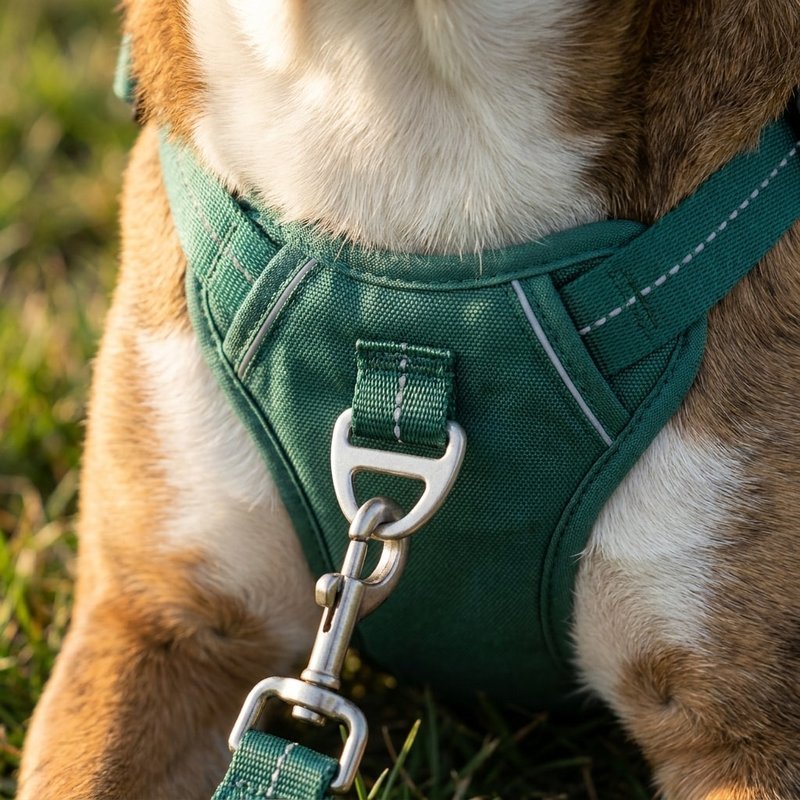
Skip flexi leashes (they keep constant tension and can spook a dog if dropped), and never use slip, choke, or prong collars on an anxious dog - pain layered onto fear makes everything worse. A microchip and up-to-date ID tags are the foundation; a harness tracker pocket is a helpful supplement. Roughly one in seven dog-owning households reports losing a dog over a five-year period, so redundancy is worth it.
Frequently Asked Questions
Do harnesses help dogs with anxiety?
They help with management, not treatment. A well-fitted harness keeps leash pressure off the neck, gives you calmer control, and makes it harder for a frightened dog to escape and bolt. It doesn’t fix the underlying fear, so it works best alongside reward-based training, trigger management, and veterinary guidance when needed.
Enjoy Calm Walks Starting Today
Dual-attachment harness distributes pressure and helps turn tug-of-war outings into relaxed, bonding strolls from the first use.
Shop Now 👉Better Walk Guarantee • 90-Day PawSafe® Promise
What is the best harness for an anxious dog?
There’s no single best model. The best harness doesn’t rub, choke, or restrict the shoulders, can be put on without overwhelming your dog, stays secure when your dog pulls backward, and gives you calm, non-punitive control. For a serious flight risk, prioritize a secure escape-resistant design plus a slack backup connection to a properly fitted martingale collar.
Are dogs calmer with a harness on?
Some dogs seem calmer, possibly because the harness removes neck discomfort or has become a positive cue for walks. Others become inhibited or stressed by the same gear. Research doesn’t show that dogs as a group reliably calm down in a harness, so watch your own dog. Freezing or refusing to move is not the same as relaxing.
Can an anxious dog escape a harness?
Yes. A frightened dog can lower its body and pull backward until the neck or chest opening slides over the shoulders and head - called backing out. A rear belly strap, precise adjustment, and an independent collar backup reduce the risk, but no harness is truly escape-proof.
How do I get an anxious dog used to a harness?
Go slow and use food. Reward your dog for looking at the harness, sniffing it, putting its head through, tolerating brief strap contact, and hearing the buckle, then build up wearing time indoors before walks. Work below your dog’s fear threshold and stop if it freezes, hides, pants, refuses treats, or tries to escape.
Should an anxious dog wear a harness or a collar?
Attach the leash to a well-fitted harness, especially if your dog startles, lunges, pulls, or may panic. Keep a collar for ID tags and, for a flight risk, as a slack backup connection. Never run leash pressure through the neck to deliver corrections.
Does a calming or pressure harness actually work?
Maybe for some individual dogs, but the evidence is weak and inconsistent. A few small studies found modest heart-rate or owner-rated improvements while many behavioral measures showed little difference. Treat a snug pressure garment as a low-risk trial your dog willingly tolerates, not a proven treatment.
Calmer, Safer Walks Start Here
The right harness for dogs with anxiety won’t cure the fear - but it makes walks safer and less stressful, which gives your training room to work. Keep leash pressure off the neck, choose a secure fit your dog can’t reverse out of, add soft padding and a calm way to get it on, and back it all up with a second point of connection if your dog is a flight risk.
Here’s what to remember:
- A harness is a management and safety tool, not a treatment - pair it with reward-based training and, when fear is severe, your vet.
- Security beats a “calming” label - the biggest danger is a panicking dog who escapes.
- Introduce it slowly, with food - a gear-shy dog needs to choose the harness, not have it forced on.
- Two points of connection keep a flight risk attached when it matters most.
Our Steady+Style No-Pull Harness was built for exactly these moments - off-neck control, a padded fit, a handle for panic, and a tracker pocket for peace of mind - and we test it on our own dogs. If you want to compare styles first, browse our other dog harness guides, then choose the anxiety harness for dogs that helps your nervous pup feel safe enough to enjoy the walk.