

Signs your dog may need probiotics include loose stool or recurring diarrhea, gas and bloating, itchy skin, and stool changes around stress, a diet switch, or a course of antibiotics. Probiotics are live microorganisms that can support digestion and the gut in some dogs, but the evidence is strain-specific and limited, and they work as supportive care rather than a cure. Several of these same signs - blood in the stool, weight loss, vomiting, or symptoms lasting beyond a day or two - need a veterinarian, not a supplement.
Your dog’s gut does more than digest dinner. It’s home to trillions of microbes that help break down food, make vitamins, train the immune system, and even talk to the brain. So when something’s off - a run of soft stool, room-clearing gas, a suddenly itchy dog - it’s fair to wonder whether their gut needs a hand.
That’s where probiotics come in. But here’s the honest part most product pages skip: the research on probiotics for dogs is still thin and mixed, they help some dogs and not others, and several of the “signs you need probiotics” you’ll read online are actually reasons to call your vet. Probiotics are support, not a cure.
This guide covers the real signs your dog needs probiotics (grounded in veterinary sources), what probiotics can and can’t do, the red flags that mean “see a vet, not a supplement,” and how to choose a dog probiotic if you decide to try one. We’ve helped 300,000+ pet parents look after their dogs, and we’d rather give you the honest version than sell you a promise.
Table of Contents
What Probiotics Actually Do for Dogs
Probiotics are live, beneficial microorganisms that, given in the right amount, can offer a health benefit. Prebiotics are the fibers those microbes feed on - so a product with both is called a synbiotic. Together they can nudge the gut environment in a healthier direction: crowding out less-friendly bacteria, changing the acidity of the gut, supporting the intestinal lining, and producing short-chain fatty acids that fuel gut cells.
Notice the careful wording. It’s tempting to say probiotics “rebalance the microbiome,” but many probiotic organisms are just passing through and don’t permanently move in. A better way to think about it: probiotics can modulate the gut environment while they’re being given, in ways that are specific to the exact strain and product.
And the evidence? Weaker than the marketing suggests. A 2024 systematic review found probiotic and synbiotic products did not meaningfully shorten acute diarrhea in dogs, and the resulting European veterinary guideline made no recommendation for or against them. Individual strains have shown promise in individual studies, but you can’t assume a result for one strain and dose applies to a different product. As PetMD’s veterinarians put it, research into probiotics for pets is uncommon and sometimes contradictory. None of that makes probiotics useless - it just means they’re a reasonable thing to try in the right situations, not a miracle.
Signs Your Dog May Need Probiotics
Think of these less as “your dog definitely needs probiotics” and more as situations where a dog-specific probiotic may offer support - especially the mild, everyday ones tied to a clear trigger.
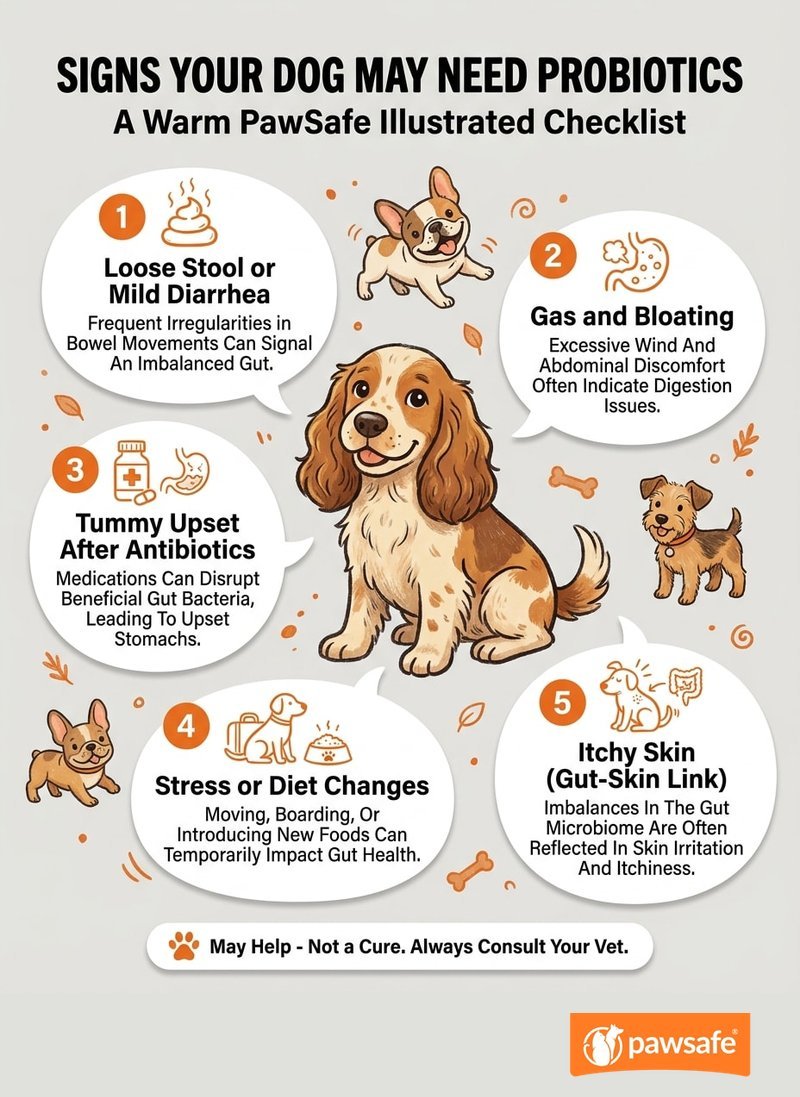
- Loose stool or recurring mild diarrhea. The most studied use. Some strain-specific products modestly shortened diarrhea in small trials, though the overall evidence is inconsistent. Best suited to mild, uncomplicated cases in an otherwise bright, well dog.
- Gas, bloating, and stomach gurgling. Often tied to diet or a sensitive stomach. Probiotics may help some dogs, but persistent gas deserves a diet and health review - and a hard, swollen, painful belly with retching is an emergency (see below).
- Constipation or irregular, on-and-off stools. Evidence here is weak, and added fiber may do more than the microbes. Recurrent straining needs a vet.
- During or after a course of antibiotics. Antibiotics disrupt gut bacteria, and a probiotic may support recovery - but ask the prescribing vet about timing, since some antibiotics inactivate the very organisms you’re giving.
- Stool changes around stress or big changes - boarding, moving, travel, a new home. If your dog has a known pattern of stress tummy, starting a probiotic a few days ahead is reasonable support.
- A diet change or sensitive stomach. A slow transition matters most, with a probiotic as optional backup.
- Itchy skin, allergies, or a dull coat. Through the proposed gut-skin axis, probiotics are an experimental add-on - not an allergy treatment. Itching first needs a check for fleas, mites, infection, and food or environmental allergies.
- Recurrent yeast or ear/skin flare-ups. There’s no persuasive evidence probiotics fix these; they point to an underlying issue a vet should diagnose.
- Anxiety or stress behavior. The gut-brain link is real and fascinating, and early research on certain strains is promising - but it’s preliminary, and anxiety deserves a proper behavior and health plan.
- Getting sick often / immune support. About 70% of a dog’s immune system sits in the gut, so it’s plausible probiotics interact with immunity. That’s not the same as “boosting immunity” or preventing illness.
See the pattern? Probiotics fit best for mild, situational, gut-and-stress signs. The moment a sign is severe, bloody, or paired with a dog who feels unwell, it stops being a supplement question.
When It’s a Vet Visit, Not a Probiotic
This is the section the listicles leave out. Several classic “probiotic signs” are actually red flags. Probiotics don’t treat parasites, infections like parvovirus, blockages, pancreatitis, or organ disease - and reaching for a chew instead of a diagnosis can cost precious time.
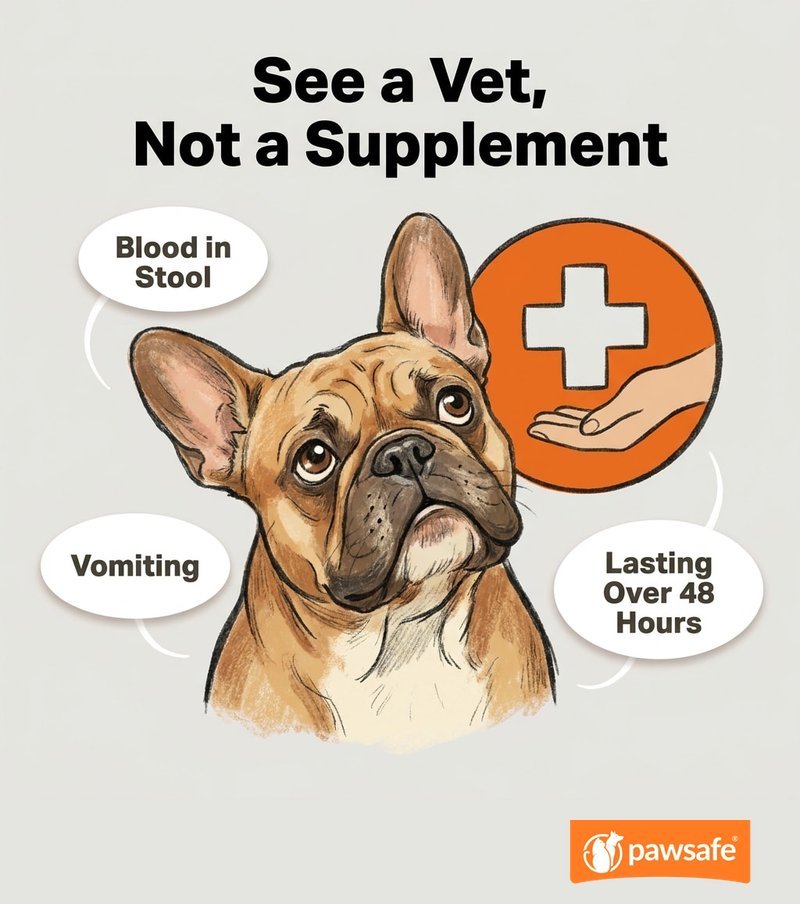
Call your vet - or an emergency clinic - right away for:
- Blood in the stool, or black, tarry stool
- Repeated or severe vomiting, or a dog that can’t keep water down
- A swollen, hard, or painful belly, especially with unproductive retching, drooling, or restlessness (possible bloat/GDV - a true emergency)
- Weakness, collapse, pale gums, or marked lethargy
- Suspected poison, medication, or a swallowed object
Book a prompt (same-day) vet visit for:
- Diarrhea or vomiting that lasts beyond about 24 to 48 hours, keeps returning, or is getting worse
- Any tummy upset in a young puppy, a frail senior, a pregnant dog, or a dog with an existing illness
- Refusal to eat, reduced drinking, or unexplained weight loss
- Frequent urinary accidents, straining, or repeat UTIs - these need testing, not probiotics
According to Cornell’s Riney Canine Health Center, severely immunocompromised dogs should only be given probiotics cautiously and under veterinary supervision. “Natural” does not automatically mean safe for every dog.
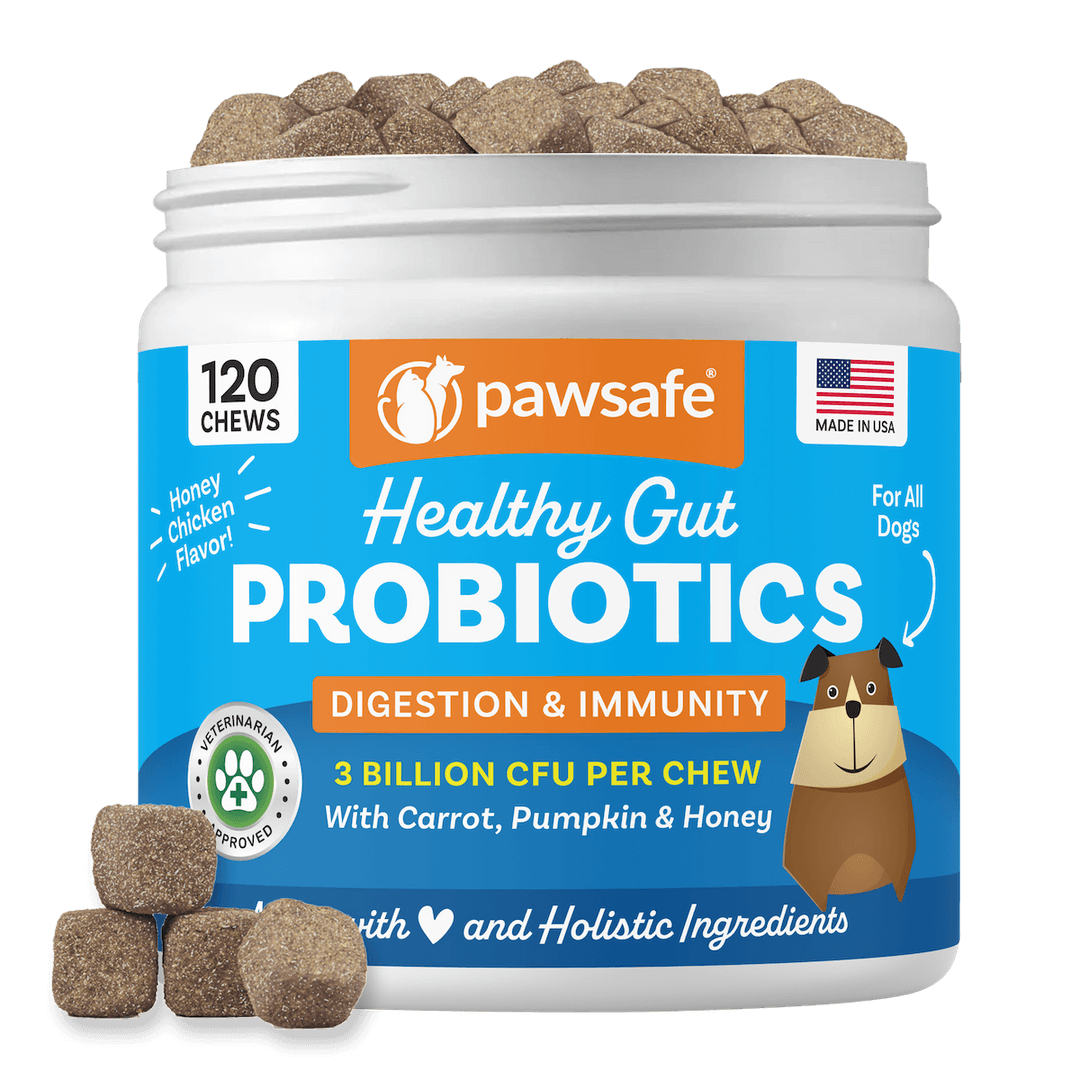
Daily Support For Healthy Digestion
Multi-strain probiotic soft chews that help maintain gut balance and stool quality in an easy, tasty format.
Shop Now 👉Vet Approved Formula • 90-Day PawSafe® Promise
Does My Dog Need Probiotics?
Honestly? Maybe not. A generally healthy dog usually keeps its gut balanced without help. Probiotics make the most sense as targeted support: around a known stressor, during a diet change, alongside or after antibiotics, or for mild, ongoing digestive niggles your vet has already looked at.
And they’re genuinely popular - about 21% of dog owners now give a prebiotic or probiotic supplement, and in one large UK study nearly 60% of dogs seen for acute diarrhea were given probiotics. Popular isn’t the same as proven, though. If you’re asking “how do I know if my dog needs probiotics,” the answer is a pattern of mild, trigger-linked signs in an otherwise well dog - plus a quick word with your vet, especially if anything is severe or persistent.
How to Choose a Dog Probiotic
If you decide to try one, the label matters more than the marketing. Here’s what to look for.
- Dog-specific, not human. Canine products are dosed for dogs. Never give a human probiotic or food without checking for xylitol (sometimes labeled birch sugar), which is toxic to dogs.
- Named strains. Look for the full strain, not just “Lactobacillus.” Different strains do different jobs, and effects don’t transfer between them.
- A meaningful CFU count. Cornell gives a general range of 1 to 10 billion CFUs (colony-forming units) per day for dogs - but dose is strain-specific, and more is not automatically better.
- A live guarantee through the expiration date, plus clear species, storage instructions, and a lot number. A 2011 review found many pet probiotics didn’t actually contain the live counts they claimed, so quality and honest labeling matter.
- A prebiotic included (making it a synbiotic), and a form your dog will reliably eat.
Side effects are usually mild and short-lived - a little gas, softer stool, or a change in appetite as their system adjusts. But “it gets worse before it gets better” should never be used to explain away a dog who is genuinely deteriorating. If appetite drops, vomiting starts, diarrhea worsens, or blood appears, stop and call your vet.
For more on timing and daily use, see our guides on how long dog probiotics take to work and whether to give your dog probiotics every day.
Where the PawSafe Probiotic Soft Chews Fit
We make a probiotic, so here’s the honest placement. Our Probiotic Soft Chews are a daily support supplement, not a treatment for illness. Each chew combines a 6-strain probiotic blend with prebiotic fiber (a synbiotic), in a chicken flavor most dogs take like a treat, with no artificial preservatives and 90 chews per bag - all backed by the 90-day PawSafe Promise, so you can try them risk-free.
They’re built for the everyday-support situations on this page: a dog with mild, occasional loose stool or gas, one going through a diet change or a stressful week, or one recovering after a vet has cleared the serious causes. Check the label for the strains and CFUs (the same things we told you to look for above), start with the directions for your dog’s size, and give it a few weeks. What they are not is a fix for the red-flag symptoms above - if your dog is truly unwell, please see your vet first. For the bigger picture on feeding a healthy gut, our dog gut health guide and the rest of our gut health and probiotics articles go deeper.
Frequently Asked Questions
Gut & Immune Support In One Chew
Targeted strains assist normal digestion while supporting natural immune defenses—simple once-a-day routine.
Shop Now 👉Vet Approved Formula • 90-Day PawSafe® Promise
What are the signs my dog needs probiotics?
Common signs a dog may benefit from probiotics include loose stool or recurring mild diarrhea, gas and bloating, stool changes around stress or a diet switch, and the gut upset that can follow a course of antibiotics. These are situations where probiotics may offer support in some dogs - not a guarantee. Several of the same signs (bloody stool, weight loss, vomiting, lethargy) actually call for a vet, not a supplement.
Does my dog need probiotics?
Not every dog does. A healthy dog usually keeps its own gut in balance. Probiotics are most reasonable as support around a known trigger - stress, a diet change, or antibiotics - or for mild, ongoing digestive niggles your vet has already assessed. The canine evidence is limited and strain-specific, so treat probiotics as optional support rather than something every dog must take.
How do I know if my dog needs probiotics?
Look at the pattern, not a single bad day. If your dog gets loose stool or gas around stress, food changes, or antibiotics and is otherwise bright, eating, and well, a dog-specific probiotic is a reasonable thing to try or to ask your vet about. If symptoms are severe, bloody, persistent beyond a day or two, or paired with weight loss or lethargy, skip the guesswork and see your vet.
Can probiotics help my dog’s itchy skin or allergies?
Possibly, as an experimental add-on - not a treatment. Research links allergic skin disease to lower gut-microbe diversity, and one small trial saw benefit when a probiotic was added to existing allergy medication. But itching is usually driven by fleas, mites, infection, or food and environmental allergies, so the first step is a vet work-up, not a supplement.
Make Digestive Care Effortless
Palatable soft chews your dog looks forward to, helping keep things regular and comfortable over time.
Shop Now 👉Vet Approved Formula • 90-Day PawSafe® Promise
Can puppies take probiotics?
Dog-specific probiotics can be used in some puppies under veterinary guidance, but they are not proven to prevent puppy illness - a large 2026 trial of over 800 puppies found a synbiotic did not reduce diarrhea or allergies. Puppies dehydrate fast and are at real risk from parasites and parvovirus, so vomiting, diarrhea, blood, or a flat, off-color puppy needs a vet, not just a chew.
Can I give my dog human probiotics or yogurt?
A dog-specific product is the safer choice - it is dosed for dogs and skips ingredients they don’t need. Never give a human probiotic or food without checking for xylitol (also called birch sugar), which is toxic to dogs. Plain, unsweetened yogurt or kefir has live cultures some dogs tolerate, but it isn’t a defined strain at a studied dose, so don’t treat it as equal to a canine probiotic.
When should I see a vet instead of giving probiotics?
See a vet if you notice blood or black, tarry stool, repeated vomiting, a swollen or painful belly, weakness or collapse, refusal to eat, weight loss, or diarrhea that lasts beyond about 24 to 48 hours (sooner for puppies and seniors). Probiotics don’t treat parasites, infections, blockages, or organ disease, so these signs need a diagnosis first.
The Bottom Line on Signs Your Dog Needs Probiotics
Reading the signs your dog needs probiotics really comes down to a few honest points:
- The best-fit signs are mild and situational - loose stool, gas, and tummy changes around stress, diet switches, or antibiotics.
- Probiotics are support, not a cure. The canine evidence is limited and strain-specific, so they help some dogs and not others.
- Red flags mean a vet, not a supplement - blood in stool, vomiting, weight loss, lethargy, a painful belly, or symptoms lasting beyond a day or two.
- If you do try one, choose well - dog-specific, named strains, a real CFU count and live guarantee, ideally with a prebiotic.
Trust the pattern, protect against the red flags, and treat a good probiotic as one helpful tool for everyday gut support - not a replacement for your vet. Get that balance right and you’re doing exactly what your dog’s gut needs.