


For most healthy dogs, giving a probiotic every day is safe and well tolerated - but not every dog needs one. Because probiotics mostly pass through the gut rather than settling in permanently, daily doses keep beneficial bacteria topped up. Veterinary sources suggest around 1 to 10 billion CFUs a day of a dog-specific product. Daily use makes the most sense for dogs with ongoing digestive issues or predictable stress; immunocompromised dogs should only take probiotics under veterinary supervision.
You’ve got the tub of chews on the counter, the label says “give daily,” and your dog is already treating them like candy. But is every single day actually the right call - or is it overkill for a dog whose stomach seems perfectly fine?
It’s a fair question, and the internet doesn’t make it easier. Search around and you’ll get a confident “Yes, every day!” (usually from a brand selling the chews) right next to “only if there’s a problem.” Both can’t be the whole story.
Here’s the honest, evidence-based version. Daily probiotics are safe for most dogs and genuinely helpful for some - but a healthy dog doesn’t strictly need one, and a few dogs shouldn’t start without a vet’s okay. This guide walks through when daily use is worth it, when a short course is enough, how much to give, and the safety cautions that actually matter. It leans on veterinary sources rather than marketing, and on our experience helping more than 300,000 pet parents.
Table of Contents
- The Short Answer: Should You Give Your Dog Probiotics Every Day?
- What Daily Probiotics Actually Do
- When Daily Probiotics Genuinely Make Sense
- Should I Give My Dog Probiotics Every Day for Diarrhea?
- Can a Dog Have Too Much? Safety and Side Effects
- How Much to Give, and How to Give It Every Day
- How to Choose a Daily Probiotic Worth Giving
- Frequently Asked Questions
- So, Should You Give Your Dog Probiotics Every Day?
The Short Answer: Should You Give Your Dog Probiotics Every Day?
For most dogs, yes - daily is safe and well tolerated. And daily is largely how probiotics are designed to work, because they don’t set up permanent residence in the gut (more on that below). Consistency is what keeps the beneficial bacteria topped up.
But two honest caveats belong right up front:
- A healthy dog may not need one. As Texas A&M veterinary nutritionist Dr. John Bauer puts it, “healthy animals with complete and balanced diets should not need supplements.” Daily probiotics for a dog with normal digestion are optional maintenance, not a proven necessity.
- Some dogs shouldn’t start without a vet. Severely immunocompromised, debilitated, or seriously ill dogs should only take probiotics under veterinary supervision.
So the useful way to think about it isn’t “yes or no” - it’s “which of these is my dog?”
- Daily makes sense: ongoing digestive sensitivity, recurring loose stool, or predictable stress.
- Situational may be enough: a one-off stressful event or a single mild tummy upset.
- Ask a vet first: immunocompromised or seriously ill dogs, or any dog with red-flag symptoms.

What Daily Probiotics Actually Do
Probiotics are live, beneficial bacteria that help keep your dog’s gut flora - the community of microbes in the digestive tract - in balance. That balance matters more than it sounds: roughly 70% of your dog’s immune system lives in the gut, so a well-functioning digestive tract supports far more than just firm stools.
Here’s the part most product pages skip. For most dogs, probiotics are transient - they pass through rather than permanently colonizing the gut. In one healthy-dog study, supplemented species showed up while dogs were taking them but faded back toward baseline within days of stopping. That’s exactly why “every day” matters: if a dog is benefiting, consistent dosing keeps the helpful bacteria present. It’s also why daily use isn’t automatically forever - it’s worth continuing only while your dog is actually getting something out of it.
Probiotics are different from prebiotics, which are fibers that feed the good bacteria already in the gut. Many quality supplements pair the two. If you want the bigger picture on the canine microbiome and how it all fits together, our dog gut health guide covers the fundamentals.

When Daily Probiotics Genuinely Make Sense
Daily use earns its place when there’s a real, repeatable reason - ideally one you’ve talked through with your vet. The strongest candidates:
- Ongoing digestive sensitivity or recurring loose stool. A dog whose stomach is reliably touchy may do better with steady support than with occasional dosing.
- Chronic gut conditions. For chronic inflammatory enteropathy, veterinary specialists treat diet trials as first-line and view probiotics as a limited but well-tolerated add-on - useful for some dogs, under guidance, not a cure.
- Around a course of antibiotics. It’s biologically sensible, though canine evidence is mixed; let the prescribing vet advise on product and timing (and never stop the antibiotic early).
- Predictable stress. Boarding, travel, moving, or a show can trigger stress diarrhea. Cornell suggests starting a probiotic several days ahead of a known stressor so the gut is already supported.
For a generally healthy dog, daily maintenance is low-risk and fine to do - just keep your expectations honest. There’s no strong evidence that a daily probiotic prevents future disease in an already-healthy dog, so it’s a reasonable “nice to have,” not a guarantee of anything. Not sure whether your dog is even a candidate? Browse our gut health and probiotics guides to match the advice to your dog.

Should I Give My Dog Probiotics Every Day for Diarrhea?
This is where the nuance really matters, so let’s separate two situations.
A single mild bout of diarrhea in an otherwise bright, well-hydrated adult dog is often self-limiting. A probiotic can be reasonable supportive care alongside the things that matter more - hydration, an appropriate bland diet, and monitoring - but it won’t fix an underlying cause like a swallowed toy, a parasite, or pancreatitis. For a one-off episode, a short, label-directed course is usually enough. You don’t need to commit to daily-forever.
Recurring or chronic diarrhea is a different story. Here a daily probiotic may help as part of a plan - but only as part of a plan. “Daily maintenance” should never quietly mask a problem that needs a diagnosis. And a quick reality check on the evidence: high-quality reviews find the benefit of probiotics for canine diarrhea is mixed and strain-specific, and a 2024 international guideline panel declined to recommend either for or against them for acute diarrhea. They can help some dogs; they’re not a sure thing.
One more wrinkle worth knowing: probiotics themselves can briefly loosen stool when a dog first starts them. Our guide to dog probiotic side effects covers what’s normal early on and what isn’t.
Crucially, more probiotics are not the answer to diarrhea that’s getting worse. Get veterinary care for blood or black, tarry stool, repeated vomiting, marked lethargy, a painful belly, refusal of food or water, signs of dehydration, or diarrhea that doesn’t improve within 24 to 48 hours. As Cornell’s Dr. Meredith Miller advises, diarrhea that comes with those systemic signs - or that doesn’t resolve in 48 to 72 hours - needs a vet. Puppies need a lower threshold, because dehydration and parvovirus can escalate fast.
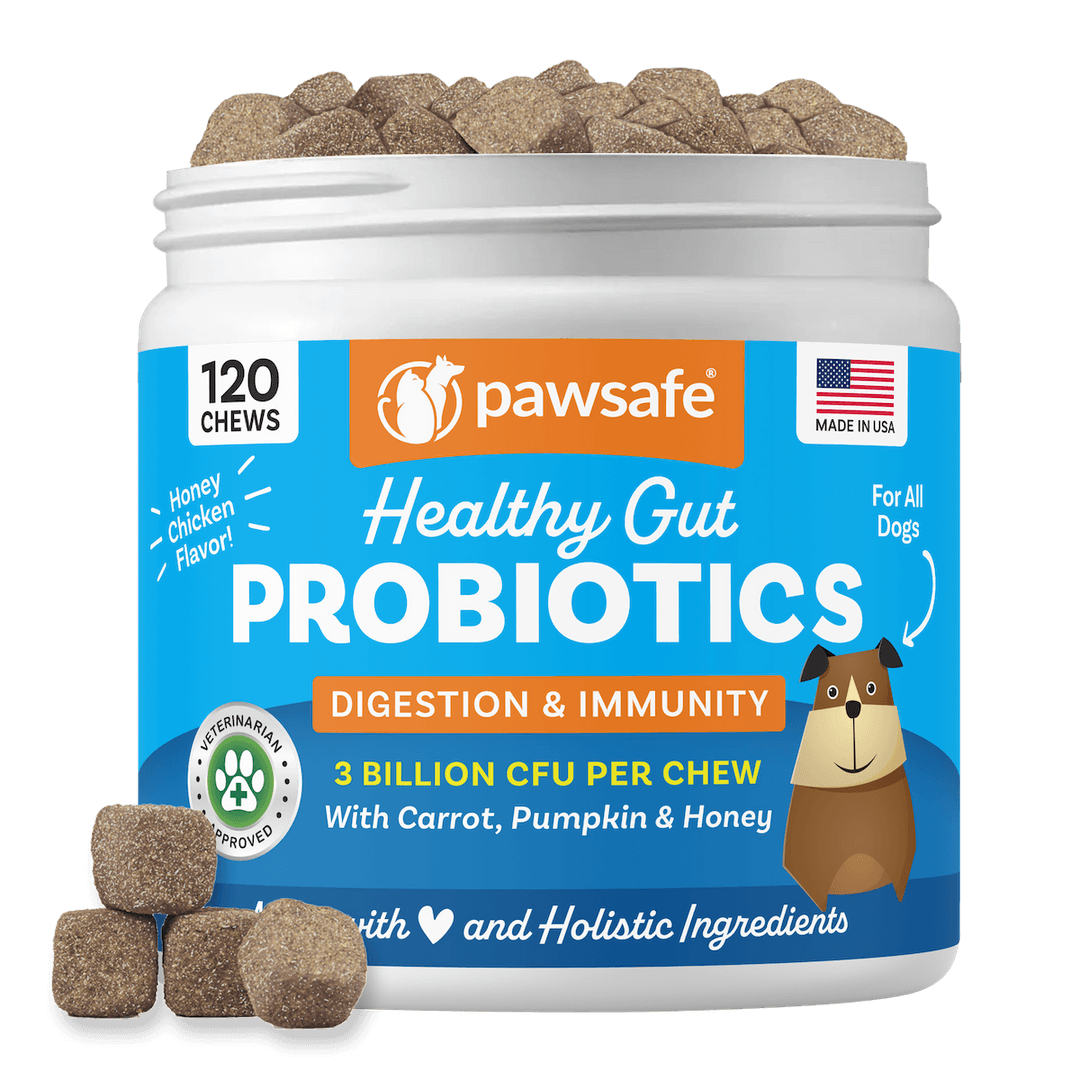
Daily Support For Healthy Digestion
Multi-strain probiotic soft chews that help maintain gut balance and stool quality in an easy, tasty format.
Shop Now 👉Vet Approved Formula • 90-Day PawSafe® Promise
Can a Dog Have Too Much? Safety and Side Effects
The good news: probiotics are generally very safe for dogs. The important news: more is not better.
When a dog first starts a probiotic, you might see temporary gas, gurgling, bloating, or a change in stool consistency, according to WebMD’s veterinary reviewers. For many dogs this settles within a few days. But be careful with the popular “it’s just detox, push through it” framing - there’s no strong canine evidence for a standard settling-in period, so if symptoms are worsening rather than easing, stop and check with your vet rather than assuming it’s normal adjustment.
A few safety rules that hold up:
- Stick to the labeled or vet-prescribed dose. There’s no established toxic CFU limit for dogs, but overdoing it can plausibly cause more digestive upset, and piling on extra inactive ingredients isn’t harmless.
- Don’t stack products or double a missed dose. If your dog gets into a whole container - especially one with added vitamins, minerals, or sweeteners - call your vet or a pet poison line.
- Skip human probiotics as a default. Dog-specific products have canine dosing and evidence. Human ones may carry the wrong strains, dairy that upsets lactose-sensitive dogs, or - critically - xylitol, an artificial sweetener that is toxic to dogs. Never give anything containing it.
- Immunocompromised or seriously ill dogs: vet first. Their systems may not handle a bacterial load the way a healthy dog’s does.
Worth knowing about quality, too: pet supplements aren’t held to the same standard as human ones, and label claims can’t be assumed accurate. An older Canadian audit of 25 animal probiotics found only about a quarter actually met their stated live-organism count - which is exactly why the “how to choose” section below matters.
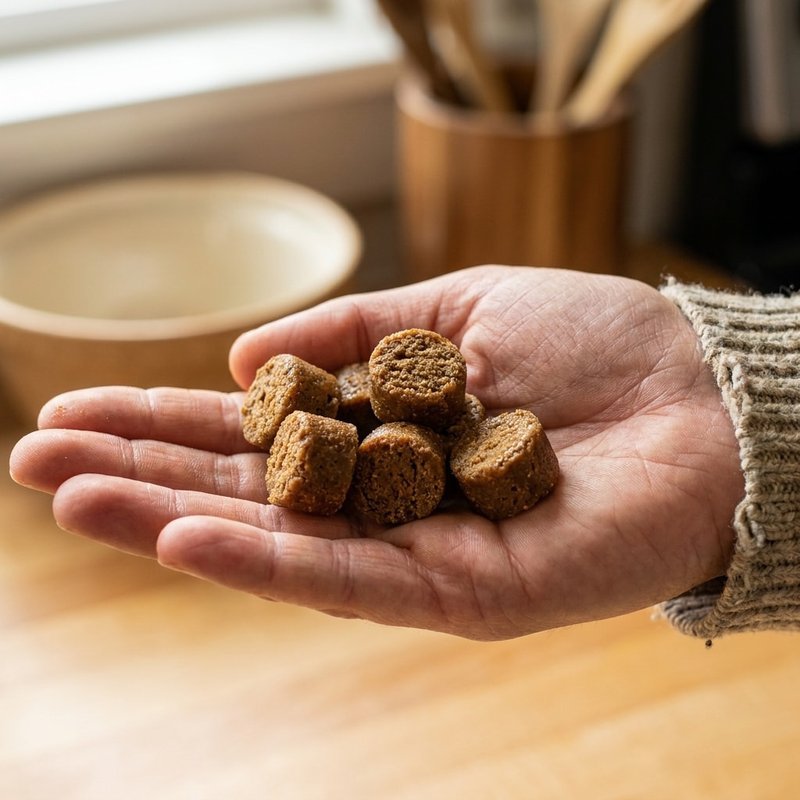
How Much to Give, and How to Give It Every Day
For everyday use, veterinary guidance from Cornell’s Riney Canine Health Center puts the general range at 1 to 10 billion CFUs (colony-forming units) a day for dogs. Treat that as a ballpark, not a prescription: there’s no validated weight-based formula, and the strain and the dose actually studied in dogs matter more than chasing the biggest number on the tub. For a specific medical condition, your vet may recommend something quite different.
To make daily probiotics work in real life:
- Follow the product’s label for dose and whether to give it with food. Most everyday chews are given with a meal; a few high-potency formulas say otherwise.
- Pick the same time each day. Consistency helps you remember and keeps the good bacteria topped up - there’s no magic clock time.
- Start low if your dog is sensitive, then build to the full dose over a few days.
- Store it properly. Live organisms hate heat, moisture, and air - keep the container sealed, cool, and dry, and refrigerate only if the label says so.
- Track the response. Note stool, appetite, gas, and energy. If you’re wondering how quickly to expect changes, our guide on how long dog probiotics take to work sets realistic timelines.
How to Choose a Daily Probiotic Worth Giving
Since label quality varies so much, a good daily probiotic is one that tells you exactly what’s inside and proves it stays alive. Look for:
- Named, dog-relevant strains - species like Lactobacillus, Bifidobacterium, Enterococcus faecium, and Bacillus coagulans - not just “proprietary blend.”
- A live-culture guarantee through the expiration date, plus the CFU count and an expiry on the pack. A guarantee “at time of manufacture” isn’t enough.
- A prebiotic paired in, which gives the good bacteria something to feed on.
- A form your dog will actually take every day. Adherence is half the battle - a chew your dog begs for beats a pill you fight over.
Our Probiotic Soft Chews were built with daily use in mind: a multi-strain blend (Lactobacillus, Bifidobacterium, and Enterococcus species plus Bacillus coagulans) with prebiotic fiber from pumpkin and flaxseed, in a honey-chicken chew most dogs treat like a treat. They’re backed by our 90-day money-back promise, so a daily routine is low-risk to try. As with any supplement, if your dog has ongoing symptoms or a medical condition, loop in your vet before making it a daily habit.
Frequently Asked Questions
Gut & Immune Support In One Chew
Targeted strains assist normal digestion while supporting natural immune defenses—simple once-a-day routine.
Shop Now 👉Vet Approved Formula • 90-Day PawSafe® Promise
Is it OK to give my dog probiotics every day?
Usually yes, for an otherwise healthy dog using a reputable dog-specific product at the labeled dose. Daily dosing is optional for a healthy dog and works best when it has a defined purpose. Immunocompromised, debilitated, or seriously ill dogs should only take probiotics under veterinary guidance.
Can a dog have too many probiotics?
In a practical sense, yes - more can cause gas or digestive discomfort and expose your dog to extra inactive ingredients. There’s no established toxic CFU limit for dogs, but more is not better. Stay within the labeled or vet-prescribed dose, don’t combine several products, and never double a missed dose.
Should I give my dog probiotics every day for diarrhea?
A probiotic can be reasonable supportive care for mild or recurring diarrhea, but it should support diagnosis, hydration, and diet - not replace them. Evidence for acute diarrhea is mixed and strain-specific. See a vet for blood, black stool, vomiting, lethargy, dehydration, appetite loss, pain, any puppy illness, or diarrhea that doesn’t improve within 24 to 48 hours.
Do healthy dogs need a daily probiotic?
No. A healthy dog on a complete, balanced diet with normal digestion has no proven nutritional need for one. Daily use can be optional maintenance, but preventive benefits have not been established for all healthy dogs, so treat it as a nice-to-have rather than a must.
Make Digestive Care Effortless
Palatable soft chews your dog looks forward to, helping keep things regular and comfortable over time.
Shop Now 👉Vet Approved Formula • 90-Day PawSafe® Promise
How many CFUs does my dog need per day?
Cornell gives a broad general range of 1 to 10 billion CFUs a day for dogs. There’s no validated weight-based formula, and the strain, formulation, and dose actually tested in dogs matter far more than picking the biggest CFU number on the label.
Can I give my dog human probiotics?
A dog-specific product with canine evidence and dosing is the better default. Some human strains may be tolerated, but check every ingredient, avoid dairy for lactose-sensitive dogs, and never give anything containing xylitol, which is toxic to dogs.
How long until a daily probiotic works?
It varies by strain and situation. Some benefits show within a few days; others take a couple of weeks. A two- to four-week monitored trial is a reasonable way to judge whether daily use helps your dog - but don’t wait through worsening symptoms or any veterinary red flags.
So, Should You Give Your Dog Probiotics Every Day?
For most dogs, giving a probiotic every day is a safe, low-risk thing to do - and for dogs with sensitive stomachs, recurring loose stool, or predictable stress, it can genuinely help. Just keep the honest limits in view.
Here’s what to remember:
- Daily is safe for most dogs, but not essential for every dog - a healthy dog on a good diet may not need one.
- Consistency matters because probiotics mostly pass through rather than settling in.
- Aim for around 1 to 10 billion CFUs a day of a dog-specific, live-guaranteed product, and follow the label.
- More isn’t better, human products can hide xylitol, and immunocompromised dogs need a vet’s okay.
- Probiotics support, they don’t replace care - worsening or bloody diarrhea, vomiting, or lethargy means a vet, not another scoop.
If a daily probiotic fits your dog, make it easy to keep up: pick a dog-specific chew with named strains and a live guarantee, give it at the same time each day, and check in with your vet if anything seems off. A little consistency is what turns a good probiotic into a real part of your dog’s gut-health routine.