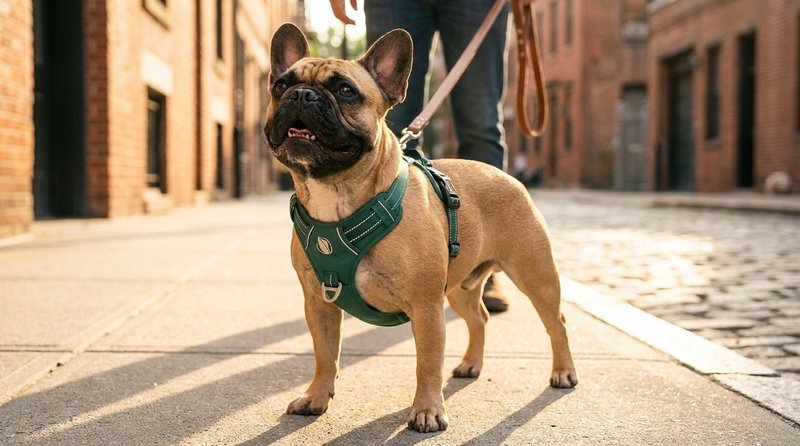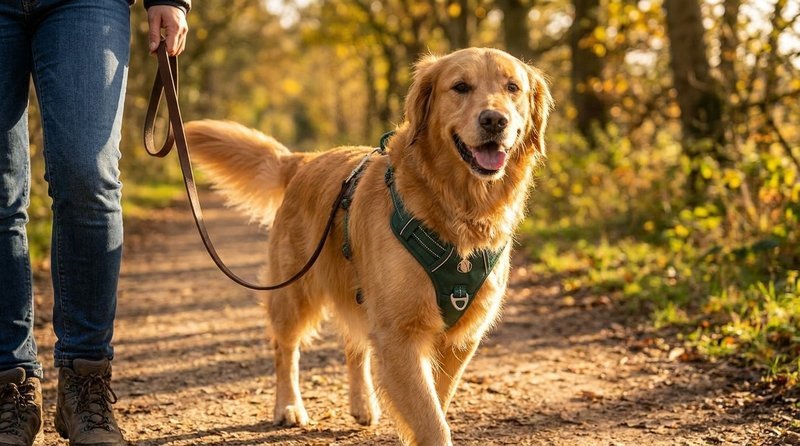



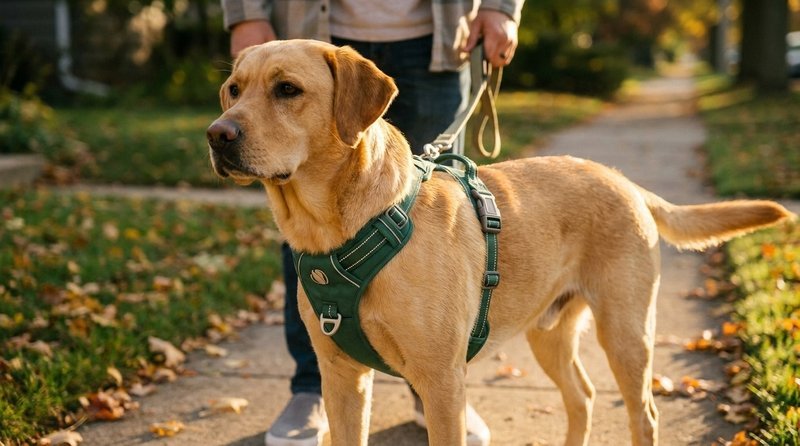
Harnesses are not bad for dogs. For most dogs, a well-fitted harness is a safer leash attachment than a neck collar because it moves pulling pressure off the throat and onto the chest and shoulders. Problems come from specific designs and poor fit - straps that cross the shoulder, no-pull styles that cinch, or a harness that rides onto the throat - not from harnesses as a category. Choosing a Y-shaped, correctly fitted harness and pairing it with training keeps walks safe and comfortable for your dog.
You have probably seen the scary version somewhere: a trainer insisting harnesses “ruin” a dog’s shoulders, a breeder warning they teach dogs to pull, or a video claiming you should never use one. Then you read the opposite - that harnesses are the only safe choice and collars are dangerous.
So which is it? If you are a pet parent who just wants to do right by your dog, the internet’s shouting match is not helpful.
Here is the honest, evidence-based answer. Harnesses are not bad for dogs, but they are not magic either. The truth lives in the details: the design, the fit, and what you expect the harness to do. Some of the anti-harness worries have a kernel of real science behind them, and we will look at those squarely instead of pretending they do not exist.
This guide draws on peer-reviewed veterinary research and guidance from veterinary sources, plus what we have learned helping more than 300,000 pet parents find gear that fits. You will get the real risks, the myths worth ignoring, and a simple way to tell a good harness from a bad one.
Table of Contents
- The Short Answer: Are Harnesses Bad for Dogs?
- Why Most Vets and Trainers Lean Toward Harnesses
- The Real Risks of Harnesses (and When They Show Up)
- Do Harnesses Make Dogs Pull? The Opposition-Reflex Myth
- Good Harness vs Bad Harness: How to Tell the Difference
- Front-Clip vs Back-Clip: Which Is Better?
- Which Dogs Should - and Shouldn't - Rely on a Harness
- How to Fit a Harness So It Never Becomes the Problem
- Frequently Asked Questions
- So, Are Harnesses Bad for Dogs?
The Short Answer: Are Harnesses Bad for Dogs?
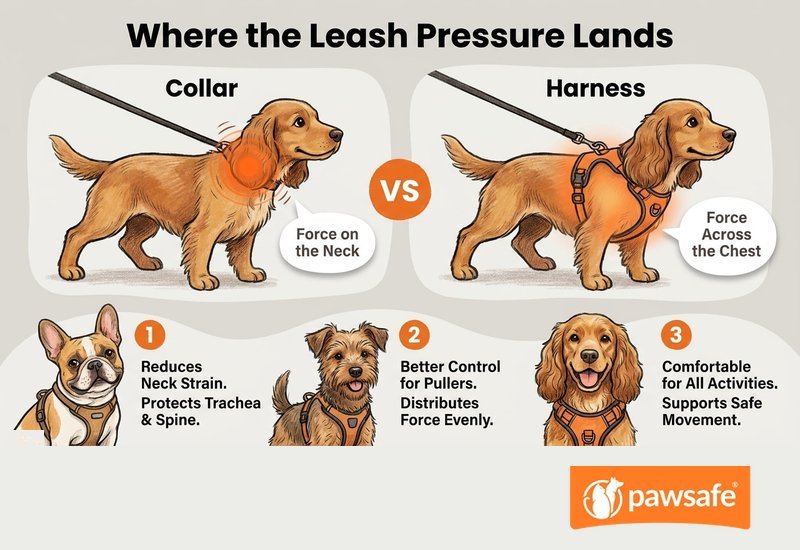
No - harnesses are not bad for dogs. A well-designed, well-fitted harness spreads leash pressure across the sturdy chest and shoulders instead of concentrating it on the delicate neck. For dogs that pull, that is a meaningful safety upgrade.
But “harness good, collar bad” is too simple. Three things decide whether a harness helps or hurts:
- Design - straps that cross the shoulder joint or cinch tight can affect how a dog moves.
- Fit - a loose or wrong-shaped harness can chafe, rotate onto the throat, or let a dog escape.
- Expectation - a harness manages a pulling dog; it does not train one.
Get those right and a harness is one of the safest, kindest tools you can put on your dog.
| A harness is a smart choice when… | Take extra care when… |
|---|---|
| Your dog pulls on the leash | Your dog is a growing puppy (check fit often) |
| You have a flat-faced or small breed | Your dog is a sport or working dog under load |
| Your dog has neck, spine, or eye issues | Your dog is deep-chested and slips gear |
| You travel with your dog in the car | The harness rubs, rotates, or rides up |
Why Most Vets and Trainers Lean Toward Harnesses
The strongest argument for harnesses is what happens to a dog’s neck when it pulls against a collar.
A 2020 study in the Veterinary Record by Carter and colleagues tested seven collars and a slip lead, applying forces from a firm 40-newton pull up to a 141-newton jerk. Measured neck pressures ranged from 83 to 832 kilopascals depending on the collar and the force. The researchers concluded that “no single collar tested provided a pressure considered low enough to mitigate the risk of injury.” Even padded collars did not solve it - in a separate 2019 study, a double-padded collar actually produced the highest average contact pressure.
A harness changes that physics. Instead of loading the throat, it distributes force across the chest and shoulders, areas built to take it. This is why so many pet parents weighing up a dog harness vs collar end up using both: a collar for ID tags, a harness for walks.
The eye and airway evidence points the same way:
- Eye pressure. In a 2006 study, dogs pulling against a collar showed a 51.6% average jump in intraocular pressure, while pulling in a harness raised it just 15.8% - a change that was not statistically significant. A 2025 study found flat-faced dogs had significant eye-pressure increases on a collar but not on a Y-shaped harness.
- Windpipe. The American College of Veterinary Surgeons recommends a body harness for small breeds prone to tracheal collapse, such as Yorkshire Terriers, Pomeranians, Poodles, and Chihuahuas.
- Neck and spine. Veterinary guidance recommends harnesses over neck leashes for dogs with cervical disc disease and cervical instability.
One honest caveat: these studies show collars can create high, concentrated pressure, especially during pulling or jerking. They do not prove every collar injures every healthy dog. The concern is real and well worth respecting - it is just not a reason to panic about collars for a calm walker.
The Real Risks of Harnesses (and When They Show Up)
Here is where we take the anti-harness camp seriously. Harnesses do carry risks - almost all of them tied to design, fit, or misuse rather than the harness itself.
Chest pressure and rubbing
If a harness fits poorly and a dog pulls hard, there is some potential for a chest injury, according to Dr. Susan Nelson, a clinical professor at Kansas State University. Narrow or displaced straps concentrate force in one spot.
More common is plain chafing. The armpits, sternum, and area behind the elbows are high-friction zones. Veterinarian Dr. Katie Grzyb advises checking these hidden areas and never leaving a wet harness on for long, since trapped moisture can lead to skin infection.
Front clips that ride onto the throat
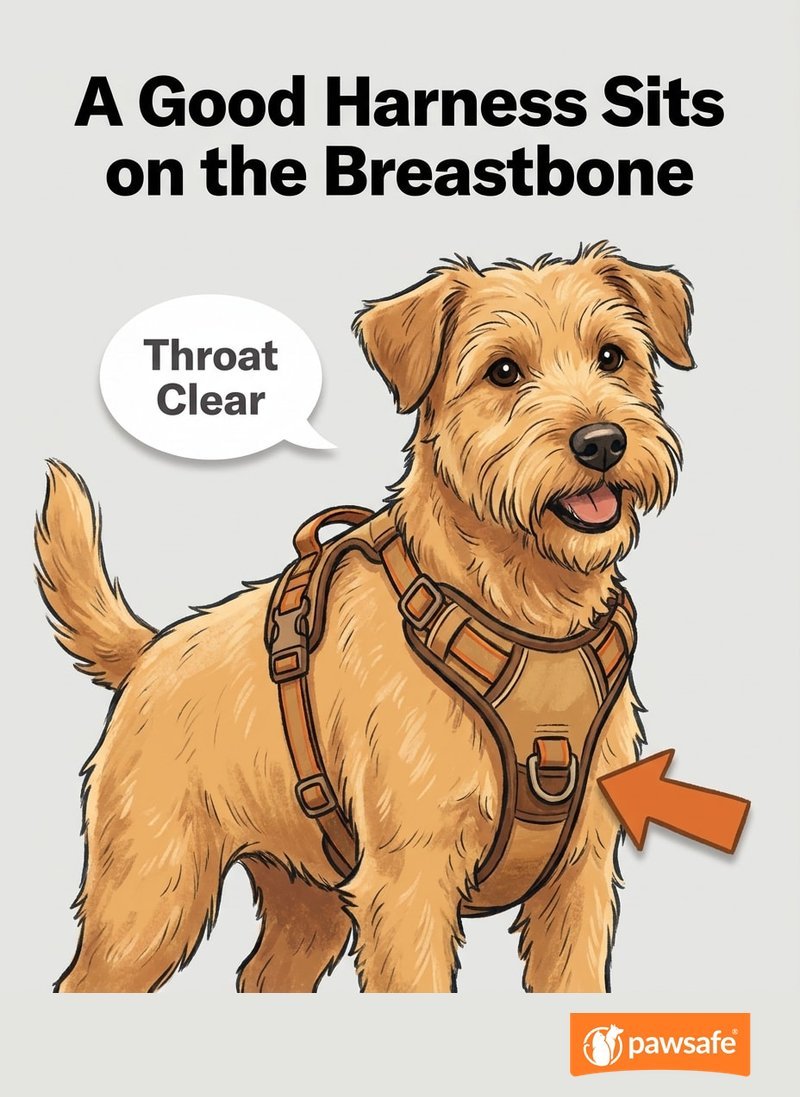
A front-clip harness is not automatically neck-safe. If the chest panel sits too high, fits too loosely, or rotates under tension, it can migrate toward the throat - the exact pressure you were trying to avoid. Positioning and fit are everything, which is what separates a true no-choke dog harness from one that merely calls itself gentle.
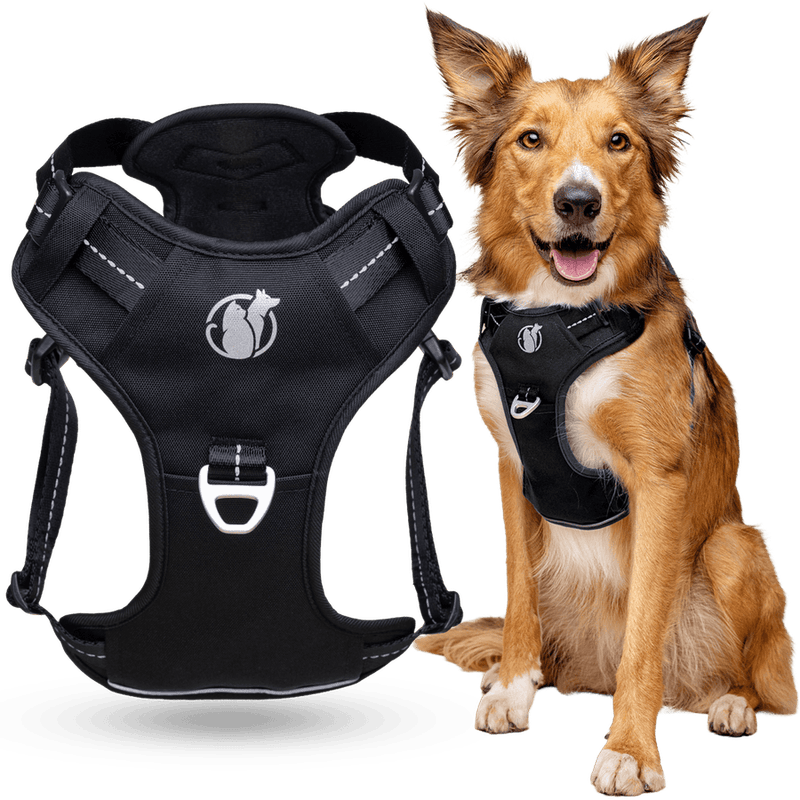
Stop Your Dog Pulling On Their Leash
The Steady+Style No Pull Harness uses front and back clip points to redirect pulling, so you get immediate, gentler control and can actually enjoy the walk again.
Shop Now 👉Better Walk Guarantee • 90-Day PawSafe® Promise
Escape
A dog that backs out of its harness mid-walk is a genuine danger. Deep-chested dogs and narrow-headed sighthounds like Greyhounds are the usual escape artists. This is one reason your dog should still wear a collar with ID, and why escape-prone dogs may need a three-strap or double-H style harness.
Sleeping or wearing it 24/7
A harness left on during sleep, crating, or unsupervised play can snag on furniture, wire, branches, or another dog’s mouth. Veterinary sources flag entanglement, panic, and choking as real risks and advise removing the harness when your dog is not being actively walked. A harness is walking gear, not all-day clothing.
Do Harnesses Make Dogs Pull? The Opposition-Reflex Myth
This is the claim you hear most: harnesses trigger an “opposition reflex,” so a dog instinctively pulls against chest pressure like a sled dog.
It sounds convincing, and there is a grain of truth underneath it. Controlled studies do show dogs can pull with more force in a back-clip harness. In a 2025 crossover study, mean leash force was 60.5 N in a back-clip harness versus 37.8 N in a collar. An earlier 2021 study found the same direction of effect.
But here is what those numbers actually mean - and do not mean. No study has validated an innate “opposition reflex.” A back clip simply gives a dog a comfortable, stable point to lean into, and it removes the throat discomfort that would otherwise limit pulling against a collar. That explains the extra force without any special reflex.
In other words: harnesses do not teach pulling. Dogs that want to pull will pull in anything - a harness just lets them do it without hurting their neck. And front-clip harnesses can genuinely help. A 2024 study found a non-tightening front-connection harness produced significantly less pulling than a martingale collar, and a 2025 systematic review concluded a non-tightening front-clip harness “offers a reasonable balance” for dogs that pull.
The takeaway: a harness is management equipment, not a training method. The leash keeps your dog safe; training teaches the manners.
Good Harness vs Bad Harness: How to Tell the Difference
This is the section that actually protects your dog. Most “harnesses are bad” horror stories are really stories about bad harnesses or bad fit. Here is how to judge yours in about 30 seconds.
Signs of a poorly designed harness:
- A strap that sits directly on or across the point of the shoulder, interfering with the moving front leg.
- A no-pull design that cinches and tightens around the shoulders or torso when the dog pulls.
- A body so short that the girth strap digs into the armpits.
- A chest piece that rides up onto the throat or rotates sideways under tension.
- Few or no adjustment points, so you cannot dial in the fit.
Signs of a good harness:
- A Y-shaped front that rests on the breastbone (sternum), keeping the throat clear.
- Straps that sit away from the point of the shoulder and behind the elbow, not in the armpit.
- A padded chest plate that spreads pressure over a broad, smooth surface.
- Multiple adjustment points so it fits your dog’s actual shape.
- Hardware that stays centered instead of rotating.
- A secure shape your dog cannot back out of.
This is the thinking behind our Steady+Style No Pull Harness: a padded chest plate and a front-clip Y-front that redirects a puller’s momentum without choking, plus adjustable straps so the load sits where it should rather than on the throat or shoulder joint. No harness suits every dog, though - if you want to compare styles and brands side by side, our dog harness reviews walk through 10 popular options and who each one fits.
One evidence-based reality check: a Y-shape is a sensible anatomical starting point, not a guarantee. Gait studies have found small movement changes in both Y-shaped and horizontal-strap harnesses, so fit and your individual dog matter as much as the label on the box.
Front-Clip vs Back-Clip: Which Is Better?
Neither is “better” outright - they do different jobs.
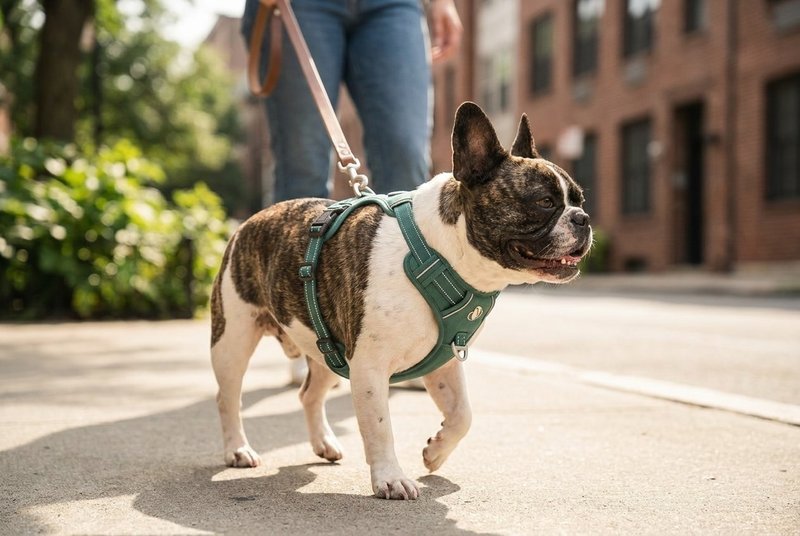
Back-clip harnesses attach between the shoulder blades. They are comfortable, keep pressure off the neck, and are a great pick for calm walkers, small dogs, and flat-faced breeds. The trade-off: because pulling is comfortable, a determined puller can lean into it happily.
Front-clip harnesses attach at the chest. When your dog pulls, the leash gently turns them back toward you, which is why they work as a no-pull training aid for strong pullers. Use them as a management tool while you train, and make sure the chest piece never rotates onto the throat or crosses the shoulder.
Dual-clip harnesses offer both, so you can start with the front clip for training and switch to the back clip once loose-leash walking clicks.
For puppies and sport dogs, favor a well-fitted Y back-clip and avoid cinching front designs during heavy activity, since those are the dogs most likely to notice a restrictive fit.
Make Every Walk Feel Under Control
Adjustable comfort design helps reduce leash tension fast so walks become calm, consistent, and more enjoyable for both of you.
Shop Now 👉Better Walk Guarantee • 90-Day PawSafe® Promise
Which Dogs Should - and Shouldn’t - Rely on a Harness
The right answer depends on your specific dog. Here is a quick guide, and you can find more options in our dog harness collection and guides.
| Dog type | Harness guidance |
|---|---|
| Flat-faced (brachycephalic) breeds | Strongly favored - keeps pressure off the airway and eyes |
| Small breeds prone to tracheal collapse | Recommended by veterinary surgeons; spares the windpipe |
| Dogs with neck, spine, or disc issues | Recommended - distributes force off the neck |
| Dogs with glaucoma or eye-pressure risk | Favored - collars raise eye pressure far more when pulling |
| Strong pullers | Yes, ideally a non-tightening front-clip while you train |
| Reactive dogs | Front-clip harness plus a training plan for control |
| Escape artists and sighthounds | Yes, but choose an escape-resistant three-strap design |
| Growing puppies | Yes, with frequent fit checks - they outgrow gear fast |
| Sport and working dogs | Yes, but prioritize free shoulder movement during the task |
| Calm, trained adult walkers | A harness or a flat collar are both reasonable |
A harness is not a medical treatment. If your dog has noisy or labored breathing, a repeated honking cough, blue or gray gums, fainting, or exercise intolerance, those are signs to see your vet - no harness fixes an airway problem.
How to Fit a Harness So It Never Becomes the Problem
A great harness that fits badly is a bad harness. Fit is where most trouble starts and where it is easiest to prevent.
- Measure your dog’s chest girth around the widest part of the rib cage, just behind the front legs.
- Use the manufacturer’s size chart - not breed or weight guesses.
- Adjust each strap independently for your dog’s shape.
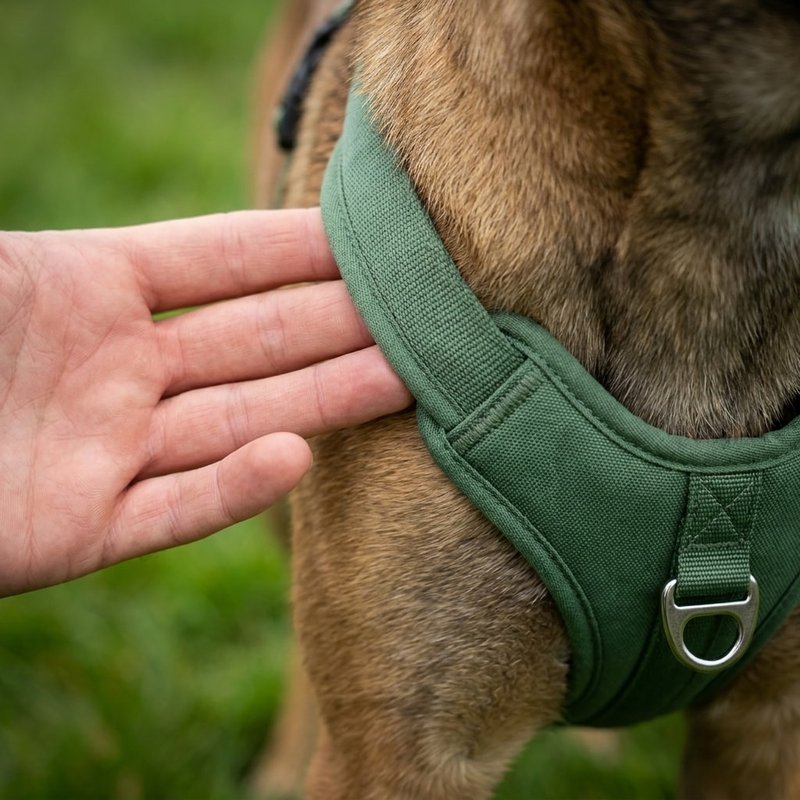
- Use the two-finger rule: two fingers should slide snugly under each strap with no loose gap (one finger is a better check for very small dogs).
- Walk and trot your dog, watching for shortened steps, rubbing, rotation, coughing, or reluctance.
- Do a gentle backward-escape check - can your dog reverse out of it?
- Recheck the fit after grooming, weight changes, or a puppy growth spurt.
Pro Tip: After a walk, run your hands over the armpits, sternum, and behind the elbows. Red marks, matted fur, or missing hair mean the fit needs adjusting - catch it early and it never becomes a sore.
Frequently Asked Questions
Are harnesses bad for a dog’s shoulders?
Harnesses can change shoulder extension and stride length in the short term, and this has been measured with both shoulder-crossing and Y-shaped designs - sometimes even with no leash attached. But no study has shown these changes cause lasting shoulder injury, arthritis, or pain. Fit and your individual dog’s movement matter more than a “nonrestrictive” label.
Do harnesses make dogs pull more?
Back-clip harnesses can let a dog pull with more force - one 2025 study measured a mean of 60.5 N in a harness versus 37.8 N in a collar. That does not mean the harness teaches pulling or triggers an opposition reflex. Non-tightening front-clip harnesses can reduce pulling, but training is what changes the behavior long term.
Enjoy Calm Walks Starting Today
Dual-attachment harness distributes pressure and helps turn tug-of-war outings into relaxed, bonding strolls from the first use.
Shop Now 👉Better Walk Guarantee • 90-Day PawSafe® Promise
Is a harness or collar better for a dog?
For a dog that pulls, or one with airway, neck, spine, tracheal, or eye-pressure concerns, a well-fitted harness is generally the safer leash attachment. A flat collar is reasonable for ID tags and for a healthy dog that reliably walks on a loose leash. Most experts suggest using a collar for identification and a harness for walks.
Are no-pull or front-clip harnesses bad for dogs?
Not inherently. Research supports non-tightening front-clip harnesses as a useful way to manage pulling. Problems arise when a harness tightens painfully, crosses the moving shoulder, rotates, rubs the armpits, or rides up onto the throat. A no-pull harness should assist reward-based training, not replace it.
Can a dog wear a harness all day or sleep in it?
Routine all-day or overnight wear is not advised. Prolonged wear increases rubbing, trapped moisture, matting, skin infection, and the risk of the harness snagging or causing entanglement. Take the harness off and let it dry after walks unless your vet has prescribed a specific medical wearable.
Are harnesses bad for puppies?
No evidence shows a correctly fitted harness harms a puppy’s growth plates. The real issue is that puppies outgrow gear fast, so check the fit often and right after a growth spurt. Your puppy should be able to walk, trot, sit, and lie down with no rubbing or restriction.
Do vets actually recommend harnesses?
Many veterinary authorities recommend harnesses for dogs that pull and for dogs with tracheal collapse, cervical disc disease, cervical instability, glaucoma risk, or brachycephalic breathing issues. Some veterinary behaviorists also prefer a well-fitted harness for everyday leash walking. It is not a unanimous rule that every dog must wear one.
So, Are Harnesses Bad for Dogs?
No. For most dogs, a well-fitted harness is a safer, kinder leash attachment than a collar - and the evidence backs that up, especially for pullers and dogs with neck, airway, or eye vulnerabilities.
Here is what to remember:
- Harnesses are not bad for dogs; poor design, poor fit, and wrong expectations are.
- Collars can put high pressure on the neck when a dog pulls - a harness moves that load to the chest.
- Harnesses do not cause pulling. Dogs that pull will pull in anything; training changes that, not equipment.
- The real risks - chafing, throat migration, escape, and entanglement - all come down to design and fit.
- Choose a Y-shaped harness that clears the shoulder and throat, fit it with the two-finger rule, and take it off at home.
Get those right, and the question “are harnesses bad for dogs” answers itself: a good harness, fitted well and paired with a little training, makes every walk safer and more comfortable for both of you. Ready to find one that fits your dog properly? Browse harnesses built to sit where they should - on the chest, off the throat, with the shoulders free to move.