


How long dog probiotics take to work depends on why they’re being used, the specific strain and product, and the individual dog - there’s no universal timeline. Probiotics support the balance of gut bacteria, which takes consistent daily use rather than a single dose. Some dogs show digestive changes like firmer stool or less gas within a few days to a week, while broader or chronic benefits are typically studied over several weeks. Because results vary and aren’t guaranteed, worsening or persistent symptoms need a vet - not more waiting.
You started the probiotic a few days ago, and now you’re standing over the poop bag wondering: is this actually working yet? It’s the most natural question in the world, and the honest answer is the one most product pages won’t give you: it depends, and there’s no magic number.
That’s not a dodge - it’s what the research actually shows. How fast (and whether) a probiotic helps hinges on the exact strain and product, how many live organisms survive to reach the gut, the reason you’re using it, and your individual dog. This guide lays out realistic, vet-sourced timelines by situation, what affects them, how long to keep going, and - most importantly - when to stop waiting on a supplement and call your vet. It’s part of our dog gut health library and built on veterinary sources.
Table of Contents
- The Honest Answer: There's No Universal Timeline
- Typical Timelines by Situation
- What Affects How Fast Probiotics Work
- How Long Should a Dog Be on Probiotics?
- How to Tell If It's Working (and If It Isn't)
- When to See a Vet Instead of Waiting
- A Few Practical Tips
- Frequently Asked Questions
- The Bottom Line
The Honest Answer: There’s No Universal Timeline
Probiotics aren’t a switch you flip. They work by nudging the balance of the gut’s bacterial community, and that’s a “consistent daily use over time” project, not a one-dose fix. Many of the organisms are also transient - they pass through rather than permanently colonizing - which is part of why studies give them daily.
It’s also worth being straight about the evidence. A 2019 systematic review described the effect of probiotics in acute canine digestive upset as “very limited and possibly clinically unimportant,” and the 2024 ENOVAT guideline - a major veterinary panel - concluded it “does not recommend either for or against” probiotics for acute diarrhea. Some products help some dogs in some situations. None is guaranteed, and the results are specific to the strain and product, not “probiotics” as a category.

Typical Timelines by Situation
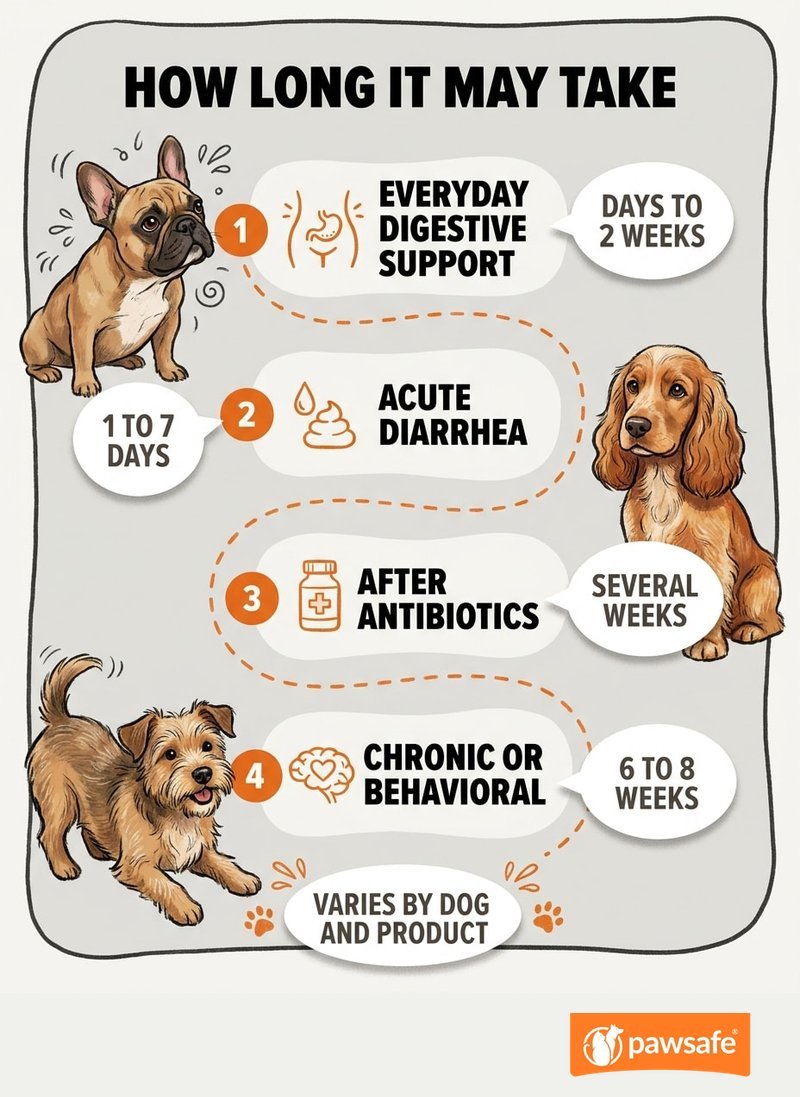
With all that said, here’s what the research suggests you might realistically expect, depending on why you’re using a probiotic.
Everyday digestive support
There’s no evidence-based countdown for “firmer stool” or “less gas.” Veterinary guidance from VCA says probiotics “may take several days to see full effects,” and the small studies that exist have often measured general or gas-related outcomes over about two to four weeks. So: a change may show up within several days, but give it a couple of weeks before judging - as long as your dog is otherwise well.
Acute diarrhea
This is where owners most want a number, and where honesty matters most. Across controlled trials, dogs with acute diarrhea usually improved within roughly one to seven days - but so did the dogs who got a placebo or just supportive care. Some products shortened episodes modestly (one trial of a Bifidobacterium strain saw resolution around 3.9 days versus 6.6 with placebo), but when the stronger studies were pooled, the average benefit was about two-thirds of a day - small enough that vets call its real-world importance uncertain. Translation: a probiotic can be associated with a faster recovery, but a quick improvement doesn’t prove the probiotic caused it.
Around antibiotics
Antibiotics can disrupt the gut community for weeks - at least four after a course of one common antibiotic, and longer with broader combinations. A synbiotic may help the microbiome bounce back, but “the microbiome looks more normal on a test” isn’t the same as “your dog feels better.” One practical tip below on timing probiotics around antibiotic doses.
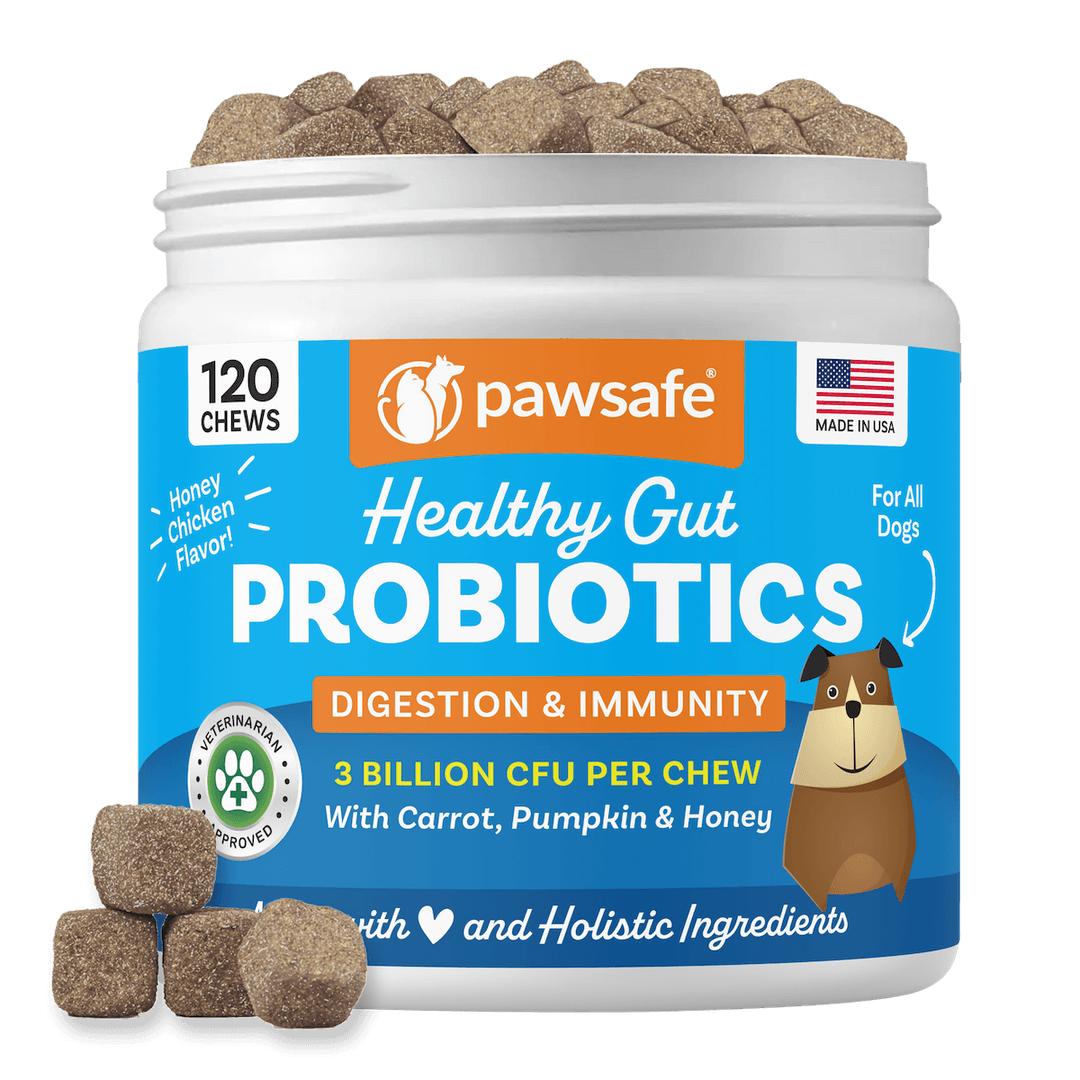
Daily Support For Healthy Digestion
Multi-strain probiotic soft chews that help maintain gut balance and stool quality in an easy, tasty format.
Shop Now 👉Vet Approved Formula • 90-Day PawSafe® Promise
Chronic or behavioral goals
For ongoing issues, the studies run long. Chronic-gut trials generally evaluated results over six to eight weeks (sometimes 60-90 days), and the well-known gut-brain study on an anxiety-linked strain used a six-week supplementation phase. These aren’t situations to self-manage with an off-the-shelf chew for weeks - they need a vet’s diagnosis and plan.
For how long dog probiotics take to work, then, the realistic range is “a few days to a few weeks,” entirely depending on the goal - which is also the honest answer to “how long for dog probiotics to work” in any specific case.
What Affects How Fast Probiotics Work
Why such a wide range? A handful of factors:
- Strain and product. Benefits shown for one specific strain don’t automatically transfer to another - or to a different product. The exact strain and formulation matter more than the word “probiotic” on the label.
- Live organisms (CFU and viability). A big colony-forming-unit (CFU) number on the box means little if the organisms aren’t still alive at the end of the shelf life. Look for a guarantee of live organisms through the expiration date, a named strain, and storage instructions.
- The underlying issue. A probiotic can’t fix parasites, an obstruction, pancreatitis, or many other causes of loose stool. If those are the real problem, no amount of waiting helps.
- Your individual dog. Age, health, diet, and existing gut community all shape the response - which is genuinely individual from dog to dog.
- Consistency. Most studies gave the product daily. Sporadic dosing is the most common reason a fair trial never really happens.
How Long Should a Dog Be on Probiotics?
There’s no evidence-based duration that fits every dog - even veterinary specialists note the studies simply don’t pin down an ideal length for an individual patient. What’s reasonable depends on the reason:
- A short course makes sense tied to a specific event or bout - around travel or boarding, or after a vet visit for digestive upset - often a couple of weeks or until things settle.
- A longer run is what chronic-condition and behavioral studies used (roughly four to eight weeks, sometimes longer), but those are vet-managed situations.
- Ongoing daily use is permissible for many dogs, but it isn’t automatically necessary. Veterinary nutrition experts at Tufts note there’s no good evidence that a daily probiotic improves wellness in an otherwise healthy dog, so it’s best used when there’s an actual reason.
You’ll also see confident claims that it takes “up to 90 days for the gut to acclimate.” Treat that with skepticism - it traces back to commercial marketing rather than a veterinary guideline, and many probiotic organisms never permanently settle in anyway. Whether to give one every day is really a question worth its own answer; our guide on giving your dog probiotics every day digs in.
How to Tell If It’s Working (and If It Isn’t)
Track the specific thing you started the probiotic for. Signs of a possible benefit include more consistently formed stool, fewer urgent or overnight bathroom trips, less gas, and steady appetite and energy. A simple daily note - stool score, any vomiting, appetite, diet changes, missed doses - beats relying on memory, and it helps you and your vet see a real trend.
Keep two honest caveats in mind. First, improvement doesn’t prove causation: mild diarrhea often resolves on its own, and diet or supportive care may deserve the credit. Second, reassess the plan if there’s no trend toward the goal within the product’s supported window, if symptoms keep returning, or if anything gets worse. If you’re not even sure your dog needs one, our guide to the signs a dog may need probiotics can help you decide.
When to See a Vet Instead of Waiting
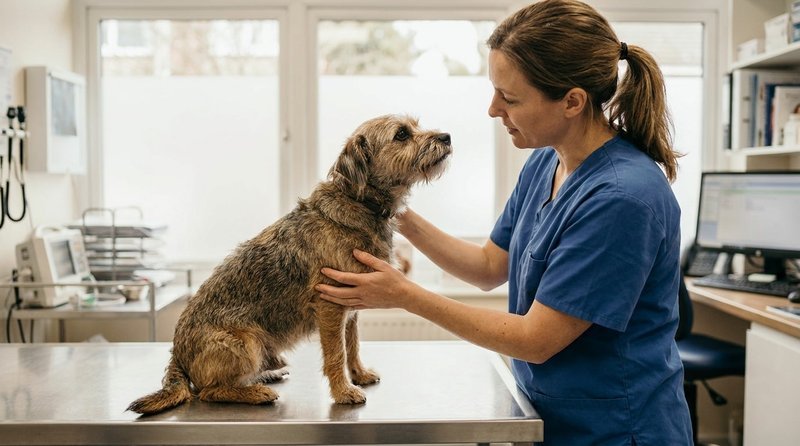
A probiotic is support, not treatment - and it should never delay real care. Cornell’s veterinarians advise seeking help if diarrhea hasn’t resolved within 48-72 hours, or sooner if warning signs appear.
Stop waiting and see a vet promptly if your dog has:
- Fresh blood in the stool, or black, tarry stool
- Repeated or severe vomiting, or can’t keep water down
- No appetite, marked lethargy, weakness, or collapse
- Signs of dehydration, or a bloated or painful belly
- A suspected swallowed object or toxin
- Diarrhea that’s worsening, or any concerning signs in a puppy, senior, pregnant, immunocompromised, or chronically ill dog
In those situations, the question isn’t “how long until the probiotic works” - it’s “how fast can my dog be seen.”
Gut & Immune Support In One Chew
Targeted strains assist normal digestion while supporting natural immune defenses—simple once-a-day routine.
Shop Now 👉Vet Approved Formula • 90-Day PawSafe® Promise
A Few Practical Tips
- Give it consistently, usually with food - unless the label or your vet says otherwise.
- Space it from antibiotics. If your dog is on an oral antibiotic, veterinary specialists suggest separating a bacterial probiotic from the antibiotic dose by at least two hours so the drug is less likely to knock it out - but follow the antibiotic’s own instructions first, and never skip or delay a dose to fit the probiotic in.
- Store it right. Check the label; refrigerate only if directed, and don’t assume a heat-exposed or expired product still has its stated live count.
- Don’t double up. Giving extra won’t speed things along and may just cause gas or loose stool. Don’t double a missed dose.
If a daily probiotic is part of your dog’s routine, our Probiotic Soft Chews are one option - a multi-strain blend with prebiotic and functional ingredients like pumpkin and flaxseed, formulated to support normal digestion in a honey-chicken chew. Some strain-specific studies report digestive benefits, but results vary from dog to dog, so follow the label and check with your vet. It’s everyday support, not a treatment for a sick dog.
Frequently Asked Questions
How long do dog probiotics take to work?
There’s no universal timeline. Some dogs show a digestive change within several days, but it depends on the strain, product, reason for use, and the individual dog. In acute-diarrhea studies, improvement usually appeared within about one to seven days - often only slightly faster than no probiotic at all. Studies of chronic gut or behavioral goals commonly measured results over six to eight weeks.
How long should a dog be on probiotics?
It depends on why you’re giving them. Products for short-term digestive upset are often used as brief courses, while veterinary trials for chronic conditions ran six to eight weeks or longer. There’s no evidence-based duration that fits every dog, and not every healthy dog needs an indefinite daily probiotic - it’s a decision to make with your vet.
Do you have to give a dog probiotics every day?
Most studied products were given daily, partly because many probiotic organisms are transient and don’t permanently settle in the gut. Daily use can make sense when the label or your vet recommends it, but consistency matters more than dose-chasing - and a healthy dog doesn’t automatically need a probiotic for life.
Make Digestive Care Effortless
Palatable soft chews your dog looks forward to, helping keep things regular and comfortable over time.
Shop Now 👉Vet Approved Formula • 90-Day PawSafe® Promise
Can dog probiotics work in a few days?
Sometimes. A few controlled trials found stool-related differences within the first several days, while others found no meaningful advantage over a placebo. So “can work within a few days” is fair, but “will work within a few days” isn’t. And a faster-looking stool doesn’t prove the probiotic caused it - mild diarrhea often improves on its own.
Why aren’t my dog’s probiotics working?
Common reasons include the wrong strain or product for the issue, too few live organisms (or poor storage), inconsistent daily use, an interaction with antibiotics, a diet change happening at the same time, or an underlying problem a probiotic simply can’t fix. Persistent or recurring symptoms need a vet’s diagnosis rather than switching supplements again.
Should you give a dog probiotics with antibiotics?
A vet may recommend it during or after antibiotics. Bacterial probiotics are usually separated from an oral antibiotic by at least two hours so the drug is less likely to inactivate them. The right product and timing depend on the specific antibiotic, so confirm the plan with the prescribing vet - and never skip or delay an antibiotic dose to fit a probiotic in.
Can you give a dog probiotics for too long?
Long-term use is generally considered well tolerated, but the long-term evidence is limited and not every dog benefits. If you keep a dog on a probiotic, it should have a clear goal, a visible benefit, and periodic check-ins with your vet - especially for an immunocompromised or chronically ill dog. Giving extra won’t make it work faster.
The Bottom Line
So, how long do dog probiotics take to work? A few days to a few weeks, depending entirely on the reason - with digestive changes sometimes showing up early and chronic or behavioral goals measured over weeks. There’s no magic number, the evidence is genuinely mixed, and consistency matters more than chasing a bigger dose.
The most useful mindset is patient but alert: give a quality product a fair, consistent trial, track how your dog actually does, and don’t let a supplement stand in for veterinary care. If there’s blood, repeated vomiting, a dog who won’t eat, or symptoms that worsen or won’t quit, skip the waiting game and call your vet. For more on using them wisely, browse our gut health and probiotics library - and when you’re unsure how long to give your dog probiotics or whether they need them at all, your vet is the best guide.