
Yes, dog probiotics can cause diarrhea, though it’s usually mild and short-lived. When you first start a probiotic - or give too much too soon - the new bacteria and any fermentable prebiotic fiber can loosen the stool or cause gas. A symptom that appears after starting a probiotic doesn’t prove the probiotic caused it, since diet changes, stress, parasites, and illness cause the same signs. Watch for blood, vomiting, or lethargy, which mean it’s time to call your vet.
You started a probiotic to help your dog’s stomach - and now the stool is looser than before. It’s a confusing, slightly worrying place to be, and the internet’s favorite answer doesn’t help: “That’s just detox, push through it.”
Here’s the honest version, and it matters. Yes, a probiotic can loosen your dog’s stool, usually mildly and briefly. But “push through the detox” is not backed by canine evidence, and following it blindly can mean ignoring a dog that’s actually getting sick.
This guide, reviewed against veterinary sources, walks through whether probiotics really cause diarrhea, why it happens, how to tell a harmless adjustment from a red flag, and how to lower the odds in the first place. We’ll also answer the flip side - whether probiotics actually help diarrhea - because the honest answer there is more nuanced than most product pages admit.
Table of Contents
- Can Probiotics Cause Diarrhea in Dogs? The Honest Answer
- Why a Probiotic Might Loosen Your Dog's Stool
- Is It Normal, and How Long Should It Last?
- Red Flags: When Diarrhea Is Not Just an Adjustment
- How to Reduce the Chance of Diarrhea
- Do Probiotics Actually Help Dogs With Diarrhea?
- Who Should Talk to a Vet Before Starting a Probiotic
- Frequently Asked Questions
- Loose Stool, Probiotics, and When to Worry
Can Probiotics Cause Diarrhea in Dogs? The Honest Answer
Yes. Some dogs develop softer stool, more frequent bowel movements, gas, mild belly discomfort, or short-lived diarrhea after starting a probiotic - most often in the first few days or when the dose is higher than the dog is ready for. Veterinary guidance recognizes these as possible early responses, especially with high-potency, multi-strain products or ones with lots of fermentable fiber.
But here’s the part the “detox” crowd skips, and it’s the single most useful thing to understand: a symptom that appears after starting a probiotic doesn’t prove the probiotic caused it. Timing is a clue, not a diagnosis. Diarrhea has a long list of causes - a diet or treat change, table scraps, stress, scavenging, parasites, infections, medications, a swallowed object, pancreatitis, or other illness - and any of them could have arrived at the same time as the new supplement.
So the right frame isn’t “is this normal?” It’s “is this mild and settling, or is my dog telling me something’s wrong?” The rest of this guide answers exactly that.
Why a Probiotic Might Loosen Your Dog’s Stool
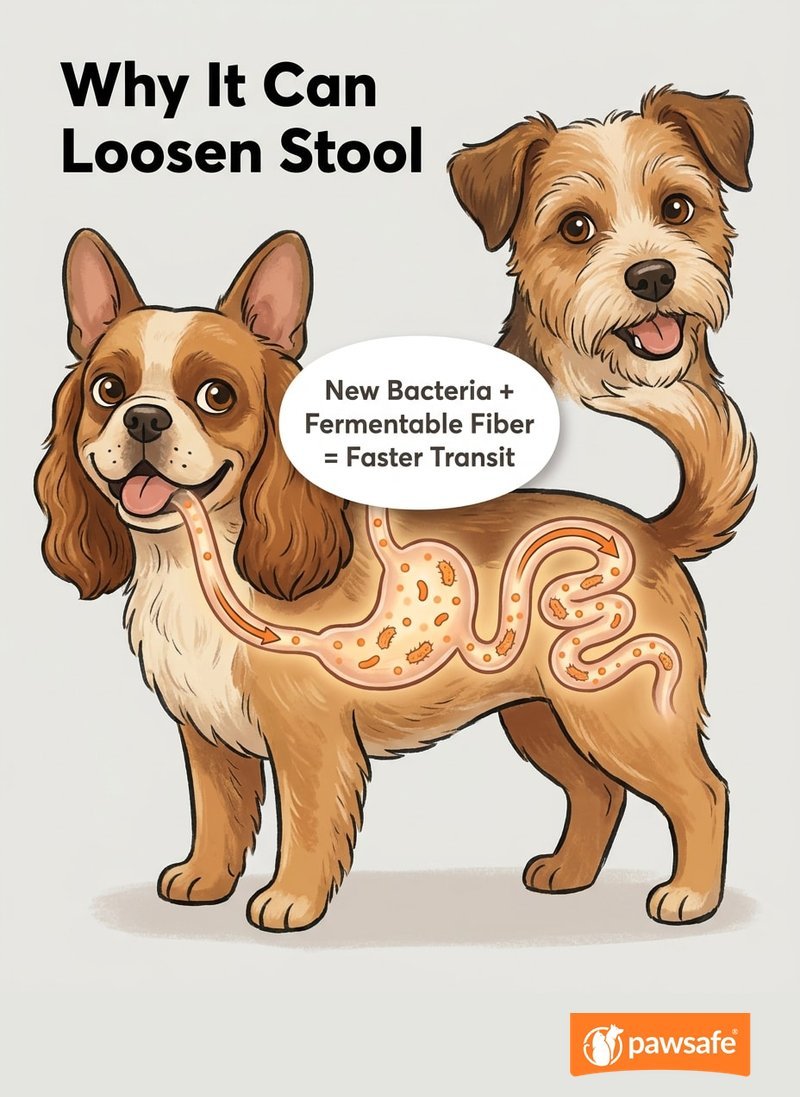
When a probiotic does cause loose stool, a few mechanisms are usually behind it:
- The gut responding to new organisms. Adding live bacteria can shift the balance in the gut for a short time. This is real, but “your dog’s microbiome is adjusting” is an explanation, not a proven diagnosis for every case - so don’t lean on it to excuse worsening symptoms.
- Too much, too soon. Higher initial exposure - a big dose before the dog is used to it - is linked to more early gas and loose stool. Vets sometimes see this ease after a clinician-directed dose change.
- Fermentable prebiotic fiber. Many “probiotics” are actually synbiotics that also contain fibers like inulin, FOS, pectin, or beta-glucans. Gut bacteria ferment these into short-chain fatty acids, which are normally helpful - but rapid fermentation of a lot of fiber can produce gas, speed up transit, and loosen stool in a sensitive dog.
- The other ingredients. Flavorings, proteins, fats, or binders in the chew - not the bacteria at all - can be the trigger, particularly in a dog sensitive or allergic to a component.
What this means in practice: it’s worth reading the whole label, not just the strain list. For a broader look at the full range of reactions dogs can have, our guide to dog probiotic side effects goes deeper than diarrhea alone.
Is It Normal, and How Long Should It Last?
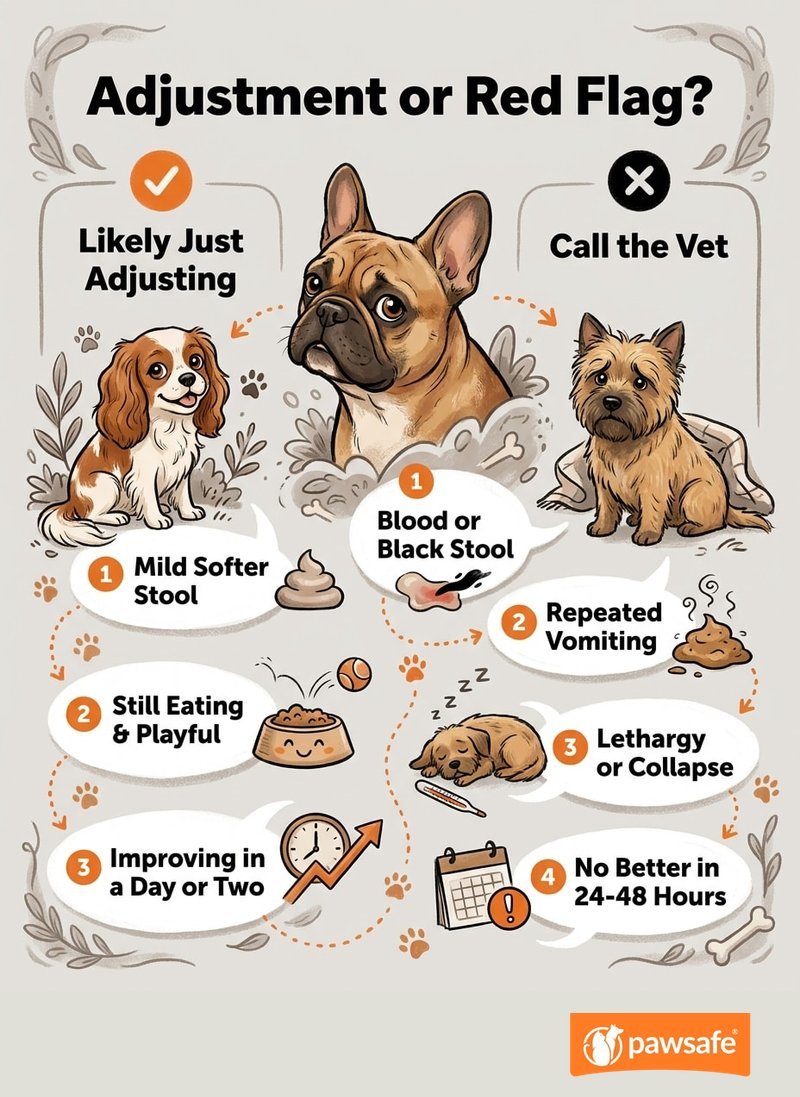
Mild, non-progressive loosening in an otherwise bright, well-hydrated adult dog is common and often settles on its own. Vets describe these mild effects as usually lasting “the first few days.”
But be careful with any source that promises a fixed “adjustment period.” There is no validated canine timeline - no proven three-, five-, or seven-day window you should make a dog push through. The honest rule is to judge the dog, not the calendar.
If you see mild loose stool after starting a probiotic:
- Stop adding new variables. Don’t introduce a new food, treat, chew, or supplement at the same time - it only muddies what’s causing what.
- Keep a short, dated log. Note stool consistency and frequency, appetite, energy, water intake, gas, and exactly when you gave the product.
- Pause the new product if a new sign follows it, and ask your vet whether to stop it rather than pressing on automatically. Don’t guess at a smaller dose on your own.
For the bigger picture on how a dog’s digestive system works and what supports it, our dog gut health guide is a good next read. But if things are getting worse rather than better, skip the waiting and read the next section.
Red Flags: When Diarrhea Is Not Just an Adjustment
This is the part that matters most. Some signs are never just “adjustment,” and they mean it’s time to contact a vet rather than wait. Seek prompt or emergency veterinary care if your dog has:
- Blood in the stool, or black, tarry stool (black can be digested blood)
- Repeated or profuse watery diarrhea, especially with weakness, collapse, or pale gums
- Repeated vomiting, or an inability to keep water down
- A painful, bloated, or distended belly, or retching without bringing anything up
- Marked lethargy, weakness, disorientation, or difficulty breathing
- Signs of dehydration, or refusal of food and water
- Facial swelling, hives, or a rash after the supplement - possible allergic reaction; stop the product and seek care
- A suspected toxin or swallowed object
For a mild case in an otherwise well adult dog, contact your vet if things aren’t clearly improving within 24 to 48 hours. Cornell’s Riney Canine Health Center advises veterinary care if diarrhea hasn’t resolved within 48 to 72 hours or comes with appetite loss, lethargy, black/tarry stool, or vomiting - and Cornell’s Dr. Meredith Miller notes that while “many cases of diarrhea in dogs and cats are mild and self-limiting,” those systemic signs change the picture. Puppies, senior dogs, very small dogs, immunocompromised dogs, and dogs with chronic illness deserve a lower threshold and an earlier call.
One thing this article won’t do is tell you how to treat the diarrhea at home with specific medicines or doses - that’s your vet’s call, based on your individual dog. If you’re noticing the diarrhea mostly overnight, our guide to why your dog has diarrhea at night covers that specific pattern.
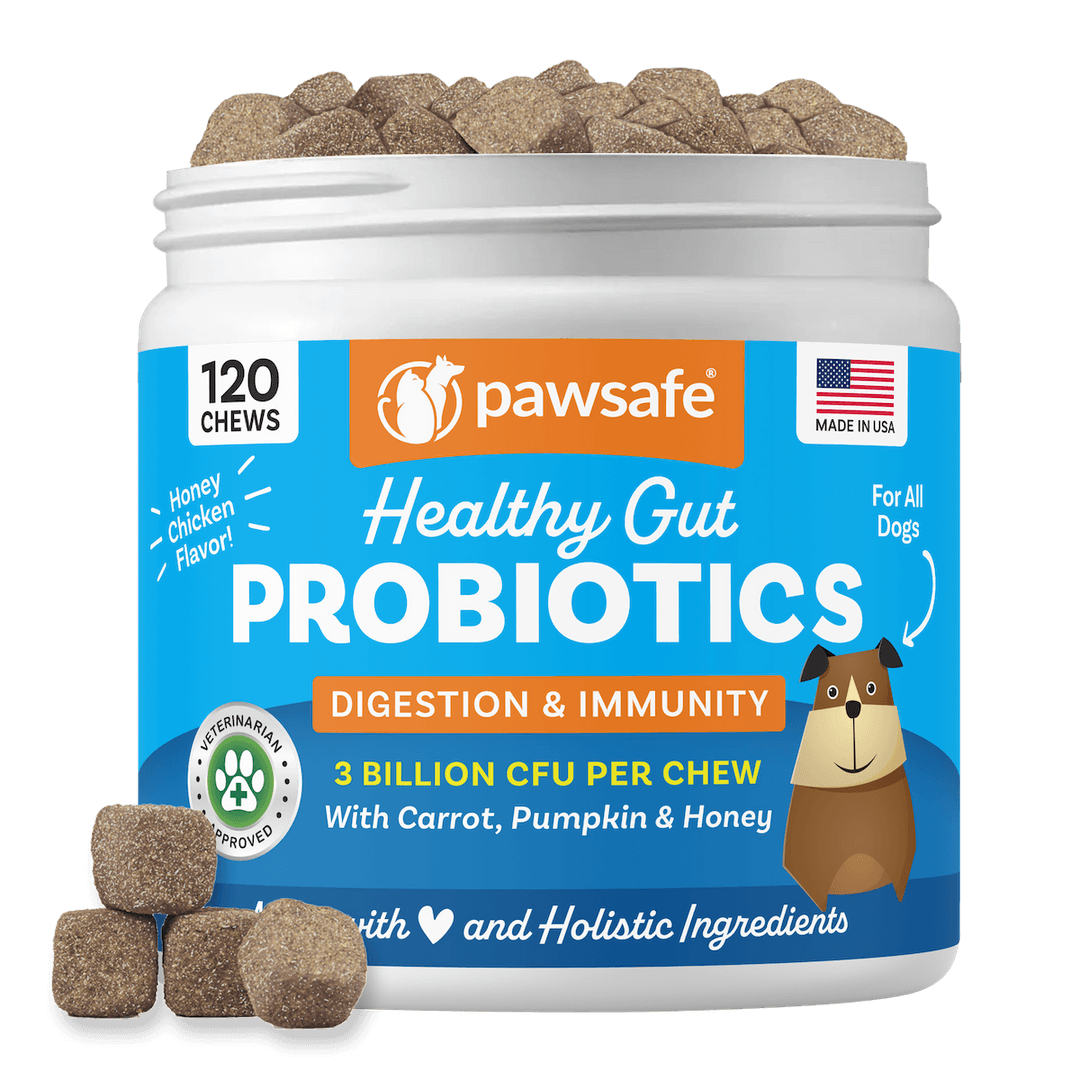
Daily Support For Healthy Digestion
Multi-strain probiotic soft chews that help maintain gut balance and stool quality in an easy, tasty format.
Shop Now 👉Vet Approved Formula • 90-Day PawSafe® Promise
How to Reduce the Chance of Diarrhea
You can’t guarantee a dog won’t react, but you can stack the odds in your favor:
- If diarrhea is already happening, talk to your vet before starting a probiotic. A supplement shouldn’t delay finding a real cause like parasites, infection, or pancreatitis.
- Introduce it gradually where the label and your vet allow. Easing in a sensitive dog can improve tolerance - just don’t invent your own schedule.
- Give it with food when that matches the label or your vet’s advice.
- Change one thing at a time. New food, several supplements, and new treats all at once make problems impossible to trace.
- Choose a quality, dog-specific product with named strains, a live-culture guarantee through the expiration date, transparent ingredients, and third-party or NASC-audited quality. Product quality genuinely varies - in one audit of 25 animal probiotics, only about a quarter met their stated live counts.
- Never give a product containing xylitol, which is toxic to dogs, and be cautious with human probiotics, which may use unsuitable strains or ingredients.
Our Probiotic Soft Chews were designed with an easy daily routine in mind: a multi-strain blend with prebiotic fiber from pumpkin and flaxseed, in a honey-chicken chew, and the product’s own guidance is to introduce it gradually. They’re covered by our 90-day money-back promise, so it’s low-risk to trial - and, like any supplement, worth clearing with your vet first if your dog has ongoing symptoms or a health condition.

Do Probiotics Actually Help Dogs With Diarrhea?
Here’s the flip side of the question, because “probiotic dog diarrhea” cuts both ways: people also reach for probiotics to treat loose stool.
The honest answer is sometimes - it depends on the strain, the formulation, and the cause. Some specific products have real, if modest, evidence:
- A blinded trial of 31 dogs found Bifidobacterium animalis AHC7 shortened acute diarrhea from about 6.6 days to 3.9 days.
- A large shelter study of 773 dogs found a synbiotic (a probiotic plus prebiotic fiber) reduced how many dogs developed diarrhea.
- Enterococcus faecium SF68 (the strain in FortiFlora) has shortened diarrhea in some studies, though results are mixed.
But the counterweight is just as important. A 60-dog trial found no significant benefit over placebo. Systematic reviews conclude the overall canine evidence is limited, small, and often industry-linked. And in 2024, an international veterinary guideline panel (ENOVAT) reached full agreement to recommend “neither for nor against” probiotics for acute diarrhea. As Texas A&M’s Dr. Emily Gould puts it, “probiotics are usually not a sole treatment.”
So what does “best dog probiotics for diarrhea” actually mean? Not the highest CFU count or a magic brand. It means the best-matched, quality-controlled, dog-specific product for your dog’s situation - and a vet deciding whether a probiotic is even the right tool, or whether the diarrhea needs testing and treatment instead. A probiotic will never fix parasites, an infection, a blockage, or pancreatitis on its own.
Who Should Talk to a Vet Before Starting a Probiotic
For most healthy dogs, a probiotic is low-risk. But some dogs should only start one under veterinary guidance:
- Seriously ill, debilitated, or hospitalized dogs
- Severely immunocompromised dogs, or those on chemotherapy or immunosuppressive drugs
- Dogs recovering from major surgery
- Dogs with chronic GI disease, pancreatitis, or other significant illness
- Dogs on antibiotics or antifungals (timing and strain choice matter)
- Dogs known to be allergic to an ingredient
“Natural” doesn’t mean risk-free, and a quality seal doesn’t prove a product is right for one specific dog. If your dog is in any of these groups, let your vet make the call. To browse more on canine digestion and supplements, our gut health and probiotics guides are a good starting point.
Frequently Asked Questions
Gut & Immune Support In One Chew
Targeted strains assist normal digestion while supporting natural immune defenses—simple once-a-day routine.
Shop Now 👉Vet Approved Formula • 90-Day PawSafe® Promise
Can probiotics cause diarrhea in dogs?
Yes. Some dogs develop mild gas, softer stool, more frequent stools, or diarrhea after starting a probiotic, especially early on or at too high a dose. The live organisms, fermentable prebiotic fiber, or an inactive ingredient may contribute. The true frequency is unknown, and the timing alone does not prove the probiotic caused it.
Why does my dog have diarrhea after starting probiotics?
It could be an individual response to the organisms, rapid fermentation of prebiotic fiber in the product, a flavoring or carrier, or giving too much too soon. It could also be unrelated - a diet or treat change, stress, scavenging, parasites, an infection, medication, or illness that happened around the same time. That’s why changing one thing at a time matters.
How long do probiotic side effects last in dogs?
There’s no validated universal adjustment period. Vets describe mild early effects over the first few days, but canine studies have not established a reliable three-to-seven-day window. Don’t force a dog to push through worsening diarrhea, and don’t rely on a preset timeline if there’s blood, vomiting, pain, dehydration, lethargy, or appetite loss.
Do probiotics help dogs with diarrhea?
Sometimes, depending on the exact strain, formulation, and cause. Small trials have reported shorter episodes and one large shelter study reduced diarrhea, while other trials found no clear benefit. A 2024 veterinary guideline recommends neither for nor against probiotics for acute diarrhea. They’re supportive care, not a cure, and won’t fix an underlying cause.
Make Digestive Care Effortless
Palatable soft chews your dog looks forward to, helping keep things regular and comfortable over time.
Shop Now 👉Vet Approved Formula • 90-Day PawSafe® Promise
What is the best probiotic for a dog with diarrhea?
There’s no universally best brand. The strongest choice is a dog-specific product with named strains, a viability guarantee through the expiration date, transparent ingredients, quality testing, and canine research relevant to your dog’s situation. Ask your vet whether a probiotic is appropriate and whether testing is needed first.
Can I give my dog too much probiotic?
Yes - more is not automatically better. Too much, especially from a high-potency multi-strain product or added fermentable fiber, can increase gas, discomfort, or loose stool. There’s no universal toxic threshold because products differ. Follow the label and your vet’s guidance, don’t combine products casually, and never double a missed serving.
When should I see a vet about diarrhea?
Seek urgent care for blood or black tarry stool, repeated or profuse watery diarrhea, repeated vomiting or inability to keep water down, lethargy, weakness or collapse, a painful or swollen belly, dehydration, breathing trouble, hives or facial swelling, or a suspected toxin. Contact your vet if mild diarrhea isn’t clearly improving within 24 to 48 hours, and use a lower threshold for puppies, seniors, and dogs with chronic illness.
Loose Stool, Probiotics, and When to Worry
So, can dog probiotics cause diarrhea? Yes - usually a mild, short-lived loosening as the gut responds to new bacteria and fiber. But the smartest thing you can do is resist the “just detox, push through it” myth and watch the dog in front of you.
Here’s what to remember:
- Probiotics can loosen stool, most often early on or at too high a dose - but a symptom after starting one isn’t proof it’s the cause.
- There’s no magic adjustment window. Judge the dog, not the calendar.
- Red flags mean a vet, not another scoop - blood, repeated vomiting, lethargy, dehydration, or a painful belly.
- You can lower the odds by going gradual, changing one thing at a time, and choosing a quality dog-specific product.
- Probiotics can also help some dogs’ diarrhea, but the evidence is strain-specific and mixed - they support care, they don’t replace it.
If a probiotic fits your dog, introduce it slowly, keep an eye on the stool for the first few days, and call your vet early if anything looks off. Done thoughtfully, a good probiotic is far more likely to settle your dog’s gut than to upset it - and now you know exactly when to wait and when to pick up the phone.