


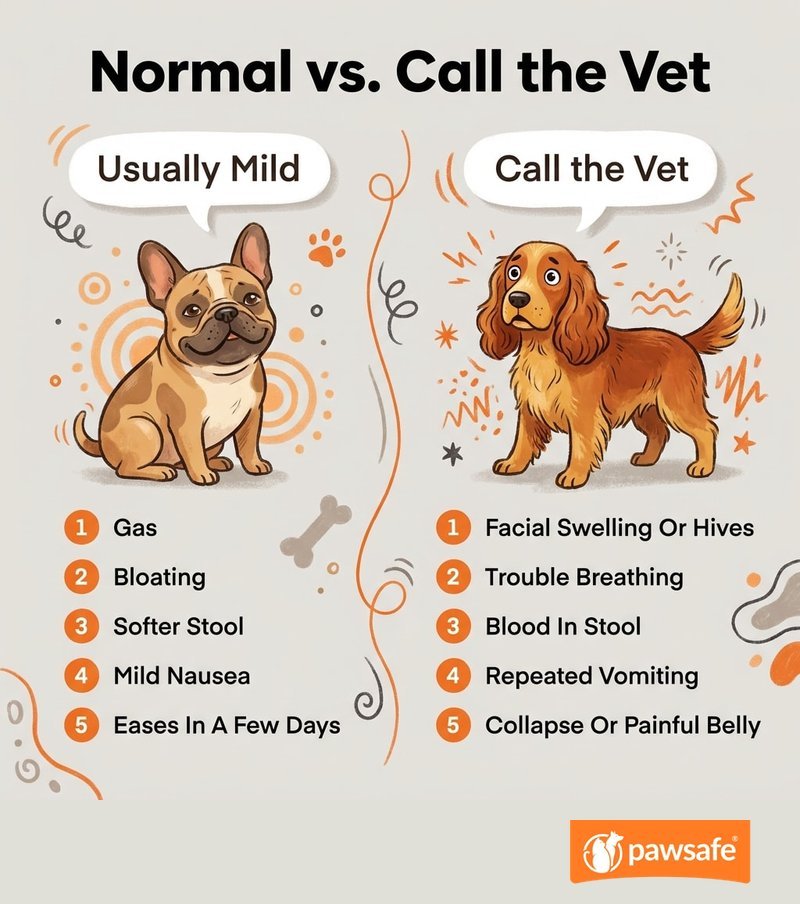
Dog probiotics side effects are usually mild and temporary as the gut adjusts: loose stool or diarrhea, gas, bloating, constipation, mild nausea, or a small change in appetite, often easing within a few days. Serious reactions are rare - stop the probiotic and contact your veterinarian right away for signs of an allergic reaction such as facial swelling, hives, or trouble breathing, or for blood in the stool, repeated vomiting, lethargy, or a painful, swollen belly. Probiotics are generally considered safe for healthy dogs.
You started your dog on a probiotic to help their tummy - so it feels backwards when they suddenly get gassy or have a softer stool. Is that a normal adjustment, or a sign something’s wrong?
Usually, it’s the former. Probiotics are generally well tolerated by healthy dogs, and when side effects do happen they’re most often mild, digestive, and short-lived. But “usually mild” isn’t “always harmless,” and a few signs genuinely mean stop and call the vet.
This guide gives you the vet-sourced version: the common side effects and why they happen, the red flags that need a vet, whether a dog can overdose, which dogs should be cautious, and how to reduce side effects in the first place. We’ve helped more than 300,000 pet parents support their dogs’ digestion. One note up front: this is general education, not a diagnosis - your veterinarian is the right person to advise on your individual dog.
Table of Contents
Are Probiotics Safe for Dogs?
For most healthy dogs, yes. Veterinary sources describe probiotics as generally safe and well tolerated, with serious adverse effects only rarely reported. VCA Animal Hospitals sums up the expected downside as “mild gas or stomach discomfort.”
A couple of honest caveats. Pet supplements aren’t reviewed by the U.S. Food and Drug Administration for safety or effectiveness before they go on sale the way medications are, so quality varies between products. And “generally safe” doesn’t mean every product works, or that every dog will tolerate every formula. Strains, the full ingredient list, manufacturing quality, and your individual dog all matter - which is why a quality, dog-specific product and a word with your vet go a long way.
Common Dog Probiotics Side Effects
When side effects happen, they’re usually digestive and show up soon after starting a product or after a larger-than-usual amount. The likely reason: you’re changing the mix of microbes in the gut, and the fermentation of prebiotic fiber in many products produces short-chain fatty acids and gas, which can nudge stool consistency and gut motility for a little while.
The most commonly reported effects:
- Gas or flatulence - one of the most consistent effects, especially with products that also contain prebiotic fiber.
- Bloating or mild tummy discomfort - from that same fermentation.
- Loose stool or diarrhea - can happen when a probiotic is introduced, particularly at higher amounts or with multi-strain products. Because probiotics can also cause diarrhea for unrelated reasons, timing alone doesn’t prove the probiotic is the culprit.
- Constipation - less common, but reported.
- Mild nausea or a smaller appetite - occasionally, and worth watching.
- Occasional vomiting - possible, though repeated vomiting is not a routine “adjustment.”
Sometimes a digestive symptom briefly gets a little worse before it settles. That’s not a “detox” or a “die-off” - those aren’t established explanations in dogs, and leaning on them can cause owners to overlook a genuine problem. A mild symptom should trend toward improving, not steadily worsening.
How long do they last? Usually the first few days as the gut adjusts. There’s no evidence-based rule that says you must “push through” side effects for a set number of days - if things aren’t improving, that’s a reason to reassess, not to wait it out.

Serious Reactions - Stop and Call Your Vet
Serious reactions are uncommon, but you should know them. Stop the probiotic and contact your veterinarian immediately if you see any of these:
- Signs of an allergic reaction - facial or muzzle swelling, puffiness around the eyes, hives, an itchy rash, wheezing, or difficulty breathing. Trouble breathing, rapid facial swelling, or collapse is an emergency. (The trigger may be a flavoring, protein, or binder in the product rather than the bacteria themselves.)
- Blood in the stool or vomit, or black, tarry stool
- Repeated vomiting, or an inability to keep water down
- Profuse or repeated watery diarrhea
- Marked lethargy, weakness, collapse, or signs of shock (pale gums)
- A painful, tense, or swollen belly
- Repeated retching without bringing anything up - especially with a swelling belly and restlessness, which can signal a life-threatening bloat (GDV) and needs an emergency hospital now
None of these are expected “adjustment” effects. If your regular vet isn’t available, contact an emergency facility.
Can a Dog Overdose on Probiotics?
There’s no known universal “toxic dose” for probiotics as a category, and the safety record is generally favorable - so a single extra serving in an otherwise healthy dog is far more likely to cause temporary gas, loose stool, or mild tummy upset than any real poisoning. It should settle once you return to the normal amount. Don’t double up a missed dose, though; just resume as directed.
A whole container is different. If your dog raids the tub, call your veterinarian or a pet poison-control line rather than assuming it’s fine - the risk depends on your dog’s size and health, how much they ate, whether they swallowed packaging, and the other ingredients (prebiotic fiber, flavorings, sweeteners, vitamins). Be ready with the package, ingredient list, rough amount eaten, and your dog’s weight. And a specific warning: never give your dog a human probiotic gummy, as some contain xylitol, which is toxic to dogs.
- ASPCA Animal Poison Control: 888-426-4435 (24/7; a fee may apply)
- Pet Poison Helpline: 855-764-7661 (a fee may apply)
Daily Support For Healthy Digestion
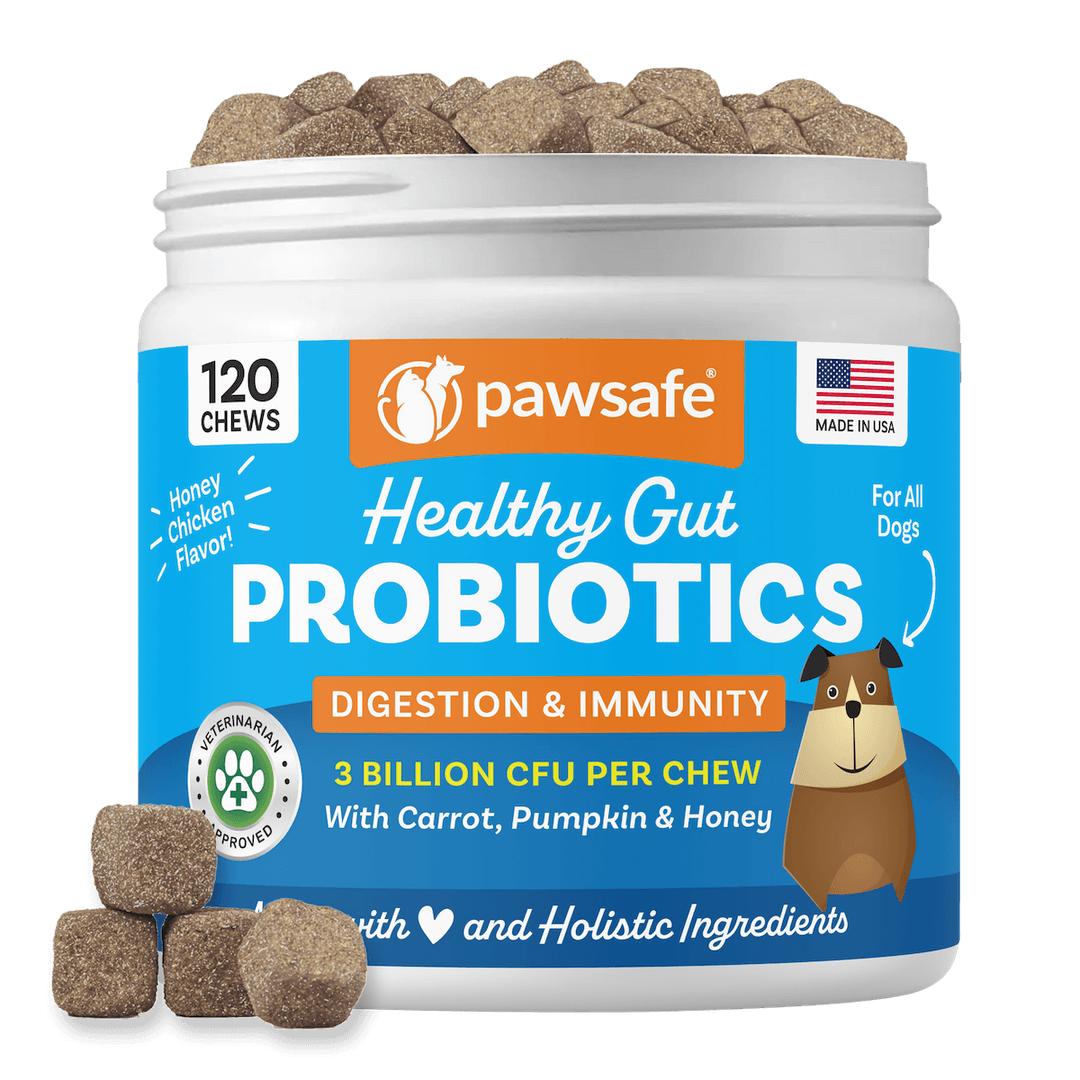
Multi-strain probiotic soft chews that help maintain gut balance and stool quality in an easy, tasty format.
Shop Now 👉Vet Approved Formula • 90-Day PawSafe® Promise
Which Dogs Should Be Cautious?
Age by itself isn’t a reason to avoid probiotics, but some dogs should only start one under veterinary guidance:
- Immunocompromised or seriously ill dogs. There are rare human reports of probiotic organisms causing bloodstream infections in severely ill patients; the same risk isn’t established as common in dogs, but it’s a real enough concern that these dogs need a vet’s okay first.
- Critically ill, debilitated, or recently hospitalized dogs, where safety data are limited.
- Dogs recovering from surgery - not an automatic no, but coordinate it with the vet managing their recovery.
- Very young, unwell puppies and frail seniors, who can go downhill quickly with vomiting or diarrhea.
- Dogs with known allergies or on an elimination diet - read every active and inactive ingredient (flavorings and proteins included), so you don’t hit an allergen or ruin a diet trial.
- Dogs on medication. Tell your vet everything your dog takes.
About antibiotics: antibiotics can kill the live bacteria in a probiotic, so they’re often spaced apart - Davies Veterinary Specialists suggests leaving at least two hours between them, and other veterinary sources say up to four. Rather than guess, ask the prescribing vet how to time the two, and never stop or change an antibiotic course on your own.
How to Reduce Probiotic Side Effects
You can’t guarantee a smooth start, but a few sensible habits make one more likely - none of which involve inventing a “dose”:
- Follow the product label or your vet’s instructions for how much to give. Probiotic effects are specific to the strain and formula, so don’t copy an amount from a different product or a human supplement.
- Start at the lower end and build up gradually if the label gives a range (or your vet agrees). Easing in gives the gut time to adjust.
- Give it with a meal, unless the label says otherwise - vets commonly recommend this, and it can settle mild stomach upset.
- Change one thing at a time. Don’t start a new food, three new treats, and a probiotic all at once, or you’ll never know what caused a reaction. Keep a simple dated log of what you gave and how your dog’s stool, appetite, and energy responded.
- Choose a quality, dog-specific product with named strains, a viable-count guarantee through the expiration date, clear storage instructions, and a contact-able maker - and store it exactly as directed.
- Don’t force it through worsening symptoms. If side effects are severe, persistent, or come back with every dose, stop and call your vet.
If you’re weighing daily use, our guide on whether to give your dog probiotics every day walks through it. Our own Probiotic Soft Chews are a dog-specific synbiotic - a multi-strain blend plus prebiotic fiber - designed to be given with food; as with any probiotic, start slow and ease in. For the bigger picture on building a resilient gut, see our guide to dog gut health.
When to See a Vet
To pull it together, contact your veterinarian promptly if:
- Side effects are severe, keep going, get worse, or return with every dose
- Your dog vomits repeatedly or can’t keep water down
- There are several watery stools, or your dog goes off food or seems unusually tired
- You suspect an overdose (whole container)
- Your dog is a puppy, small dog, senior, or has a health condition - call sooner
Seek emergency care immediately for trouble breathing, severe facial swelling, collapse, blood or black tarry stool, a painful or swollen belly, or repeated retching without producing anything. As a general benchmark, Cornell’s veterinary team suggests having ordinary diarrhea evaluated if it hasn’t resolved in about 48 to 72 hours - but that’s not permission to wait if a red flag is present. And don’t give human anti-diarrhea medicine unless your vet approves the specific product and amount.
Frequently Asked Questions
Gut & Immune Support In One Chew
Targeted strains assist normal digestion while supporting natural immune defenses—simple once-a-day routine.
Shop Now 👉Vet Approved Formula • 90-Day PawSafe® Promise
What are the side effects of probiotics in dogs?
The most common are mild, temporary digestive changes: gas, bloating, loose stool or diarrhea, constipation, mild nausea, a small drop in appetite, and occasionally vomiting. They usually show up in the first few days as the gut adjusts and ease on their own. Persistent or worsening symptoms should be checked by a veterinarian rather than ignored.
Are probiotics safe for dogs?
They’re widely considered safe for most healthy dogs, and serious adverse effects are rarely reported. That said, safety and benefit depend on the specific strains, the full formulation, manufacturing quality, storage, amount given, and your individual dog. Pet supplements aren’t reviewed by the FDA before sale the way drugs are, so choose a quality, dog-specific product and check with your vet.
Can probiotics make a dog sick or worse?
They can. A probiotic can cause temporary digestive upset, trigger a reaction to an ingredient like a flavoring or binder, or be a poor choice for a sick or immunocompromised dog. Symptoms blamed on a probiotic can also be an underlying illness getting worse - so don’t dismiss worsening signs as the gut just “adjusting.” When in doubt, stop and call your vet.
Can a dog overdose on probiotics?
There’s no known universal toxic dose. A single extra serving usually causes at most temporary gas or loose stool that settles once you go back to the normal amount. But if your dog eats a whole container, call your vet or a pet poison-control line - other ingredients, flavorings, sweeteners, or the packaging can matter more than the bacteria themselves. Never double a missed dose.
Make Digestive Care Effortless
Palatable soft chews your dog looks forward to, helping keep things regular and comfortable over time.
Shop Now 👉Vet Approved Formula • 90-Day PawSafe® Promise
How long do probiotic side effects last?
Mild gas or looser stool from starting a probiotic is usually described in the first few days and should trend toward improving, not worsening. There’s no rule that says you must “push through” side effects for a set number of days. If symptoms persist, get worse, come back with every dose, or a red flag appears, stop and contact your vet.
Should I give my dog probiotics with food?
Usually yes - veterinary guidance commonly recommends giving probiotics with a meal, which can also help reduce mild stomach upset. Follow the specific product label or your veterinarian’s directions if they say otherwise.
Can I give probiotics at the same time as antibiotics?
Antibiotics can kill the live bacteria in a probiotic, so timing matters. Veterinary sources suggest spacing them out - recommendations range from at least two to four hours apart depending on the product - but the safest move is to ask the prescribing vet how to time the specific products. Never stop or change an antibiotic course on your own.
When should I call the vet about probiotic side effects?
Call promptly if symptoms persist or worsen, your dog vomits repeatedly or can’t keep water down, has several watery stools, goes off food, or seems unusually tired. Seek emergency care for trouble breathing, severe facial swelling, collapse, blood or black tarry stool, a painful or swollen belly, or repeated retching without bringing anything up.
The Bottom Line
For most healthy dogs, probiotics are a low-risk way to support digestion - and when side effects happen, they’re usually mild, digestive, and gone within a few days.
Here’s what to remember about dog probiotics side effects:
- Mild and temporary is normal - gas, a little bloating, softer stool as the gut adjusts.
- A few signs are not - allergic reactions, blood in stool, repeated vomiting, collapse, or a painful belly mean stop and call the vet.
- Overdose is usually low-risk for a single extra serving, but a whole container warrants a poison-control call.
- Ease in - start low, give with food, change one thing at a time, and use a quality dog-specific product.
- When in doubt, ask your vet - especially for puppies, seniors, sick dogs, or dogs on medication.
Used thoughtfully, a good probiotic is a gentle everyday tool for your dog’s gut. Explore our gut health and probiotics guides for more on supporting digestion the safe way - and let your veterinarian steer any decision that’s specific to your dog.