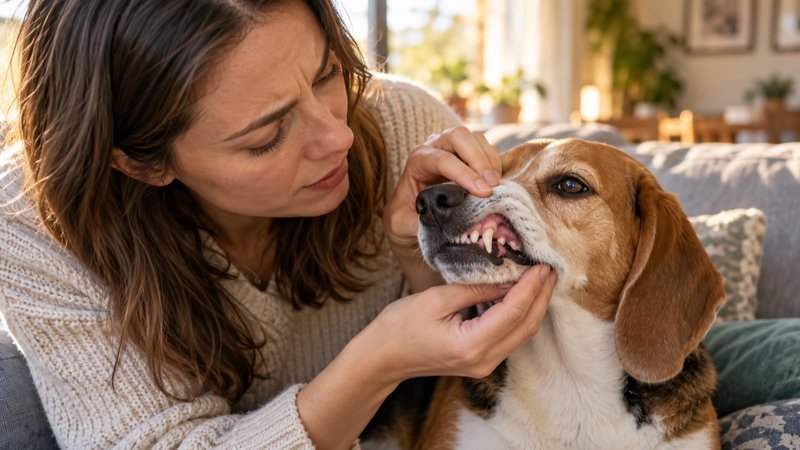


Plaque and tartar are two stages of the same buildup on the teeth. Plaque is a soft, sticky film of bacteria that forms within hours of eating and can be brushed away. If it isn’t removed, minerals in saliva harden it into tartar - also called calculus - within about one to three days. Tartar is a rough, yellow-brown deposit that bonds to the teeth and can only be removed by a vet. Both feed the bacteria that cause gum disease, so daily plaque control matters.

You spot something on your dog’s teeth - a slimy film here, a yellow-brown crust there - and wonder: is that plaque or tartar, and does the difference matter? It does, because one you can handle at home and the other is a job for your vet.
The short version: plaque and tartar are two stages of the same process. Plaque is the soft, living bacterial film that forms every day; tartar is what plaque becomes once it hardens. Getting the distinction straight tells you exactly what to do - and why brushing daily is worth the effort. Below, we break down what each one is, how to tell them apart, how fast plaque turns to tartar, and how to prevent and remove them. This guide is part of our dog dental care routine series and is built on veterinary sources.
Table of Contents
- What Is Dog Plaque?
- What Is Dog Tartar (Dental Calculus)?
- Dog Plaque vs Tartar: The Key Differences
- How Plaque Turns Into Tartar (and Why Timing Matters)
- How to Prevent Plaque (the Part You Control)
- How to Remove Tartar (Spoiler: That's a Vet Job)
- When to See a Vet
- Frequently Asked Questions
- The Bottom Line on Dog Plaque vs Tartar
What Is Dog Plaque?
Plaque is a soft, sticky biofilm - a structured community of bacteria living in a matrix of saliva, with some food particles and debris mixed in. It’s not just “leftover food”; the important part is the bacteria.
A few things to know about plaque:
- Texture: soft, gummy, or slimy - you might feel a filmy coating with a fingernail.
- Color: often colorless or nearly invisible when fresh, which is why white-looking teeth don’t mean a clean mouth.
- Where it forms: on the teeth, between them, and along and below the gumline - within hours of a meal, and it comes back quickly after cleaning.
- How it’s removed: effective daily brushing physically disrupts it.
Plaque is the active player here. When it sits against the gums, it triggers inflammation - the start of gum disease - long before it ever hardens.
What Is Dog Tartar (Dental Calculus)?
Tartar is plaque that has absorbed calcium and other minerals from saliva and turned hard. “Tartar” and “calculus” mean the same thing - calculus is the clinical term, tartar is the everyday one.
- Texture: hard, rough, and porous, firmly cemented to the tooth.
- Color: usually yellow, tan, brown, or golden-brown, often darkest near the gumline.
- Where it forms: above and below the gumline; you can often see the deposits on the crowns, but hidden buildup can sit under the gums where you can’t.
- How it’s removed: it can’t be brushed off. Established tartar has to be removed by a vet with professional scaling above and below the gumline, followed by polishing.
Tartar’s rough surface gives fresh plaque even more to cling to, which speeds the whole cycle up.
Dog Plaque vs Tartar: The Key Differences
Here’s the dog teeth plaque vs tartar comparison at a glance:
| Feature | Plaque | Tartar (calculus) |
|---|---|---|
| What it is | Soft, living bacterial film | Hardened, mineralized plaque |
| Texture | Soft, sticky, slimy | Hard, rough, crusty |
| Color | Colorless or pale; easy to miss | Yellow, tan, or brown; visible |
| Where | Above and below the gumline | Above and below the gumline |
| Timeline | Forms within hours; returns fast | Hardens in about 1-3 days |
| Remove at home? | Yes - daily brushing | No - vet cleaning only |
| Role in disease | The main bacterial trigger for gum inflammation | A rough trap that holds more plaque |
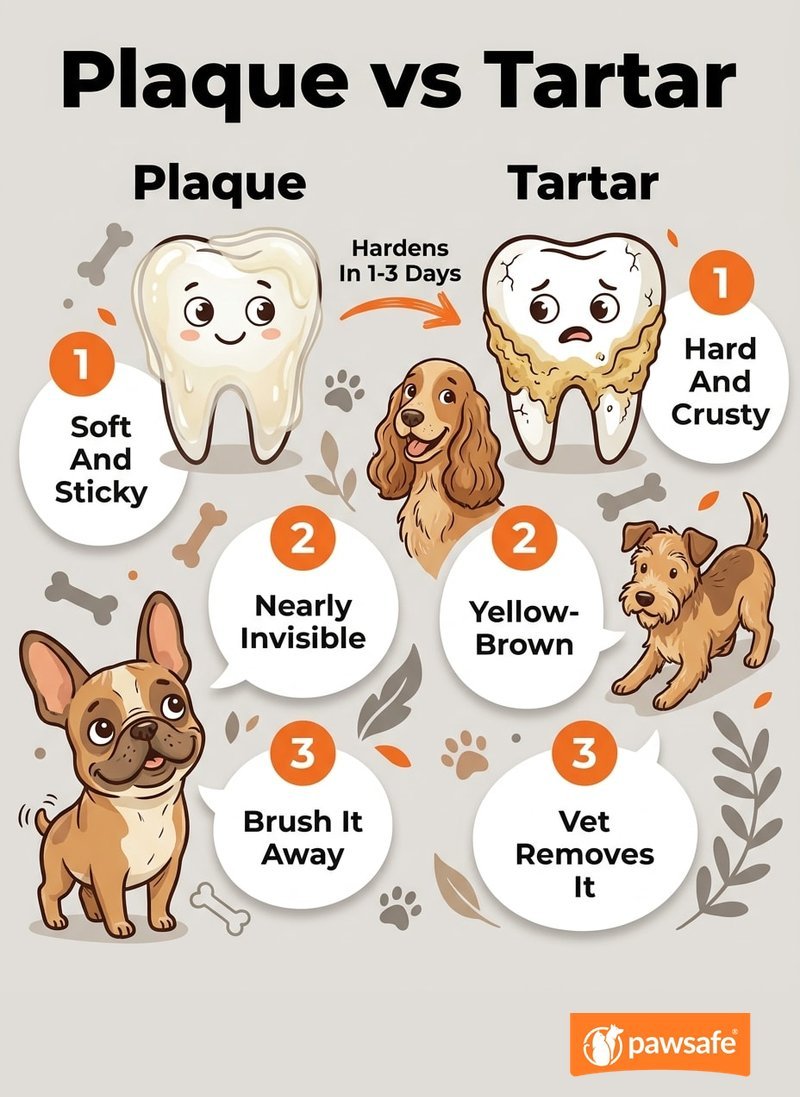
One myth worth busting: tartar isn’t automatically “worse” just because it’s harder. The bacteria in soft plaque - especially the plaque hiding below the gumline - are the primary driver of gum inflammation and tissue damage. Visible tartar is a sign that buildup has been there a while, but the invisible plaque under the gums can be doing more harm than the crust you can see. For how that buildup is graded as it worsens, see our guide to the stages of dog tartar.
How Plaque Turns Into Tartar (and Why Timing Matters)
This timeline is the whole reason daily brushing works.
Plaque starts forming within hours after your dog eats. Left alone, minerals in the saliva begin hardening it - some veterinary sources say that can start within about 24 hours, and most place the early hardening window at roughly one to three days. The exact rate varies with a dog’s saliva, diet, and mouth.
That short, variable window is the key insight: brushing every day removes soft plaque before it has a chance to mineralize. Once it hardens into tartar, a toothbrush can’t touch it. As the AAHA dental guidelines put it, brushing “needs to be done daily to be of benefit.”
Why care at all? Because both plaque and tartar feed the bacteria that cause gingivitis (red, swollen, sometimes bleeding gums) and, if it advances below the gumline, periodontitis - which damages the tissue and bone that hold teeth in place and isn’t reversed by brushing. Gum disease is extremely common and often starts early: some veterinary sources estimate that 80-90% of dogs older than three have at least some periodontal disease, though published figures vary widely depending on how dogs are examined. (Periodontal disease has also been associated with effects on organs like the kidneys and heart - an association, not proof that tartar directly causes organ disease.)
Fresh Breath The Easy Way
Just add to the water bowl to support cleaner mouths and noticeably fresher breath without daily brushing struggles.
Shop Now 👉Fresh Breath Guarantee • 90-Day PawSafe® Promise
How to Prevent Plaque (the Part You Control)
Everything you can do at home is really about controlling plaque - stopping it before it becomes tartar.
Brush Daily
Daily brushing is the best-supported home step, full stop. Use a soft, appropriately sized dog toothbrush and a dog-specific toothpaste. Never use human toothpaste: dogs swallow it, and some human products contain xylitol, which is highly toxic to dogs (the FDA warns it can cause dangerous low blood sugar and liver injury), while swallowed fluoride and other ingredients can cause illness depending on the amount. One important caveat: if your dog’s gums look red, swollen, or bleed, have them checked before you start brushing - brushing sore gums hurts and can turn your dog off the whole idea. So the honest answer to “the best dog toothpaste to remove plaque and tartar” is a dog-specific one your dog tolerates; the brushing action does the work, and no toothpaste removes tartar that’s already hardened.
Choose Proven Chews, Diets, and Additives
For extra plaque control - and the best dog dental chews for plaque and tartar - a useful independent check is the VOHC Seal: the Veterinary Oral Health Council reviews trial data and lets products display “Helps Control Plaque” or “Helps Control Tartar” when they meet its standard. Note which claim a product carries - a tartar seal means it helps reduce new tartar forming, not that it removes existing deposits.
A safety note on chews: skip anything rock-hard - real bones, antlers, hooves, nylon “bones,” and ice - which can fracture teeth. If you can’t dent it with a thumbnail, it’s too hard.
Water Additives
For dogs who won’t tolerate a toothbrush, a dental water additive you add to the bowl is an easy, passive way to help control plaque between brushings. Keep expectations realistic, though: a water additive is an adjunct, not a replacement for brushing or a way to remove tartar that has already formed.
How to Remove Tartar (Spoiler: That’s a Vet Job)
Here’s the honest limit of home care: once plaque has hardened into tartar, brushing, chews, and additives can’t remove it. Getting it off requires a professional veterinary dental cleaning under general anesthesia - which is much more than scrubbing the visible surfaces. The team takes full-mouth dental X-rays (more than half of each tooth sits below the gumline), probes and charts the gums, then scales the teeth above and below the gumline and polishes them, treating any diseased teeth along the way.
That’s also why “anesthesia-free” tartar scraping isn’t a real solution - AAHA and the veterinary dental college call cleaning only the visible crown while a dog is awake cosmetic and ineffective, because it can’t assess or treat the disease under the gums. And please don’t try to scrape tartar off at home: sharp tools can injure your dog’s mouth and leave real disease undiagnosed. For what the process involves, see our guide on how to remove tartar from dog teeth.
Daily Water Additive For Oral Freshness
Helps maintain better breath and oral hygiene as your dog drinks, keeping cuddle moments pleasant.
Shop Now 👉Fresh Breath Guarantee • 90-Day PawSafe® Promise
When to See a Vet
Book a veterinary dental exam if you notice:
- Visible yellow, brown, or dark tartar
- Persistent bad breath, or red, swollen, or bleeding gums
- Blood on chews or toys, receding gums, or loose, broken, or discolored teeth
- Drooling, pawing at the mouth, chewing on one side, dropping food, or eating less
- Facial or jaw swelling (this one deserves prompt attention)
Visible tartar usually isn’t an emergency on its own, but it’s worth an exam because the deposit you can see says nothing about what’s happening below the gumline. Seek urgent care for facial swelling, an inability to eat or drink, heavy bleeding, marked pain, or suspected xylitol exposure. And some dogs need closer attention sooner - small and toy breeds, flat-faced (brachycephalic) breeds, and seniors are all more prone to dental disease. Your vet decides how often your individual dog needs a professional cleaning.
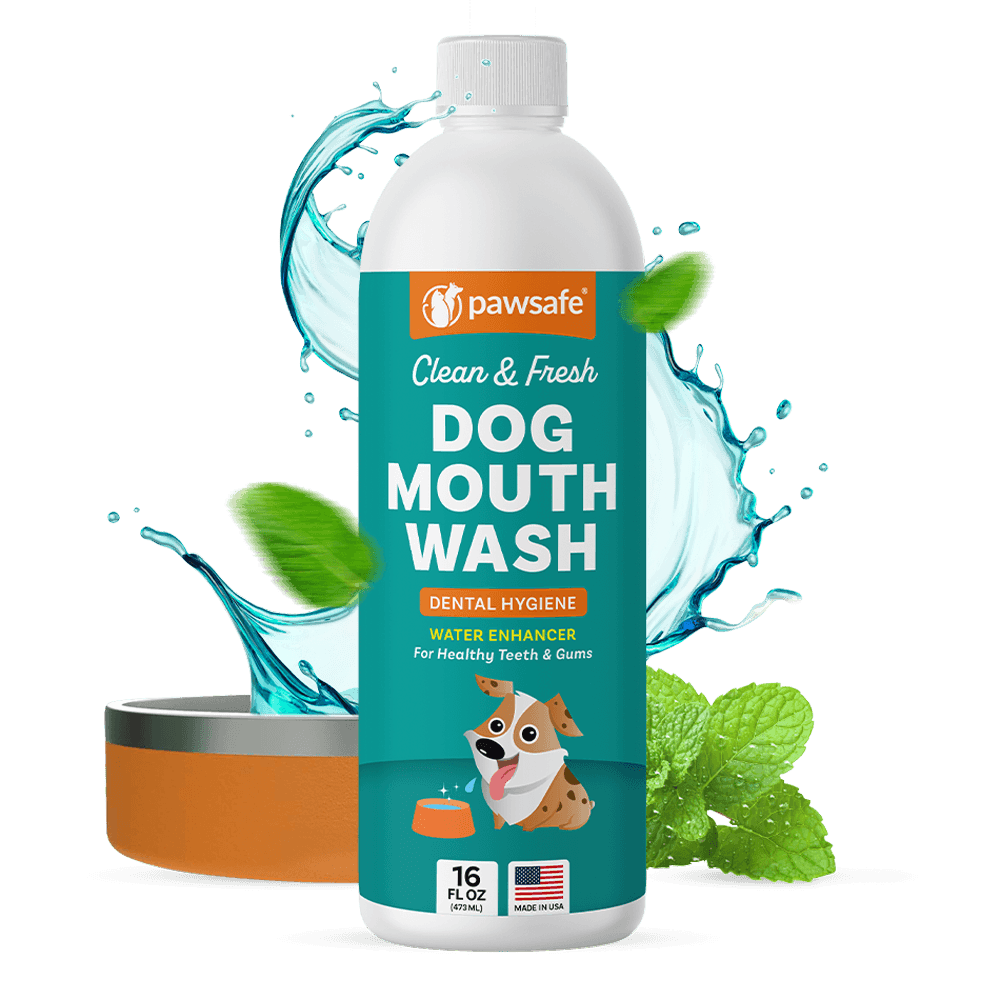
Where does a product like ours fit? Our Dog Mouthwash is an optional dog dental water additive you add to the bowl - one convenient way to support daily oral care, meant to complement (not replace) brushing and regular veterinary dental care. It isn’t a tartar remover and won’t take the place of a professional cleaning; think of it as one small, low-effort habit within a bigger routine.
Frequently Asked Questions
What’s the difference between plaque and tartar on dogs’ teeth?
Plaque is a soft, sticky bacterial film that continually forms on the teeth and can be disrupted with effective daily brushing. Tartar - also called calculus - is plaque that has absorbed minerals from saliva and hardened into a rough, firmly attached deposit. Both can form above and below the gumline, but only plaque can be removed at home.
How long does it take plaque to turn into tartar?
Plaque starts forming within hours of eating, and it may begin hardening in as little as about 24 hours - veterinary sources place the early window at roughly one to three days. The exact rate varies from dog to dog, which is why brushing daily, before plaque can mineralize, is the recommended target.
Can I remove tartar from my dog’s teeth at home?
No. Once plaque hardens into tartar, no toothpaste, chew, or water additive can safely remove it, and you should never scrape it off with a tool. Removing established tartar - and checking for disease below the gumline - requires a professional veterinary cleaning under general anesthesia.
Turn Plain Water Into Breath Support
A simple routine that supports a cleaner mouth and fresher kisses over time—no messy brushing required.
Shop Now 👉Fresh Breath Guarantee • 90-Day PawSafe® Promise
What’s the best toothpaste or dental chew for plaque and tartar?
There’s no single winner. Choose a dog-specific product your dog tolerates, with no xylitol, and look for independent evidence like a current VOHC Accepted seal for a plaque or tartar claim. Remember the brushing action does the work - and no toothpaste or chew removes tartar that has already hardened.
Is plaque or tartar worse?
Both matter, but plaque is the primary bacterial trigger for gum inflammation, especially where it spreads below the gumline. Tartar is older, hardened plaque that can’t be brushed off and gives new plaque a rough surface to cling to. Visible tartar isn’t necessarily more damaging than the invisible plaque hiding under the gums.
How do I get rid of plaque before it hardens?
Brush daily with a dog-specific toothpaste and a soft brush - that’s the best-supported way to remove soft plaque before it can mineralize. Proven dental chews, diets, or water additives can add extra control when used as directed, but ask your vet before brushing gums that look red, swollen, or painful.
When should I take my dog to the vet for tartar?
Book a dental exam for visible yellow-brown tartar, persistent bad breath, red or bleeding gums, loose or broken teeth, drooling, chewing on one side, dropping food, or reduced appetite. Seek urgent care for facial swelling, an inability to eat or drink, heavy bleeding, marked pain, or suspected xylitol exposure.
The Bottom Line on Dog Plaque vs Tartar
The plaque vs tartar difference comes down to one thing: plaque is soft and you can brush it away, while tartar is hardened plaque that’s cemented on and only a vet can remove. And because plaque can start hardening within about a day, daily brushing - before it mineralizes - is the single most effective habit you have.
So keep it simple: brush daily with dog toothpaste, add proven chews or a water additive if they help, skip rock-hard chews and human toothpaste, and let your vet handle any tartar that’s already formed. Watch for the warning signs above, and when something looks off in your dog’s mouth, get it checked. For a full daily plan and more dental guides, browse our dog dental care library - your dog’s teeth (and their breath) will thank you.