
The best no-pull harness for a pit bull is a durable, dual-clip harness that fits a strong, muscular, deep-chested dog without slipping. A front chest attachment steers a lunging dog toward you, while a snug fit and metal load-bearing hardware resist breaking or backing out. Look for a metal front ring, reinforced stitching, several adjustment points, and breathable padding for a short coat. No harness is truly bully-proof, so pair the right one with reward-based training and a careful fit rather than trusting a label.
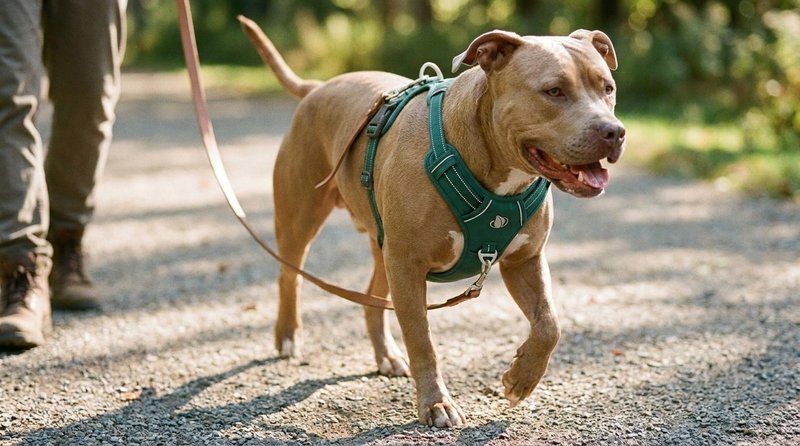
A determined pit bull can hit the end of a leash like a freight train - and snap flimsy gear like a chew toy. If you’ve watched a clip break, a buckle pop, or your dog simply twist out and trot off, you already know the search for a no pull harness for pitbulls is really a search for something that survives a strong dog.
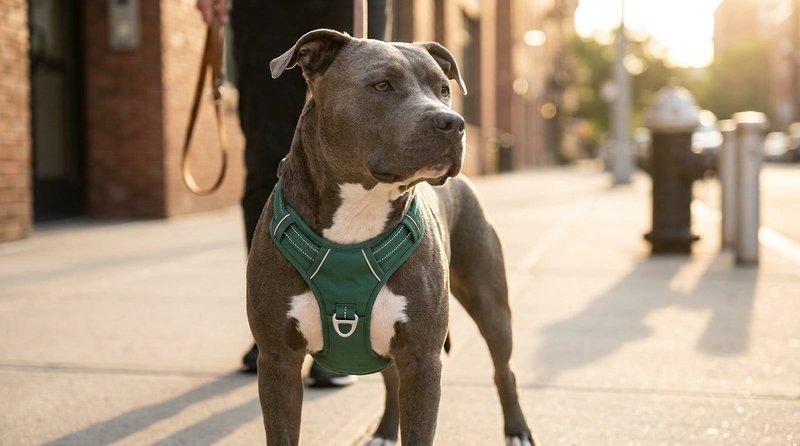
That strength is the whole challenge. Pit bull-type dogs are built low, broad, and muscular, with a deep chest and a thick neck. Cheap harnesses twist sideways, ride up, rub a short coat raw, or slip off entirely - and a collar puts all that force straight onto the neck. What you need is control that holds up without hurting your dog.
This guide is honest about what actually matters: the hardware that survives a puller, how to fit a muscular deep-chested build, and where a padded everyday harness beats a heavy tactical one (and where it doesn’t). We test our gear on our own dogs, we’ve helped 300,000+ pet parents, and every claim here is grounded in veterinary and testing sources - not marketing.
Table of Contents
- Why Pit Bulls Need a Different Kind of Harness
- Front-Clip vs Back-Clip: What Actually Controls a Strong Puller
- What Makes a Harness Actually Hold Up on a Pit Bull
- Best No-Pull Harnesses for Pit Bulls: Our 2026 Picks
- How to Size and Fit a Harness on a Pit Bull
- Harnesses for Pit Bull Puppies
- Frequently Asked Questions
- Walks You Can Both Enjoy
Why Pit Bulls Need a Different Kind of Harness
“Pit bull” isn’t one breed - it’s an umbrella for the American Pit Bull Terrier, American Staffordshire Terrier, Staffordshire Bull Terrier, American Bully, and mixes. They range from a 24-pound Staffie to an XL Bully over 20 inches tall. What they share: muscular bodies, broad deep chests, substantial necks, and short coats. That build changes what a harness has to do.
Power means the attachment point matters. A collar concentrates leash force on a small part of the neck. A harness moves the main load onto the larger, stronger torso and keeps pressure off the throat. VCA recommends body harnesses for dogs with neck or airway issues and notes that hard pulling against a collar presses on delicate neck structures. To be clear, routine collar use hasn’t been proven to cause chronic spinal or tracheal damage in healthy dogs - but for a persistent puller, keeping force off the neck is simply the prudent choice.
The build defeats generic gear. A deep chest, a thick neck that’s sometimes close to head width, and a short back mean standard harnesses twist, ride up, or get backed out of. A short coat also means less padding between the strap and the skin, so chafing shows up fast on the chest and behind the elbows.
Heat is worth a mention, not a panic. Pit bull types aren’t automatically heat-intolerant, but a heavy, muscular dog generates real heat when it works, and some Bullies have shorter muzzles. Breathable material and low bulk help in warm weather. For the wider picture on how harness styles compare, see our full dog harness reviews.
Front-Clip vs Back-Clip: What Actually Controls a Strong Puller
Where the leash attaches decides how much control you get over a powerful dog.
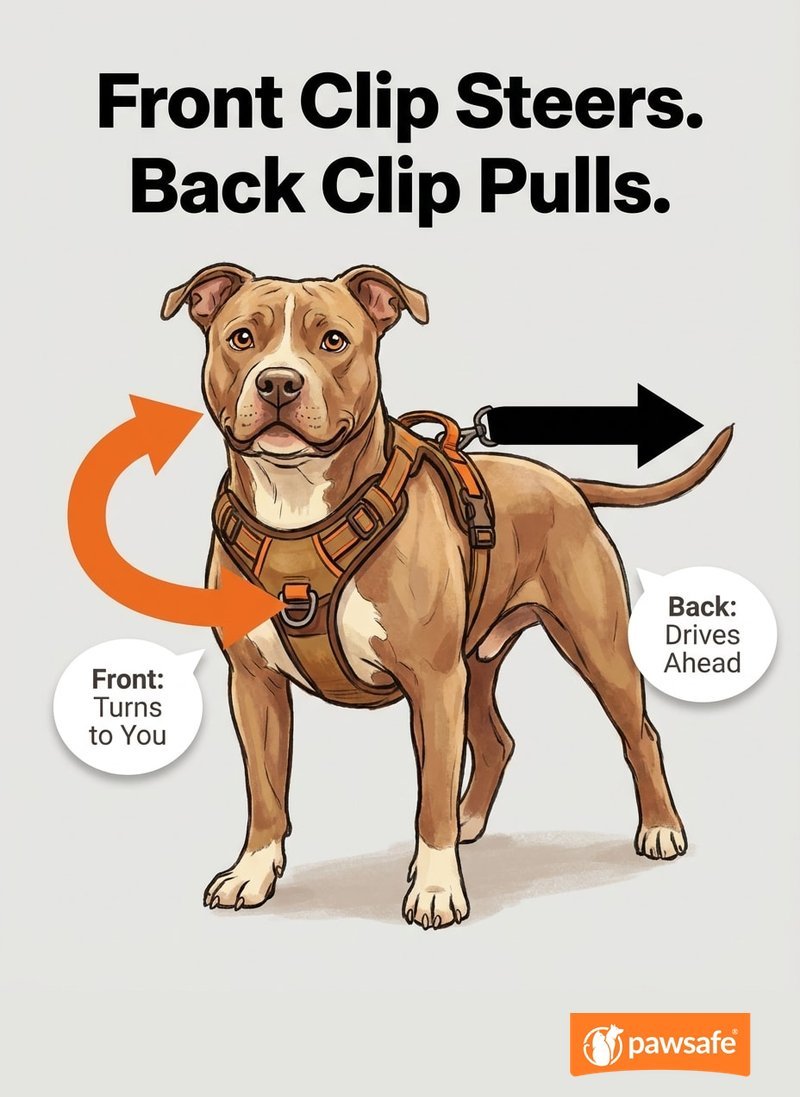
Back-clip harnesses attach between the shoulders. Comfortable for a dog who already walks nicely - but they give a puller efficient forward leverage. One 2025 study measured higher pulling force in a back-clip harness than on a collar, so a back clip alone can actually make a strong dog pull harder.
Front-clip harnesses attach at the chest. When your dog surges, the leash turns their chest back toward you instead of letting them drive straight ahead. It’s steering and interruption, not punishment - a 2024 study found a front connection produced less pulling force than a martingale collar. One caution: don’t use a front clip for running or let a dog hit the leash at speed, since an off-center yank can wrench the harness.
Dual-clip harnesses have both, and for a powerful pit bull that’s usually the sweet spot. Train and steer on the front, relax on the back, or run a double-ended leash on both points for two-point control that also stops the harness rotating. For the physics of why front-clip redirection works, our guide to the best harness for dogs that pull breaks it down in depth.
What Makes a Harness Actually Hold Up on a Pit Bull
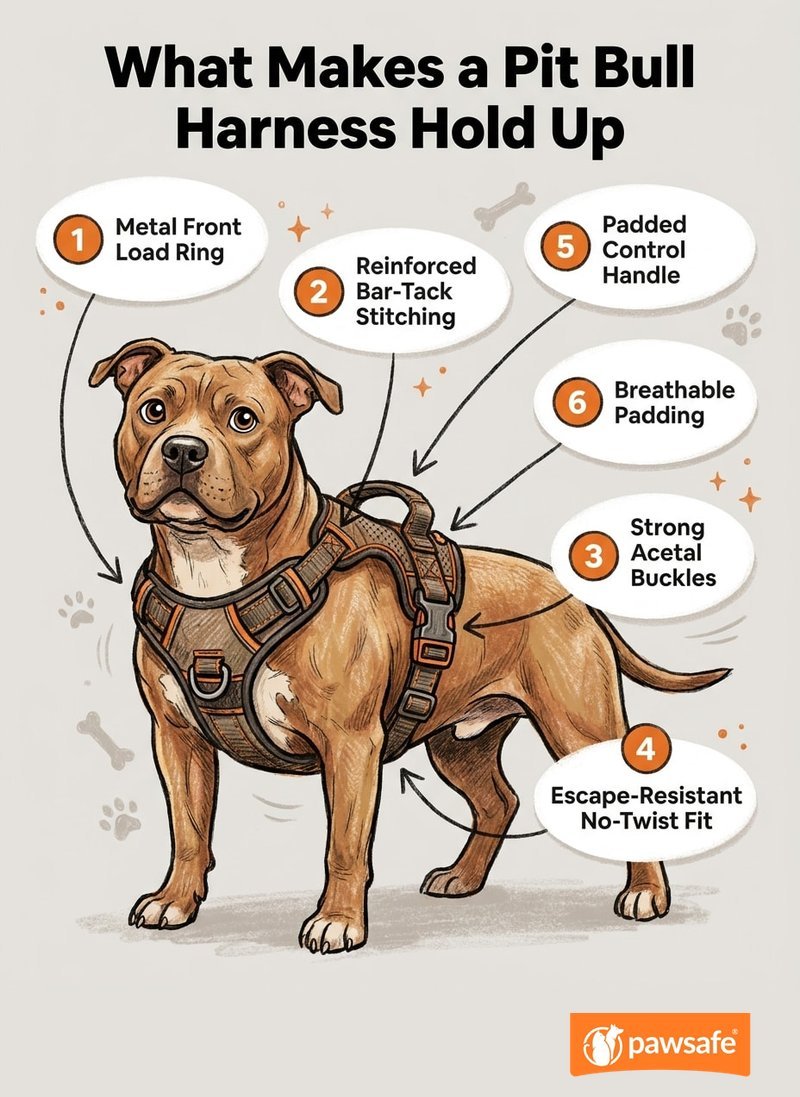
Ignore the words “bully-proof” and “indestructible” - there’s no standard behind them. What matters is the whole load path, from the leash ring all the way to the buckle. A big metal ring stitched to weak fabric is not a strong harness.
Metal Load-Bearing Hardware
For the primary leash connection, a solid metal D-ring resists bending, chewing, and abrasion better than an unmarked plastic ring. But metal isn’t magic - the alloy, the shape, and how it’s attached all matter, and metal can still fail.
Strong, Honest Buckles
Good acetal (reinforced polymer) buckles like Duraflex or ITW Nexus can be genuinely tough at a fraction of metal’s weight. Just know that “Duraflex buckle” is a brand, not a strength rating - published figures vary widely by model - so treat any buckle-strength number skeptically unless the maker names the exact part and test.
Reinforced Stitching and Webbing
This is where cheap harnesses actually fail. Look for dense bar-tack or box-and-X stitching around every load point and wide webbing with no cuts or fraying. A “3,800-pound webbing” claim describes the thread, not the finished harness.
Stop Your Dog Pulling On Their Leash
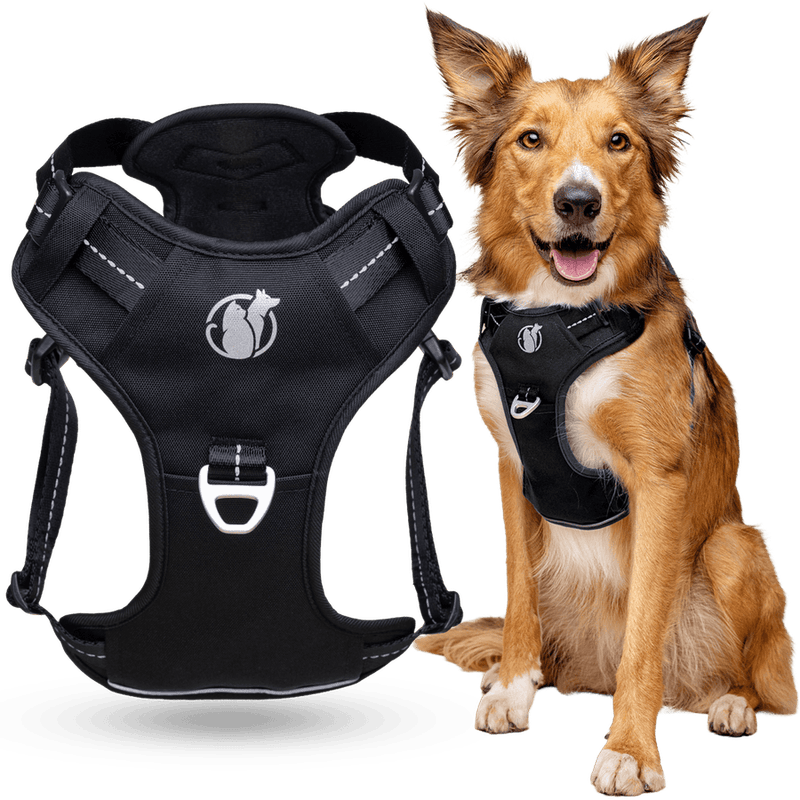
The Steady+Style No Pull Harness uses front and back clip points to redirect pulling, so you get immediate, gentler control and can actually enjoy the walk again.
Shop Now 👉Better Walk Guarantee • 90-Day PawSafe® Promise
An Escape-Resistant, No-Twist Fit
A snug fit with several independent adjustment points keeps the chest panel centered and stops the harness rotating when a strong dog leans off-center. For a dog that backs out, a rear belly strap closes the escape route.
A Control Handle
A padded top handle gives you instant, close control of a powerful dog at a crosswalk or in a tense moment - far kinder than hauling on the leash.
Breathable Padding
Padding spreads force over a wider area (not perfectly evenly - pressure still concentrates at straps and edges) and protects a short coat from chafing. Breathable mesh helps a hard-working muscular dog stay cooler.
Best No-Pull Harnesses for Pit Bulls: Our 2026 Picks
We weighed these on what a strong breed actually needs - durable load path, real control, and an honest fit. Prices are U.S. listings as of 2026 and exclude promotions. Competitor specs come from manufacturer listings and independent testing.
| Harness | Price | Clip type | Standout for pit bulls | Watch-out |
|---|---|---|---|---|
| PawSafe Steady+Style | $63.96 | Front + back | Metal front ring, handle, padded, sizes to XL | Two-strap (not a 3-strap escape design) |
| 2 Hounds Freedom | $33-39 | Front + rear loop | Strong two-point control, stainless rings | Straps confusing at first |
| Ruffwear Web Master | $79.99 | Back (+ front loop) | 3 straps + belly strap: best for escapers | More coverage, heat, cost |
| Ruffwear Front Range | $59.99 | Front + back | Comfortable padded everyday | Front point is webbing, not metal |
| PetSafe Easy Walk | ~$23 | Front only | Budget steering leverage | No back clip, handle, or padding |
| OneTigris X ARMOR | ~$90 | Front + back | Maximum metal hardware | Heavy (1.6-2.4 lb), hot, bulky |
Best Overall: PawSafe Steady+Style No-Pull Harness
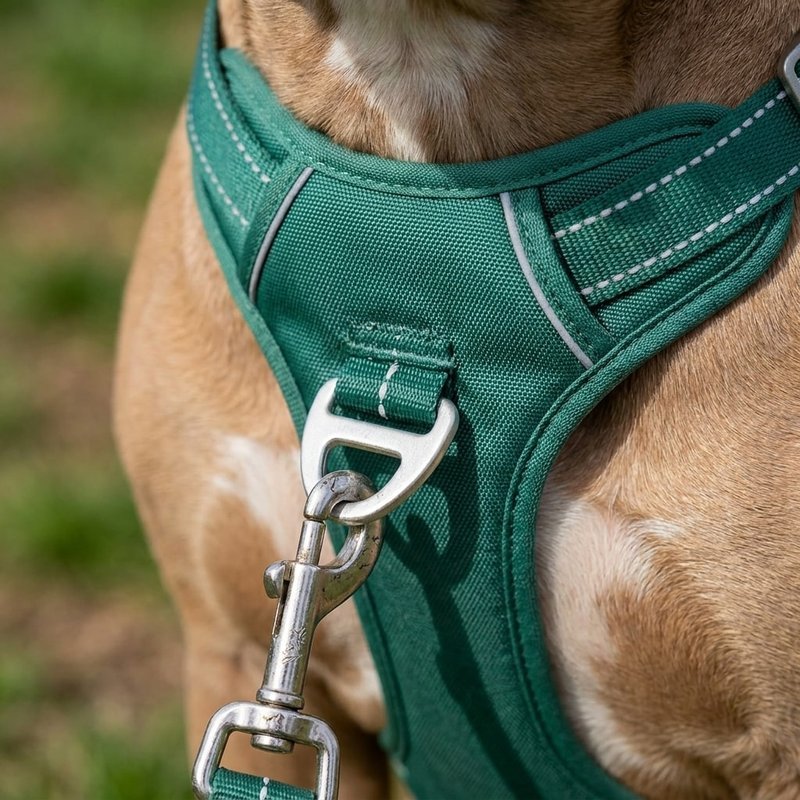
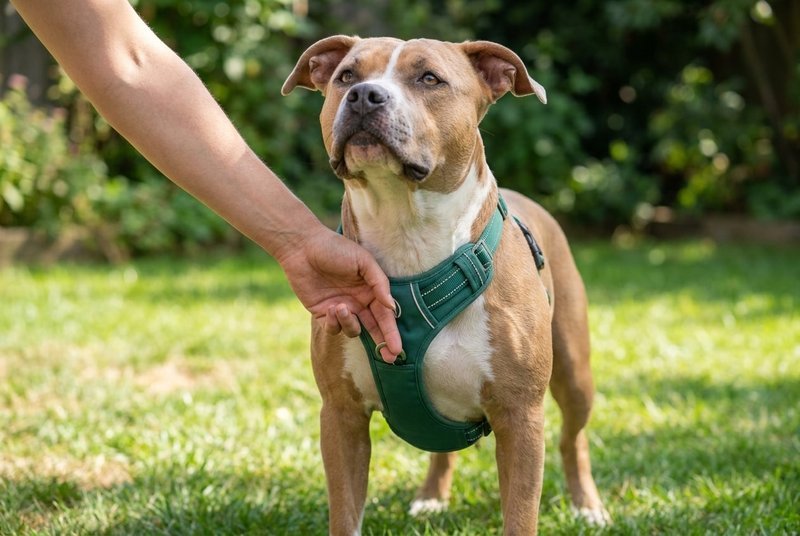
Our Steady+Style No-Pull Harness is the one we reach for with a strong dog, because it covers what a pit bull needs without going full tactical. The front chest attachment uses a reinforced aluminum D-ring to steer a lunging dog back toward you, and a rear D-ring handles relaxed walks - true dual-clip control. Heavy-duty Duraflex buckles and a padded chest plate stand up to a determined puller, the padded grab handle gives you close control in a tense moment, and reflective stitching keeps a dark dog visible. There’s also a hidden AirTag pocket - a sensible backup for a strong dog who could slip a gate - and it’s seatbelt-compatible for the car.
We test it on our own dogs, and it earns its keep on a dog that leans into the leash. It runs from XS all the way to XL (up to 132 lbs), so it covers most pit bulls and larger American Bullies.
Best for: most pit bulls that pull - owners who want durable dual-clip control, a handle, and everyday comfort in one harness.
Honest note: the Steady+Style sizes by weight with adjustable straps, and its buckles are heavy-duty reinforced polymer rather than all-metal. It’s a two-strap dual-clip, not a dedicated three-strap escape harness. That fits the majority of pit bulls well, but if your dog has genuinely backed out of harnesses or destroys gear, add a slack backup collar connection or choose a three-strap or all-metal option below.
- Sizes: XS (10-18 lbs), S (18-28 lbs), M (28-50 lbs), L (45-70 lbs), XL (70-132 lbs)
- Colors: Classic Black, Ever Green, Wild Berry
- Front (metal D-ring) + rear attachment, padded chest plate, grab handle, reflective, AirTag pocket
Best for All-Round Control: 2 Hounds Freedom No-Pull
The 2 Hounds Design Freedom ($33-$39) is the strongest general control pick among the competitors. It pairs a front ring with a rear martingale loop that gently tightens when your dog pulls, uses two stainless-steel rings, and lines the belly strap with velvet to spare a short coat from chafing. It’s relatively low-bulk and comes in a wide size range. The straps are confusing to set up the first time, and it’s not a three-strap escape design - but for everyday pulling control on a pit bull, it’s excellent.
Best for Escape Artists: Ruffwear Web Master
If your dog’s signature move is backing out, the Ruffwear Web Master ($79.99) is built for it: three body straps including a rear belly strap that blocks the reverse-out route, plus a sturdy lifting handle. The trade-offs are more coverage, more heat, and a higher price - and it’s still not “escape-proof,” so fit it carefully and test indoors first.
Make Every Walk Feel Under Control
Adjustable comfort design helps reduce leash tension fast so walks become calm, consistent, and more enjoyable for both of you.
Shop Now 👉Better Walk Guarantee • 90-Day PawSafe® Promise
Best Padded Everyday: Ruffwear Front Range
The Ruffwear Front Range ($59.99) is a comfortable, well-padded dual-clip harness that’s lighter than a tactical rig. Worth knowing: its front attachment is a reinforced webbing loop rather than a metal ring, and a long-term test saw the back ring eventually wear through the surrounding fabric after about three years - a reminder to inspect where the ring meets the fabric, not just the ring.
Best Budget and Best Max-Metal
For a cheap, effective front-clip steering tool, the PetSafe Easy Walk (about $23) works if you fit the chest strap carefully and watch for rub - but it has no back clip, handle, or padding. At the other extreme, an all-metal tactical harness like the OneTigris X ARMOR (around $90) maxes out hardware for a dog that destroys everything, at a real cost in weight (up to about 2.4 lbs), heat, and bulk. Tactical isn’t automatically safer - for a healthy dog on neighborhood walks, a lighter padded harness with well-reinforced load points is usually the better call.
How to Size and Fit a Harness on a Pit Bull
Choosing the right dog harness for a pitbull starts with a tape measure, not the breed label. There’s no reliable “pit bull size” - a muscular build and brand-to-brand chart differences make breed labels useless for ordering. Measure instead, following AKC’s harness-fit guidance: the base of the neck and the widest part of the ribcage, then verify free leg movement and check the fit in several directions.
With your dog standing squarely:
- Lower neck: around the base of the neck where it meets the shoulders (not high like a collar).
- Chest girth: around the widest part of the ribcage, just behind the front legs - your primary number.
- Weight: record it, but treat it as a secondary check.
Then use the size chart for that exact model. Many adult American Pit Bull Terriers and Am Staffs land around medium or large, smaller Staffies around small or medium, and XL Bullies around large or XL - but those labels aren’t interchangeable between brands.
Fit checks that matter for a strong dog: two fingers should slide under each strap without the harness sliding around; the front panel stays centered on the sternum; the girth strap sits behind the elbows, not in the armpits; nothing rotates when you pull from the front, back, and side; and your dog can’t lift an elbow through an opening in a gentle backward tug-test. Because the coat is short, check the sternum, armpits, and belly after early walks for redness or rubbing, and recheck fit as your dog gains or loses muscle. A harness gives you leverage, but the behavior change comes from training: Best Friends Animal Society recommends stopping the moment the leash goes tight and rewarding a loose leash, and our guide to stopping leash pulling covers the full reward-based method that pairs with the harness.
Harnesses for Pit Bull Puppies
A pitbull puppy harness has different priorities than an adult’s. Puppies get strong fast - adolescence can start around eight months, when your dog is powerful but still short on impulse control - so choose light, soft-edged, and highly adjustable over heavy and tactical. You’ll likely size up more than once.
Start leash and harness habituation indoors as soon as your puppy comes home: reward them for investigating the harness, putting their head through, and standing calmly while you buckle it, then build up wearing time. Plan public walks with your vet based on local disease risk rather than a rigid age rule. Recheck the fit weekly during growth spurts, and replace the harness once the straps hit their limit, the chest panel rides up, or the girth strap creeps toward the armpits.
Frequently Asked Questions
What is the best no-pull harness for a pit bull?
There’s no universal breed winner. For most hard-pulling pit bulls, look for a low-bulk, padded, dual-clip harness with several independent adjustments, reinforced metal load points, and a centered chest panel. Among competitors, the 2 Hounds Freedom is a strong all-round control pick; choose the Ruffwear Web Master instead if your dog backs out of harnesses.
Enjoy Calm Walks Starting Today
Dual-attachment harness distributes pressure and helps turn tug-of-war outings into relaxed, bonding strolls from the first use.
Shop Now 👉Better Walk Guarantee • 90-Day PawSafe® Promise
Are harnesses good for pit bulls, and are they better than a collar?
For a dog that pulls hard, a well-fitted harness is the more sensible primary leash attachment because it keeps force off the neck and gives you more control of the body. A back-clip harness alone can actually let a dog pull harder, so pair any harness with training. Keep a collar for ID tags.
What size harness does a pit bull need?
Measure the lower neck and the widest part of the chest, then use that exact model’s size chart - weight is only a secondary check. Many adult American Pit Bull Terriers and Am Staffs land around medium or large, smaller Staffies around small or medium, and XL American Bullies around large or XL, but labels aren’t interchangeable between brands.
Can a pit bull escape or break a harness?
Yes. Any dog can back out of a loose or poorly shaped harness, and any harness can fail through wear, chewing, or a sudden shock load. For a dog that reverses out, use a snug three-strap design with a rear belly strap plus a slack backup connection to a collar, and inspect the webbing, stitching, rings, and buckles before each walk.
How do I stop my pit bull from pulling?
The harness gives you leverage; training changes the behavior. Reward your dog for walking in position, stop the moment the leash goes tight, resume when they make slack, and change direction smoothly when they lock onto something. Keep early sessions short and low-distraction, and never jerk the leash.
What harness is best for a pit bull puppy?
Choose a lightweight, soft-edged, highly adjustable harness rather than a heavy tactical model. Introduce it indoors with treats and short voluntary sessions, and recheck the fit weekly during growth spurts and before every walk. Pit bull puppies get strong fast, so expect to size up more than once.
Front-clip or back-clip for a pit bull?
Use a front clip for steering while you train loose-leash walking, and a back clip once your dog walks calmly. A dual-clip harness is the most versatile for a powerful dog because it gives you two points of control. Don’t use the front clip for high-speed running or let your dog hit the end of the leash at speed.
Walks You Can Both Enjoy
The right no pull harness for pitbulls isn’t about a “bully-proof” label - it’s about a durable load path, real dual-clip control, a snug no-twist fit, and breathable comfort for a short coat. Get those right, pair the harness with reward-based training, and walking a powerful dog stops being a battle.
Here’s what to remember:
- A harness is a control and safety tool, not a cure - a back-clip alone can even increase pulling, so train alongside it.
- Durability lives in the whole load path - rings, stitching, webbing, and buckles, not just one shiny D-ring.
- Measure, don’t guess - lower neck plus widest chest, then the model’s own chart.
- Fit beats hype - a centered, snug, no-twist fit is what actually holds a strong dog.
Our Steady+Style No-Pull Harness was built for exactly this kind of dog - a metal front ring, a padded plate, a control handle, and sizing up to XL - and we test it on our own dogs. If you want to compare styles first, browse our other dog harness guides, then pick the dog harness for your pit bull that gives you control you can trust.