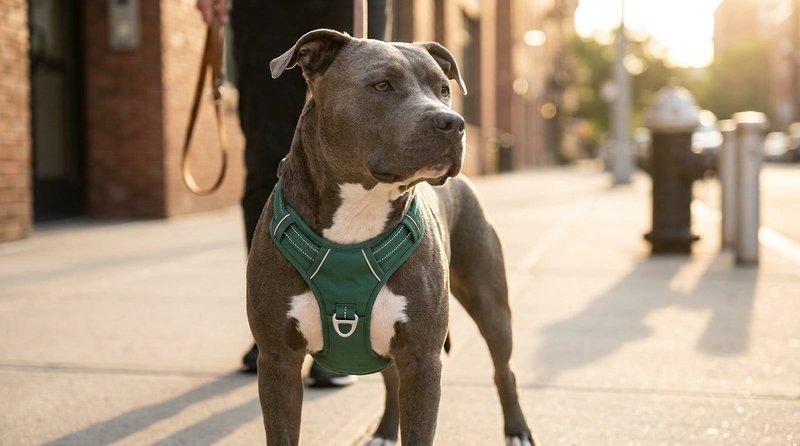

The best harness for dogs that pull features a front chest clip that redirects forward momentum, turning your dog toward you instead of letting them lunge ahead. Front-clip harnesses work through physics - the leash attachment acts as a pivot point, making pulling unproductive without causing discomfort. Look for Y-shaped designs that allow full shoulder movement, padded construction for comfort, and multiple adjustment points for secure fit. No-pull harnesses don’t stop pulling through pain; they redirect it.

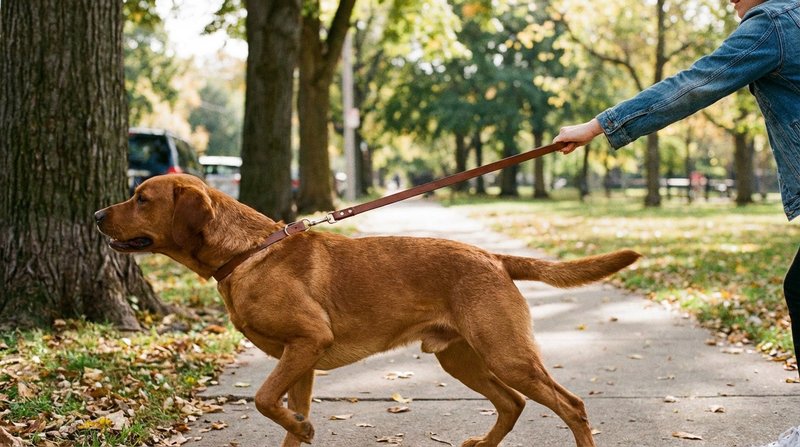
Every walk shouldn’t feel like a tug-of-war. If your arm aches after walks and your dog is gasping at the end of the leash, you’re not alone - 82.7% of pet parents report dealing with pulling issues, according to a 2021 survey.
The wrong equipment makes pulling worse. Collars put dangerous pressure on necks (research shows pressures reaching 83 kPa, far exceeding the 4.3 kPa threshold for tissue damage). Back-clip harnesses give dogs sled-dog leverage to pull harder. And generic “anti-pull” gadgets often rely on discomfort to work.
This guide covers exactly which harness features actually stop pulling (and the physics behind why), our tested recommendations across price points, and how to fit a dog harness for dogs that pull so it works. We’ve helped 300,000+ pet parents find safer walking solutions. Our recommendations are vet-reviewed and tested on real dogs - including our own.
Table of Contents
- Why Dogs Pull (And Why Most Solutions Fail)
- How Front-Clip Harnesses Actually Stop Pulling
- 5 Features That Make a No-Pull Harness Actually Work
- Best Harnesses for Dogs That Pull: Our 2026 Recommendations
- How to Fit a No-Pull Harness (So It Actually Works)
- Sizing Guide by Dog Type
- Training Tips That Work WITH Your No-Pull Harness
- Complete Walking Kit for Dogs That Pull
- Frequently Asked Questions
- Enjoy Walks Again
Why Dogs Pull (And Why Most Solutions Fail)
Dogs pull because it works. When your dog lunges toward that squirrel and gets closer to it, the behavior is reinforced. Pulling isn’t defiance or dominance - it’s simple cause and effect. They want to go somewhere, pulling gets them there, so they keep pulling.
The problem compounds with the wrong equipment.
Collars concentrate force dangerously. Research found that even the lowest measured collar pressure was approximately 83 kPa - far exceeding the 4.3 kPa threshold where tissue injury begins in humans. VCA Animal Hospitals notes that constant neck pressure is implicated in many tracheal collapse cases, particularly in small breeds like Yorkies, Pomeranians, and Pugs. Studies also show collars can spike intraocular pressure during pulling.
Back-clip harnesses give dogs leverage. One study found peak pulling forces of approximately 199 N with back-clip harnesses versus approximately 163 N with collars. The leash attachment between the shoulders works exactly like a sled dog harness - it’s designed FOR pulling. You’re fighting your dog’s strongest muscles with zero feedback mechanism.
Pain-based tools suppress without teaching. Choke chains and prong collars may reduce pulling temporarily, but research shows dogs wearing harnesses display 45% fewer stress signs (panting, lip-licking) compared to those in choke collars. The American College of Veterinary Behaviorists does not support pain-based devices.
The goal isn’t to punish pulling - it’s to make pulling unproductive.
For the full breakdown of collar risks versus harness benefits, see our guide on dog harness vs collar.
How Front-Clip Harnesses Actually Stop Pulling
So what is a no pull dog harness, exactly? It’s a front-clip harness that redirects pulling momentum instead of allowing it. Understanding the physics helps you see why they work - and why they work better than alternatives.
The Physics of Redirection
When you attach a leash to the front of your dog’s chest, you create a pivot point. The moment your dog pulls forward, the harness turns them sideways toward you.
Think of it like steering a boat. If you attach a rope to the front of a boat and pull, the boat turns toward you. If you attach it to the back, the boat just gets pulled straight. Same principle applies to your dog.
A strong pull on a front-clip harness causes the dog to pivot sideways toward the owner, making pulling ineffective. The dog learns that pulling doesn’t get them closer to what they want - it just turns them around. Professional trainers describe this as “steering like a sled dog,” but in reverse.
This happens through physics, not pain. You’re not yanking your dog backward. You’re redirecting their own forward momentum.

Why Back-Clip Harnesses Don’t Work for Pullers
Back-clip harnesses attach the leash between your dog’s shoulder blades. This is the exact same attachment point used on sled dogs - equipment literally designed to maximize pulling efficiency.
With a back-clip harness:
- Your dog engages their full chest and shoulder muscles (their strongest)
- They can lean their entire body weight into the pull
- You get zero mechanical advantage to redirect them
- There’s no feedback that interrupts forward momentum
VCA veterinarians note that back-clip harnesses can actually reinforce pulling by giving dogs that “sled dog” stance where pulling feels natural and effective.
Key point: Front-clip doesn’t punish pulling; it makes pulling unproductive.
5 Features That Make a No-Pull Harness Actually Work
Not all front-clip harnesses are created equal. A quality pull harness for dogs needs specific features to be effective. Here are the ones that separate harnesses that work from those that don’t.
1. Front Chest Clip (Non-Negotiable)
The redirection mechanism is the foundation - without a front attachment, it’s just a harness. Look for a sturdy metal D-ring, not a fabric loop. Metal rings handle the sudden forces of pulling without warping or breaking.
The clip should sit at the center of your dog’s chest, on the sternum. Too high and it won’t redirect effectively; too low and it can interfere with leg movement.
2. Y-Shaped Front Design
The straps on the chest should form a “V” or “Y” shape, not a horizontal bar across the shoulders.
Why this matters: Gait studies find Y-shaped harnesses are the least restrictive to front-leg movement. A harness that crosses the top of the shoulders can impede shoulder blade rotation, restricting natural movement.
VCA advises that a well-fit harness must allow free front-leg extension and should not rub behind the elbows. Dogs with restricted movement often pull harder from frustration - the opposite of what you want.
3. Padded Construction
When your dog pulls, all that force transfers through the harness straps. Padded chest plates and straps distribute pressure over a wider area, preventing:
- Bruising from sudden pulls
- Chafing during extended walks
- Discomfort that increases stress
Comfort equals less stress, which equals less reactive pulling. Quality harnesses use foam padding or velvet-lined chest plates.
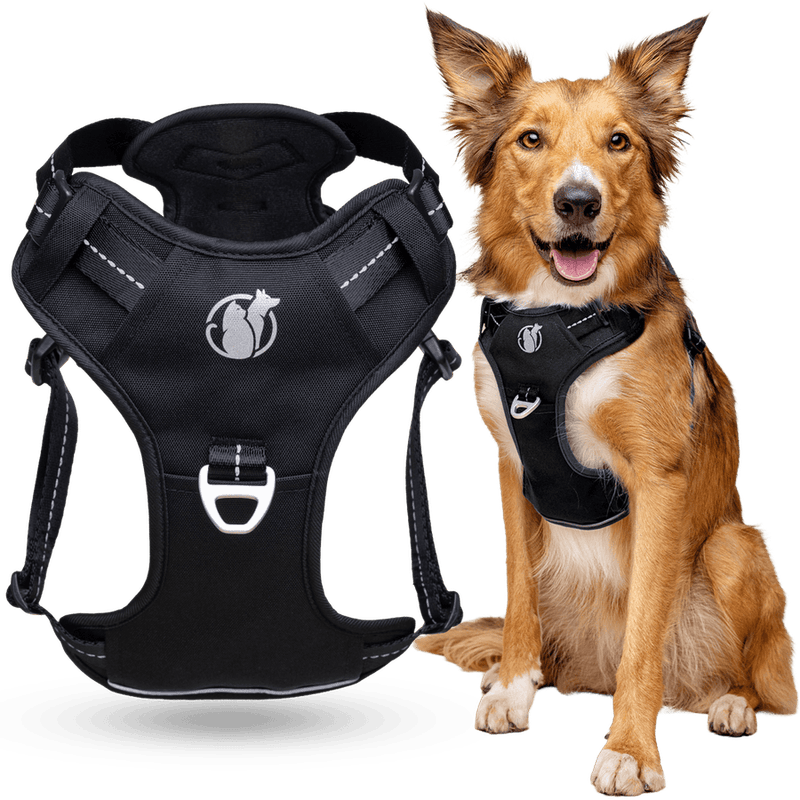
Stop Your Dog Pulling On Their Leash
The Steady+Style No Pull Harness uses front and back clip points to redirect pulling, so you get immediate, gentler control and can actually enjoy the walk again.
Shop Now 👉Better Walk Guarantee • 90-Day PawSafe® Promise
4. Multiple Adjustment Points
Look for harnesses with four or more adjustment points. This allows you to:
- Customize fit for your dog’s unique body shape
- Prevent escape (pullers often twist and back out of loose harnesses)
- Keep the harness positioned correctly during walks
Expert reviewers note that with proper girth and adjustment, “there’s little chance a dog can wriggle out of this harness.” That security comes from multiple adjustment points, not just one strap.
5. Dual Attachment Options
The best no-pull harnesses offer both front and back attachment points:
- Front clip for training and active pulling management
- Back clip for casual walks once training progresses
- Both clips used together with a double-ended leash for maximum control
This flexibility lets you adjust your approach as your dog improves.
Best Harnesses for Dogs That Pull: Our 2026 Recommendations
We’ve evaluated harnesses based on the five essential features above to find the best dog harness for pulling. For detailed testing of each option, see our dog harness reviews. Here are our top picks.
Best Overall: PawSafe Steady+Style No-Pull Harness
Why it works for pulling dogs:
- Front chest clip redirects pulling momentum
- Padded chest plate for comfort during training
- Reflective stitching for visibility on early/late walks
- Seatbelt-compatible D-ring for car safety
- Adjustable straps for escape-resistant fit
Specs:
- Sizes: XS (10-18 lbs), S (18-30 lbs), M (30-50 lbs), L (50-70 lbs), XL (70-132 lbs)
- Price: $63.96
- Colors: Classic Black, Ever Green
Best for: Most pulling dogs; excellent balance of control, comfort, and value.
View Steady+Style No-Pull Harness →
Best Budget Option: PawSafe No-Pull Harness
Why it works:
- Dual leash attachment points (front and back)
- Quick-release buckles for easy on/off
- Breathable mesh lining prevents overheating
- Machine washable (pulling dogs get sweaty)
- 1,200+ reviews from real pet parents
Specs:
- Sizes: XS through XL (10-132 lbs)
- Price: $55.96
Best for: Budget-conscious pet parents wanting effective no-pull training without premium pricing.
View No-Pull Harness →
Best for Strong Pullers: Ruffwear Front Range
Why it works:
- Four adjustment points for custom fit
- Padded chest and belly panel for all-day comfort
- Aluminum V-ring leash attachment
- ID pocket for tags
- Durable construction for active dogs
Considerations:
- Higher price point (~$60)
- Can run warm in hot weather
- Limited color options
Best for: Active dogs, hikers, strong medium-to-large pullers who need rugged gear.
Best for Escape Artists: Ruffwear Flagline
Why it works:
- Tummy strap prevents backing out
- Five adjustment points for secure fit
- Lightweight but escape-proof
- Built for dogs that slip out of standard harnesses
Considerations:
- Premium price (~$70)
- More complex to put on
- May be overkill for dogs that don’t escape
Best for: Dogs who slip out of harnesses, anxious pullers who twist and thrash.
For reactive dogs who lunge at triggers, see our guide on best harness for reactive dogs.
How to Fit a No-Pull Harness (So It Actually Works)
A harness only works if it fits. Too loose and your dog escapes or the redirection fails. Too tight and discomfort increases stress and pulling.
Make Every Walk Feel Under Control
Adjustable comfort design helps reduce leash tension fast so walks become calm, consistent, and more enjoyable for both of you.
Shop Now 👉Better Walk Guarantee • 90-Day PawSafe® Promise
Measuring Your Dog
Chest girth: Measure around the widest point of your dog’s ribcage, just behind the front legs. This is your primary measurement.
Weight: Use for size chart reference, but chest measurement takes priority. Two dogs at the same weight can have very different chest sizes.
When between sizes: Choose the smaller size and adjust up. A harness that’s slightly snug is safer than one that’s too loose.
The Two-Finger Fit Test
The standard rule: fit exactly two fingers under every strap.
- More than two fingers = too loose (escape risk, reduced control)
- Less than two fingers = too tight (discomfort, chafing, restricted breathing)
- Exactly two fingers = proper fit
Test this at every adjustment point: chest strap, belly strap, and any shoulder straps.
Positioning Checklist
Before your first walk, verify:
- Front chest strap sits on sternum, not up on throat
- No straps crossing the top of shoulders
- Armpits clear with no rubbing
- Harness doesn’t shift when dog moves
- Belly strap sits 1-2 inches behind front legs
- Front clip centered on chest
Pro Tip: Practice fitting when your dog is calm. A walk-ready dog is wiggly and harder to fit properly. Get the adjustments right during a calm moment, then it’s ready for walk time.

Sizing Guide by Dog Type
Different body shapes create different fitting challenges. Here’s how to address them:

| Dog Type | Common Issue | Sizing Tip |
|---|---|---|
| Deep-chested (Greyhounds, Whippets, Dobermans) | Harnesses slip over head | Choose escape-resistant design with tummy strap; need high-cut chest plate, minimal neck coverage |
| Barrel-chested (Bulldogs, Pugs, Boston Terriers) | Standard harnesses don’t fit | Look for adjustable girth, wider size range; need broad chest panel |
| Long-bodied (Dachshunds, Corgis, Basset Hounds) | Harness rides up toward neck | Tummy strap keeps position stable |
| Large/Strong breeds (Labs, German Shepherds, Rottweilers) | Extreme pulling force, escape risk | Prioritize sturdy construction, metal hardware; harnesses rated for heavy loads |
| Small breeds (Chihuahuas, Yorkies, Toy Poodles) | Harnesses too heavy/bulky | Lightweight materials, smaller buckles |
Quality hardware matters - especially when finding the best harness for large dogs that pull. Duraflex buckles (molded from tough acetal plastic) are tested to bear 130+ lbs per buckle. D-rings should be stainless steel or brass-coated steel. Cheaper zinc-alloy or thin aluminum rings may bend under strong pulls.
When in doubt, measure and check the brand’s size chart. Most fit issues come from guessing instead of measuring.
Training Tips That Work WITH Your No-Pull Harness
Equipment enables training - it doesn’t replace it. The harness makes training possible; these techniques make changes permanent.
As professional trainers note: “A properly fitted front-clip harness helps guide rather than restrain, teaching cooperation through movement, not force.” But trainers consistently say it takes several weeks of daily practice to change the pulling habit.
The Stop-and-Wait Method
- When your dog pulls, stop walking completely
- Wait for slack in the leash (dog looks back or returns to you)
- Mark with “yes!” and continue walking
- Repeat consistently - pulling = we stop; loose leash = we go
This is the most commonly recommended technique by professional trainers. The harness makes it manageable; the consistency makes it work.
Direction Changes
When your dog pulls, turn 180 degrees and walk the other way. Your dog learns that pulling doesn’t get them where they wanted - it takes them in the opposite direction.
The front-clip harness makes turning easier. When you turn, the harness naturally redirects your dog to follow, rather than you fighting their forward momentum.
Reward Position, Not Just Attention
Treat your dog when they walk beside you, not just when they look at you. You’re building the habit of checking in at your side.
- Start with frequent treats (every few steps)
- Gradually increase duration between treats
- Use high-value rewards (cheese, chicken) for training walks
Key insight: The harness manages the symptom (pulling force); training addresses the cause (pulling habit).
Enjoy Calm Walks Starting Today
Dual-attachment harness distributes pressure and helps turn tug-of-war outings into relaxed, bonding strolls from the first use.
Shop Now 👉Better Walk Guarantee • 90-Day PawSafe® Promise
Complete Walking Kit for Dogs That Pull
Beyond the harness, here’s what makes walks successful:
Essential:
- Front-clip harness (primary control)
- 6-foot fixed leash (no retractable - they teach pulling)
- Flat collar with ID tags (legal requirement in most areas)
- High-value treats (for training rewards)
Helpful additions:
- Treat pouch for hands-free access
- Dog seatbelt for car travel (pairs with harness)
What NOT to use:
- Retractable leashes: Inconsistent boundaries teach pulling, offer no control during lunges
- Choke chains/prong collars: Pain-based, can increase stress and reactivity
- Collar for leash attachment: Neck injury risk when your dog pulls
Frequently Asked Questions
Do no-pull harnesses actually work?
Yes, when properly fitted. Front-clip harnesses redirect pulling momentum rather than allowing it. Research shows they can reduce pulling force compared to back-clip harnesses. However, they work best combined with consistent training - equipment alone won’t create permanent behavior change. The harness makes pulling unproductive; training teaches your dog not to try.
Is a harness or collar better for a dog that pulls?
Harness. Research found collar pressure during strong pulling can reach 83-832 kPa - the lowest measured pressure was still far above the 4.3 kPa threshold where tissue injury begins. Collars risk trachea damage, thyroid issues, and spikes in eye pressure. Cornell University’s veterinary school explicitly advises dogs with airway problems to switch from neck collars to harnesses. Use the harness for leash attachment; the collar is for ID tags only.
Do harnesses make dogs pull more?
Common myth. One study found dogs pull slightly harder in back-clip harnesses than collars, but this doesn’t mean harnesses cause pulling - dogs pull because it works. Front-clip harnesses actively redirect pulling momentum, making them more effective than either collars or back-clip designs. The harness style matters more than harness vs. collar.
How do I stop my dog from pulling even with a harness?
Combine the harness with consistent training. Use the stop-and-wait method: stop when they pull, continue when the leash is loose. The harness makes pulling less effective by redirecting momentum; training teaches your dog that loose-leash walking is more rewarding. Consistency is critical - treat every walk as a training session.
What size no-pull harness does my dog need?
Measure your dog’s chest girth at the widest point (behind the front legs) with a soft tape measure. Check the brand’s size chart - weight is secondary to chest measurement. When your measurements fall between sizes, choose the smaller size and adjust the straps up. Apply the two-finger rule: you should fit exactly two fingers under every strap.
Can puppies use no-pull harnesses?
Yes, once they’ve had their vaccinations and can go on walks (typically around 16 weeks). Start with short sessions to build positive association with the harness. Puppies grow fast - recheck fit monthly and size up as needed. Early training with proper equipment builds good habits before pulling becomes ingrained.
Enjoy Walks Again
Walks don’t have to be a battle. The best harness for pulling dogs transforms that daily struggle into something you and your dog can both enjoy.
Here’s what to remember:
- Front-clip harnesses redirect pulling through physics, not pain - the pivot point turns lunging into a gentle redirect
- Y-shaped design + padded construction + proper fit = effectiveness - all three matter
- Equipment enables training; training creates lasting change - the harness manages pulling while you teach loose-leash walking
- The right harness makes walks enjoyable for both ends of the leash
Our Steady+Style No-Pull Harness was designed for exactly this challenge - front-clip control, padded comfort, and a fit that actually works on pulling dogs. We use it on our own dogs because we know the frustration of being dragged down the street.
Ready to enjoy walks again? Browse our dog harness collection and see why 300,000+ pet parents trust PawSafe.
Every walk is a chance to build the habit you want. The right harness gives you the control to make that happen.