
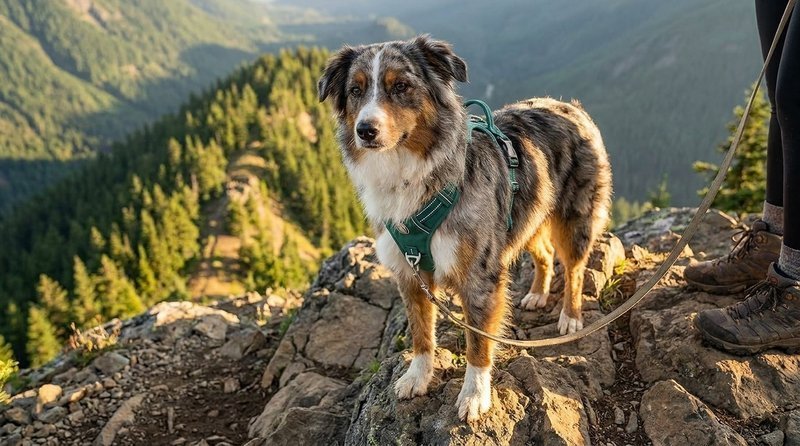
The best harness for hiking dogs is a well-fitted, non-tightening body harness that keeps the leash off the throat and clears the shoulders and armpits. Look for durable, quick-drying materials, multiple adjustment points, reflective trim, and secure metal hardware, with a rear leash clip for the trail and an optional front clip for control. A lift-assist handle helps over obstacles, and a third belly strap adds security for dogs that back out. Fit matters more than any label.

The trail is not the sidewalk. A harness that’s perfectly fine for a loop around the block can ride up into your dog’s armpits by mile three, soak through at the first creek crossing, or pop a buckle when they lunge after a chipmunk - a real problem when you’re an hour from the car.
A true hiking dog harness is technical gear, the way your boots are. It has to move with your dog over rocks and roots, dry out after a swim, stay put when they scramble, and give you a secure grip when you need to steady them across a stream.
Here’s the honest version of how to choose one: the six features that actually matter on a trail, how to get the fit right, which harness suits your specific dog, and a fair look at the trail favorites. We’ve helped 300,000+ pet parents find safer walking gear, we test on our own dogs, and where the research is mixed, we’ll say so instead of overselling.
Table of Contents
- What Makes a Hiking Harness Different From an Everyday One?
- 6 Features of the Best Harness for Hiking Dogs
- Back-Clip vs Front-Clip on the Trail
- How to Fit a Hiking Harness
- Best Hiking Harness for Your Dog (by Size and Body Type)
- Hiking Harnesses Compared
- Trail Safety and Harness Care
- Frequently Asked Questions
- The Bottom Line
What Makes a Hiking Harness Different From an Everyday One?
An everyday harness only has to survive gentle, predictable use. A hiking harness faces abrasion from granite and brush, water crossings, heat, long hours of movement, and obstacles your dog has to climb. That changes what matters.
So do you actually need a dedicated one? Not always. A regular walking harness is fine for an easy day hike if it fits when your dog is moving, stays secure, isn’t damaged, doesn’t chafe, and dries reasonably fast. The calculus changes on long, hot, wet, remote, or technical trips - that’s where low water uptake, visibility, a supported handle, and an escape-resistant fit stop being luxuries.
The rest of this guide assumes you want gear that can handle a real trail, not just prove it survives one easy loop.
6 Features of the Best Harness for Hiking Dogs
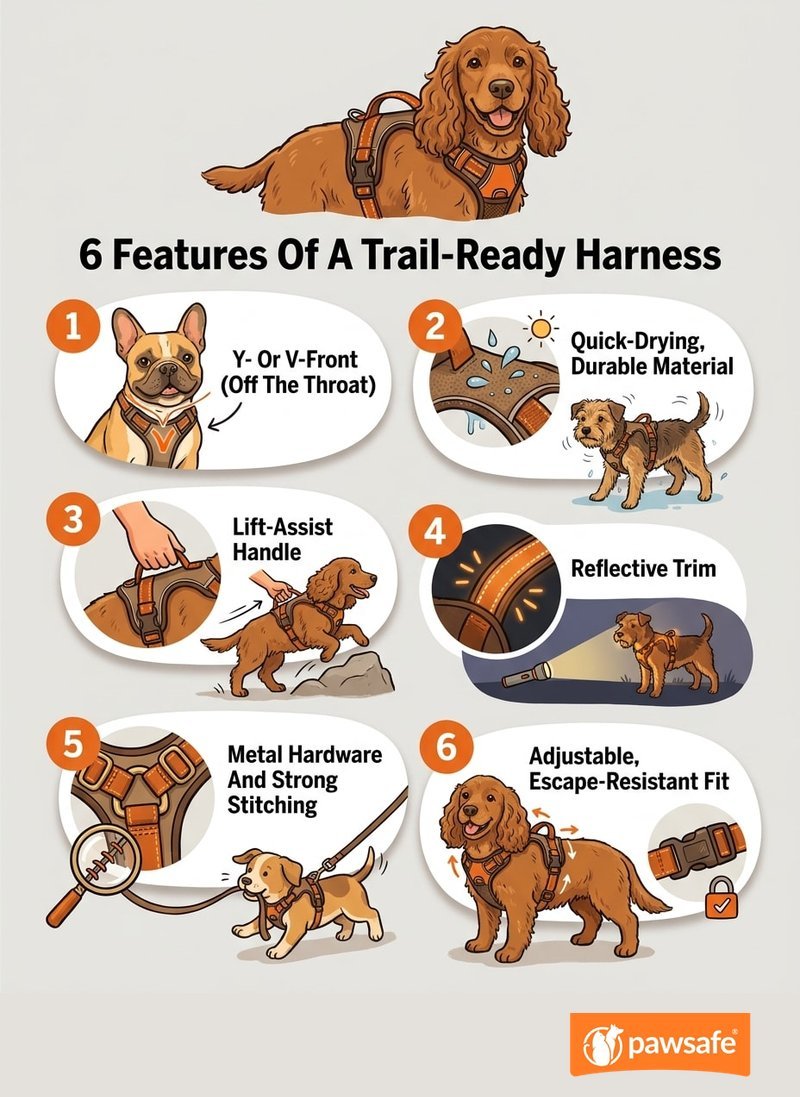
You can judge almost any hiking dog harness on these six things.
- A Y- or V-front that clears the throat and shoulders. A Y-front routes straps up either side of the breastbone instead of laying one horizontal band across the front of the shoulders. It’s designed to keep the leash off the windpipe and out of the shoulder joint. (More on why “designed to” isn’t the same as “proven to” in the next section.)
- Durable, quick-drying materials. Look for a tough face fabric and a lining that doesn’t hold water. “Ripstop” is a weave, not a strength rating, and “waterproof” coatings only shed splashes - but low water uptake matters enormously after a creek crossing. Closed-cell foam padding resists soaking; thick spongy mesh and neoprene hold water and heat.
- A lift-assist handle. A sturdy handle lets you boost your dog over a downed log, steady them across moving water, or hold them close on a narrow ledge. The best ones connect to a broad chest-and-belly panel so the load spreads out, rather than yanking one thin strap.
- Reflective trim. Dawn starts and later-than-planned finishes are part of hiking. Reflective stitching lights up in a headlamp beam. Treat it as a supplement to a real light and ID, not a replacement.
- Secure metal hardware and reinforced stitching. Aluminum saves weight; steel is compact and corrosion-resistant. But the metal’s name doesn’t prove the finished harness is strong - look for reinforced box-stitching or bartacks at the D-ring, handle, and buckle anchors.
- Multiple adjustment points and an escape-resistant fit. Four to six adjustment points let you tune neck, chest, and length independently for an odd-shaped dog. For dogs that back out, a third strap set farther behind the rib cage is much harder to reverse out of - though no honest maker calls any harness truly escape-proof.
A Straight Answer on the Y-Shape
You’ll see “Y-shaped” treated as a magic word. The reality is more honest: a well-positioned Y-front avoids a strap across the shoulders and gives useful throat clearance, but studies on whether it actually preserves a dog’s natural gait are genuinely mixed. One 2019 treadmill study even found its Y-shaped test harness reduced shoulder extension more than a horizontal one, and later research found the effect depends on the specific product and the individual dog.
The takeaway: choose a Y-front as a sensible starting point, then test it on your dog rather than trusting the label. If you want the full breakdown of the design, see our guide to the Y-shaped dog harness.
Back-Clip vs Front-Clip on the Trail
Where you clip the leash changes how the harness behaves on the trail.
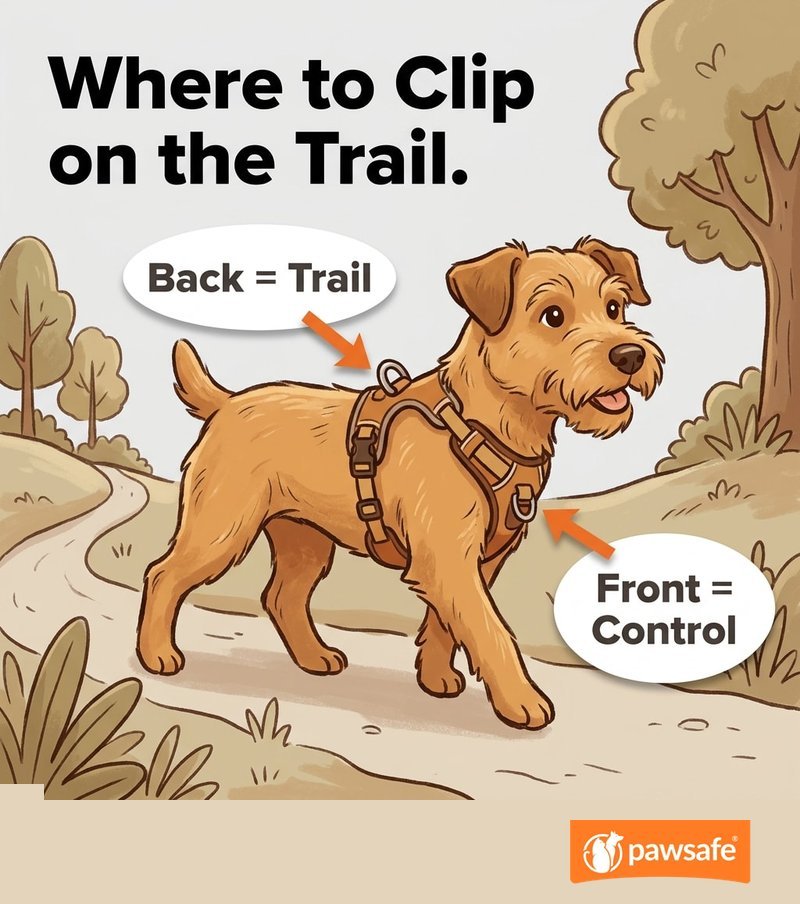
- Back-clip is the trail default. The leash sits up over the shoulders, so it’s far less likely to slip under a front leg and trip your dog on rooty, rocky ground. It’s the right choice for a dog that already walks calmly on a loose leash.
- Front-clip attaches at the chest and turns your dog back toward you when they surge - genuinely helpful for a puller or a reactive dog. The trade-off on a trail: a low front leash can wrap a foreleg, and constant sideways tension for miles isn’t ideal.
The best hiking harnesses offer both, so you can run the back clip on open trail and switch to the front clip (or a double-ended leash) when you need more control. A harness doesn’t teach loose-leash walking on its own - some dogs actually pull just as hard in one - so pair a front clip with reward-based training rather than relying on gear alone.
How to Fit a Hiking Harness
A harness is only as good as its fit - a poor one can rotate, rub, or shorten your dog’s stride over a long day.
Measure first. With your dog standing naturally, measure chest girth around the widest part of the rib cage, just behind the front legs (this is usually the primary size), and the base of the neck where it meets the shoulders. Always use that specific brand’s chart - sizes aren’t standardized.
Use the two-finger rule - then move. You should be able to slide two fingers under each strap with slight pressure, not through a loose gap. Then do a dynamic check: have your dog walk, trot, sit, lie down, turn tightly, climb a step, and lower their head. Confirm the chest piece stays centered, the girth strap stays behind the elbow (not in the armpit), and the shoulders move freely.
Test the escape. Apply gentle leash pressure from the back, front, and sides, then do a controlled backing-up test to make sure the harness can’t slip over your dog’s head. Recheck the fit after grooming, weight change, or a growth spurt.
Stop and readjust if the harness rides into the armpit, pulls onto the throat, gaps enough to catch a leg, or spins around. After the hike, take it off and check the skin underneath for redness, damp spots, or missing fur.

Best Hiking Harness for Your Dog (by Size and Body Type)
The “best” harness depends as much on your dog’s build as on the trail.
Small Dogs
Go light. Prioritize proportionate hardware, a chest piece that stays centered, soft edges, and enough clearance behind the front legs. A supported handle helps a small dog over big steps without hauling them up by the leash. Choose by measurement, never by a weight-based “small” label.
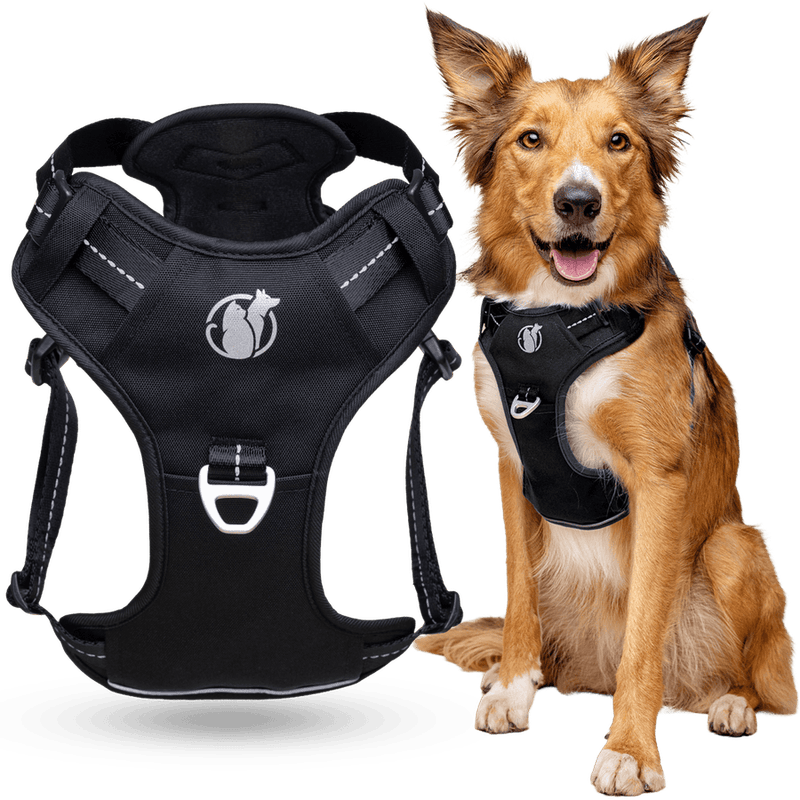
Stop Your Dog Pulling On Their Leash
The Steady+Style No Pull Harness uses front and back clip points to redirect pulling, so you get immediate, gentler control and can actually enjoy the walk again.
Shop Now 👉Better Walk Guarantee • 90-Day PawSafe® Promise
Large and High-Energy Dogs
Look for wide load-bearing panels, secure rear hardware, reinforced stitching, and front-and-back leash options. A big, powerful dog can shred an under-built harness - and a front clip is management for pulling, not a substitute for training.
Deep-Chested Breeds
Boxers, Weimaraners, Greyhounds, and Whippets have a big girth-to-neck difference and a narrow waist, so standard harnesses ride into the armpits or slip off. Prioritize independent neck and girth adjustment, a longer body, and - for dogs that reverse out - a third strap behind the rib cage. Always run the backing-up test.
Brachycephalic Breeds
French Bulldogs, Pugs, and Bulldogs already work hard to breathe, so keep all pressure off the throat with a low, well-positioned Y- or chest-style back clip. Just as important on the trail: these dogs overheat fast, so keep routes short and cool. Cornell’s veterinary guidance recommends a harness over neck pressure and limiting exertion in heat for flat-faced dogs.
Puppies and Seniors
Puppies need light construction, a broad adjustment range, and frequent remeasuring - plus short outings rather than one long forced march, since growing joints need protecting until skeletal maturity. Seniors do best with soft padding, an easy neck buckle, a supported handle, and routes matched to their current stamina.
For hands-on testing notes across many models and body types, see our dog harness reviews.
Hiking Harnesses Compared
No single harness wins for every dog. Here’s an honest look at trail favorites and where PawSafe fits, based on manufacturer specs and independent trail testing.
Ruffwear Flagline
The most consistently recommended hiking-specific pick among independent testers (Outdoor Life and Treeline Review both name it their top hiking harness). It’s a lightweight three-strap design with six adjustment points, three leash points, a debris-resistant liner, and a load-distributing handle. Around $70. The trade-offs: more coverage means more warmth, and being light, it can rotate under hard sideways pull.
Ruffwear Front Range
A durable, padded, reflective everyday harness with front and back clips, around $60. No handle and no third strap. Testers find its shorter body fits small and square dogs (including many Frenchies and Pugs) better than long medium-to-large dogs.
Make Every Walk Feel Under Control
Adjustable comfort design helps reduce leash tension fast so walks become calm, consistent, and more enjoyable for both of you.
Shop Now 👉Better Walk Guarantee • 90-Day PawSafe® Promise
Non-stop Dogwear Line Harness 5.0
An active-dog favorite with an explicit Y-front, excellent armpit clearance, and a wide size range (around $55). Light and water-resistant, but the neck isn’t adjustable and there’s no handle or escape strap - and the maker notes it isn’t for strong pulling sports.
Kurgo Journey Air
An affordable dual-clip option (around $43) with a padded chest, aluminum hardware, and a handle. Well built for the price; testers note the body runs short for some long dogs.
PawSafe Steady+Style No-Pull Harness
Where it fits: everyday walks and day hikes. The Steady+Style No-Pull Harness has a padded chest plate, a padded grab handle for quick control, front and rear D-rings so you can switch between no-pull steering and a relaxed back-clip, and reflective stitching for low light. It’s also seatbelt-compatible, which is handy for the drive to the trailhead.
Being honest about the limits: it’s a versatile walking-and-day-hike harness, not a dedicated three-strap mountaineering rig. If your dog is a committed escape artist or you’re doing serious technical backcountry, a purpose-built three-strap harness like the Flagline or Web Master is the better tool. For most dogs on most trails - and for everything between the car and the summit - the dual clips, handle, and reflective trim cover the essentials.

Trail Safety and Harness Care
The harness is half the job; how you use and maintain it is the other half.
Run a pre-hike gear check. Flex every buckle until it clicks locked, inspect the webbing at the D-ring, handle, and buckle anchors for frayed threads or cracks, and tug each attachment point. Confirm adjustment sliders haven’t crept, then recheck the fit and do a quick back-out test.
Keep your dog leashed and close. A slipped harness or dropped leash can turn into a lost dog fast when a scent or a deer pulls them out of sight. The American Hiking Society recommends leashing both to protect wildlife and to keep your dog from disappearing. Rules vary a lot - many National Park trails don’t allow dogs at all, and other public lands have their own leash rules - so check before you go.
Watch for heat. Most canine heat illness comes from exertion, not parked cars, so pace hot-weather hikes, carry water, and rest in shade. Heavy panting, bright-red gums, drooling, wobbliness, or refusing to move are warning signs - move to shade, wet your dog with cool (not ice-cold) water, and get to a vet.
Practice Leave No Trace. Stay on durable trail, don’t let your dog chase wildlife, yield to other hikers and horses, and pack out waste - Leave No Trace is explicit that this includes pet waste. After a muddy or wet outing, rinse the harness as directed, clear debris from the padding, and let it dry fully before storage. And take the harness off when your dog is crated or unsupervised.
Frequently Asked Questions
What kind of harness is best for hiking?
A well-fitted, non-tightening body harness with durable, quick-drying materials, good armpit clearance, multiple adjustment points, reflective trim, and a rear leash point. A Y- or V-front is a reasonable starting shape, but your dog’s actual stride and fit matter more than the label. Add a third belly strap for escape risk and a lift-assist handle for technical terrain.
Do dogs need a special harness for hiking?
Not for every hike. A regular walking harness can handle an easy day hike if it fits when your dog moves, stays secure, is undamaged, doesn’t chafe, and dries reasonably fast. Long, hot, wet, remote, or technical trips make low water uptake, visibility, a supported handle, and an escape-resistant fit far more valuable.
Enjoy Calm Walks Starting Today
Dual-attachment harness distributes pressure and helps turn tug-of-war outings into relaxed, bonding strolls from the first use.
Shop Now 👉Better Walk Guarantee • 90-Day PawSafe® Promise
Is a front-clip or back-clip harness better for hiking?
Use the back clip for a dog that walks calmly - it keeps the leash higher and less likely to tangle around a front leg. A non-tightening front clip or double-ended leash adds steering for pullers or reactive dogs, but pair it with reward-based training and don’t rely on constant sideways tension for miles.
Are Y-shaped harnesses better for hiking?
A Y-front is designed to avoid a strap across the front of the shoulders and can give useful throat and shoulder clearance, which is why many hiking harnesses use it. But the research is mixed - studies find gait effects vary by product and dog. Treat a Y-front as a design preference to test on your dog, not a guarantee of unrestricted movement.
Does a hiking harness need a handle?
No, but a lift-assist handle is genuinely useful for boosting your dog over logs, steadying them across creeks, or quick control on a narrow ledge. Use a smooth upward assist while your dog keeps using their legs - don’t suspend them by a small handle. For repeated or full-body lifting, use a dedicated rehabilitation harness.
What’s the best hiking harness for a small dog?
Choose by actual chest-girth and neck measurements, not weight. Look for lightweight hardware, a chest piece that stays centered, soft edges, and enough clearance behind the front legs so nothing digs into the armpits. A supported handle can help a small dog over big steps without yanking the leash upward.
Can I use a regular walking harness for a hike?
Yes, if it passes the fit, escape, hardware, temperature, and drying checks. Change it if it rotates, rides into the armpits, pulls onto the throat, traps debris, shortens your dog’s stride, or lacks the security the terrain demands. A short, flat, paved walk asks far less of a harness than a rocky all-day trail.
How should a hiking harness fit?
Measure the widest part of the rib cage (chest girth) and the base of the neck, then follow that brand’s chart. Adjust so two fingers fit under each strap with slight pressure. Then test it in motion - walking, sitting, climbing a step, and backing up - and confirm it stays centered, clears the throat and armpits, and can’t slip over the head.
The Bottom Line
The best harness for hiking dogs isn’t about a brand name or a buzzword - it’s about a body harness that fits your dog when they move, keeps the leash off their throat, survives the trail, and gives you control when the ground gets tricky.
Keep this checklist in your back pocket:
- Y- or V-front, tested on your dog - clearance you confirm, not a label you trust
- Quick-drying materials + reflective trim + metal hardware - built for real miles
- A lift-assist handle and an escape-resistant fit - control and security when it counts
- Back clip for the trail, front clip for control - and training does the rest
- Fit beats everything - measure, move-test, and re-check
For everyday walks and day hikes, our Steady+Style No-Pull Harness covers the essentials with a padded chest plate, a grab handle, dual clips, and reflective stitching. Browse the full dog harness collection to match the right harness to your dog and your trail. Then go find some dirt - the good stuff is always past the trailhead.