
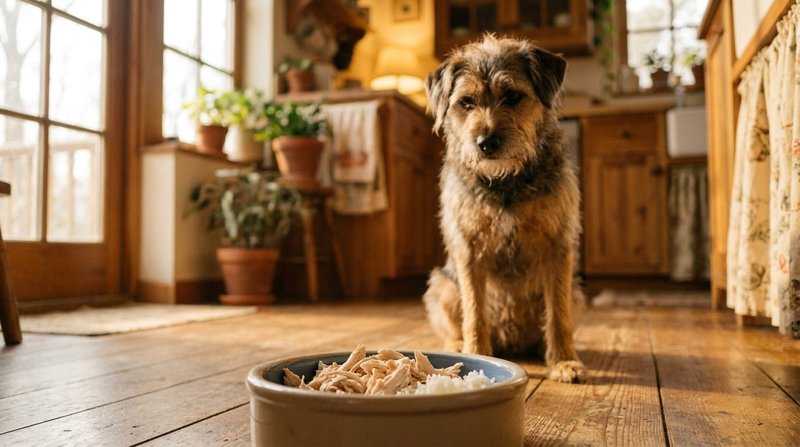
A bland diet for dogs is a simple, highly digestible meal - usually a lean protein like boiled chicken or turkey with an easy carbohydrate like white rice - fed briefly to settle mild diarrhea, vomiting, or an upset stomach. It’s gentle on the gut and easy to absorb while the digestive system recovers. It is a short-term bridge, not a complete and balanced diet, so the amounts and how long to feed it should come from your vet. It simply helps a mildly unwell dog recover at home.
Your dog has the runs (or just brought up breakfast), and everyone from your neighbor to the internet has the same advice: “Give them chicken and rice.” It’s a good instinct - but there’s a right way and a wrong way, and most quick answers skip the parts that actually matter.
They rarely mention that plain chicken and rice isn’t a complete diet, that the old “just fast them for a day” advice is now outdated, or how to tell when loose stool is a home-care situation versus a call to the vet. Get those wrong and you can leave a sick dog underfed - or wait at home when they need help.
This guide, written with veterinary sources and reviewed for accuracy, covers exactly what a bland diet is, how to make and feed it safely, how long to use it, and the red flags that mean “call the vet, not the kitchen.” Diarrhea is common - a large 2025 UK study estimated about one in 12 dogs gets a bout each year - so it’s worth knowing how to handle it well.
Table of Contents
- What Is a Bland Diet for Dogs?
- When to Use a Bland Diet (and When Not To)
- The Classic Bland Diet: Chicken and Rice, Done Right
- How to Feed a Bland Diet
- How Long Should a Dog Stay on a Bland Diet?
- When to Skip the Kitchen and Call the Vet
- Helping Your Dog's Gut Recover
- Frequently Asked Questions
- A Bland Diet, Done Safely
What Is a Bland Diet for Dogs?
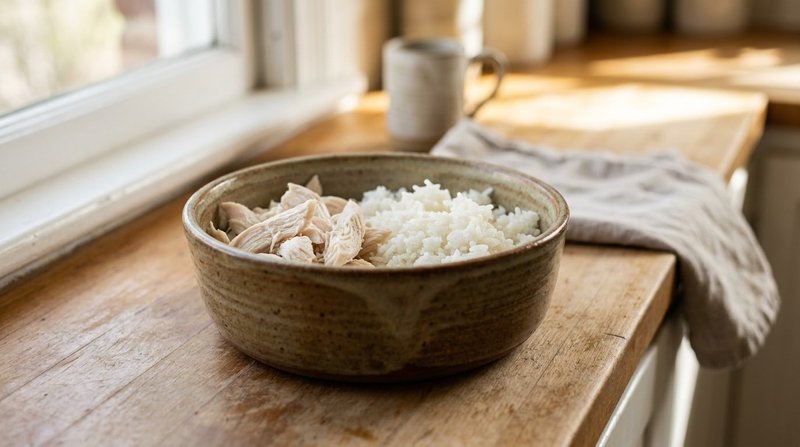
A bland diet is a simple, easy-to-digest, usually low-fat meal you feed for a short stretch while your dog’s stomach settles. “Bland” here means gentle and highly digestible, not flavorless - the classic version is boiled skinless chicken mixed with plain white rice.
It’s worth knowing that vets have somewhat cooled on the term itself, because “bland” is vague - it could mean low-fat, low-fiber, limited-ingredient, or highly digestible, which are all different things. What matters is the idea: food that’s easy on a recovering gut.
A bland diet can be a reasonable choice for a dog with mild, recent diarrhea or a bit of an upset stomach who is otherwise bright, drinking, and interested in food. It’s often used for mild dietary indiscretion (garbage-can raiding), an abrupt food change, stress-related loose stool, or recovery after a self-limiting tummy bug. What it is not is a treatment for the underlying cause - it’s supportive care that helps a mildly unwell dog keep eating while they heal.
When to Use a Bland Diet (and When Not To)
A bland diet makes sense when all of these are true: the diarrhea is mild and recent, your dog is bright and responsive, they’re drinking and keeping water down, any vomiting was a one-off that has stopped, and there’s no blood, black stool, belly pain, or chance they swallowed something they shouldn’t have.
Two common myths are worth clearing up:
- You usually shouldn’t fast your dog. Years ago, vets recommended withholding food for 24 to 48 hours. That advice has changed: the gut actually needs nutrients to heal, and withholding food can slow recovery. A dog with diarrhea but no vomiting generally should keep eating appropriate food. (A vet may still advise a short pause from food for active, repeated vomiting - that’s an individual call, not a blanket rule. And never withhold water on your own.)
- A bland diet isn’t a cure. It won’t fix parasites, a foreign body, pancreatitis, a toxin, or a food allergy. It buys a mildly unwell gut some easy meals while the problem resolves - or while you decide whether to call the vet.
If your dog is a puppy, a senior, a toy breed, pregnant or nursing, diabetic, or has any chronic illness, skip the guesswork and check with your vet first. And if the upset started right after eating, our guide on why dogs throw up after eating can help you spot what’s going on.

The Classic Bland Diet: Chicken and Rice, Done Right
The traditional bland diet is a lean protein plus an easy-to-digest carbohydrate, served plain. Common vet-suggested options:
Lean proteins:
- Boneless, skinless chicken or turkey breast, thoroughly cooked
- Very lean ground beef, cooked and drained of fat
- Low-fat cottage cheese - only if your dog handles dairy (many dogs don’t)
Easy carbohydrates:
- Well-cooked plain white rice (the most common choice)
- Plain boiled potato or plain cooked pasta
How to prepare it safely:
- Remove skin, bones, and visible fat; boil or poach with no added fat
- Drain the fat from any ground meat
- Cook everything thoroughly (poultry to a safe internal temperature) and serve it plain and cooled - warm, never hot
- Add nothing else: no butter, oil, gravy, salt, stock cubes, or seasoning
- Never use onion, garlic, chives, or leeks in any form - they’re toxic to dogs
As for how much of each? Veterinary examples vary a lot - some suggest roughly equal parts protein and carbohydrate, others about twice as much rice as meat. That inconsistency is exactly why there’s no single “correct” recipe, and why the total amount and portion size should come from your vet, based on your dog’s size and situation. This is the same easy-on-the-gut thinking behind our broader dog gut health guide.
Here’s the honest part the recipe pages skip: chicken and rice on its own is not complete or balanced. Veterinary nutrition guidance notes it’s deficient in more than 10 essential nutrients, and a landmark analysis found 95% of homemade dog recipes fell short on at least one essential nutrient. As Tufts veterinary nutritionist Dr. Deborah Linder puts it, “these ingredients alone are not a complete and balanced diet.” That’s fine for a few days as a bridge - but it’s why a bland diet is short-term, not a long-term way to feed your dog.

How to Feed a Bland Diet
How you feed matters as much as what you feed. A few principles:
- Go small and frequent. Offer smaller portions more often than your dog’s usual big bowls, starting conservatively and increasing only if food and water stay down and things keep improving.
- Make it easy for a picky, queasy dog. Feed in a calm, quiet spot; try hand-feeding or a plate; soak the food in a little water; or, with your vet’s okay, moisten it with a small amount of low-fat, low-sodium broth that has no onion or garlic. Never force-feed a dog that’s refusing to swallow.
- Keep water available and let your dog drink normally - just don’t force it.
- Cut the extras. No treats, chews, table scraps, or rich toppers while they recover, and keep them out of other pets’ bowls.
- Keep a simple diary of what you offered, how much they ate, water intake, and every stool - it’s genuinely useful if you end up at the vet.
- Transition back gradually. Once vomiting has stopped and stool is firming up, mix the regular food back in over several days rather than switching all at once. If symptoms return during the transition, call your vet instead of restarting chicken and rice on a loop.
Daily Support For Healthy Digestion
Multi-strain probiotic soft chews that help maintain gut balance and stool quality in an easy, tasty format.
Shop Now 👉Vet Approved Formula • 90-Day PawSafe® Promise
How Long Should a Dog Stay on a Bland Diet?
Think days, not weeks. A genuinely mild case usually shows clear improvement within about 24 to 48 hours. Veterinary guidance from PetMD notes that dogs who recover quickly typically improve within roughly 48 hours, and Cornell advises calling your vet if diarrhea hasn’t resolved within 48 to 72 hours.
So the pattern is: feed the bland diet for a few days, watch for steady improvement, and transition back to the regular diet once your dog is bright, eating, and passing firmer stool. If signs drag on past about 48 hours, keep recurring, or worsen at any point, that’s a call to the vet - not a reason to extend chicken and rice indefinitely. Repeatedly quieting symptoms with a bland diet can hide a problem that needs diagnosing.
If your dog genuinely needs a gentle diet long-term - say, for a diagnosed condition - that should be a complete therapeutic food or a recipe balanced by a board-certified veterinary nutritionist, not home-cooked chicken and rice.
When to Skip the Kitchen and Call the Vet
This is the part that matters most, because a bland diet is only ever right for a mild case. Get veterinary help right away if your dog has:
- Repeated vomiting, or can’t keep water down
- Blood in the vomit or stool, or black, tarry stool
- Profuse or watery diarrhea, especially with weakness
- Collapse, marked lethargy, or pale gums
- A painful, bloated, or distended belly, or retching without bringing anything up (this can signal a life-threatening emergency)
- Signs of dehydration, or refusal of all food and water
- A suspected toxin or swallowed object
And call your vet promptly - same day - if diarrhea or vomiting lasts beyond about 24 to 48 hours without clear improvement, if diarrhea and vomiting happen together, or if your dog stops eating or seems off. As Cornell’s Dr. Meredith Miller notes, “many cases of diarrhea in dogs and cats are mild and self-limiting” - but the signs above are how you tell the mild ones from the serious ones.
Use a much lower threshold for puppies (who, as Texas A&M’s Dr. Emily Gould warns, “become dehydrated very quickly”), seniors, toy breeds, pregnant or nursing dogs, and dogs with diabetes or other chronic conditions. For those dogs, call at the first sign of trouble rather than waiting. One thing this guide won’t do is tell you which medicines or doses to give - human anti-diarrhea and anti-nausea products can harm some dogs, so that’s strictly your vet’s call.
Helping Your Dog’s Gut Recover
Once your dog is on the mend, a couple of gentle extras can support the return to normal - though none of them treat the underlying upset, and all are worth clearing with your vet first.
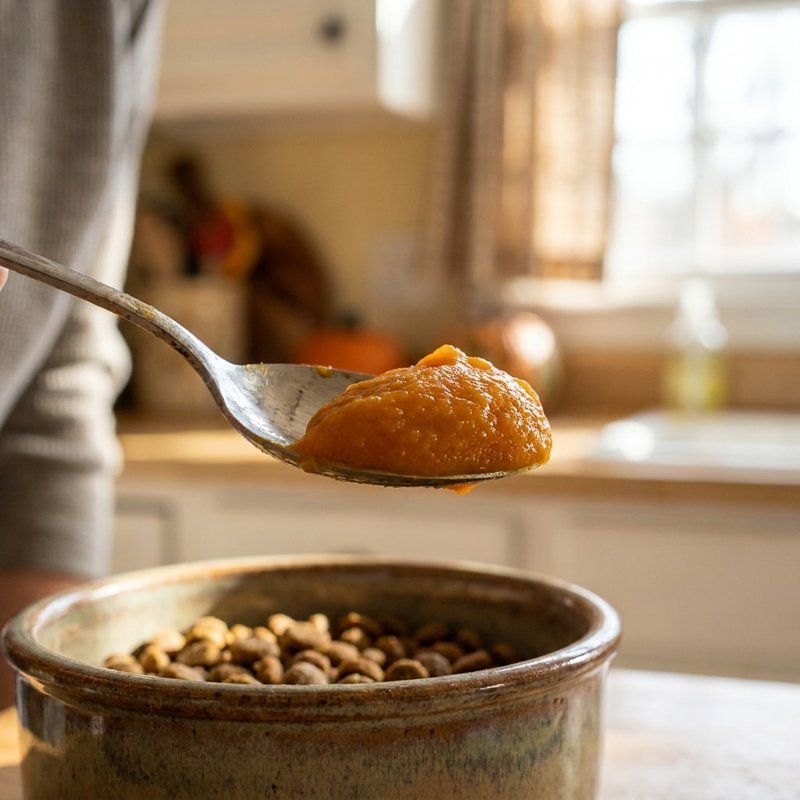
Pumpkin. A little plain canned pumpkin (not pie filling) is a common source of fiber that can help with stool consistency for some dogs. Be honest with expectations, though - the evidence for pumpkin specifically is weak, and too much fiber can backfire. Our guide to pumpkin for dog diarrhea covers when it helps and when it doesn’t.
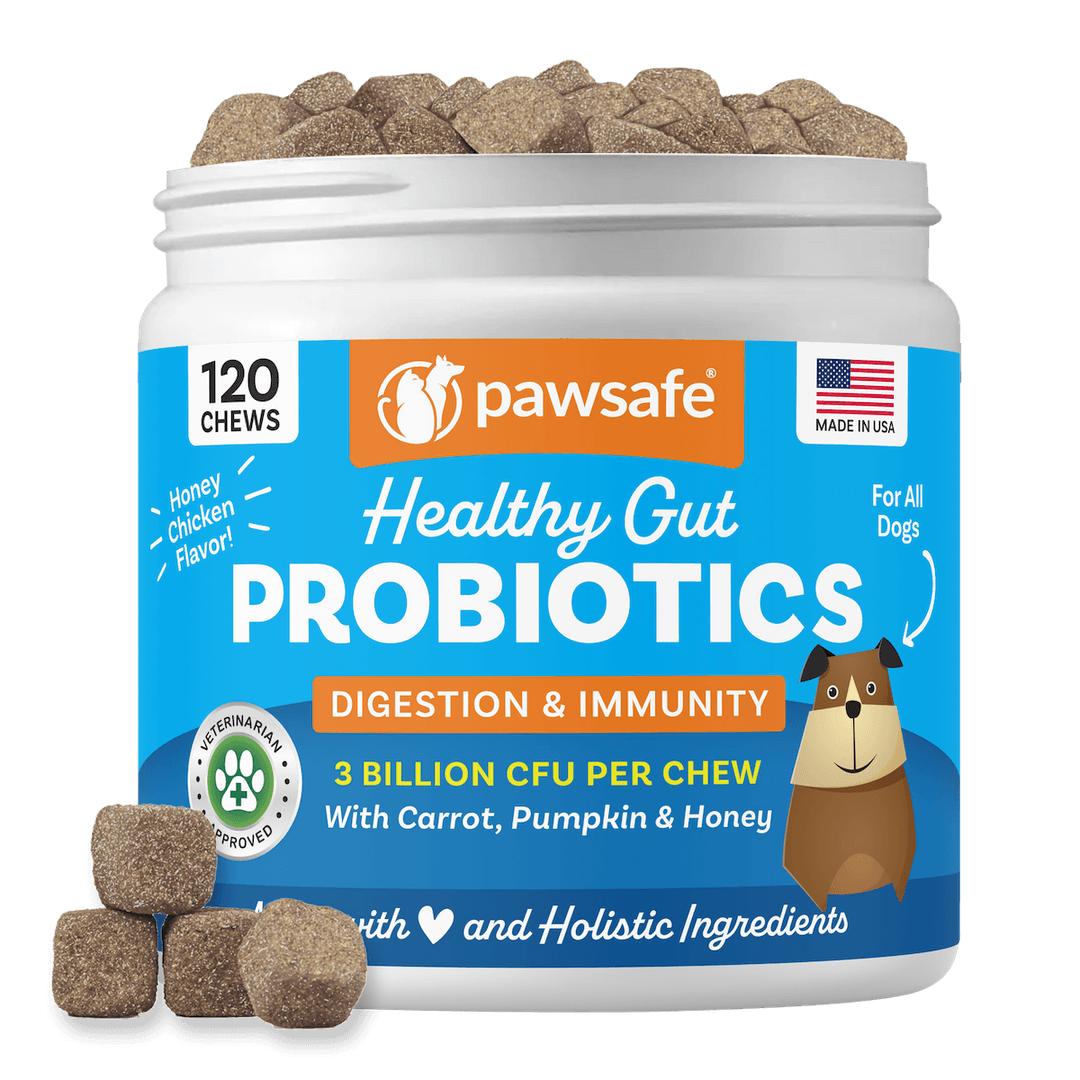
Probiotics. An upset stomach and diarrhea can disrupt the balance of good bacteria in the gut, and a vet-selected probiotic may help support recovery in some dogs. The evidence is strain- and product-specific and mixed, so think of it as gentle support, not a treatment - and as Texas A&M’s Dr. Emily Gould notes, “probiotics are usually not a sole treatment.” Our Probiotic Soft Chews are one option: a multi-strain chew with prebiotic fiber from pumpkin and flaxseed, designed for everyday gut support as your dog eases back onto their normal food. As always, check with your vet before adding anything if your dog is unwell or has a health condition.
For more on supporting digestion day to day, browse our gut health and probiotics guides.
Frequently Asked Questions
Gut & Immune Support In One Chew
Targeted strains assist normal digestion while supporting natural immune defenses—simple once-a-day routine.
Shop Now 👉Vet Approved Formula • 90-Day PawSafe® Promise
What is a bland diet for a dog?
A bland diet is a temporary, easily digested, usually low-fat food plan used as supportive nutrition during a mild upset stomach. A homemade version commonly pairs a thoroughly cooked lean protein, like skinless chicken, with a plain carbohydrate, like white rice. It is not nutritionally complete, so it’s meant for short-term use with your vet’s guidance.
What can I feed my dog for an upset stomach?
If your dog is otherwise bright, drinking, not actively vomiting, and has no red flags, a vet may suggest a complete therapeutic GI food or a short-term homemade mix such as skinless chicken or turkey with white rice. Lean beef, plain potato, plain pasta, or low-fat cottage cheese can be alternatives for some dogs. Use no fat, salt, seasoning, onion, or garlic.
How much chicken and rice should I feed my dog?
Ask your vet - there’s no safe universal cup-per-pound formula. Published veterinary examples range from equal parts lean protein and carbohydrate to about twice as much carbohydrate as protein. Your vet should set the total amount and meal size based on your dog’s weight, normal intake, age, body condition, symptoms, and health history, usually split into smaller, more frequent meals.
Is chicken and rice good for a dog with diarrhea?
It can be a useful short-term option for mild, uncomplicated diarrhea in a dog that tolerates both ingredients. It doesn’t treat the underlying cause, and it isn’t right for every dog - skip it if chicken allergy, a diet trial, pancreatitis, diabetes, or another condition calls for a different plan. For longer feeding, a complete therapeutic diet is better than home chicken and rice.
Make Digestive Care Effortless
Palatable soft chews your dog looks forward to, helping keep things regular and comfortable over time.
Shop Now 👉Vet Approved Formula • 90-Day PawSafe® Promise
How long should a dog stay on a bland diet?
Usually just a few days. A genuinely mild case should show clear improvement within about 24 to 48 hours. Call your vet if signs last beyond roughly 48 hours, recur, or worsen. Once vomiting has stopped and stool is firming up, transition back to the regular diet gradually, as your vet advises.
Should I fast my dog with an upset stomach?
Not routinely. A dog with diarrhea but no vomiting generally should keep receiving appropriate nutrition, because the gut needs nutrients to heal. A vet may advise a short pause from food for active or repeated vomiting, but that should be individualized. Never withhold water unless a vet is supervising and providing fluids.
When should I take my dog to the vet for diarrhea or vomiting?
Seek urgent care for repeated vomiting or an inability to keep water down, blood in vomit, profuse or bloody diarrhea, black tarry stool, collapse, pale gums, severe lethargy, a painful or bloated belly, unproductive retching, dehydration, or a suspected toxin or swallowed object. Call promptly if signs don’t improve within 24 to 48 hours, and sooner for puppies, seniors, tiny dogs, or dogs with chronic illness.
A Bland Diet, Done Safely
A bland diet for dogs is one of the simplest, kindest things you can do for a mildly upset stomach - as long as you treat it for what it is: a short-term, easy-to-digest bridge, not a cure or a complete diet.
Here’s what to remember:
- It’s supportive care, not a treatment - it helps a mildly unwell dog eat and recover, but it won’t fix an underlying cause.
- Keep it simple and clean - lean protein plus a plain carb, no fat, salt, seasoning, onion, or garlic.
- Don’t fast your dog for diarrhea, and don’t feed chicken and rice long-term - it isn’t complete or balanced.
- Get the amounts and duration from your vet, and feed small, frequent meals.
- Watch the red flags - blood, repeated vomiting, lethargy, a painful belly, or no improvement in 24 to 48 hours means it’s time for the vet.
Feed the bland diet thoughtfully, support the recovery with your vet’s okay, and most mild tummy troubles settle within a couple of days. And when they don’t, you’ll know exactly when to close the recipe and pick up the phone.