


When a dog’s breath smells like poop, it is usually a sign, not just “dog breath.” The most common source is the mouth - plaque bacteria that produce foul, sometimes fecal-smelling compounds. Coprophagia, or eating feces, is the other frequent culprit. Gastrointestinal problems like reflux or a blockage can push foul odors up from the gut, and less often kidney or liver disease is behind it. Persistent fecal breath, or breath with tartar, vomiting, or lethargy, warrants a veterinary exam to find the cause.
Some dog breath makes you wince. Breath that smells like actual poop makes you pull back - and that reaction is worth trusting.
Genuinely fecal breath is almost always a symptom, not a quirk. Whether you’d describe it as “dog breath smells like poop,” “dog breath stinks like poop,” or “dog breath that smells like poop,” the answer is usually the same. The good news: the causes are identifiable and often fixable. They usually come down to one of three things - the teeth, a poop-eating habit, or the gut.
This guide walks through why it smells like poop, a cause-by-cause table with the signs to look for, how to check your dog at home, the routine that clears up mouth-related odor, an honest answer to the cancer worry, and the signs that mean this is a vet visit - not a breath mint. We write with veterinary sources and this article is reviewed by a licensed vet, but your own vet, who can examine and test your dog, always has the final say.
Table of Contents
- Why Does My Dog's Breath Smell Like Poop?
- The Common Causes of Poop-Smelling Dog Breath
- Coprophagia: When the Cause Is Exactly What It Smells Like
- Check Your Dog at Home
- How to Get Rid of Dog Poop Breath
- Does Poop-Smelling Breath Mean Cancer?
- When to See the Vet
- Frequently Asked Questions
- The Bottom Line
Why Does My Dog’s Breath Smell Like Poop?
There are three reasons a dog with poop-smelling breath usually smells that way.
The first, and most common, is the mouth. As plaque builds up along the gumline, the bacteria in it break down proteins and release strong-smelling compounds - volatile sulfur gases plus putrid molecules like indole and skatole, the same ones that make feces smell fecal. In other words, severe dental odor can genuinely smell like poop without your dog ever eating any. According to UC Davis, the mouth is by far the most common origin of bad breath in dogs.
The second is the most literal: coprophagia, or eating feces. If your dog has snacked on stool - its own or another animal’s - fecal residue and bacteria are simply in the mouth. It’s more common than people think.
The third is the gut. When digestive contents are regurgitated, vomited, or held up by reflux or a blockage, foul odor can reach the mouth that way. (Ordinary intestinal gas doesn’t travel backward and come out as breath - it’s the physical movement of material that carries the smell up.) A consistent dog dental care routine handles the first cause; the other two need different fixes.
The Common Causes of Poop-Smelling Dog Breath
Fecal breath has a handful of usual explanations, and the extra signs around it usually reveal which one you’re dealing with.
| Likely cause | What else you’ll notice |
|---|---|
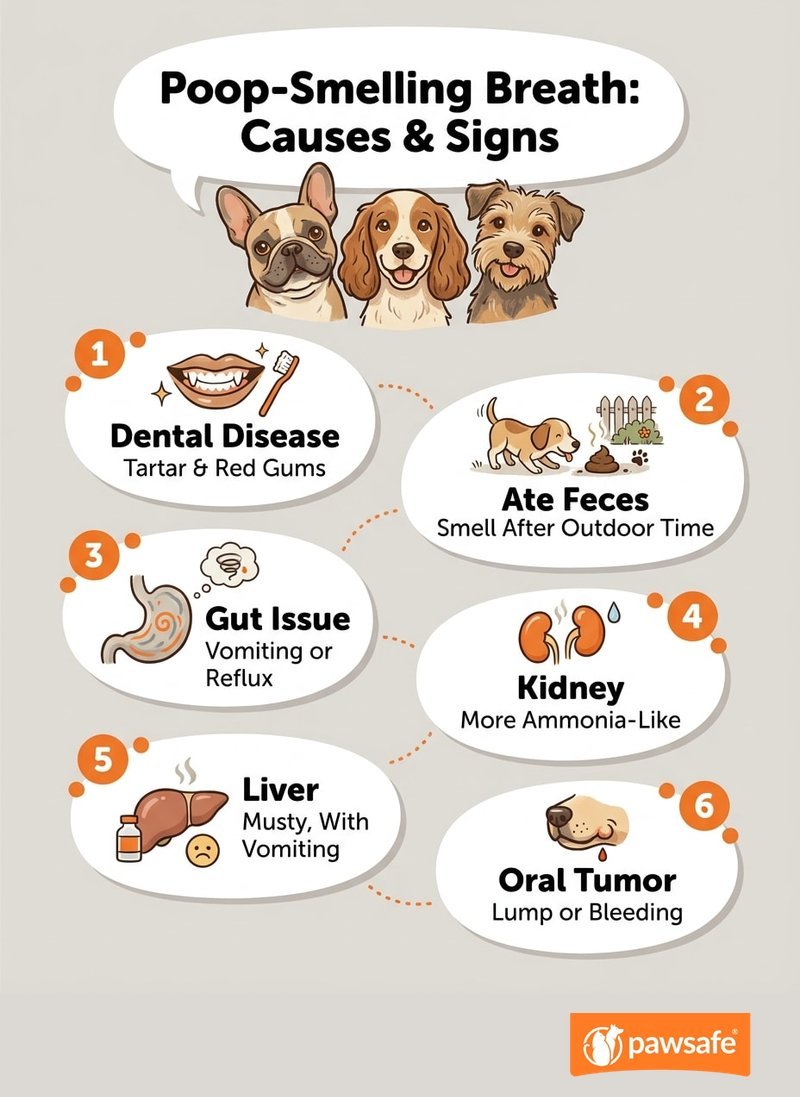
| Dental / periodontal disease (most common) | Yellow-brown tartar, red or bleeding gums, drooling, dropping food, chewing on one side, loose teeth |
| Coprophagia (eating feces) | Smell appears after outdoor time; yard, litter box, or animal access; fecal debris around the mouth |
| GI issues (reflux, regurgitation, blockage) | Vomiting, regurgitating food, diarrhea, bloating, appetite changes; a bloated painful belly is urgent |
| Kidney disease | More ammonia- or urine-like; older dog; increased thirst and urination, weight loss, mouth ulcers, lethargy |
| Liver disease | Sweet, musty, or foul breath with vomiting, diarrhea, appetite loss, or yellowish gums |
| Oral tumor, infected tooth, or trapped object | A lump, bleeding, a loose or broken tooth, facial swelling, sudden odor with pawing at the mouth |
A few of these deserve emphasis. Dental disease is the number-one cause of persistent bad breath. Most dogs develop some periodontal (gum) disease as they age, and it can be painful even while a dog keeps eating normally. Oral bacteria and inflammation are also linked to changes in the heart, kidneys, and liver - though that’s an association, not a guarantee that “bad teeth will wreck the organs.” Kidney and liver disease tend to smell more ammonia-like or musty than truly fecal. But a worried owner may describe any severe odor as “like poop,” so the other signs matter most.
Coprophagia: When the Cause Is Exactly What It Smells Like
Sometimes the answer is as literal as it seems: your dog ate poop. It’s surprisingly common - in one large owner survey, roughly a quarter of dogs had been seen eating stool at least once, and about 16% did it regularly. Dogs do it out of boredom, hunger, learned habit, or simply because they’re scavengers, and it’s more common in multi-dog homes and “greedy” eaters.
Whatever the reason, it puts fecal bacteria straight into the mouth - which is where the smell comes from, and why it can lead to dental problems over time. The fix is management, not punishment:
- Pick up stool right away and supervise outdoor time
- Restrict access to litter boxes and other animals’ waste
- Reward your dog for moving away from stool (“leave it”)
- Cover the basics: enough exercise, enrichment, and a complete diet
Two honest notes from the research: commercial “stop coprophagia” powders and deterrents have a poor track record, so don’t count on them - and if stool-eating starts suddenly in an adult dog or comes with a ravenous appetite, weight loss, or greasy stool, that’s a reason to see your vet.
Check Your Dog at Home
You can gather useful clues before you call the vet.
Look in the mouth. With a calm dog and good light, gently lift the upper lip (don’t force the jaws open) and pull the cheek back to see the big teeth at the back, where odor and tartar tend to be worst. Check for yellow-brown tartar, a red or bleeding gumline, a broken or loose tooth, or anything lodged between the teeth or across the roof of the mouth. If you spot string or thread, don’t pull it - it can extend into the gut - and stop if your dog seems painful.
Look at the behavior and the rest of the dog. Any stool-eating, vomiting or regurgitation, diarrhea, appetite or weight changes, increased thirst, or lethargy all push this toward a vet visit rather than home care. Remember that dental disease can hide below the gumline, so a clean-looking front of the mouth doesn’t rule it out.

Fresh Breath The Easy Way
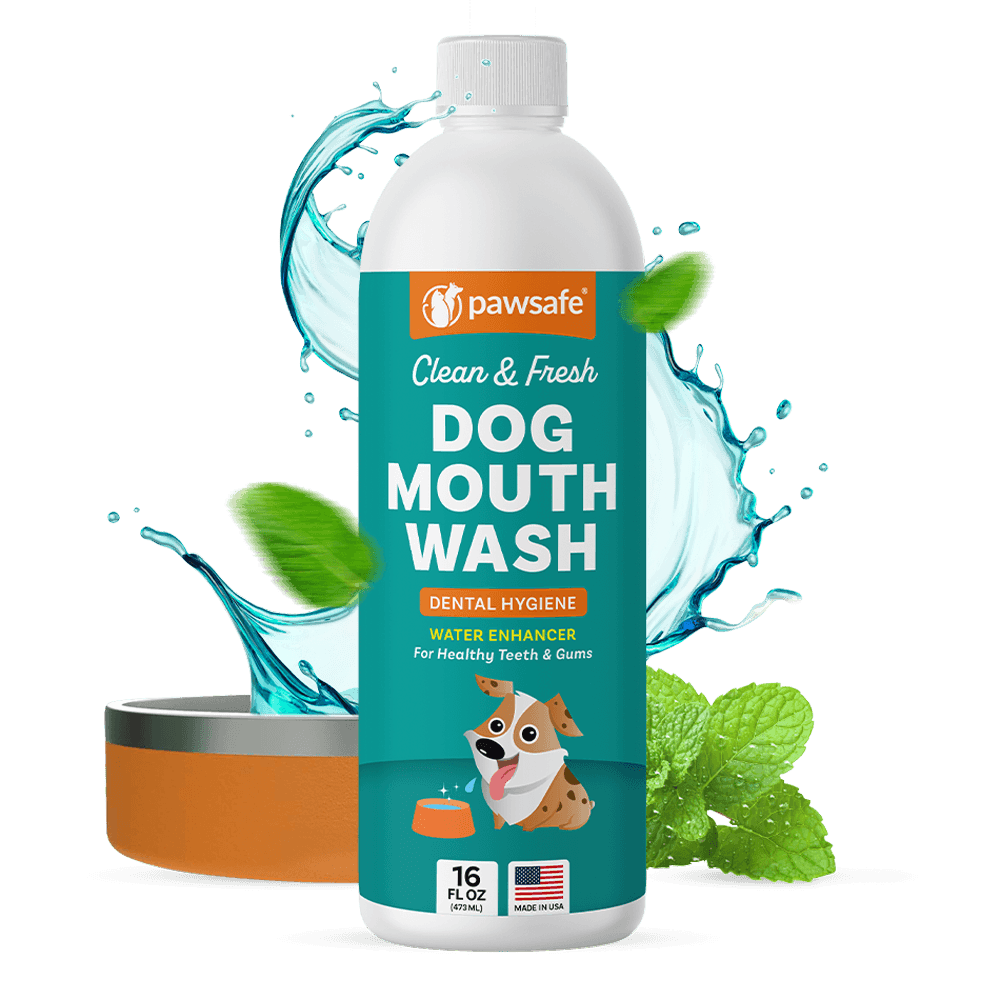
Just add to the water bowl to support cleaner mouths and noticeably fresher breath without daily brushing struggles.
Shop Now 👉Fresh Breath Guarantee • 90-Day PawSafe® Promise
How to Get Rid of Dog Poop Breath
The honest first step to getting rid of dog poop breath is to find the cause - fecal breath is a signal, and masking it with a breath spray just hides the message. Once serious causes are ruled out, mouth-related odor responds well to a simple routine:
- Brush daily with a dog-specific (usually enzymatic) toothpaste. Daily works best because plaque comes back fast, but a few times a week still helps. Never use human toothpaste - dogs swallow it, and some contain xylitol, which the FDA warns is dangerously toxic to dogs.
- Add a between-brushings helper. Dental chews and water additives can help control the bacteria behind breath odor. For a product sold on a plaque- or tartar-control claim, the VOHC Seal (from the Veterinary Oral Health Council) is a useful independent check. Our Dog Mouthwash is a no-brush water additive - a few drops in the bowl - made with naturally derived ingredients to freshen breath and help with everyday plaque. Think of it as an add-on to brushing, not a replacement, and not a fix for coprophagia or a medical cause.
- Book a professional cleaning when there’s visible tartar, red or bleeding gums, or a loose tooth. Home care slows new plaque; it can’t remove hardened tartar or treat disease below the gumline. A full veterinary cleaning under anesthesia, with X-rays and scaling below the gums, is the only way to reset that - and anesthesia-free “scaling” can’t do it.
- Handle the other causes at the source - manage coprophagia as above, and let your vet guide any GI or organ issue rather than reaching for supplements.
For the wider playbook on freshening things up, see our guide on how to get rid of bad dog breath.


Does Poop-Smelling Breath Mean Cancer?
This is the worry that sends people to Google at midnight - plenty of owners search “dog breath smells like poop cancer” fearing the worst. So here’s the honest answer: almost never on its own. There’s no recognized “cancer smell,” and dental disease or a poop-eating habit is far more likely than a tumor.
That said, oral tumors can cause a very foul odor when the tissue ulcerates, bleeds, gets infected, or traps food around it - so it’s worth knowing the signs that deserve a prompt look:
- A lump, thickening, or a sore in the mouth that doesn’t heal
- Bleeding from the mouth with no obvious minor cause
- A tooth going loose without widespread dental disease
- Facial swelling or asymmetry, or a one-sided bloody nose
- Dropping food, difficulty eating, or weight loss
A smell and a glance can’t tell a tumor from an infection or an inflamed spot - only a vet exam and, usually, a tissue sample can. So the takeaway is calm, not scary: most poop-breath is treatable, and the smell is a reason to get answers, not to panic. (A different odor points elsewhere - our guide on breath that smells like fish covers the anal-gland and dental angles behind that one.)
When to See the Vet
Most poop-smelling breath comes down to a treatable dental or behavioral issue - but the smell is worth acting on, not covering up. Book an exam if you notice:
- Fecal breath that lasts more than a day or two, or keeps coming back despite home care
- Red, swollen, or bleeding gums, visible tartar, or a loose or broken tooth
- An oral lump, a non-healing sore, or bleeding from the mouth
- Vomiting, regurgitation, diarrhea, or appetite or weight loss
- Increased thirst and urination, mouth ulcers, or lethargy in an older dog (possible kidney or liver disease)
Treat it as urgent if you see repeated vomiting or retching, a bloated or painful belly (a possible blockage), collapse or marked weakness, breathing trouble or pale gums, or any suspected xylitol ingestion.
Frequently Asked Questions
Daily Water Additive For Oral Freshness
Helps maintain better breath and oral hygiene as your dog drinks, keeping cuddle moments pleasant.
Shop Now 👉Fresh Breath Guarantee • 90-Day PawSafe® Promise
Why does my dog’s breath smell like poop?
The leading causes are oral bacteria producing foul, putrid-smelling compounds (dental disease), food or infected material trapped in the mouth, or recently eating feces. Less often, regurgitated or retained gut contents, kidney or liver disease, a respiratory issue, or an oral tumor can create a similar odor. Smell alone can’t tell these apart, so persistent fecal breath deserves a vet’s look.
Is fecal breath from my dog’s teeth or from eating poop?
Either is possible, and some dogs have both. A smell that appears right after unsupervised outdoor time points toward coprophagia (eating feces). A persistent odor with yellow-brown tartar, red or bleeding gums, drooling, mouth pain, or changed chewing points toward dental disease. Your vet can check the mouth to be sure.
Can kidney or liver disease make a dog’s breath smell like poop?
They can cause foul breath, but neither has a reliably fecal smell. Advanced kidney disease more classically causes ammonia- or urine-like breath; advanced liver disease can cause a sweet, musty, or unusually foul odor. Increased thirst and urination, vomiting, appetite or weight loss, jaundice, or lethargy make organ disease more concerning and mean a prompt vet visit.
Does poop-smelling breath mean cancer?
Almost never on its own. Dental disease and eating feces are far more common. Oral tumors can cause foul breath when tissue ulcerates, bleeds, or gets infected, but a smell alone doesn’t diagnose cancer. A lump in the mouth, unexplained bleeding, a loose tooth without other dental disease, facial swelling, dropping food, or weight loss all warrant a prompt exam.
Turn Plain Water Into Breath Support
A simple routine that supports a cleaner mouth and fresher kisses over time—no messy brushing required.
Shop Now 👉Fresh Breath Guarantee • 90-Day PawSafe® Promise
How do you get rid of dog poop breath?
Fix the cause, don’t just mask it. A one-off smell after eating feces usually fades once the mouth clears; recurring stool-eating needs access management and sometimes a vet workup. Dental odor needs an oral exam and often a professional cleaning, followed by daily brushing with dog toothpaste and a between-brushings helper like a dental chew or water additive. Breath fresheners shouldn’t delay a diagnosis.
Can I brush my dog’s teeth with human toothpaste?
No. Dogs swallow toothpaste, and human products aren’t made for that. Some contain xylitol (also labeled birch or wood sugar), which is highly toxic to dogs and can cause dangerous low blood sugar and liver injury. Use a toothpaste made specifically for dogs, and treat any suspected xylitol ingestion as an emergency.
Do dental chews and water additives help?
Some do, as add-ons - not replacements for brushing or a vet cleaning. Look for the Veterinary Oral Health Council (VOHC) Seal, which means that specific product met standards for reducing plaque, tartar, or both. These products can slow new buildup when used as directed, but they can’t remove hardened tartar or treat disease below the gumline.
When should I see the vet for my dog’s bad breath?
Book an exam if fecal breath lasts more than a day or two, keeps coming back, or comes with tartar, red or bleeding gums, a loose tooth, an oral lump, vomiting, diarrhea, appetite or weight loss, or increased thirst and urination. Treat repeated vomiting, a bloated or painful belly, collapse, breathing trouble, or suspected xylitol ingestion as an emergency.
The Bottom Line
When your dog’s breath smells like poop, it’s a clue - and most of the time it points somewhere very fixable.
- Usually the teeth, a poop habit, or the gut - dental disease is the most common cause
- A poop smell doesn’t prove a gut problem - severe mouth bacteria can smell fecal on their own
- Rarely cancer - but a mouth lump, bleeding, or a loose tooth deserves a prompt look
- Find the source, don’t mask it - and never use human toothpaste
- The little routine wins - daily brushing plus a between-cleanings water additive keeps mouth odor down
For everyday, mouth-related freshness, a simple habit goes a long way: brush when you can, add a dog-safe water additive to the bowl between brushings, and keep up with professional cleanings. Explore our dog dental care guides for the full routine - and whenever your dog’s breath smells like poop and won’t quit, skip the breath mint and call your vet.