
Dog diarrhea for 3 days has passed the point where waiting at home is safe. Most mild diarrhea clears within 24 to 48 hours, so three days warrants a call to your veterinarian today - even if your dog seems otherwise well. Persistent diarrhea risks dehydration and often has an underlying cause, such as parasites, infection, or a dietary problem, that needs testing to identify. Seek emergency care right away if you see blood or black stool, repeated vomiting, weakness, a painful belly, or signs of dehydration.
You’ve cleaned up more messes than you can count, tried going easy on the food, and here you are on day three - still watching your dog strain and produce another puddle. At this point the question isn’t really “will it pass on its own?” It’s “is it time to call the vet?”
Here’s the honest answer, up front: yes. Three days is beyond the window where a healthy dog’s tummy upset is expected to sort itself out, and it’s the point where veterinarians want to hear from you. This guide explains why three days matters, the red flags that mean go now, what’s likely behind it, what to expect at the vet, and how to support your dog safely in the meantime - without reaching for anything that could make things worse. This is general education, not a substitute for your veterinarian, and it’s the kind of content we have reviewed by a vet before it goes live.
Table of Contents
- Is 3 Days of Diarrhea Too Long? (Short Answer: Call Your Vet)
- Red Flags: When Dog Diarrhea Is an Emergency
- Why Has My Dog Had Diarrhea for 3 Days?
- What to Expect at the Vet
- Supporting Your Dog Safely at Home (Without Playing Doctor)
- Where a Probiotic Fits (and Where It Doesn't)
- How to Lower the Risk of Future Bouts
- Frequently Asked Questions
- The Bottom Line on Dog Diarrhea for 3 Days
Is 3 Days of Diarrhea Too Long? (Short Answer: Call Your Vet)
Veterinarians split diarrhea into acute (sudden, usually clearing in a day or two) and chronic (dragging on for three weeks or more). Three days sits in between: it’s still “acute,” but it’s well past the point a single bad meal should take to resolve.
That’s why the threshold matters. Cornell’s Riney Canine Health Center puts it plainly: if loose stool lasts more than two days, call the vet. Their small-animal specialist Dr. Meredith Miller adds that you should seek care “if a pet stops eating, is lethargic, the diarrhea is black or tarry in quality, there is associated vomiting, or the diarrhea doesn’t resolve in 48-72 hours.” A vet-authored PetMD review gives similar advice.
The reason is simple biology. Diarrhea rushes food and water through the gut before the body can absorb it, so your dog loses fluid and electrolytes with every episode. Over three days that adds up, raising the risk of dehydration - and if vomiting joins in, the fluid loss speeds up. A bright, well-hydrated adult dog with no other signs may not need the emergency room tonight, but three days of diarrhea has earned a veterinary assessment rather than another day of guessing at home.
Red Flags: When Dog Diarrhea Is an Emergency
Sometimes waiting even a few hours is too long. Go straight to your vet or the nearest emergency clinic if you notice any of these:
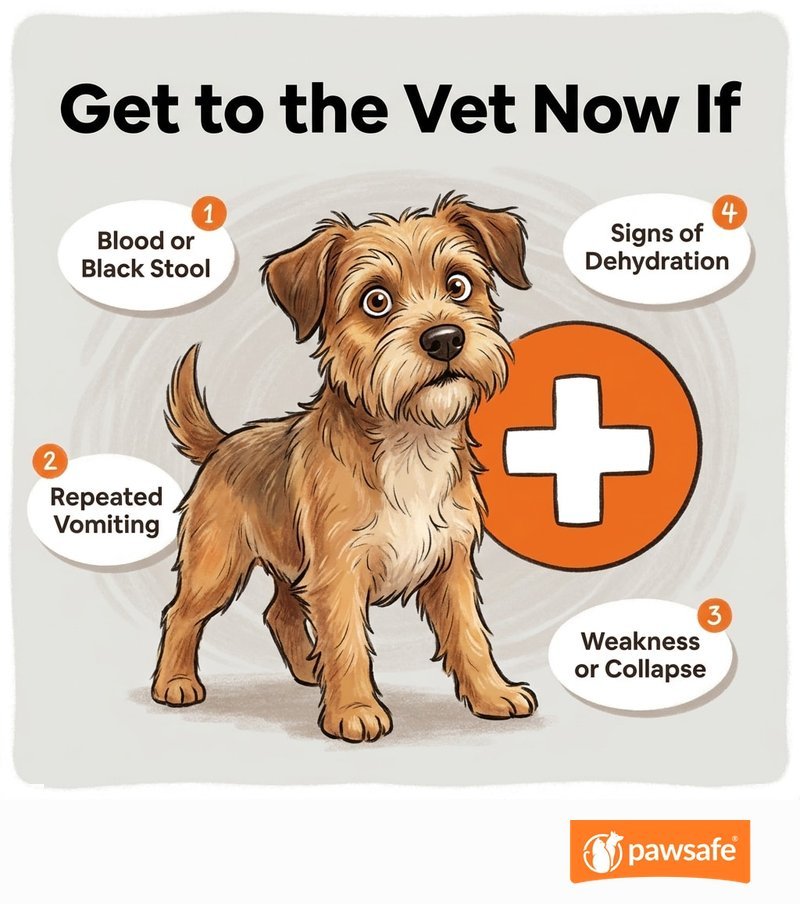
- Blood in the stool, or black, tarry stool. Fresh red blood or black “coffee-ground” stool both need prompt attention.
- Repeated vomiting, vomiting alongside the diarrhea, or a dog who can’t keep water down.
- Weakness, collapse, or a dog who can’t stand; pale, white, or grayish gums.
- A painful, swollen, or tense belly, repeated unproductive retching, or a hunched “prayer” posture.
- Signs of dehydration: dry or tacky gums, sunken eyes, skin that’s slow to spring back, or clearly reduced urination.
- A suspected toxin or a swallowed object (a sock, toy, or bone).
- Puppies, senior dogs, pregnant dogs, or dogs with existing illness - and any young or unvaccinated dog with vomiting and diarrhea, because parvovirus is a real risk.
Two conditions are worth knowing by name. Acute hemorrhagic diarrhea syndrome (AHDS) causes sudden, profuse bloody diarrhea and can send a dog into shock before dehydration even looks obvious - it’s an emergency, per the Merck Veterinary Manual. Parvovirus is a highly contagious, life-threatening illness in young or unvaccinated dogs; call the clinic before you arrive so they can prepare isolation.
Why Has My Dog Had Diarrhea for 3 Days?
Three days of diarrhea doesn’t point to one specific cause - that’s exactly why a vet exam and testing matter. But these are the usual suspects behind a bout that won’t quit:
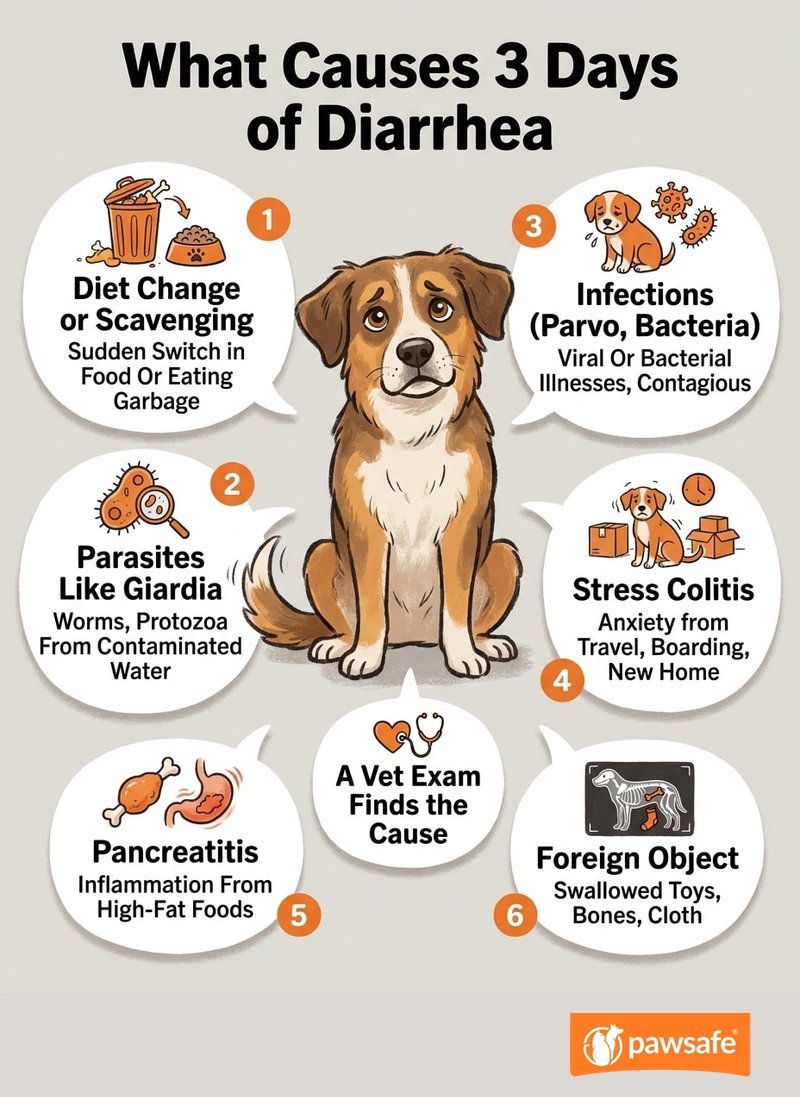
- Dietary indiscretion or a sudden food change - garbage, table scraps, rich or fatty food, or switching kibble too fast.
- Intestinal parasites - Giardia, roundworms, hookworms, whipworms, and coccidia in puppies. Giardia is notorious for causing stubborn, on-and-off diarrhea.
- Infections - viral (parvovirus) or bacterial (Salmonella, Campylobacter, certain Clostridium species).
- Stress colitis - a flare of large-bowel diarrhea after boarding, travel, a move, or another upset.
- Pancreatitis - inflammation of the pancreas, often with vomiting, appetite loss, and belly pain.
- A foreign body or partial blockage - and yes, a dog can still pass liquid stool around a partial obstruction.
- Medications - antibiotics can disrupt the gut, and NSAIDs can irritate it. Never stop a prescribed medication without calling the vet who prescribed it.
- Underlying illness - liver or kidney disease, Addison’s disease, and (with longer or recurring signs) inflammatory bowel disease. These are less likely from three days alone but part of why testing matters.
The takeaway: the cause changes the treatment completely, and you can’t tell parasites from pancreatitis from a foreign body by looking at the stool. That’s the vet’s job.
What to Expect at the Vet
Knowing the plan takes some of the worry out of the visit. Your vet will start with a history - when it started, how often, the color and consistency, whether there’s blood or mucus, plus your dog’s diet, appetite, energy, vaccination status, medications, and anything they might have eaten or gotten into. Bringing a fresh stool sample (and photos of earlier stools) genuinely helps.
From there, testing is matched to how sick your dog is and what the history suggests. It may include a fecal exam for parasites, bloodwork to check hydration, organ values, and signs of infection or inflammation, a parvovirus test for young or unvaccinated dogs, and X-rays or an ultrasound if a blockage, foreign body, or pancreatitis is suspected.
Treatment then targets the cause. Depending on what’s found, that can mean fluids for dehydration, anti-nausea medication, dewormers, a therapeutic gastrointestinal diet, and sometimes a probiotic - all chosen by your vet. Antibiotics aren’t automatic; current veterinary guidelines actually advise against them for mild or moderate cases without signs of a body-wide infection.
Daily Support For Healthy Digestion
Multi-strain probiotic soft chews that help maintain gut balance and stool quality in an easy, tasty format.
Shop Now 👉Vet Approved Formula • 90-Day PawSafe® Promise
Supporting Your Dog Safely at Home (Without Playing Doctor)
While you arrange the visit, there’s a short list of genuinely helpful, safe things you can do - and a few you should not.
Safe and helpful:
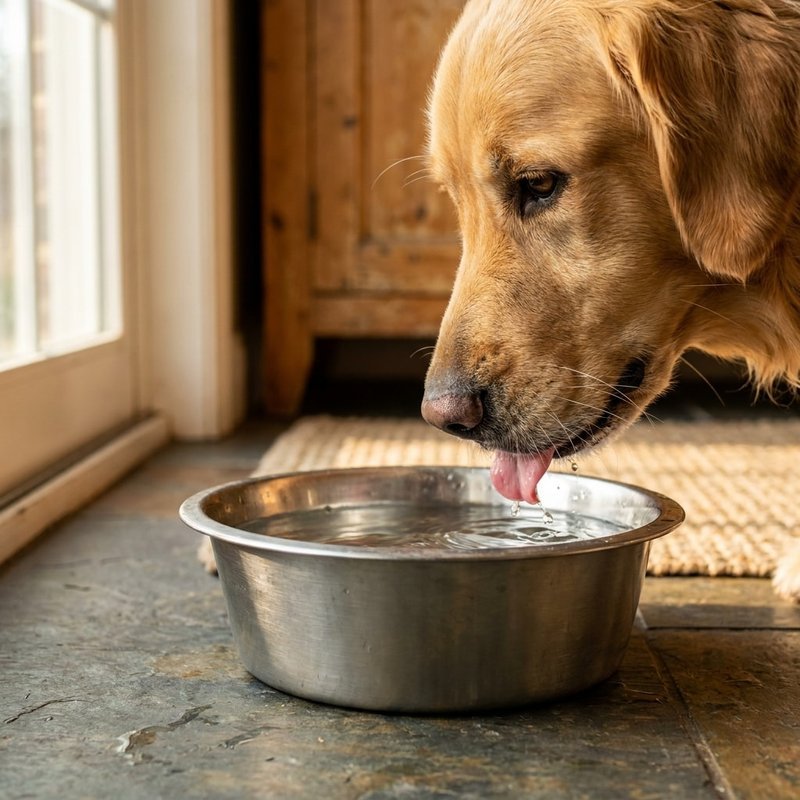
- Keep fresh water available at all times so your dog can replace what they’re losing. If your dog is vomiting repeatedly or can’t keep water down, skip the home care and get to the vet.
- Offer frequent, easy trips outside.
- Keep notes: how often, the color, whether there’s blood or mucus, plus appetite, energy, and any vomiting. This is gold for your vet.
- Prevent more scavenging, and pick up stool promptly and wash your hands - some causes of diarrhea can spread to other pets or people.
Ask, don’t guess: vets often recommend a bland, easily digestible diet for mild, short-lived upset, and some suggest adding a little plain pumpkin for fiber - but after three days, let your vet tell you what (and whether) to feed rather than following a home recipe or fasting your dog. Our guide to pumpkin for dog diarrhea explains where it fits.
Please don’t reach for the human medicine cabinet. Per the Merck Veterinary Manual and Cornell, never give Imodium (loperamide) or Pepto-Bismol (bismuth subsalicylate) unless your vet directs it. Loperamide can trap harmful bacteria and toxins in the gut, worsen a blockage, and cause severe neurological reactions in herding breeds (Collies, Australian Shepherds, and relatives with the MDR1 gene). Pepto-Bismol can interact with other drugs and turns stool black - masking the very bleeding your vet needs to see. Human pain relievers like ibuprofen and acetaminophen are outright dangerous for dogs.
Where a Probiotic Fits (and Where It Doesn’t)
It’s tempting to hope a probiotic will settle things, so here’s the straight version. A 2024 systematic review found probiotics did not meaningfully shorten acute diarrhea in dogs on average, and the resulting veterinary guideline made no recommendation for or against them. A probiotic is not a treatment for active three-day diarrhea, and it should never delay a vet visit or stand in for diagnosing the cause.
Where probiotics do earn a place is everyday digestive support - and vets sometimes add a veterinary probiotic alongside treatment as your dog recovers. If that’s the road you and your vet land on, our Probiotic Soft Chews pair a multi-strain probiotic blend with prebiotic fiber in a chicken-flavored chew, with no artificial preservatives and the 90-day PawSafe Promise. Think of them as ongoing gut support for a healthy dog - or recovery support once your vet has assessed your dog and ruled out the serious causes - not as an answer to the current episode. For the bigger picture, see our dog gut health guide and our other gut health and probiotics articles.
How to Lower the Risk of Future Bouts
You can’t prevent every upset stomach, but you can stack the odds in your dog’s favor:
- Keep vaccinations and parasite prevention current - especially against parvovirus and intestinal worms.
- Transition to any new food gradually, over 7 to 10 days.
- Keep a lid on scavenging: secure the trash, skip the rich table scraps, and watch what they pick up on walks.
- Ease stress around big changes like boarding or travel.
- Keep up with routine wellness visits, which catch problems like parasites or early illness before they drag on.
Frequently Asked Questions
Gut & Immune Support In One Chew
Targeted strains assist normal digestion while supporting natural immune defenses—simple once-a-day routine.
Shop Now 👉Vet Approved Formula • 90-Day PawSafe® Promise
My dog has had diarrhea for 3 days - should I see the vet?
Yes. Most mild diarrhea clears within 24 to 48 hours, so three days is past the point where waiting at home is appropriate. Veterinary sources like Cornell advise seeking care if diarrhea doesn’t resolve within 48 to 72 hours, or sooner if there’s vomiting, black or bloody stool, lethargy, or loss of appetite. Call your vet today, even if your dog otherwise seems fairly normal.
Is 3 days of diarrhea an emergency?
Not always, but it needs a vet’s assessment now rather than another day at home. Treat it as an emergency and go straight in if you see blood or black, tarry stool, repeated vomiting, weakness or collapse, a painful or swollen belly, or signs of dehydration like dry gums or sunken eyes. Puppies, seniors, and dogs with other illnesses should be seen urgently.
Why does my dog have diarrhea for 3 days but is acting normal?
A dog can seem bright and still have a problem that needs treatment - parasites like Giardia, a lingering diet upset, or an early infection. Acting normal is reassuring, but three days of fluid loss still risks dehydration and the cause still needs identifying. Call your vet, and see our guide on when a dog has diarrhea but is acting normal for more.
Can I give my dog Imodium or Pepto-Bismol for diarrhea?
Not without your vet’s direction. Loperamide (Imodium) can be dangerous - it can trap toxins in the gut, worsen a blockage, and cause severe reactions in herding breeds with the MDR1 gene. Pepto-Bismol contains a salicylate that interacts with other drugs and turns stool black, hiding signs of bleeding. Never give human medications to a dog unless a veterinarian tells you to.
Make Digestive Care Effortless
Palatable soft chews your dog looks forward to, helping keep things regular and comfortable over time.
Shop Now 👉Vet Approved Formula • 90-Day PawSafe® Promise
What can I feed a dog with diarrhea?
For a dog that’s had diarrhea for three days, food choices should be guided by your vet rather than a home recipe. Vets often suggest a bland, easily digestible diet for mild, short-lived upset, and some add a fiber source like plain pumpkin - but a three-day case needs assessment first. Keep fresh water available and ask your vet what’s right for your dog.
Can probiotics stop my dog’s diarrhea?
No - don’t rely on a probiotic to fix active diarrhea, and don’t let it delay a vet visit. A 2024 veterinary review found probiotics did not meaningfully shorten acute diarrhea in dogs on average. Vets sometimes add a probiotic as supportive care, but only alongside diagnosing and treating the actual cause. Probiotics are best thought of as everyday gut support, not a treatment.
How long is too long for dog diarrhea?
More than about 48 hours is the general point to call your vet, and three days is clearly past it. Any diarrhea with blood, vomiting, lethargy, or a dog who won’t eat should prompt a call right away, whatever the duration. Puppies and seniors should be seen sooner because they dehydrate faster and are more vulnerable.
The Bottom Line on Dog Diarrhea for 3 Days
If your dog has had diarrhea for 3 days, the guesswork is over - it’s time to loop in your vet:
- Three days is past the wait-and-see window. Most mild diarrhea clears in 24 to 48 hours; beyond that, call your vet.
- Watch for red flags - blood or black stool, vomiting, weakness, a painful belly, or dehydration mean go now.
- The cause needs testing. Parasites, infection, dietary problems, or illness all look similar from the outside.
- Support safely. Fresh water and good notes help; human anti-diarrheals and home dosing can hurt.
Your dog can’t tell you what’s wrong, but three days of diarrhea is a clear message. Make the call, let your vet find the cause, and you’ll get your happy, healthy dog back faster - and more safely - than by waiting it out.