
Mucus in dog poop is a shiny, jelly-like coating on the stool. The intestines naturally make mucus to lubricate and protect the gut lining, so a small, one-off amount in an otherwise-well dog can be normal. Larger or repeated amounts usually mean the colon is irritated or inflamed, often from a diet change, stress, parasites, or infection. A little mucus can be watched briefly, but mucus with blood or diarrhea - or a dog that seems unwell - needs a vet.

You bent down to scoop, and the poop was wrapped in slime - maybe clear jelly, maybe streaked with something red. It’s an unsettling thing to see. Take a breath: a little mucus is one of the more common things dog parents notice, and it’s often minor.
But “often minor” isn’t “always minor.” The same slime can also ride along with diarrhea, blood, or a genuinely sick dog - and knowing the difference is what this guide is for. Below, you’ll find what mucus actually is, the usual causes, what blood in the mix means, and a clear, vet-sourced triage of when to watch at home versus when to call. This article is part of our dog gut health library, it’s built on veterinary sources, and because it covers a health symptom, it carries a veterinary reviewer before publication. It is not a substitute for your own vet’s advice.
Table of Contents
- What Mucus in Dog Poop Looks Like (and Why It's There)
- Common Causes of Mucus in Dog Poop
- Mucus With Diarrhea, and Mucus With Blood
- When to See a Vet
- How Vets Diagnose and Treat It
- Supporting Your Dog's Gut (Once Serious Causes Are Ruled Out)
- Frequently Asked Questions
- The Bottom Line on Mucus in Dog Poop
What Mucus in Dog Poop Looks Like (and Why It’s There)
Your dog’s intestines are lined with cells that constantly produce mucus - a slippery gel that lubricates stool and protects the gut wall from bacteria and irritants. A little of it turning up in the poop now and then isn’t shocking. As PetMD’s veterinarians put it, a little mucus “is not a reason to panic.”
When your dog has mucus in their poop, it usually looks like clear or whitish shiny slime, a jelly or snot-like coating, or a gelatinous film or casing wrapped around part of the stool. Sometimes it’s mixed through loose stool.
When there’s a lot of it, or it keeps showing up, it usually means the colon is inflamed - a problem vets call colitis. An irritated colon pumps out extra mucus while absorbing less water, which is why colitis so often shows up as frequent, small, urgent, mucus-coated (and sometimes bloody) stools. A quick note on color: clear or white is the usual look; yellow or green can reflect fast transit or diet; red may be fresh blood; and black, tarry stool is a red flag on its own. Color alone can’t diagnose the cause, though - it’s a clue, not an answer.
Common Causes of Mucus in Dog Poop
Lots of things can inflame the colon. The most common culprits:
- Dietary indiscretion. Garbage, table scraps, spoiled food, or something they shouldn’t have eaten can irritate the gut and produce mucus or diarrhea.
- An abrupt diet change. Switching foods too fast is a classic trigger - which is why vets recommend gradual transitions.
- Stress colitis. Boarding, travel, or a household shake-up can set off large-bowel diarrhea with mucus. It’s common, but it’s a conclusion to reach after ruling other things out, not a first assumption.
- Intestinal parasites. Whipworms and Giardia are especially associated with large-bowel signs and mucus; roundworms and hookworms can contribute too. Egg shedding can be intermittent, so one clear fecal test doesn’t always rule them out.
- Infections. Bacteria (such as Salmonella, Clostridium, or E. coli) and viruses can inflame the gut - usually alongside diarrhea, vomiting, or appetite loss. Some of these are also contagious to people, so hygiene matters.
- Food sensitivity. Dietary proteins can play a role in some dogs, but a single episode isn’t a food-allergy diagnosis; that takes a proper vet-run diet trial.
- Chronic inflammatory enteropathy. Persistent or recurring inflammation is a diagnosis of exclusion your vet works up over time - not a label for every occasional slimy stool.
- A swallowed object or blockage. Mucus can appear here too, but obstruction is an emergency - never write off a possible swallowed toy, bone, or sock as “just colitis.”
- Polyps or tumors. Uncommon, but rectal polyps or growths can cause straining, blood, or mucus, which is part of why persistent signs deserve a look.
For the bigger picture on the microbiome and what keeps a colon happy, see our full guide to canine digestive wellness.

Mucus With Diarrhea, and Mucus With Blood
This is the part to read slowly, because it’s where “keep an eye on it” can tip into “go now.”
Mucus in dog diarrhea is common - an inflamed colon makes more mucus and holds less water at the same time. The catch is that diarrhea also drains fluid. Watch for dehydration signs like tacky gums, thick saliva, reduced skin springiness, sunken eyes, or low energy, and don’t let diarrhea run on (see the triage below). Home dehydration checks aren’t fully reliable, so when in doubt, call.
Mucus with blood deserves a careful eye on what the blood looks like:
- Fresh, bright-red blood (vets call it hematochezia) usually comes from the lower gut - the colon or rectum - and often travels with colitis and straining. A single small streak in an otherwise-well adult dog is usually a same-day call rather than a midnight dash, but it still deserves a vet’s input.
- Black, tarry stool (melena) is digested blood, usually from higher up in the gut. Genuinely tarry stool should be treated as bleeding until your vet says otherwise. Our guide to black dog poop covers this one in detail.
One pattern is a true emergency: acute hemorrhagic diarrhea syndrome (AHDS) - sudden, profuse, bloody, mucus-filled diarrhea that can look like raspberry jam, often with vomiting. Dogs can lose fluid so fast that, as the MSD Veterinary Manual warns, shock can develop “before clinically recognizable dehydration.” Small and toy breeds are overrepresented, but any dog can be affected. And in puppies or unvaccinated dogs, bloody, mucusy diarrhea with vomiting and lethargy can signal parvovirus - call the clinic ahead so they can prepare isolation. Either of these means emergency care, now.
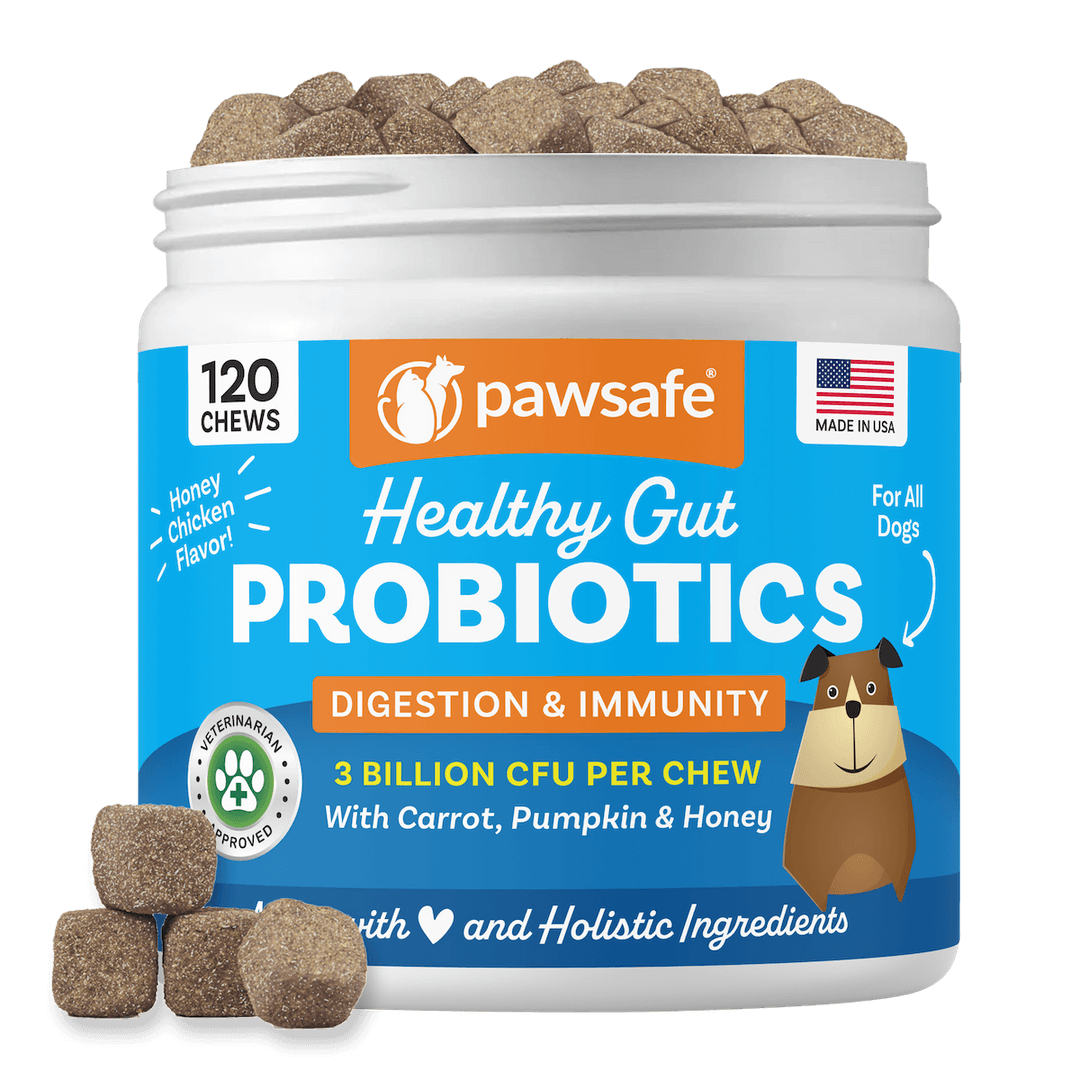
Daily Support For Healthy Digestion
Multi-strain probiotic soft chews that help maintain gut balance and stool quality in an easy, tasty format.
Shop Now 👉Vet Approved Formula • 90-Day PawSafe® Promise
When to See a Vet
Mucus is a sign, not a diagnosis, so base your decision on the whole picture - your dog’s energy, appetite, the amount and frequency of mucus, whether there’s blood or diarrhea, and your dog’s age and health. Here’s a vet-sourced way to triage it.
You can watch at home briefly if your healthy adult dog has a single stool with a small amount of clear or white mucus, no blood, no diarrhea, no vomiting or pain, and is eating, drinking, and acting completely normal. Keep water available, watch the next couple of bowel movements, and don’t start any medications on your own.
Call your vet (same day) if you see:
- A heavy mucus coating, even once, or mucus that recurs across several stools
- Multiple soft or watery stools in 24 hours, or diarrhea continuing into the next day
- Any fresh red blood, repeated straining, reduced appetite, vomiting, lethargy, pain, or weight loss
Go to an emergency vet now if you see:
- Black, tarry stool, or profuse or rapidly worsening bloody/raspberry-jam diarrhea
- Collapse, marked weakness, pale/white/blue gums, a swollen or very painful belly
- Repeated vomiting with diarrhea, or an inability to keep water down
- Straining hard but passing little or nothing, or a suspected swallowed object or toxin
The MSD Veterinary Manual lists thick black stool, uncontrollable bloody diarrhea, extreme lethargy, white or blue gums, severe pain, and unproductive straining among its signs that mean see a vet immediately.
On timing, veterinary sources vary, but a good rule is to call by 24 hours for ongoing mucus-with-diarrhea and treat 48 hours as the outer limit for an otherwise-well adult - and to skip the clock entirely when there’s blood, black stool, vomiting, pain, or a dog who seems unwell. Cornell’s veterinarians put it simply: if loose stool lasts more than two days, call.
See a vet sooner - for any mucus - if your dog is a puppy (especially under six months or not fully vaccinated), a senior, a toy or very small breed, pregnant or nursing, immunocompromised, or managing a chronic illness. These dogs can go downhill faster. A quick tip: snap a photo of the stool for your vet.
How Vets Diagnose and Treat It
Because mucus has so many possible causes, your vet works the problem rather than the slime. Expect a history (diet, treats, garbage access, stress, travel, vaccine and parasite-prevention status), a physical exam, and often a fresh fecal test to check for parasites. From there, they may add bloodwork, a parvovirus test (for puppies or unvaccinated dogs), or imaging if an obstruction or mass is a concern.
Treatment then targets the cause, which is exactly why it’s individualized: it might mean rehydration and supportive care, a vet-selected digestible or therapeutic diet, specific parasite treatment, targeted care for an infection or inflammation, or surgery for a blockage or growth. That’s also why home medicating is a bad idea - human anti-diarrhea products like bismuth or loperamide can be harmful or inappropriate for some dogs unless a vet directs their use. Let the diagnosis drive the treatment.
Supporting Your Dog’s Gut (Once Serious Causes Are Ruled Out)
If your vet has checked your dog and ruled out the serious stuff, a few everyday habits help a sensitive gut settle and stay steady:
- Transition foods slowly. Sudden switches are a common trigger; easing from old to new food over a week or two is gentler on dogs prone to upset. Your vet may advise a different schedule for a dog with special dietary needs.
- Follow your vet on diet. A short-term digestible or therapeutic diet is a vet call - homemade “bland diets” generally aren’t complete for the long run, so skip the one-size-fits-all recipe.
- Keep water available and reduce stress with predictable routines and gentle acclimation to things like boarding or travel.
- Consider probiotics as an add-on, not a fix. Some dogs do well with a probiotic as ongoing digestive support, but the evidence is mixed and product-specific - a 2024 veterinary guideline made no recommendation for or against probiotics in acute diarrhea. Think of them as a possible helper your vet might suggest once things are stable, never as first aid for a bleeding or sick dog.
If a probiotic is part of your dog’s routine, our Probiotic Soft Chews are one option - a multi-strain blend with prebiotic and functional ingredients (like pumpkin and flaxseed), formulated to support normal digestion. Some strain-specific studies report digestive benefits, but results vary from dog to dog, so follow the label and check with your vet - and they’re meant to support a healthy gut, not to treat a symptom like mucus or blood. For dogs whose everyday issue is ongoing soft stool, our guide on soft dog poop has more.
Frequently Asked Questions
Gut & Immune Support In One Chew
Targeted strains assist normal digestion while supporting natural immune defenses—simple once-a-day routine.
Shop Now 👉Vet Approved Formula • 90-Day PawSafe® Promise
Is mucus in dog poop an emergency?
Not always. One small amount of clear or white mucus on an otherwise normal stool can be monitored briefly if your dog is eating, drinking, and acting normally. It becomes urgent when it’s heavy or repeated, mixed with diarrhea or blood, or comes with vomiting, pain, appetite loss, lethargy, or dehydration. Black tarry stool, profuse bloody diarrhea, collapse, pale gums, or a suspected swallowed object need emergency care.
Why is my dog’s poop covered in mucus or jelly?
A jelly-like coating usually means the colon is producing extra mucus because it’s irritated or inflamed (colitis). Common triggers include dietary indiscretion, an abrupt food change, stress, parasites, or infection. Less commonly a foreign object, polyp, or tumor is involved. The appearance alone can’t identify the cause, so persistent or heavy mucus needs a vet’s assessment.
What does mucus with blood in dog poop mean?
Fresh red blood with mucus usually points to irritation or straining in the lower gut, especially the colon - from colitis, parasites, infection, or acute hemorrhagic diarrhea syndrome. A single small streak in an otherwise-well adult dog still warrants same-day veterinary advice. Large amounts, raspberry-jam-like diarrhea, or black tarry stool - along with vomiting, weakness, or pale gums - are emergencies.
Can stress cause mucus in dog poop?
Yes. Stress colitis is a common cause of large-bowel diarrhea with urgency, small frequent stools, mucus, and sometimes a little fresh blood, often after boarding, travel, or a household change. But stress should be a conclusion your vet reaches after ruling out parasites, infection, and diet - not an assumption, especially if signs persist or there are red flags.
Make Digestive Care Effortless
Palatable soft chews your dog looks forward to, helping keep things regular and comfortable over time.
Shop Now 👉Vet Approved Formula • 90-Day PawSafe® Promise
Should I worry about mucus in my dog’s diarrhea?
Mucus commonly rides along with large-bowel diarrhea, but diarrhea also raises the risk of dehydration. Contact your vet the same day if there are multiple episodes, a lot of mucus, any blood, vomiting, appetite loss, pain, or lethargy. Ongoing diarrhea should prompt a call by 24 hours and shouldn’t continue past 48 hours without veterinary guidance.
How do vets treat mucus in dog poop?
Vets treat the cause, not the mucus itself. Depending on the exam and tests, care might include rehydration and supportive care, a vet-selected therapeutic diet, parasite treatment, targeted treatment for infection or inflammation, or removing an obstruction or mass. Medication and diet choices are individualized after diagnosis - which is why home medicating isn’t advised.
Can probiotics help with mucus in dog poop?
Sometimes, as a vet-selected add-on once serious causes are ruled out - but the evidence is mixed and product-specific, and a 2024 veterinary guideline made no recommendation for or against probiotics in acute diarrhea. Probiotics are not first aid: they should never delay veterinary care for a dog with blood in the stool, repeated vomiting, dehydration, or signs of illness.
The Bottom Line on Mucus in Dog Poop
A little mucus in dog poop is common and often clears on its own - but it’s a sign worth reading in context, not ignoring. Small and clear in a happy, healthy dog? Watch the next couple of stools. Heavy, recurring, or mixed with diarrhea? Call your vet. Blood, black tarry stool, vomiting, pain, or a dog who seems unwell? That’s a vet visit now, and sometimes an emergency.
The most useful things you can do are simple: look before you scoop, note the color and amount, take a photo, and trust your instincts about whether your dog seems “off.” Good everyday gut habits - gradual food changes, fresh water, low stress, and, for some dogs, a vet-suggested probiotic - can help a sensitive gut stay steady once the serious causes are ruled out. You can find more digestive-health guides in our gut health and probiotics library. When mucus in dog poop comes with anything that worries you, don’t wait it out alone - call your vet.