
Yes, plain canned pumpkin can help mild dog diarrhea. Its soluble fiber holds water and adds bulk to firm up loose stool, and its fermentable fiber feeds healthy gut bacteria as a prebiotic. Use 100% pure pumpkin, never pie filling, starting with about half a teaspoon for small dogs up to one to two tablespoons for large dogs. Pumpkin is supportive care for mild cases, not a cure. See a vet for blood, vomiting, lethargy, or diarrhea lasting more than a day or two.
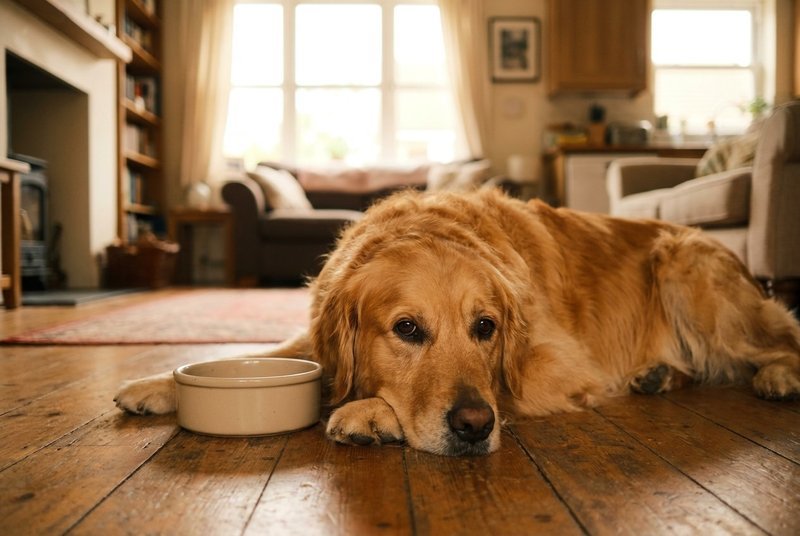
Every dog gets diarrhea at some point, and every dog parent has heard the same tip: “just give them some pumpkin.” It sounds almost too simple. Is it real advice, or an internet myth passed around dog-park to dog-park?
The honest answer is: it’s real, but only for the right situation. Plain pumpkin genuinely can help mild loose stool - and vets do recommend it - but it isn’t a cure, it won’t touch diarrhea caused by something serious, and giving too much can actually backfire.
This guide gives you the straight, vet-sourced version: what pumpkin does, exactly how much to give by your dog’s weight, which kind is safe (and which is dangerous), and the red flags that mean you should skip the pumpkin and call your vet. We’ve helped more than 300,000 pet parents support their dogs’ digestion, and everything below leans on veterinary sources.
Table of Contents
Does Pumpkin Help Dogs With Diarrhea?
Short answer: yes, for mild, uncomplicated diarrhea in a dog who is otherwise bright, drinking, and eating. As the American Kennel Club puts it, pumpkin “is best for mild, non-serious diarrhea and not a substitute for veterinary care in severe cases.”
Here’s the part most “give them pumpkin” advice leaves out: pumpkin is supportive care, not a treatment. It does nothing for diarrhea caused by parasites, parvovirus, bacterial infection, pancreatitis, inflammatory bowel disease, toxins, or a swallowed object - and those causes need a vet. Fiber alone rarely resolves diarrhea when there’s a real illness behind it.
So pumpkin is worth trying for the classic “my dog had a dietary slip-up and has soft stool but is acting totally normal” scenario. It is not the answer when your dog is genuinely sick.
Why Pumpkin Works for Diarrhea
Pumpkin’s benefit comes down to fiber - and pumpkin actually contains a few kinds.
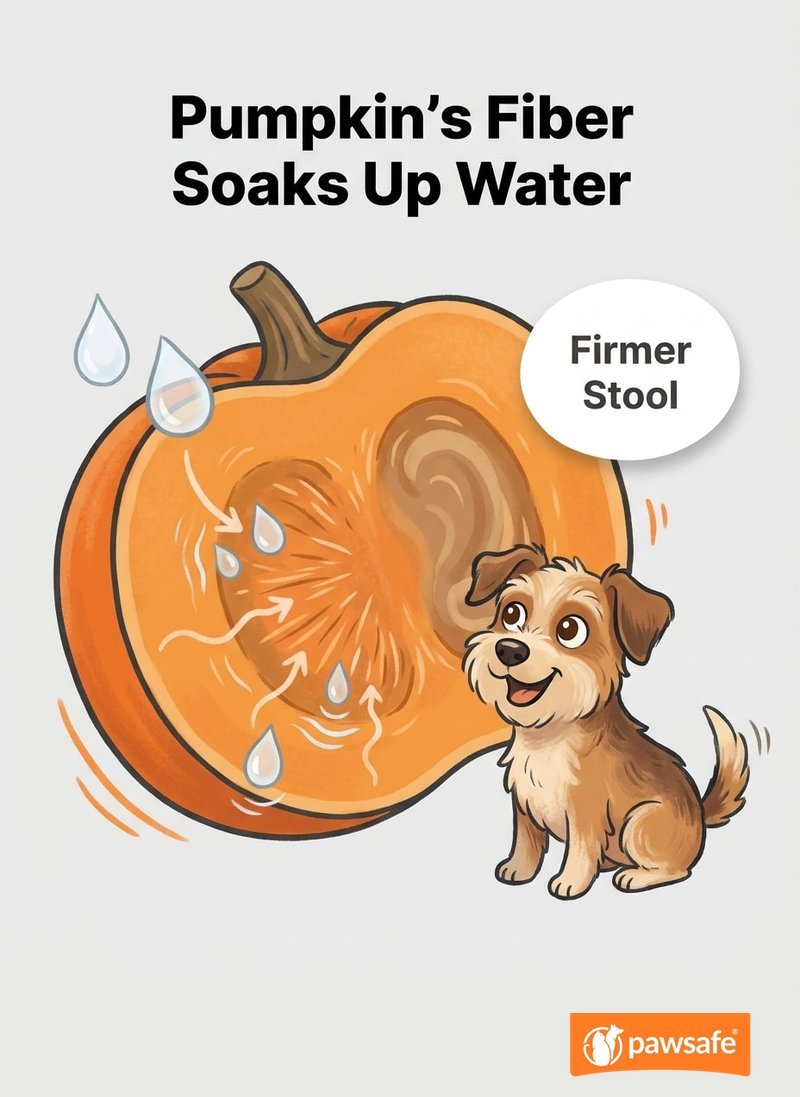
Soluble fiber holds water and adds bulk. Soluble fiber swells in water and forms a gel that can slow how fast things move through the gut, while adding bulk that helps firm up loose, watery stool. The everyday shorthand that pumpkin “soaks up extra water” is directionally right, if a little simplified.
Fermentable fiber feeds good bacteria. Some of pumpkin’s fiber is fermentable, meaning gut bacteria in the colon break it down into short-chain fatty acids like butyrate. According to the Merck Veterinary Manual, those short-chain fatty acids can supply roughly 70% of the energy a dog’s colon cells use, and they help the colon absorb sodium and water. That fermentable fiber also acts as a prebiotic - food for the beneficial bacteria in your dog’s gut.
Pumpkin is also nutritious: one cup of plain canned pumpkin has about 7 grams of fiber plus vitamins A, C, and E, potassium, and iron, and it’s roughly 90% water. Keep it in perspective, though - a single tablespoon has under half a gram of fiber, so the effect from a spoonful is gentle, not dramatic.
How Much Pumpkin to Give a Dog for Diarrhea
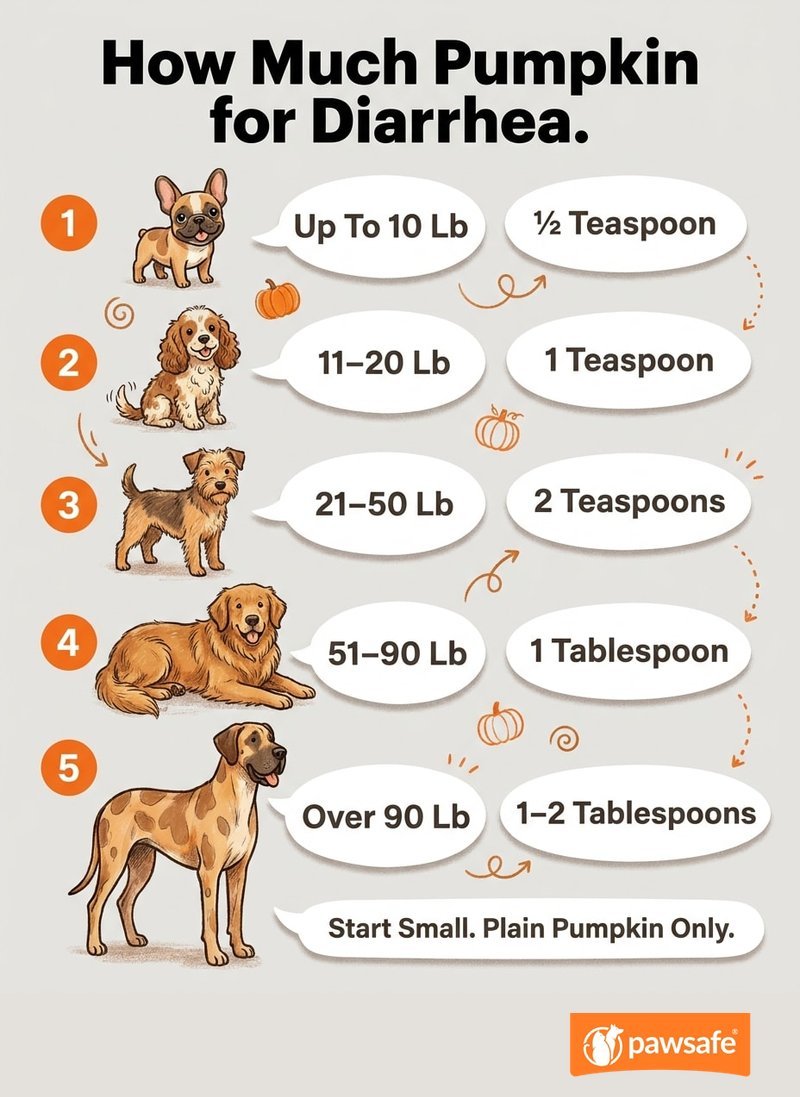
Here’s the honest truth vets will tell you: there is no official, tested “dose” of pumpkin. Recommendations range from 1 to 4 tablespoons to “a teaspoon per 10 pounds,” which is why results vary so much. The safest approach is to start with a small amount and only increase slowly if your dog needs it and tolerates it.
A conservative starting amount, mixed into one plain meal:
| Your dog’s weight | Plain canned pumpkin to start |
|---|---|
| Up to 10 lb | ½ teaspoon |
| 11–20 lb | 1 teaspoon |
| 21–50 lb | 2 teaspoons |
| 51–90 lb | 1 tablespoon |
| Over 90 lb | 1–2 tablespoons |
More is not better. Adding too much fiber, especially too quickly, can cause gas, bloating, cramping, and even more diarrhea. A giant-breed dog does not automatically need the maximum amount, and doubling the pumpkin won’t make it work faster.
How to Give It
Mix the pumpkin thoroughly into plain food. You can freeze extra in premeasured spoonfuls (an ice-cube tray works well) as long as it’s plain - no sweetener, spices, dairy, or salt. Keep fresh water available the whole time: pumpkin is mostly water, but it is not a substitute for drinking or for veterinary fluids.
Daily Support For Healthy Digestion
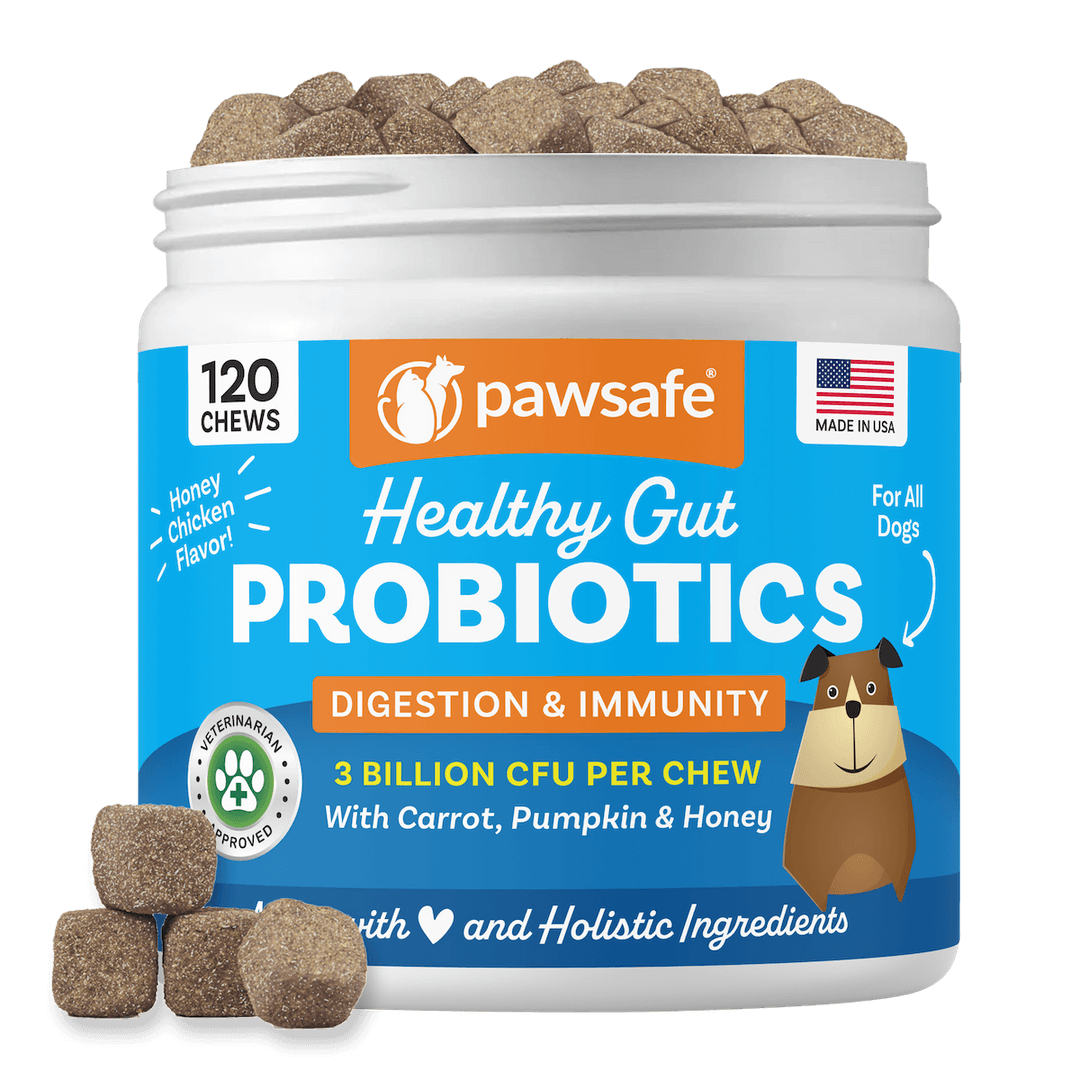
Multi-strain probiotic soft chews that help maintain gut balance and stool quality in an easy, tasty format.
Shop Now 👉Vet Approved Formula • 90-Day PawSafe® Promise
How Long to Try It
There’s no proven timeframe for pumpkin to “work,” and mild diarrhea often clears up on its own anyway. A sensible, cautious plan:
- Reassess after the next one or two bowel movements, within about 12–24 hours.
- Call your vet if there’s no clear improvement within 24 hours - sooner for a puppy, small, senior, or unwell dog.
- Don’t keep treating at home beyond about 48 hours without veterinary guidance.
- Stop and seek care immediately if any red flag appears (see below).
What Kind of Pumpkin Is Safe?
Not all pumpkin is created equal, and one common product is genuinely dangerous.
Safe options:
- Plain 100% canned pumpkin - the simplest choice. Check the label says only “pumpkin,” with no sugar, salt, or spices.
- Plain cooked fresh pumpkin - peel it, remove the stem, stringy center, and seeds, then cook and mash it with no seasoning. It has more water and less fiber than canned.
- Pet pumpkin powder - fine if the ingredients are clean, but it’s concentrated, so measure by the label, not by the tablespoon.
Avoid:
- Pumpkin pie filling or mix - never give this. It can contain sugar, fat, and spices like nutmeg (which can cause vomiting and neurological signs), and any sugar-free product may contain xylitol, which is toxic to dogs and can cause dangerous blood-sugar drops and liver injury.
- Decorative, carved, or moldy pumpkins - these can grow mold that produces toxins causing tremors and seizures.
- The rind, stem, and whole seeds - hard to digest and a choking or blockage risk, especially for small dogs. There’s no reason to add seeds during a bout of diarrhea.
Pumpkin, Probiotics, and a Bland Diet
Pumpkin works best as one part of gentle supportive care - not a standalone fix.
A bland diet. For a dog with mild diarrhea and no vomiting, vets often suggest small, frequent portions of a highly digestible, low-fat food - classically boiled skinless chicken (or lean turkey) with white rice - with no butter, oil, salt, onion, or garlic. A spoonful of pumpkin can be stirred in. Just remember these are short-term recovery meals, not complete nutrition. Our bland diet for dogs guide walks through the details. (Older “fast your dog for 24 hours” advice is now debated - an otherwise stable dog often does better with small, gentle meals, and puppies, toy breeds, and frail seniors should never be fasted without a vet’s say-so.)
Probiotics. Pumpkin’s fermentable fiber is a prebiotic - food for good bacteria - while a probiotic supplies the live bacteria themselves; together they’re called a synbiotic. The evidence for probiotics in acute dog diarrhea is genuinely mixed and depends on the specific strains, so choose a vet-recommended product with named strains rather than expecting any probiotic to stop diarrhea. For everyday digestive support, our Probiotic Soft Chews pair a multi-strain blend with prebiotic fiber - and, fittingly, they already include pumpkin powder in the recipe. Think of them as ongoing gut maintenance, not an emergency treatment. For the bigger picture on building a resilient gut, see our guide to dog gut health.
Pumpkin’s fiber cuts both ways, incidentally - the same bulk-and-water effect can also ease mild constipation, which is why you’ll see it recommended for the opposite problem too.
When Pumpkin Won’t Help - See Your Vet
This is the most important section. Pumpkin is for mild cases only. Cornell’s veterinary team advises calling your vet when diarrhea lasts more than a day or two, or sooner if your dog stops eating, becomes lethargic, vomits, or passes black, tarry stool. Skip the home remedy and contact your vet right away if you see:
- Blood in the stool, or black, tarry stool
- Repeated vomiting, or an inability to keep water down
- Profuse or very watery diarrhea
- Lethargy, weakness, collapse, or a dog who just seems “off”
- Fever, belly pain, or a hunched, uncomfortable posture
- Pale gums, or refusal to eat or drink
- A suspected toxin, medication, spoiled food, or swallowed object
- Diarrhea that lasts more than a day or two, or isn’t improving
Some dogs need a vet at the first sign of diarrhea, before you even reach for pumpkin: puppies (especially unvaccinated ones, because of parvovirus), toy and very small dogs, senior or frail dogs, pregnant or nursing dogs, and any dog with diabetes, kidney disease, or another chronic condition. These dogs have less reserve and can dehydrate fast.
Watch for dehydration too - dry or tacky gums, skin that stays “tented” when gently lifted, sunken-looking eyes, or unusual sleepiness all warrant prompt care. And never give human anti-diarrhea medicine unless your vet approves the exact product and dose; some are unsafe for dogs and can mask a serious problem.

Frequently Asked Questions
Gut & Immune Support In One Chew
Targeted strains assist normal digestion while supporting natural immune defenses—simple once-a-day routine.
Shop Now 👉Vet Approved Formula • 90-Day PawSafe® Promise
Does pumpkin help dogs with diarrhea?
It can help mild, uncomplicated diarrhea. The soluble fiber in plain pumpkin holds water and adds bulk to firm up loose stool, and its fermentable fiber acts as a prebiotic that feeds healthy gut bacteria. Pumpkin is supportive care, not a cure - it won’t fix diarrhea caused by parasites, infection, or illness, and severe cases rarely respond to fiber alone.
How much pumpkin should I give my dog for diarrhea?
There’s no official dose, so start small: about half a teaspoon for dogs under 10 lb, 1 teaspoon for 11-20 lb, 2 teaspoons for 21-50 lb, 1 tablespoon for 51-90 lb, and 1-2 tablespoons for dogs over 90 lb. Mix it into plain food and increase slowly only if needed. More pumpkin does not work faster - too much can make diarrhea worse.
How fast does pumpkin work for dog diarrhea?
There’s no proven timeframe, and mild diarrhea often improves on its own. Reassess after the next bowel movement or two, within about 12-24 hours. If there’s no clear improvement in 24 hours - or sooner in a puppy, small, senior, or unwell dog - call your vet. Don’t keep trying pumpkin at home beyond about 48 hours without veterinary guidance.
What kind of pumpkin is best - canned or fresh?
Plain 100% canned pumpkin is simplest: it’s cooked, consistent, and easy to measure. Plain cooked fresh pumpkin works too (peel it, remove the stem and seeds, no seasoning). Never use pumpkin pie filling or mix - it can contain sugar, spices like nutmeg, or xylitol, all of which are bad or toxic for dogs. Pet pumpkin powder is concentrated, so measure by its label.
Make Digestive Care Effortless
Palatable soft chews your dog looks forward to, helping keep things regular and comfortable over time.
Shop Now 👉Vet Approved Formula • 90-Day PawSafe® Promise
Can too much pumpkin cause diarrhea?
Yes. Adding too much fiber, especially too fast, can cause gas, bloating, cramping, and looser stool - the opposite of what you want. That’s why you start with a small amount and increase slowly. If pumpkin seems to make things worse, stop and check with your vet.
Can I give my dog pumpkin every day?
Many healthy dogs tolerate a small daily spoonful of plain pumpkin as a food topper, kept within about 10% of daily calories. But don’t use daily pumpkin to cover up ongoing or recurring diarrhea - chronic stool problems need a diagnosis, not a permanent home remedy.
Pumpkin or probiotics for dog diarrhea?
They do different jobs and can work together. Pumpkin’s fermentable fiber is a prebiotic (food for good bacteria); a probiotic supplies live bacteria. Evidence for probiotics in acute dog diarrhea is mixed and strain-specific, so use a vet-recommended product with named strains. Neither replaces a vet visit when red flags are present.
When should I take my dog to the vet for diarrhea?
Right away for blood or black tarry stool, repeated vomiting, profuse watery diarrhea, lethargy or weakness, fever, belly pain, pale gums, refusal to eat or drink, or a suspected toxin. Puppies, toy breeds, seniors, and dogs with other illnesses need earlier attention. Also call if diarrhea lasts more than a day or two or isn’t improving.
The Bottom Line
Pumpkin earned its reputation honestly - for the right dog, a small amount of plain pumpkin really can help firm up mild, uncomplicated loose stool, thanks to its soluble and prebiotic fiber. Just keep it in its lane.
Here’s what to remember about pumpkin for dog diarrhea:
- Plain 100% pumpkin only - never pie filling, and nothing with sugar, spices, or xylitol.
- Start small - roughly half a teaspoon for little dogs up to a tablespoon or two for big ones, increased slowly.
- It’s supportive care, not a cure - it won’t fix parasites, infection, or illness, and too much backfires.
- Mind the clock - if things aren’t improving in a day or two, or red flags appear, call your vet.
- Think long-term for the gut - a bland diet helps recovery, and a prebiotic-plus-probiotic routine supports everyday digestion.
For ongoing digestive support once the storm passes, explore our gut health and probiotics guides - because the goal isn’t just firmer stool today, it’s a happier, steadier tummy for the long haul. When in doubt, your veterinarian is always the best guide for your individual dog.