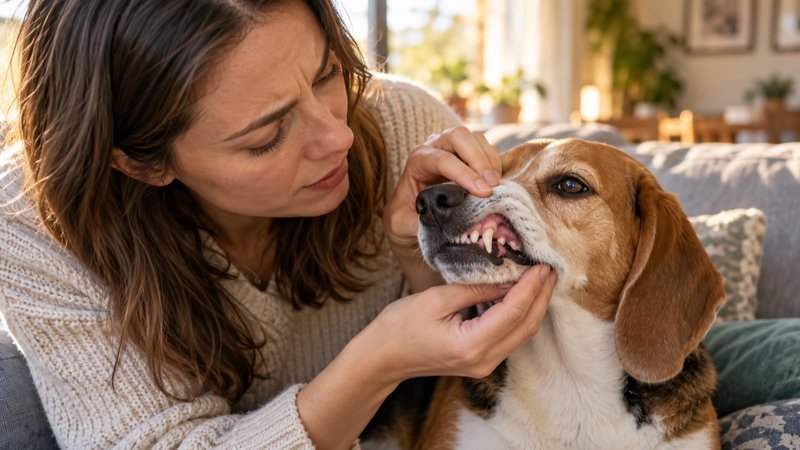


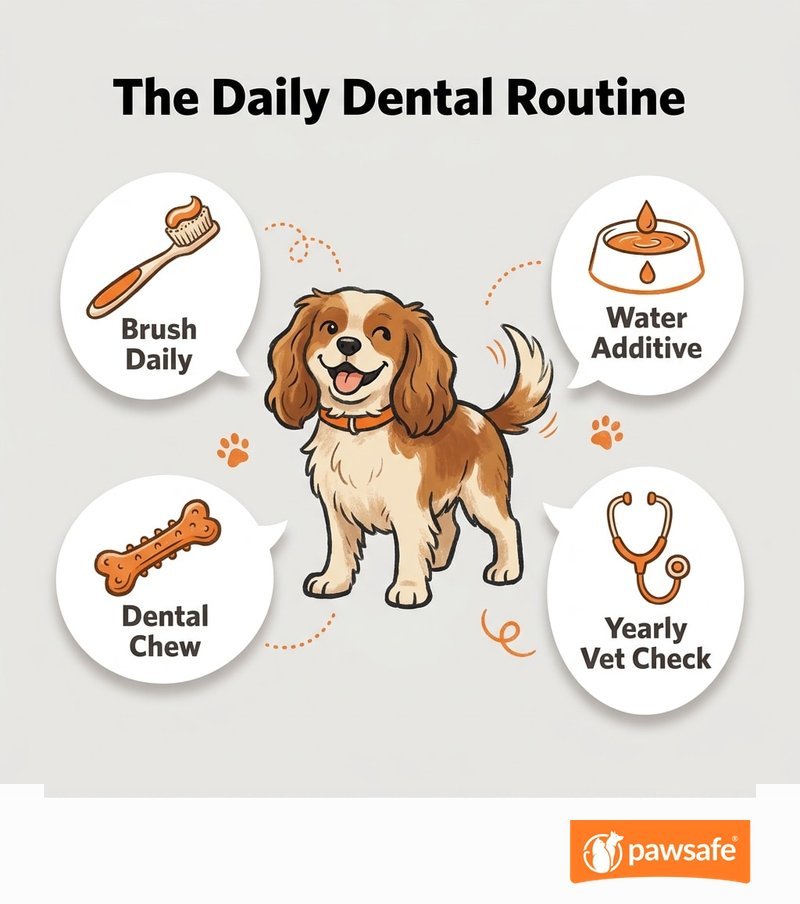
A dog dental care routine combines daily tooth brushing, dog-safe helpers like chews and water additives, and regular veterinary exams with professional cleanings when they’re needed. Brushing with canine toothpaste is the single most effective home step because it disrupts plaque before it hardens into tartar. It matters because periodontal (gum) disease is one of the most common problems in dogs, with early signs often present by age three. No product removes established tartar below the gumline - that part needs a vet.
If your dog’s breath could knock you over, that’s usually the first clue a dental routine is overdue. It’s easy to shrug off “dog breath” as normal, but a healthy mouth shouldn’t smell bad - and by the time most dogs are three, they already show early signs of gum disease.
The good news: looking after your dog’s teeth isn’t complicated once you know the priority order. The hard part is that the pet-store aisle is a wall of chews, sprays, powders, and additives, most promising miracles. This guide cuts through it. You’ll get the complete, vet-informed dog dental care routine - what actually matters, in what order, how to judge which products are worth buying, what a vet cleaning involves and costs, and when to get help. We’ve helped 300,000+ pet parents care for their dogs, and we’ll always tell you when a toothbrush beats a gadget. For more in this series, browse our full dog dental care guides.
Table of Contents
- Why Your Dog's Dental Care Routine Matters
- Start With the Warning Sign: Your Dog's Breath
- Plaque vs Tartar: What You're Actually Fighting
- Brushing: The Foundation of the Routine
- Daily Helpers: Water Additives, Rinses & Powders
- Dental Chews, Treats & Diets: How to Judge Them
- Professional Vet Cleanings (and What They Cost)
- Finding Dog Dental Care Near You
- A Dental Routine for Every Life Stage
- Frequently Asked Questions
- The Bottom Line on Your Dog's Dental Care Routine
Why Your Dog’s Dental Care Routine Matters
Dental disease isn’t just about bad breath or yellow teeth. Periodontal disease - inflammation and infection of the tissues around the teeth - is one of the most common conditions vets see in dogs. The American Veterinary Medical Association notes that by age three, most dogs already have early evidence of it, and Cornell cites estimates that 80-90% of dogs over three have some component of the disease.
It starts small - a little gum redness (gingivitis) that’s still reversible - but left unchecked it can progress to irreversible loss of the bone and tissue that hold teeth in place, along with pain, loose teeth, and infection. Vets grade it in stages, and understanding how it advances helps you catch it early; our guide to the stages of dog gum disease walks through each one.
Two honest caveats. First, dogs are stoic - they often keep eating right through oral pain, so “he’s still eating fine” doesn’t mean his mouth is comfortable. Second, you’ll see claims that bad teeth “cause” heart or kidney disease. The truth is more measured: studies have associated periodontal disease with heart, kidney, and liver changes in dogs, but researchers haven’t proven it directly causes them. That’s still a good reason to take dental care seriously - just not a promise that brushing prevents organ disease.
Start With the Warning Sign: Your Dog’s Breath
As the American Veterinary Dental College puts it, “healthy mouths do not have an odor.” Persistent bad breath is the most common early flag that plaque and bacteria are building up - so it’s the perfect place to start paying attention. If your dog’s breath has turned, our guide on how to get rid of bad dog breath covers the causes and fixes.
The type of smell can occasionally hint at what’s going on, though it’s never a diagnosis on its own. A strong fishy odor is often traced to the mouth or other sources, which we unpack in why your dog’s breath smells like fish, while a breath that smells like poop has its own set of usual suspects. Most bad breath comes straight from the mouth, but because the digestive system can play a role too, it’s worth understanding the wider picture in our dog gut health guide. If bad breath is sudden, severe, or comes with drooling, bleeding gums, or a dog that’s off his food, skip the guesswork and see your vet.
Plaque vs Tartar: What You’re Actually Fighting
Almost everything in a dental routine comes down to one battle: controlling plaque before it turns into tartar.

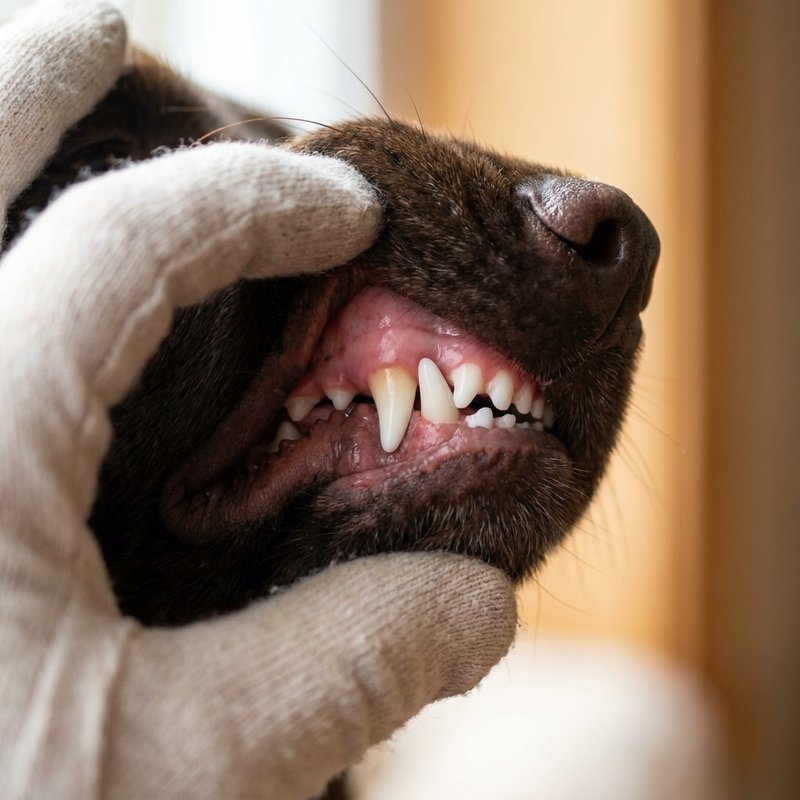
Plaque is the soft, sticky film of bacteria that forms on teeth constantly - it starts rebuilding within about a day of brushing. That’s the part you can remove at home. Leave it, and minerals in saliva harden it into tartar (also called calculus) within a day or two. Tartar is cemented on and can’t be brushed off - it takes a vet. Our guide to dog plaque vs tartar breaks down the difference, and how tartar builds up in stages shows why acting early is so much easier than catching up.
Here’s the key point: the tartar you can see on the crowns isn’t the real problem - the damage happens at and below the gumline, where you can’t inspect or clean. That’s why scraping visible tartar off at home is a bad idea (you’ll miss the disease underneath and can injure the gum or enamel). If tartar has already formed, read how to remove tartar from dog teeth for what’s safe to do yourself versus what needs a professional.
Brushing: The Foundation of the Routine
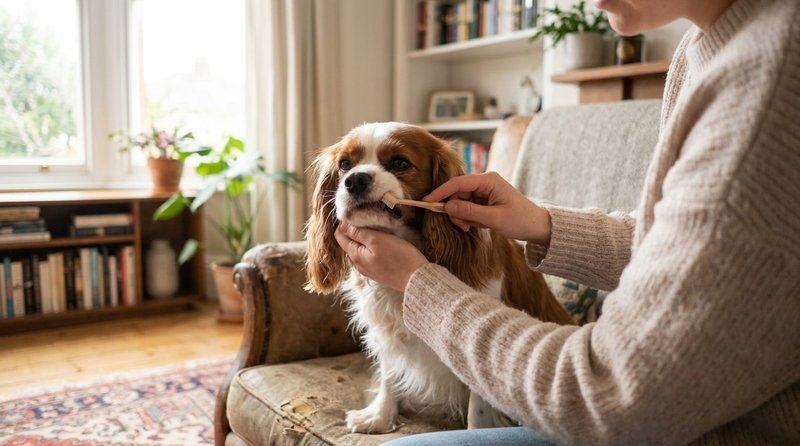
If you do one thing for your dog’s teeth, make it this. Brushing is, by a wide margin, the most effective home step - it physically disrupts plaque before it can harden. One controlled study found daily brushing more than three times as effective at controlling plaque as a dental chew or dental diet.
A few essentials:
- Use canine toothpaste only. Never human toothpaste - it can contain fluoride, detergents, or xylitol (a sweetener that’s toxic to dogs). Dog pastes come in flavors like poultry and peanut butter that most dogs treat as a reward.
- Aim the brush at the gumline with small circular motions, focusing on the outer (cheek-facing) surfaces of the upper back teeth, where plaque piles up fastest. Thirty to sixty seconds is plenty.
- Build up slowly over days - let your dog lick the paste, then touch the gums with a finger, then a soft brush. Keep it short and positive, and never force a painful mouth.
How often? Daily is ideal because plaque comes back so quickly; several times a week still helps, but weekly isn’t enough to hold gum inflammation at bay. Our guide on how often to brush your dog’s teeth gets specific. And if your dog simply won’t tolerate a brush, don’t give up on dental care - there are real alternatives in how to clean dog teeth without brushing.
Fresh Breath The Easy Way
Just add to the water bowl to support cleaner mouths and noticeably fresher breath without daily brushing struggles.
Shop Now 👉Fresh Breath Guarantee • 90-Day PawSafe® Promise
Daily Helpers: Water Additives, Rinses & Powders
Brushing is the foundation, but it isn’t the whole house. For the days you can’t brush - or the spots you miss - a few daily helpers can support the routine.
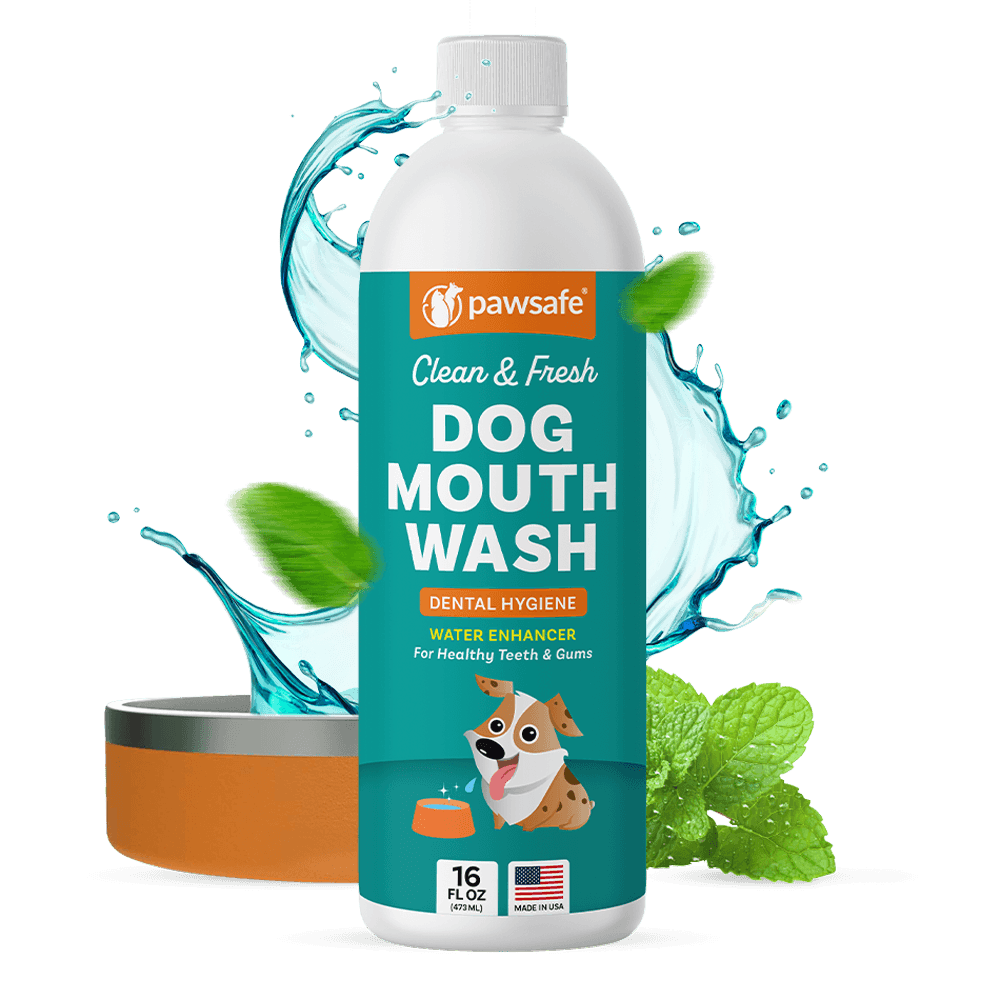
Water additives and mouth rinses go into the water bowl or straight onto the gums to help freshen breath and slow plaque bacteria between brushings. They’re genuinely convenient, especially for hard-to-brush dogs - but the evidence is formula-specific, and they don’t dissolve tartar that’s already there. It’s worth reading the honest breakdown in do dog water additives work before you buy, and if you’re tempted to mix your own, homemade dog mouthwash explains what’s safe (and what to never put in your dog’s water).
This is where a product like our PawSafe Dog Mouthwash fits in - it’s a water additive you add to the bowl to help freshen breath and support plaque control, no brushing required, backed by a 90-day money-back promise. We’ll be straight with you, though: a water additive is a helper, not a replacement for brushing or a vet cleaning, and it can’t remove hardened tartar below the gumline. Use it alongside brushing, follow the label, and make sure your dog keeps drinking normally.
Dental Chews, Treats & Diets: How to Judge Them
Dental chews, treats, and prescription dental diets can all earn a place. Chews work partly by mechanical scrubbing as your dog gnaws, and dental diets use special kibble structure or coatings to reduce buildup. But they sit below brushing, and quality varies wildly.
For chews, treats, and diets that claim to control plaque or tartar, a useful independent check is the VOHC Seal of Acceptance. The Veterinary Oral Health Council reviews the evidence and awards a “Helps Control Plaque” and/or “Helps Control Tartar” seal only to specific products that meet its standard (a meaningful reduction across controlled trials). It’s on the package, and you can search the current list at vohc.org. Two caveats: the seal belongs to that exact product and size (not the whole brand or a single ingredient), and it means “helps control,” not “cures disease.” It carries the most weight when plaque or tartar control is a product’s core promise; a breath-freshening water additive like ours is honestly positioned as an everyday convenience, a different job from a clinical plaque treatment.
A few safety notes on dental treats and chews:
- Pick the size made for your dog’s weight, and supervise chewing.
- Keep dental treats within about 10% of your dog’s daily calories.
- Skip anything rock-hard - real bones, antlers, and hooves fracture teeth. A good rule: if you can’t dent it with a thumbnail, it’s too hard.
Professional Vet Cleanings (and What They Cost)
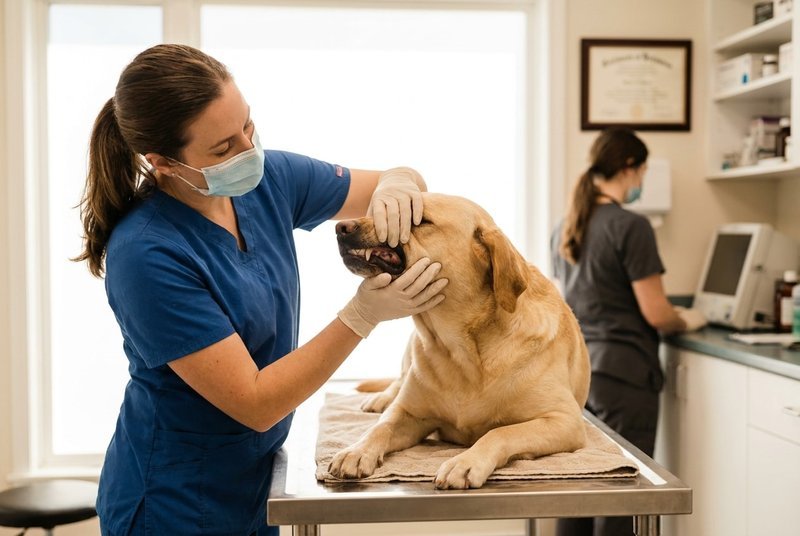
No matter how diligent you are at home, some tartar will win, and only a professional can clean below the gumline. A veterinary dental cleaning (dental prophylaxis) is done under general anesthesia so the team can safely probe every tooth, take full-mouth x-rays, and scale and polish above and below the gumline - then treat anything they find.
Anesthesia understandably makes people nervous, but it’s what makes a real cleaning possible, and the American Veterinary Dental College specifically advises against “anesthesia-free” scraping, which only tidies the visible surfaces and can leave the real disease hidden and untreated. Most dogs need a professional cleaning every one to two years, though small breeds and dogs prone to dental disease often need them more often - your vet decides based on an exam.
What does dog dental care cost? For a basic cleaning, US figures are commonly quoted around $350-$500, with national averages near $388 - but procedures involving x-rays, multiple extractions, oral surgery, or a specialist can climb past $1,500. The honest reality is that the final number often isn’t clear until your dog is under anesthesia and the vet can x-ray and examine each tooth. Ask for an itemized estimate up front and agree on how the clinic will reach you if they find more that needs doing.
Finding Dog Dental Care Near You
Searching “dog dental care near me” usually starts and ends with your regular veterinarian - they handle oral exams, cleanings, x-rays, and most extractions. For complex cases (difficult extractions, root canals, oral masses, jaw problems, or a medically fragile dog), ask for a referral to a board-certified veterinary dentist, an AVDC Diplomate, who you can find through the American Veterinary Dental College’s specialist directory. A quick tip: February is National Pet Dental Health Month, when many clinics run dental checks and promotions - handy, though good dental care is a year-round job, not a once-a-year event.
A Dental Routine for Every Life Stage
Your dog’s dental needs shift with age:
- Puppies go through teething (roughly 3-7 months). Keep an eye out for a baby tooth that hasn’t fallen out as the adult tooth comes in - those “retained” teeth crowd the mouth and trap plaque, and your vet may need to remove them. Start gentle handling early, but wait until the adult teeth are in and the mouth is comfortable before real brushing.
- Adults are all about prevention: daily brushing, the right helpers, and a yearly oral exam.
- Seniors deserve more attention, not less. Older dogs carry more cumulative wear, are more prone to tooth resorption and oral masses, and benefit from regular checks. Age itself isn’t a reason to skip dental care - your vet will tailor anesthesia and treatment to your dog.
A note on breed and size: small and toy breeds (think Toy Poodles, Yorkies, Chihuahuas) are at notably higher risk of gum disease because big teeth crowd little jaws, and flat-faced breeds and Greyhounds also tend to need extra attention. If that’s your dog, lean into prevention early.
Daily Water Additive For Oral Freshness
Helps maintain better breath and oral hygiene as your dog drinks, keeping cuddle moments pleasant.
Shop Now 👉Fresh Breath Guarantee • 90-Day PawSafe® Promise
Frequently Asked Questions
What is a good dog dental care routine?
A good routine has three layers: daily brushing with canine toothpaste (the single most effective home step), dog-safe helpers like proven dental chews, a dental diet, or a water additive, and at least yearly veterinary exams with professional cleanings when your vet recommends them. Brushing controls the soft plaque that hardens into tartar; the vet handles what builds up below the gumline, where you can’t reach.
How often should I brush my dog’s teeth?
Daily is the ideal because plaque starts reforming within about a day. Brushing several times a week still helps and is far better than not brushing, but weekly isn’t enough to reliably prevent gum inflammation. Use only canine toothpaste - human toothpaste can contain fluoride, detergents, or xylitol, which is toxic to dogs. Build up slowly and keep sessions short and positive.
Do dog dental treats and water additives actually work?
Some do - as helpers, not replacements for brushing. One useful check is the Veterinary Oral Health Council (VOHC) Seal, an independent mark given to specific products shown to reduce plaque or tartar. It applies to the exact product and size, not a whole brand or ingredient. Chews and water additives can support a routine, but they don’t remove hardened tartar or replace a vet cleaning.
Turn Plain Water Into Breath Support
A simple routine that supports a cleaner mouth and fresher kisses over time—no messy brushing required.
Shop Now 👉Fresh Breath Guarantee • 90-Day PawSafe® Promise
How much does dog dental care cost?
A basic veterinary dental cleaning in the US is often quoted in the several-hundred-dollar range (commonly cited averages sit around $350-$500), while procedures that involve full-mouth x-rays, extractions, oral surgery, or a specialist can exceed $1,500. The final cost often isn’t known until your dog is under anesthesia and the vet can x-ray and probe each tooth, so ask for an itemized estimate.
Is anesthesia-free dog dental cleaning safe or worth it?
Veterinary dentists advise against it. The American Veterinary Dental College calls it “anesthesia-free tooth scraping” because it only cleans visible surfaces - it can’t clean or x-ray below the gumline, where the damaging disease lives, and it can stress or injure the dog. It may make teeth look cleaner while leaving real disease untreated. A proper cleaning needs general anesthesia.
How do I find dog dental care near me?
Start with your regular veterinarian, who handles oral exams, most cleanings, and dental x-rays. For advanced problems - complex extractions, root canals, oral masses, or a medically fragile dog - ask for a referral to a board-certified veterinary dentist, which you can find through the American Veterinary Dental College’s specialist directory. February is National Pet Dental Health Month, when many clinics run dental promotions.
What are the signs my dog has a dental problem?
See your vet if you notice persistent bad breath, red, swollen, bleeding, or receding gums, loose, broken, or discolored teeth, drooling, dropping food, chewing on one side, pawing at the mouth, facial swelling, or reduced appetite. Dogs often hide oral pain and keep eating through it, so don’t wait for your dog to “act sick” - a yearly oral exam catches problems early.
The Bottom Line on Your Dog’s Dental Care Routine
A dental care routine that actually protects your dog’s teeth is simpler than the product aisle makes it look:
- Brush first. Daily if you can, with canine toothpaste - it beats every gadget.
- Add helpers, not replacements. Chews, a dental diet, and a water additive support the routine; judge them by real evidence, not packaging.
- Let the vet do what you can’t. Yearly exams and professional cleanings under anesthesia handle the disease below the gumline.
- Watch the early signs. Bad breath, red gums, and changes in eating are your cue to act.
Start where you are - even a few brushing sessions a week plus a good helper and a vet check is a real routine. Build the habit, keep an eye on your dog’s breath and gums, and you’ll spare them a lot of pain (and yourself a lot of vet bills) down the road. That’s the whole point of a dog dental care routine: small, consistent care now for a healthier, happier dog for years to come.