

Dog gut health is how well a dog’s digestive system works, including the microbiome - the community of bacteria and other microbes living in the gut. A balanced gut digests food, produces vitamins and short-chain fatty acids, and supports a large share of the immune system, which is concentrated in the intestinal tract. Signs of good gut health include formed stool, a steady appetite, and normal energy. Diet, stress, antibiotics, and age all shift the balance, so supporting it starts with consistent, complete nutrition rather than any single supplement.
You’ve probably heard that a dog’s health “starts in the gut.” It’s a tidy phrase - and it’s mostly true. The digestive tract does far more than break down kibble: it absorbs nutrients, houses a huge share of the immune system, and is home to a bustling community of microbes that influence everything from stool quality to, possibly, mood.
The catch is that gut health is also where dog parents get the most conflicting advice. One site says add pumpkin, another says buy a microbiome test, a third promises a probiotic will fix everything. So this guide does something different: it explains what dog gut health actually is, how to spot when something’s off, what genuinely helps (and what’s oversold), and - most importantly - exactly when a symptom means “call the vet.” It’s built on veterinary sources, and because it covers health, it carries a veterinary reviewer before publication.
Table of Contents
What Is Dog Gut Health (and the Microbiome)?
Gut health is how well the whole digestive system does its jobs: breaking down food, absorbing nutrients, maintaining the intestinal barrier, moving things along, and interacting with the microbes inside it. A big player in all of that is the gut microbiome - the community of bacteria, fungi, viruses, and other microorganisms in the digestive tract, along with their genes and the compounds they produce.
It’s a big, individual ecosystem. Sequencing studies estimate enormous microbial populations in the canine gut, and, importantly, only a modest fraction of species are shared from one dog to the next. In other words, there is no single “perfect” canine microbiome - what’s normal for your dog may look different from the dog next door.
A well-functioning microbiome helps in several ways, according to the Merck Veterinary Manual: it ferments fibers the dog can’t digest alone, produces short-chain fatty acids like butyrate that feed the cells lining the colon, contributes to vitamins such as vitamin K and some B vitamins, competes with harmful organisms, and helps regulate the immune system.
That immune connection is where you’ll see a familiar stat. Veterinary sources commonly estimate that a large share of the immune system - often cited as roughly 70-80% of immune activity - is associated with the gut, though the exact figure is an approximation rather than a precise measurement. Cornell, for example, ties a large share of the immune system to the digestive tract. The takeaway isn’t the number; it’s that the gut and the immune system are deeply linked.
Vets describe a balanced gut community as eubiosis and a disrupted one as dysbiosis. Just know that these aren’t simple on/off states, and “more bacterial diversity” isn’t automatically “healthier.” There’s even active research into the gut-brain axis - the two-way communication between the digestive tract and the brain. It’s a promising field, but it’s still developing, and it does not mean gut bacteria are the cause of a dog’s anxiety.
Signs of a Healthy vs Unhealthy Gut
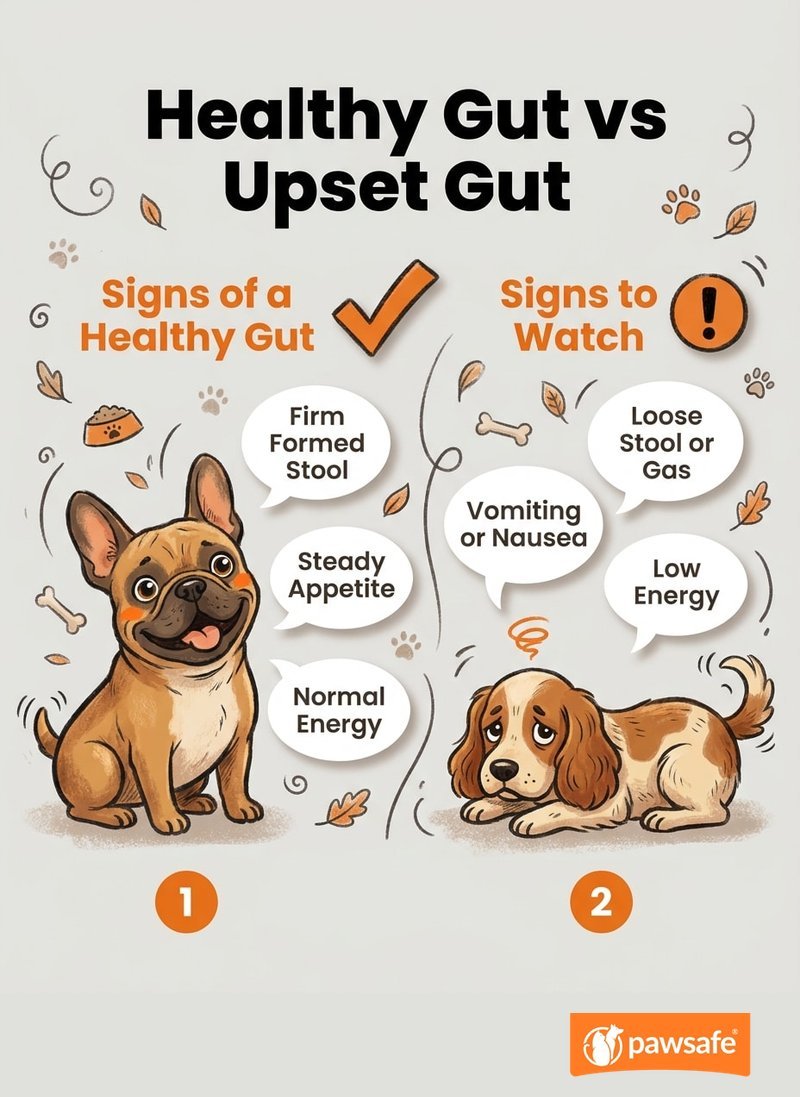
You can’t see a microbiome, but you can watch the whole dog. Signs consistent with normal digestion include:
- Formed, moist stool that holds its shape
- A fairly consistent bathroom routine (many adult dogs go once or twice a day)
- Comfortable pooping without repeated straining
- A steady appetite and stable weight
- Normal energy and engagement
One honest caveat: a shiny coat, good appetite, and playful energy are whole-dog observations, not a validated test of microbiome quality. A dog can have glossy fur and still have intestinal disease.
Signs worth paying attention to include diarrhea or persistently soft stool, mucus or blood, black or tarry stool, constipation or straining, excess gas, audible stomach gurgling, nausea or vomiting, appetite loss, a hunched or tender belly, weight loss, or lethargy. If you’re troubleshooting a specific symptom, we cover two of the most common in depth: why your dog’s poop is soft and what a gurgling stomach means. Colour and consistency are worth reading closely, because yellow, green, black, and red stool each point to different causes, as do mucus, white specks, and clear liquid passed instead of a normal stool. Appetite and vomiting patterns are part of the same picture, whether your dog acts hungry all the time or throws up soon after eating.
Here’s the crucial part: no single symptom on that list diagnoses a gut problem. The same signs can come from parasites, infection, dietary indiscretion, a swallowed object, pancreatitis, or endocrine, liver, and kidney disease. That’s why persistent or severe signs belong with a vet, not a guessing game.
What Disrupts a Dog’s Gut Health
Several everyday factors shift the microbial balance:
- Diet and abrupt food changes. Diet is one of the strongest influences on the gut. Even a good new food, switched too fast, can cause temporary gas or loose stool - which is why gradual transitions matter.
- Antibiotics. These can reduce microbial diversity. In one study of dogs given metronidazole for a week, changes were still detectable for about four to six weeks, though profiles were broadly back toward baseline by six months. That timeline comes from one antibiotic, not every drug - and you should never stop, shorten, or skip a prescribed antibiotic over microbiome worries. That’s a decision for the prescribing vet.
- Stress. Stressful events like boarding or travel can affect appetite and motility. The link is plausible but variable - one 2024 study found no consistent microbiome change after an acute stress challenge - so stress is a factor, not a guaranteed cause of dysbiosis. Calm routines help more here than any supplement, and slow, low-key enrichment like a lick mat with a dog-safe topping can take the edge off mealtimes and separations.
- Age, breed, and body size. These shape the microbiome too, but “different” isn’t the same as “diseased.” Healthy aging may simply set a different normal.
How to Support Your Dog’s Gut Health
For most healthy dogs, the foundation is unglamorous and evidence-aligned - and it isn’t a supplement. When people ask about the best dog food for gut health, the honest answer is a complete, balanced diet fed consistently, not a single miracle ingredient.
Feed a Consistent, Complete Diet
Start with a complete and balanced food appropriate to your dog’s life stage, keep it reasonably consistent, maintain a healthy body condition, and provide fresh water. Keep treats and extras to no more than about 10% of daily calories, as the WSAVA Nutrition Committee recommends. If your dog is on a prescription or elimination diet, talk to your vet before changing anything.
Daily Support For Healthy Digestion
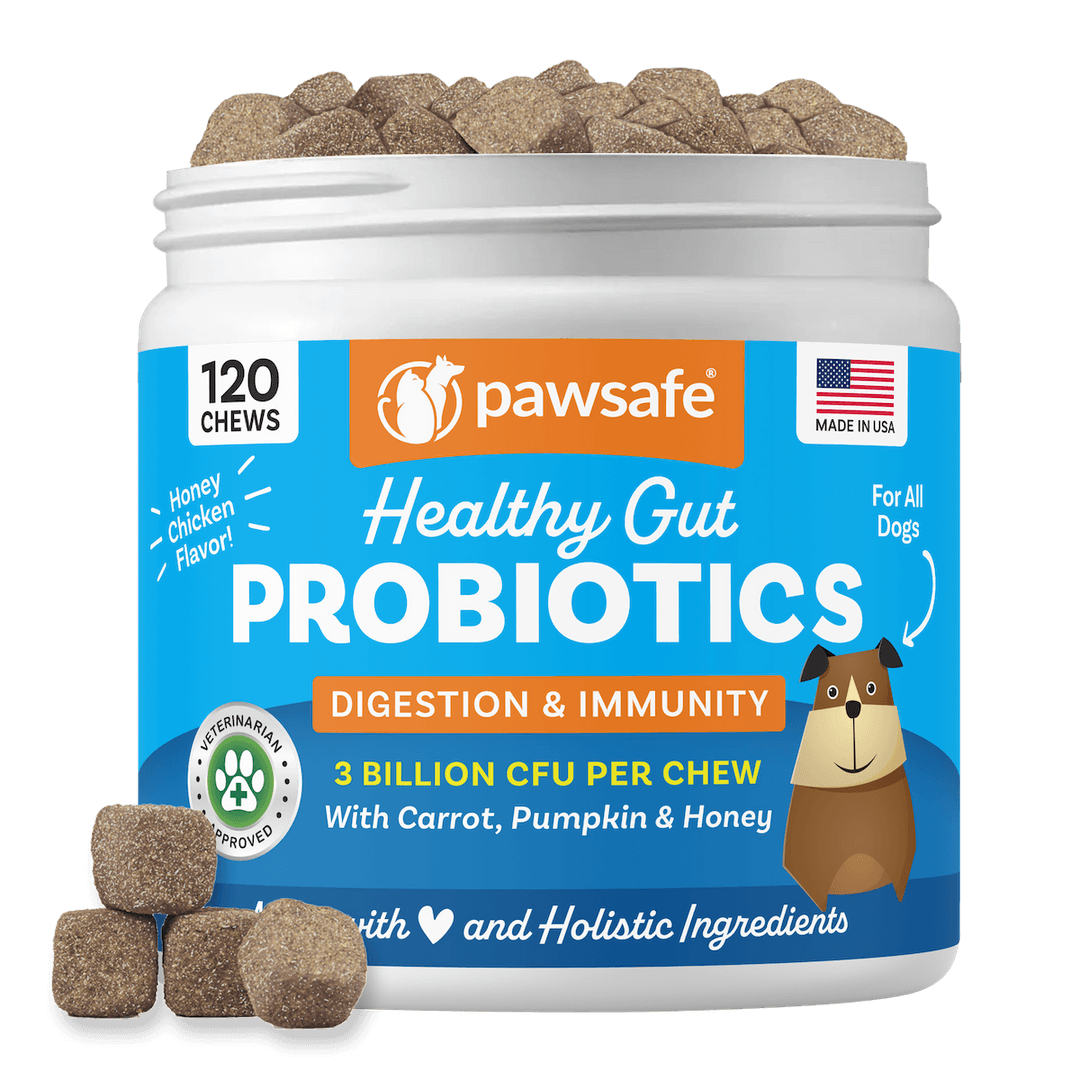
Multi-strain probiotic soft chews that help maintain gut balance and stool quality in an easy, tasty format.
Shop Now 👉Vet Approved Formula • 90-Day PawSafe® Promise
Understand Fiber (It’s Not One Thing)
Insoluble fiber adds bulk; soluble fiber holds water and can change stool consistency; fermentable fiber feeds gut microbes and produces short-chain fatty acids. Most real foods mix all three. Fermentable fibers like inulin can shift gut metabolism in studies - but more fiber isn’t automatically better, and the wrong amount can worsen gas, constipation, or diarrhea. If your dog is already straining, our guide to what to give a dog for constipation covers the safe options before you start adding more fiber. This is a good place to ask your vet rather than guess.
Optional Whole-Food Add-Ins
For suitable dogs, small amounts of certain foods can add fiber and variety. These are optional extras, not required for a healthy gut and not substitutes for a balanced diet:
- Plain pumpkin (canned or cooked, never pie filling, which can contain spices or xylitol) supplies fiber that may help firm up stool for some dogs - here’s how pumpkin is actually used for dog diarrhea, and where it falls short.
- Dog-safe vegetables like small amounts of leafy greens or bite-size plain broccoli add fiber - skip the butter, salt, onion, and garlic.
- Plain cooked, boneless, low-mercury fish (such as salmon or sardines) supplies protein and omega-3 fats; avoid high-mercury fish like swordfish, and skip smoked or heavily salted preparations.
- Fermented foods like plain kefir or low-sodium sauerkraut are sometimes suggested, but they don’t suit dogs with dairy sensitivity or salt concerns - and fermentation alone doesn’t make something a proven probiotic.
I’m deliberately not giving amounts here. The right quantity depends on your dog’s size, calories, diet, and any medical conditions - so that’s a conversation for your vet, especially for a dog that’s already unwell.
Transition New Foods Gradually
When you change foods, most healthy adult dogs do best with a 5-to-7-day transition: roughly 25% new food for the first couple of days, then 50/50, then 75%, then all new - as long as appetite and stool stay normal. Some dogs need longer. (One exception: if your vet says to switch immediately - for a recall or a therapeutic diet - follow their instructions.)
Prebiotics, Probiotics, and Synbiotics
These terms get muddled, so quickly: a probiotic is a live microorganism that provides a health benefit in an adequate amount; a prebiotic is a substrate (often a fiber) that beneficial microbes use; a synbiotic combines both. Not every fiber is a prebiotic, not every fermented food is a probiotic, and a benefit shown for one strain can’t be assumed for every relative. If you’re wondering whether your dog is a candidate, see our guide to the signs your dog may need probiotics.
Dog Food, Supplements, and Chews for Gut Health
Here’s the honest version of the probiotic story, because it’s where the most money and hype live.
The evidence is promising but inconsistent and very product-specific. A 2019 systematic review of controlled studies found the benefit for acute digestive upset “very limited,” and the 2024 ENOVAT guideline explicitly made no recommendation for or against probiotics in acute canine diarrhea. Some individual products have shortened bouts of diarrhea in trials; others performed no better than placebo. Where there’s more support, it tends to be for specific strains in specific situations - short-term diarrhea, stressful transitions like shelter intake, or alongside (not instead of) veterinary care.
So a probiotic is best thought of as a possible helper for certain dogs and moments - not a cure, not a daily necessity for every healthy dog, and not interchangeable brand to brand. Most healthy dogs don’t automatically need one, which is really the heart of the question of whether to give a dog probiotics every day. If you do start one, it also helps to know how long dog probiotics take to work before you judge the results.
If you and your vet decide to try a dog gut health supplement, a stronger product will tell you:
- The exact organisms, ideally down to the strain (genus, species, and strain code)
- The colony-forming units (CFU) per serving, with a guarantee of live organisms through the expiration date - not just at manufacture
- An expiration date, lot number, and storage instructions
- Dog-specific directions, and ideally research on the exact strain or finished product
Cornell’s probiotic guide lists similar criteria and notes a general reference range of 1-10 billion CFU per day for dogs - useful background, but not a one-size dose, since effective amounts vary by strain, product, and dog. Follow the product’s label and your vet rather than chasing the highest CFU number; more strains or more CFUs is not automatically better. Look for dog-specific formulas, because “dog-specific” helps with formulation and dosing directions even though it isn’t proof a product works. Tolerance matters as much as the label: most dogs do fine, but probiotics can have side effects, and a new supplement can loosen stool in the first few days, which is one more reason to start when your dog is stable rather than mid-flare.
Where PawSafe fits: if you’re weighing probiotics for dog gut health, our Probiotic Soft Chews are one daily option among the many dog gut health chews on the market, formulated to support normal digestion, with a multi-strain blend (including Lactobacillus acidophilus, L. plantarum, Bifidobacterium bifidum, and Enterococcus faecium) plus functional ingredients like pumpkin and flaxseed, in a honey-chicken soft chew, with no artificial preservatives. Some strain-specific studies report digestive benefits, but results vary by dog - so we’d rather you see it as one tool that fits alongside good food and veterinary advice than as a fix for a sick dog. Follow the label’s serving guidance, and check with your vet before starting any supplement, especially for a puppy, a pregnant dog, an immunocompromised dog, or a dog on medication.
Gut & Immune Support In One Chew
Targeted strains assist normal digestion while supporting natural immune defenses—simple once-a-day routine.
Shop Now 👉Vet Approved Formula • 90-Day PawSafe® Promise
When to See a Vet
This is the most important section, so read it before you reach for any home remedy. Some digestive signs are genuine emergencies.
Go to a vet or emergency clinic immediately if your dog has:
- A swollen, hard, or painful belly with repeated unproductive retching, drooling, restlessness, or pale gums - this can signal bloat/GDV, which is life-threatening
- Black, tarry stool, or vomit that looks like coffee grounds or contains blood (signs of internal bleeding)
- Profuse, uncontrollable, or heavily bloody diarrhea
- Repeated vomiting or an inability to keep water down
- Collapse, extreme weakness, pale or blue gums, or trouble breathing
- Severe or constant belly pain
- A known or suspected toxin, medication overdose, or swallowed object (string, bone, corn cob, toy, fabric) - don’t wait for symptoms
Call your vet the same day or within 24 hours if:
- Vomiting or diarrhea lasts more than 24 hours, keeps recurring, or is getting worse
- Your dog won’t eat or drink for 24 hours, or seems lethargic
- There’s blood in the stool, or you notice signs of dehydration (tacky gums, skin that’s slow to spring back, sunken eyes, reduced urination)
A conservative rule of thumb: contact your vet if diarrhea or vomiting continues for 24 hours, recurs repeatedly, or worsens - and seek care sooner for any red flag. Some vets will observe an otherwise-normal adult dog’s mild diarrhea for 48-72 hours, but that’s a call to make with them, not alone. That watchful-waiting window is where the common questions live: diarrhea in a dog who is otherwise acting normal, loose stool that shows up mainly at night, and diarrhea running into a third day. It’s also where a vet may suggest a short, temporary bland diet rather than a supplement.
Use a lower threshold - see a vet sooner - for puppies (especially under four months or not fully vaccinated), seniors, pregnant or nursing dogs, toy breeds, immunocompromised dogs, and dogs with diabetes, kidney, liver, heart, pancreatic, or chronic intestinal disease. In young puppies, vomiting and diarrhea can cause dangerous dehydration and low blood sugar quickly, and infections like parvovirus have to be ruled out.
A probiotic or a spoon of pumpkin is never the right answer to black stool, repeated vomiting, a suspected obstruction, collapse, or persistent weight loss. When in doubt, call.
Frequently Asked Questions
What is dog gut health?
Dog gut health is how well the gastrointestinal system performs digestion, absorbs nutrients, maintains its protective barrier, supports immune signaling, and interacts with the microbes living inside it. A healthy gut isn’t defined by one bacterial species or one score - it’s a system that works well and keeps the whole dog comfortable.
How can I improve my dog’s gut health?
Start with a complete, balanced diet, consistent feeding, gradual food transitions, suitable fiber, fresh water, and a healthy weight, and get prompt veterinary care for persistent symptoms. Keep treats and extras below about 10% of daily calories. A vet can help decide whether a therapeutic diet, a diagnostic workup, or a strain-specific probiotic is right for your dog.
What foods are good for a dog’s gut?
The most important food is a complete, balanced diet suited to your dog’s life stage and health. Some dogs also tolerate small amounts of plain pumpkin, dog-safe vegetables, or plain cooked boneless low-mercury fish. Fermented foods like plain kefir or low-sodium sauerkraut are optional extras, not proven treatments, and don’t suit every dog. Keep all extras a small part of the diet.
Make Digestive Care Effortless
Palatable soft chews your dog looks forward to, helping keep things regular and comfortable over time.
Shop Now 👉Vet Approved Formula • 90-Day PawSafe® Promise
Do dogs need probiotics, and do they work?
Most healthy dogs don’t automatically need a probiotic. Some products have improved stool outcomes in individual studies, while others did no better than placebo, and a 2024 veterinary guideline made no recommendation for or against them in acute diarrhea. Some probiotics may help some dogs in specific situations, but they aren’t interchangeable or guaranteed - ask your vet.
How long do dog probiotics take to work?
There’s no universal timeline. Some acute-diarrhea studies noticed changes within a few days; studies of chronic or behavioral outcomes measured results after several weeks. It depends on the strain, product, reason for use, and the individual dog. Don’t wait on a supplement if symptoms are severe, worsening, or persistent.
What are the signs of poor gut health in dogs?
Possible signs include recurrent diarrhea or soft stool, vomiting, constipation, excess gas, stomach gurgling, appetite changes, weight change, and lethargy. Skin or coat problems sometimes coexist but aren’t specific to the gut. None of these diagnoses a microbiome problem on its own - they have many causes, so persistent or severe signs need a vet.
When should I take my dog to the vet for digestive problems?
Seek emergency care for a swollen or painful belly with unproductive retching, black tarry stool, profuse or bloody diarrhea, repeated vomiting with inability to keep water down, collapse, pale gums, or a suspected toxin or swallowed object. For an otherwise stable adult, call your vet if vomiting or diarrhea lasts 24 hours, keeps recurring, or comes with appetite loss or lethargy. Puppies, seniors, pregnant, and immunocompromised dogs should be seen sooner.
The Bottom Line on Dog Gut Health
Good gut health for dogs isn’t a product you buy - it’s a system you support. Feed a complete, consistent diet, change foods gradually, keep extras small, manage stress and weight, and pay attention to your dog’s stool, appetite, and energy as the everyday dashboard of how things are going.
A few honest takeaways:
- The gut and immune system are closely linked, but no single symptom diagnoses a microbiome problem.
- Diet is the foundation - probiotics and add-ins are supporting players, not the main event.
- Probiotic evidence is real but strain- and situation-specific - helpful for some dogs, not a cure-all.
- Know the red flags and call your vet early; digestive emergencies are time-sensitive.
If you and your veterinarian decide a daily probiotic is a good fit, our Probiotic Soft Chews are one gentle option, and you can explore more digestive-health guides in our gut health and probiotics library. Above all, when your gut tells you something’s wrong with your dog’s gut, trust it - and talk to your vet.